 DongDong Park
The Wii (2006): motion controls for the whole family
Updated
The 2006 Nintendo Wii was the first console to make a motion controller its standard controller: every console came with one, every game could be designed around it, and a swing was a swing, with no buttons to learn. Nintendo reports 101.63 million Wii consoles sold worldwide, and 82.90 million copies of Wii Sports, which came in the box.
Launch
- November 19, 2006 in the Americas, $249.99, with Wii Sports in the box (according to a reprint of Nintendo of America’s press release).
- December 2, 2006 in Japan, ¥25,000 including tax, with no game included.
How the Wii Remote sensed movement: accelerometer plus infrared pointing
The Wii Remote does two jobs at once. First, it measures swings: inside is an accelerometer (a three-axis one from Analog Devices, according to the sensor maker’s press release at the time) that measures acceleration forward and back, left and right, up and down. Swinging a racket, casting a fishing rod and throwing a punch all rely on it. Second, it points at the screen: the “sensor bar” on top of or below the TV doesn’t actually sense anything. According to Nintendo support, it has five infrared lights on the front at each end, and a sensor window at the tip of the remote sees those two spots of infrared light and works out where on the screen it is pointing.
In Iwata Asks, Nintendo’s developers explained that the accelerometer alone wasn’t reliable enough, so they needed an absolute reference point near the TV, and the sensor bar was essential. Because of how it works, infrared light from heaters, candles and fireplaces can throw off the pointer, and the manual recommends holding the remote 3 to 10 feet (1 to 3 m) from the sensor bar, directly in front of the TV.
2009: adding a gyroscope
An accelerometer can tell which way something is accelerating, but not accurately how far it has turned. Wii MotionPlus, released in 2009, was a small attachment for the remote with a gyroscope inside; Nintendo said that together with the remote’s accelerometer it could sense motion on six axes, not just straight-line movement but rotation and twisting too. The later Wii Remote Plus built it in (sets including it were on sale in Japan by November 2010). An accelerometer plus a gyroscope later became standard in almost every motion controller (see How motion games work).
2007: Wii Fit and the Balance Board
Wii Fit came out in Japan on December 1, 2007 with a Balance Board, and in North America in May 2008. The board weighs about 3.5 kg (under 8 lb) and is made for players up to 136 kg (300 lb). In an interview, Nintendo’s developers explained that each of its four feet holds a strain-gauge sensor (which measures the force on it), and that the four sensors can measure a shift in balance in any direction, and a player’s weight, with high accuracy. Yoga, balance games, aerobics and strength exercises were all done standing on the board.
According to Nintendo (as of March 31, 2024), Wii Fit has sold 22.67 million copies and 2009’s Wii Fit Plus 21.13 million. Motion games had grown from “fun” to “fitness,” a path Ring Fit Adventure later picked up (see Move, Switch and Ring Fit).
Sales (Nintendo figures)
| Product | Total | As of |
|---|---|---|
| Wii console | 101.63 million | September 30, 2026 |
| Wii Sports | 82.90 million (bundled with the console in most regions) | March 31, 2024 |
| Wii Sports Resort | 33.14 million | March 31, 2024 |
| Wii Fit | 22.67 million | March 31, 2024 |
| Wii Fit Plus | 21.13 million | March 31, 2024 |
Nintendo’s software figures include copies bundled with consoles or other products, so the Wii Sports number is closely tied to console sales.
Dance games took off on the Wii too
Ubisoft’s first Just Dance came out on the Wii on November 17, 2009: players held the remote and copied the dancer on screen. Ubisoft said in 2024 that the series has sold more than 90 million copies. New editions still come out, and it can now also be played with a phone camera (see Move, Switch and Ring Fit).
Why the Wii worked
- Standard equipment. No extra device to buy, so every game could safely be designed for motion, which is exactly what the earlier add-ons couldn’t manage (see Early devices).
- Simple. A swing is a swing, with no buttons to learn, so the whole family could play.
- Accurate enough. The accelerometer measured swings and the infrared handled pointing, each covering for the other.
- It also brought new safety problems. The manual tells players to wear the wrist strap, stay at least about 3 feet (1 m) from the TV and watch out for ceiling lights, and early on doctors published case reports of injuries during Wii play (see Why are motion games so tiring?).
Common questions
How does the Wii sense motion?
An accelerometer in the Wii Remote measures swings. The sensor bar by the TV has five infrared lights at each end; the front of the remote sees them and works out where on the screen it is pointing. Wii MotionPlus (2009) added a gyroscope to measure rotation and twisting.
How many Wii consoles were sold?
According to Nintendo, 101.63 million worldwide as of September 30, 2026. Wii Sports had sold 82.90 million copies as of March 31, 2024 (in most regions it came with the console).
How does the Wii Balance Board work?
According to Nintendo’s developers, each of the board’s four feet holds a strain-gauge sensor. Comparing the force on the four corners gives your weight and the direction your balance is shifting.
More in “The history of motion games, from light guns to webcams”
- The history of motion games, from light guns to webcams (overview)
- What was the first motion game?
- Before the Wii: balance boards, mats, gloves and dance pads (1982–2004)
- EyeToy (2003): the camera comes to the living room
- Kinect (2010): nothing to hold, and why it was discontinued
- PlayStation Move, Switch and Ring Fit: motion games turn to fitness
- Motion games in VR: from room-scale tracking to Beat Saber
- Motion games in schools: from DDR in PE class to today
- Webcams and the browser: motion games without special hardware
- Why did motion gaming fade, and where did it go?
Games mentioned here
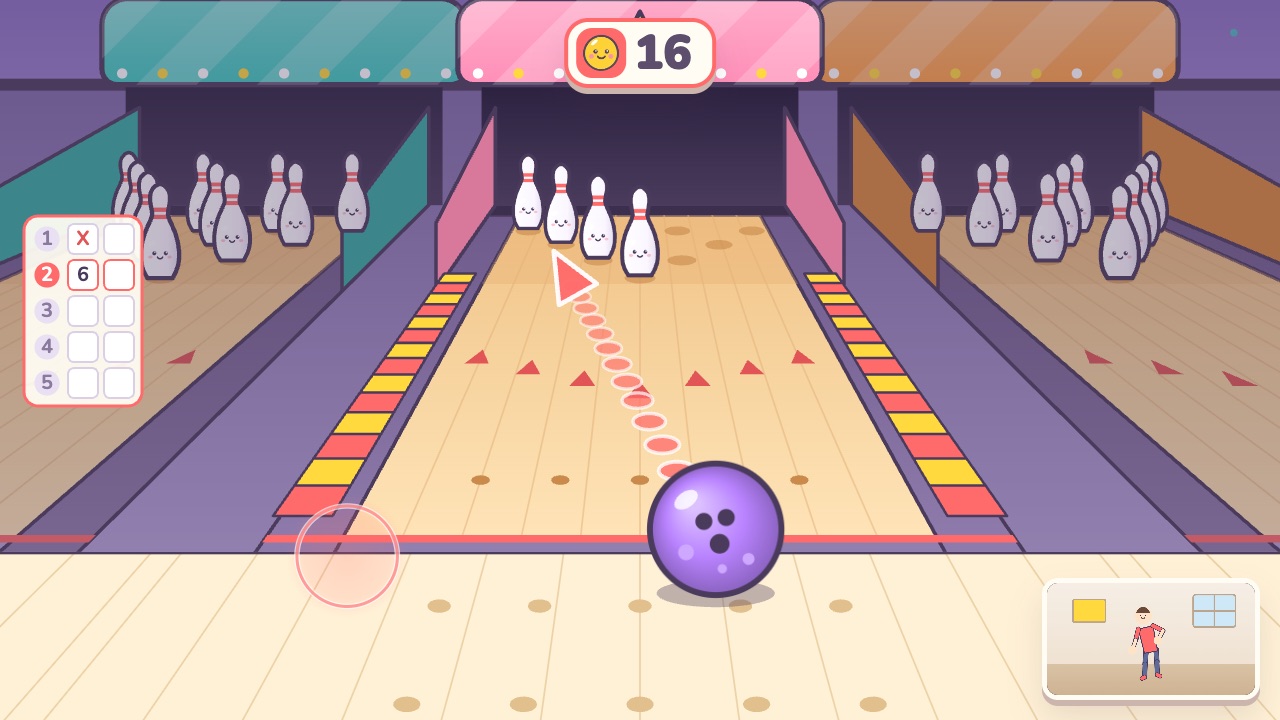 BowlingSwing your arm back and fling the ball forward. Lean your body to aimAges 5–14 · Moderate activity · Hands
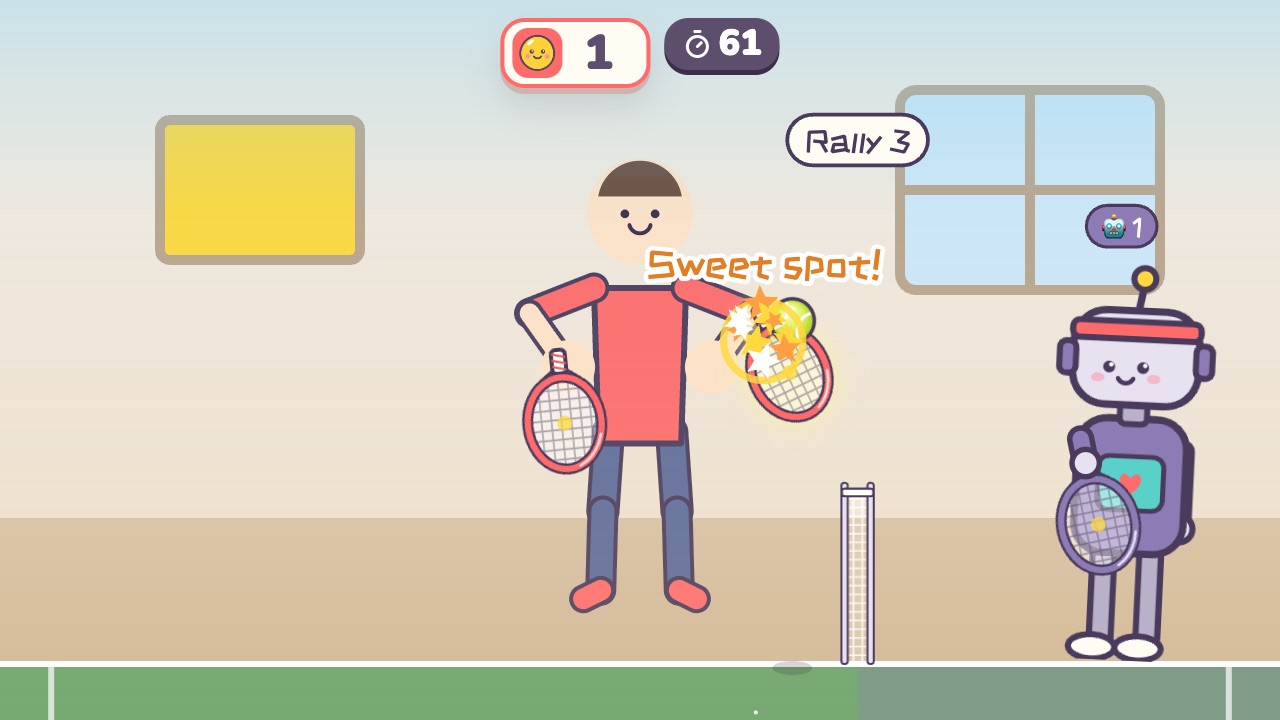 Tennis RallySwing across with the hand on the side where the ball comesAges 6–15 · Moderate activity · Hands / Versus
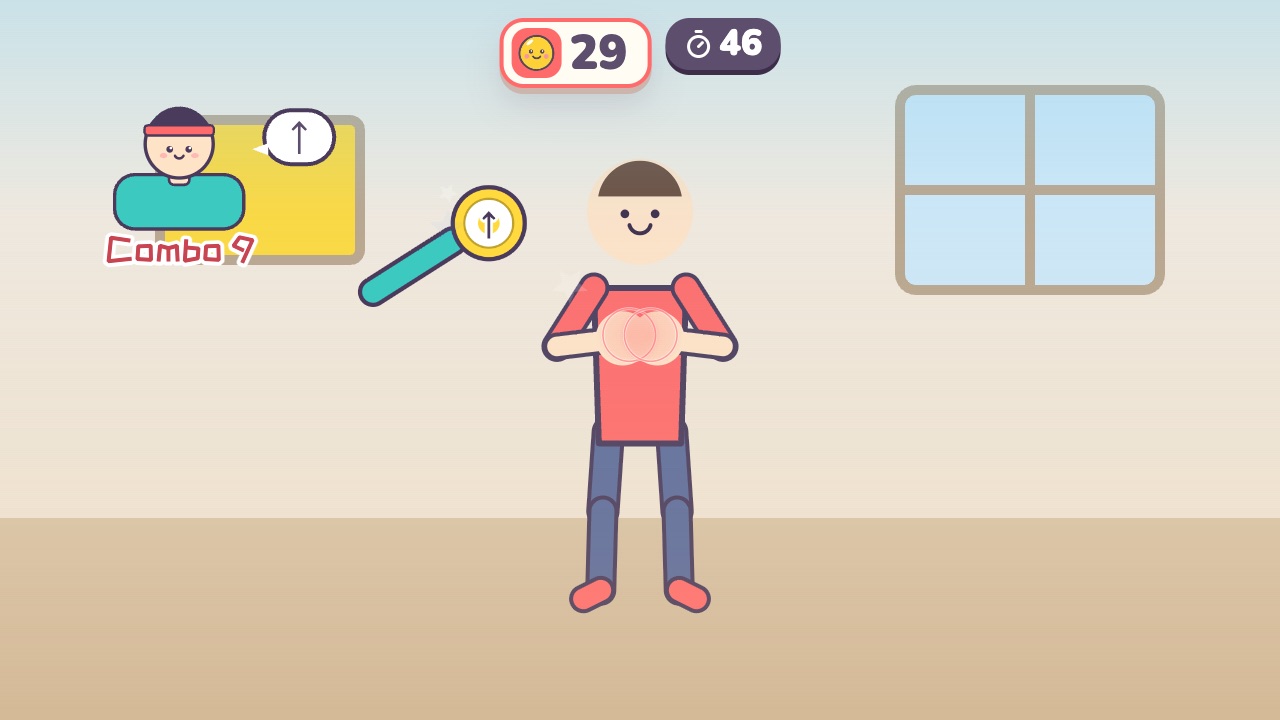 Boxing PracticeThe coach holds up pads: punch left, right and up, dodge the gloves and duck the barAges 9–18 · High activity · Hands / Fitness
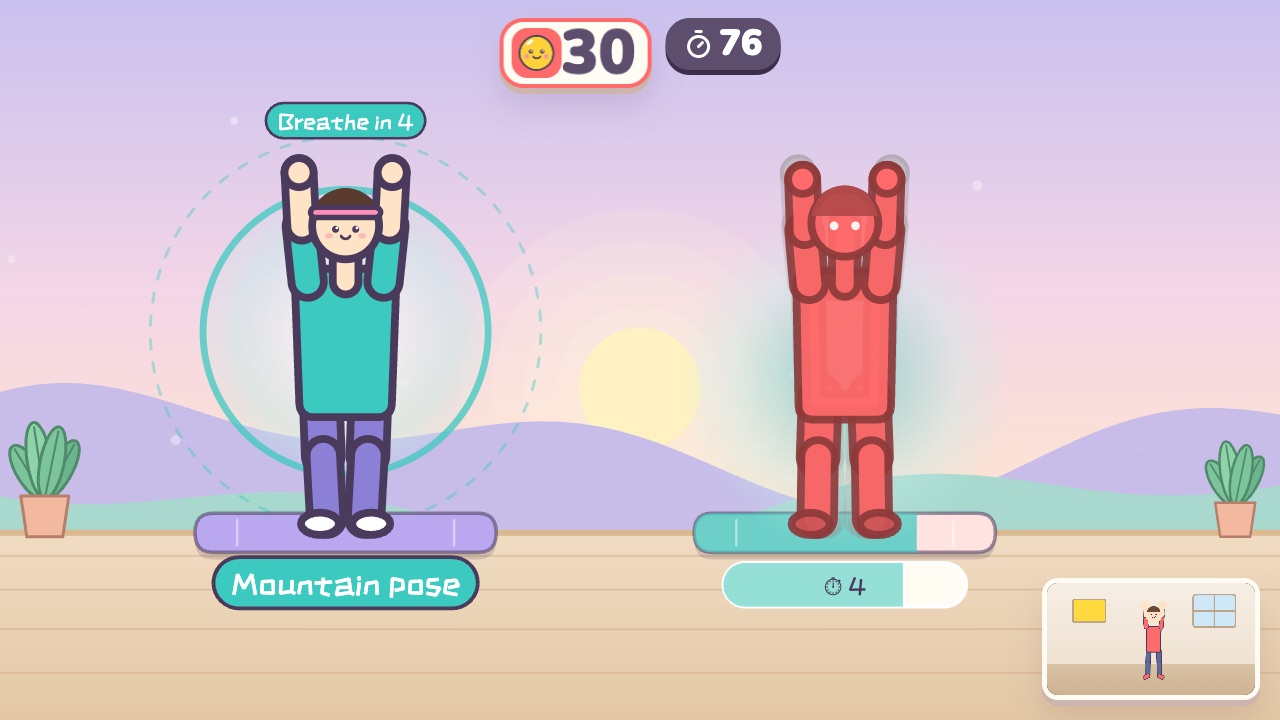 Yoga PosesCopy each yoga pose and hold it steadyAges 12–18 · Light activity · Calm / Fitness / Whole body
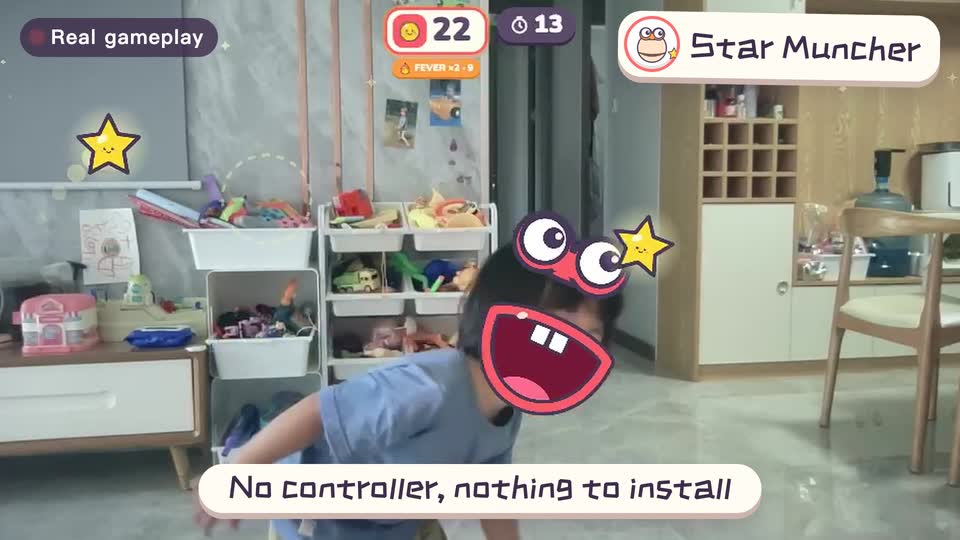
Real footage · 14 s
Kids stand in front of the computer and just move
100+ motion games for ages 3 to 18. Open the website and play: nothing to install, and the camera picture stays on this computer.
Sources
- Wii to launch December 2, 2006 (press release). Nintendo (Japanese). September 14, 2006: Japan launch on December 2 at ¥25,000
- Iwata Asks: Wii Remote. Nintendo. An accelerometer plus an absolute reference point next to the TV: the sensor bar
- How to Check Functionality of the Sensor Bar (Wii). Nintendo of America support. Five infrared lights on the front at each end of the sensor bar
- Iwata Asks: Wii MotionPlus. Nintendo. Adds a gyroscope; together with the accelerometer it senses motion on six axes
- Dedicated Video Game Sales Units. Nintendo Investor Relations. As of September 30, 2026: Wii 101.63 million, Switch 157.20 million, Switch 2 26.35 million
- Top Selling Title Sales Units: Wii Software. Nintendo Investor Relations (Internet Archive copy). As of March 31, 2024: Wii Sports 82.90 million, Wii Fit 22.67 million, Wii Fit Plus 21.13 million (bundled copies included)
- Wii Fit product page. Nintendo (Japanese site). Released December 1, 2007 with the Balance Board; for users up to 136 kg
- Iwata Asks: Wii Fit (the Balance Board). Nintendo. A strain-gauge sensor in each of the four feet measures weight and center of balance
- Just Dance Celebrates 15th Anniversary. Ubisoft. November 2024: the first game came out November 17, 2009; over 90 million sold across the series
- Wii Operations Manual – System Setup. Nintendo (Australia). Use the remote 1 to 3 m (3 to 10 feet) from the sensor bar, directly in front of the TV
- Simulated Activity but Real Trauma: A Systematic Review on Nintendo Wii Injuries Based on a Case Report of an Acute Anterior Cruciate Ligament Rupture. Müller et al., Medicine. 2015; 13 injury reports