 DongDong Park
Motion games in schools: from DDR in PE class to today
Updated
The best-known early example of motion games at school is West Virginia in 2006: Konami announced a three-year partnership with the state to bring its dance game into PE or health classes in public schools. Since then, a steady stream of studies has looked at motion games in PE, with mixed results.
2006: dance games in West Virginia
On January 25, 2006, Konami announced a three-year partnership with West Virginia: within two years, all the state’s public schools would add Dance Dance Revolution (DDR, a game where you step on arrow panels to the music) to PE or health-related classes, starting with the state’s middle schools. The partnership grew out of “Games for Health” research by West Virginia University and the state’s Public Employees Insurance Agency, which began in 2004.
Accounts of the number of schools differ: Konami said 765 schools within two years, while the Associated Press reported 753 schools within three years. Also, the DDR study West Virginia University later published involved 35 overweight children in a clinical setting, not a school classroom.
What studies of PE classes found
After West Virginia, more studies looked at motion games in PE, and the results point both ways:
- A 2010 single-case study (4 inactive children) found that exergaming lessons gave noticeably more active time than regular PE.
- A 2012 study compared a 4-week exergaming unit with a fitness unit: students were more interested in the exergames, but how active they were in class was lower than in the fitness unit.
- A 2016 systematic review (22 reports) found that in 9 of 14 studies, exergaming lessons produced more activity than the comparison, but judged the evidence not yet strong enough to recommend exergames as a school health intervention.
- A 2024 meta-analysis by a Beijing Normal University team (16 randomized controlled trials, 2,962 participants) found a moderate positive effect of exergames on students’ PE learning, with larger effects in kindergarten and in programs lasting one to two months.
Taken together: at school, motion games work best as a supplement to PE (building interest, indoor lessons on rainy days, warm-ups and brain breaks), not as a replacement for real practice. More of the research is in Are motion games good for kids?
How to use them in class today
- Indoor recess and PE on rainy, cold or very hot days, and two-minute brain breaks: see the classroom guide and the indoor PE lesson.
- A school that wants “AI in PE” on a small budget: see AI in PE with just a webcam, and the online rep counter for counting jump rope, squats and jumping jacks.
- Practicing and counting fitness moves: Jump Rope Counter and Squat Counter count one exercise for one minute, and Fitness Circuit strings several together.
- Movement plus math: Math Catch.
- Showing it to the whole class on a projector or classroom display: see On a TV or projector.
- What happens to the camera picture: see Safety and privacy.
More in “The history of motion games, from light guns to webcams”
- The history of motion games, from light guns to webcams (overview)
- What was the first motion game?
- Before the Wii: balance boards, mats, gloves and dance pads (1982–2004)
- EyeToy (2003): the camera comes to the living room
- The Wii (2006): motion controls for the whole family
- Kinect (2010): nothing to hold, and why it was discontinued
- PlayStation Move, Switch and Ring Fit: motion games turn to fitness
- Motion games in VR: from room-scale tracking to Beat Saber
- Webcams and the browser: motion games without special hardware
- Why did motion gaming fade, and where did it go?
Games mentioned here
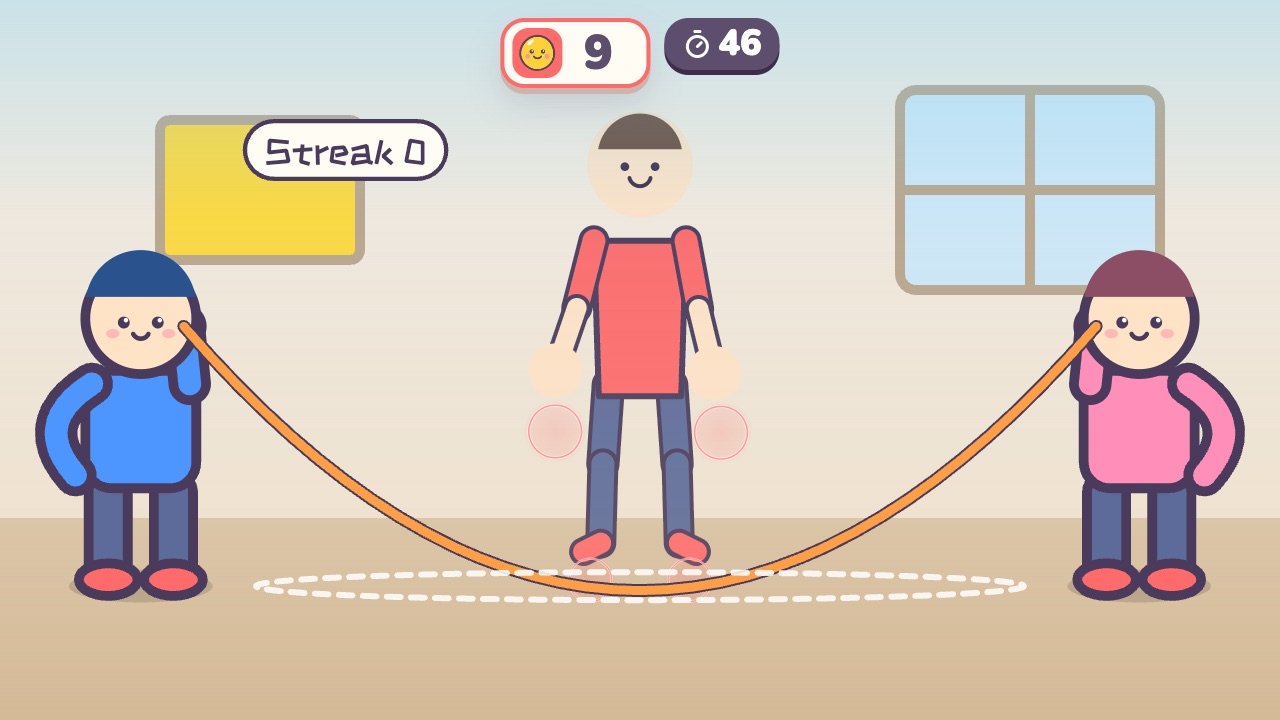 Jump Rope ChampJump when the rope sweeps under your feet. The longer your streak, the faster the ropeAges 6–14 · High activity · Run & jump / Fitness / Rhythm
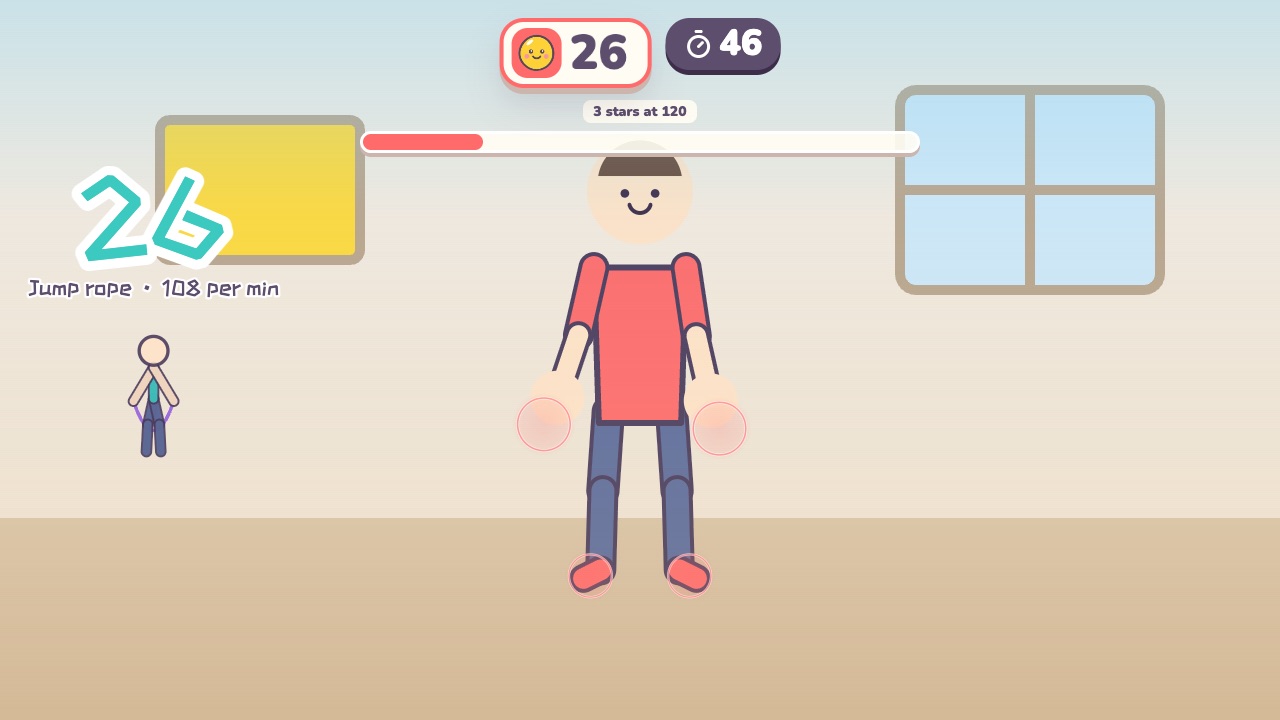 Jump Rope CounterWith a rope or without: how many jumps can you do in one minute?Ages 6–18 · High activity · Fitness / Run & jump / Rhythm
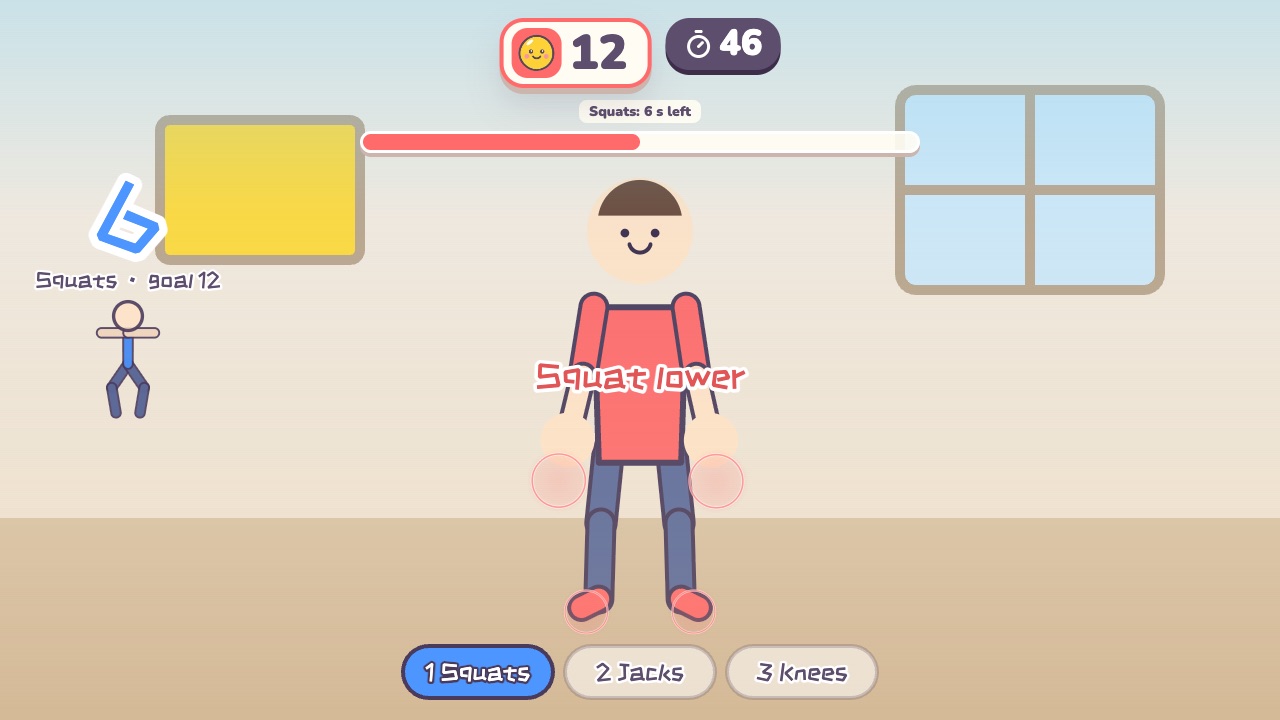 Fitness CircuitSquats, jumping jacks and high knees: three stations, counted for youAges 12–18 · High activity · Fitness / Run & jump / Whole body
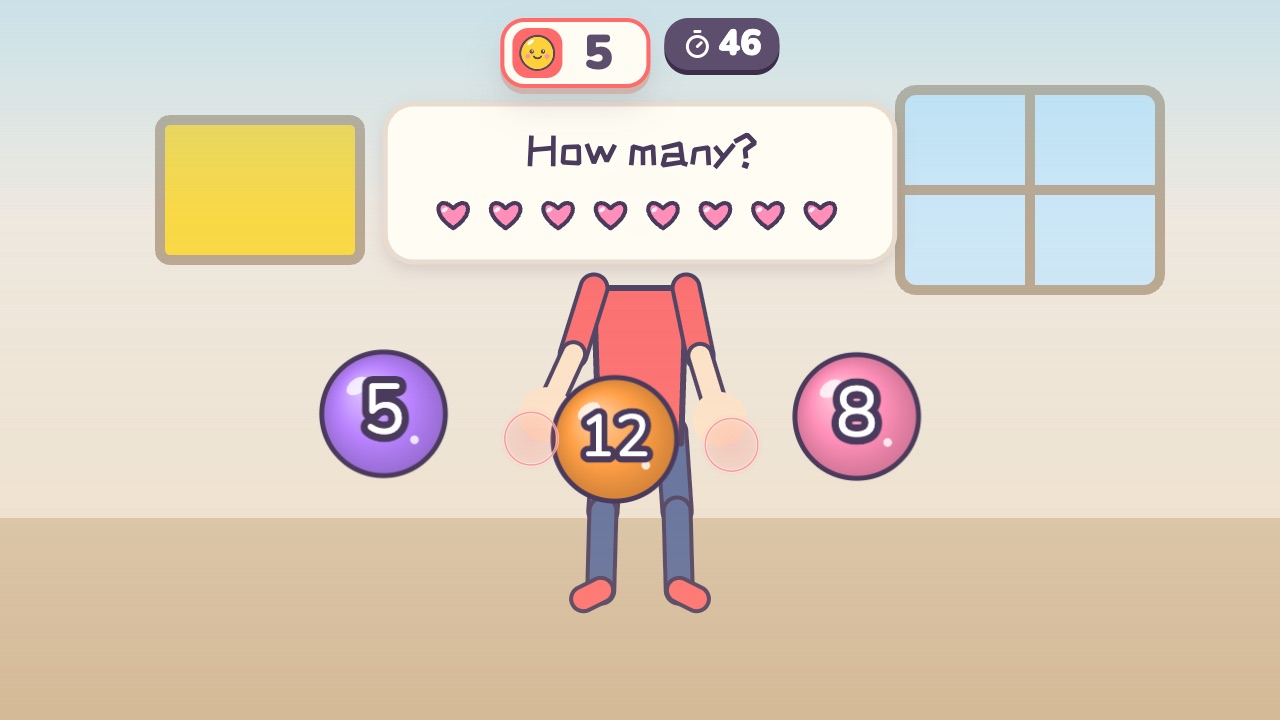 Math CatchThink it through and catch the right answerAges 5–9 · Light activity · Hands / Thinking / Calm
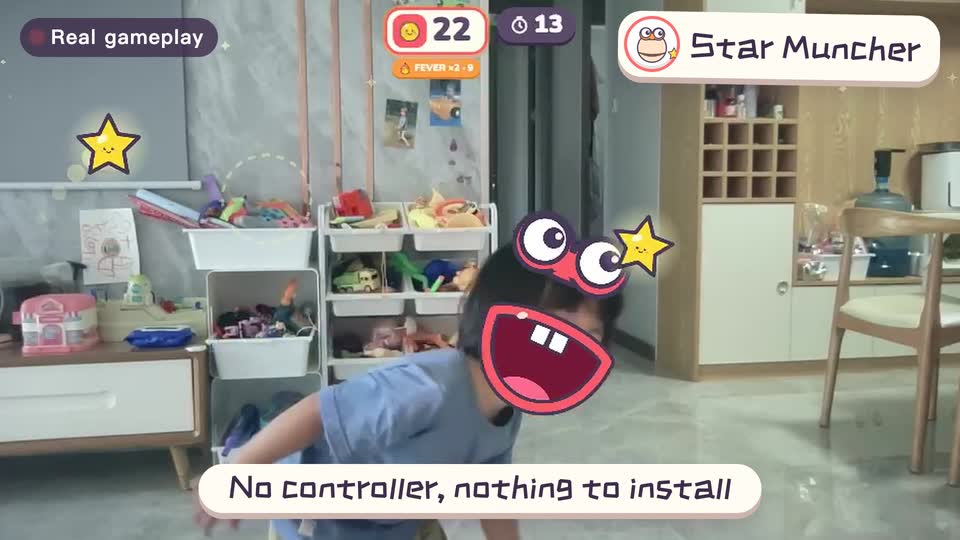
Real footage · 14 s
Kids stand in front of the computer and just move
100+ motion games for ages 3 to 18. Open the website and play: nothing to install, and the camera picture stays on this computer.
Sources
- Konami Digital Entertainment and the State of West Virginia Develop Groundbreaking Program. Konami (official press release, Internet Archive copy). January 25, 2006: a three-year partnership bringing the dance game into PE or health classes in the state’s public schools
- The Effects of Exergaming on Physical Activity Among Inactive Children in a Physical Education Classroom. Fogel et al., Journal of Applied Behavior Analysis. 2010; four inactive children, single-case design
- Exergaming Impact on Physical Activity and Interest in Elementary School Children. Sun, Research Quarterly for Exercise and Sport. 2012; a four-week exergaming unit compared with a fitness unit
- Active Video Games in Schools and Effects on Physical Activity and Health: A Systematic Review. Norris et al., The Journal of Pediatrics. 2016; 22 reports
- Effects of Exergames on Student Physical Education Learning in the Context of the Artificial Intelligence Era: A Meta-analysis. Zhao et al. (Beijing Normal University), Scientific Reports. 2024; 16 randomized controlled trials, 2,962 participants