 DongDong Park
Why are motion games so tiring? What’s normal and how to stay safe
Updated
Motion games are tiring because kids really are exercising: the big muscles of the whole body work together, squats, jumps and arm swings repeat again and again, and one round follows another with hardly a pause. In one study, kids around 11 years old played several motion games at an intensity similar to brisk walking at 3 miles per hour (4.8 km/h), and some games went higher (see exercise intensity).
Why it’s harder than it looks
- Lots of repetitions. A minute of squats or jumping jacks means dozens in a row, far more than kids usually do at once.
- No natural breaks. The beat and the countdown keep everyone moving, while on their own kids would pause without noticing.
- Overdoing it. Excited kids swing and jump much bigger than they need to.
- Unfamiliar moves. Muscles that don’t get much use (the front of the thighs, the shoulders) suddenly work hard, so they’re often sore the next day.
What kind of tired is normal?
| Normal: take a break | Stop right away and tell a grown-up |
|---|---|
| Breathing hard, fast heartbeat, sweating, red face | Dizziness, vision going dark, chest tightness or pain |
| Sore thighs or shoulders the next day that ease once moving and fade within two or three days | Joint pain (knees, ankles, wrists) that gets worse with movement, or swelling |
| A bit tired and thirsty afterward | Bad pain after a fall, a twist or a bump |
If your child has a heart condition, asthma or another long-term condition, ask their doctor first how hard they can exercise.
How to plan a session
- Warm up for 3 to 5 minutes. March in place, roll the shoulders and do a few slow squats before the jumping games.
- Rest after each round. A round is about a minute; rest for 30 seconds to a minute and have a drink. When kids take turns, the one stepping out gets a rest.
- Easy first, slow first. Start on easy difficulty the first time and step up once kids know the game.
- Cool down. Finish with a calm game such as Yoga Poses or Calm Breathing, and stretch the legs.
- Keep the whole session short. It is still screen time, and a few rounds with breaks also stops kids from overdoing it.
The counting games, Squat Counter and Jumping Jack Counter, last one minute each, which makes them easy to slot between rests.
What injury research says
Reported motion-game injuries come mostly from the early days of motion-game consoles. A 2015 systematic review found 13 reports, covering fractures, soft-tissue injuries and strains. Its authors note that these are mostly case reports: minor injuries usually go unrecorded, so no injury rate can be calculated. Other reports found that among self-reported injuries, the most common were cuts to the hand (from swinging a controller into the TV or furniture). The evidence is thin, but the common sense is simple:
- Clear the space so you can turn around with arms outstretched without touching anything, away from table corners, glass and other people.
- Wear non-slip sneakers or go barefoot; don’t jump in socks on a smooth floor.
- If the game uses a handheld controller, fasten the wrist strap. Camera games with nothing in your hands remove the “flying controller” risk, but bumps and slips are still possible.
- Stop when tired, stop when it hurts.
For how much room to leave, see how much space motion games need; for classroom safety, see the safety guide.
Common questions
Why are motion games so tiring?
Because kids really are exercising: the big muscles work together, squats and jumps repeat, and rounds follow one another with hardly a pause. In studies, whole-body motion games were about as intense as brisk walking, and some were more.
Are sore legs after motion games normal?
Sore thighs or shoulders the next day that ease once moving and fade in two or three days are usually just muscles that don’t get much use. Joint pain that gets worse with movement, or swelling, is different: stop, and see a doctor if needed.
Can kids get hurt playing motion games?
Yes, though the evidence is mostly case reports from early consoles: hand cuts, soft-tissue injuries, and a few fractures or ligament injuries. Clearing the space, wearing non-slip shoes, warming up and stopping when tired or sore avoids most of the risk.
More in “Are motion games good for kids? Benefits, risks and what the research says”
- Are motion games good for kids? Benefits, risks and what the research says (overview)
- Do motion games count as exercise? Intensity by game type and age
- Can motion games help kids lose weight? Weight, fitness and daily activity
- Can motion games build motor skills and balance?
- Motion games and focus: what the executive function research shows
- Are motion games bad for kids’ eyes? Screen time, myopia and outdoor play
- Motion games in special education: what the research says
Games mentioned here
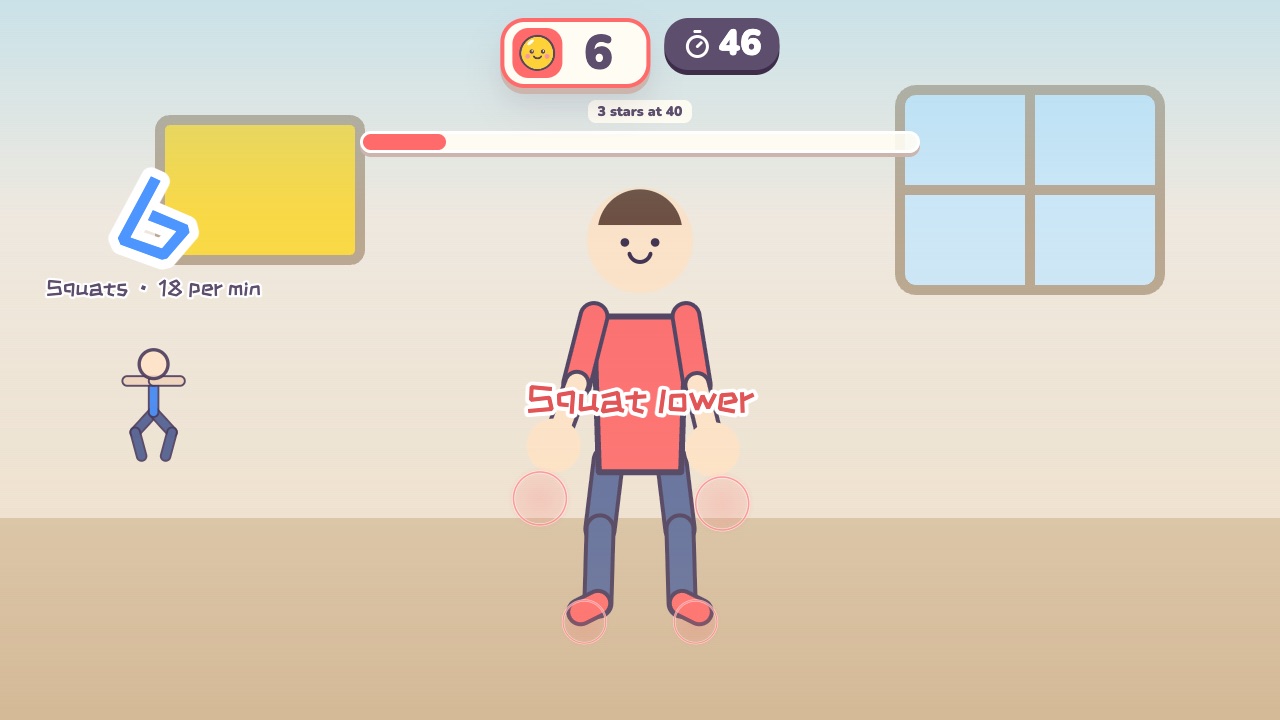 Squat CounterSquat all the way down and stand back up to count one. How many in a minute?Ages 6–18 · High activity · Fitness / Run & jump
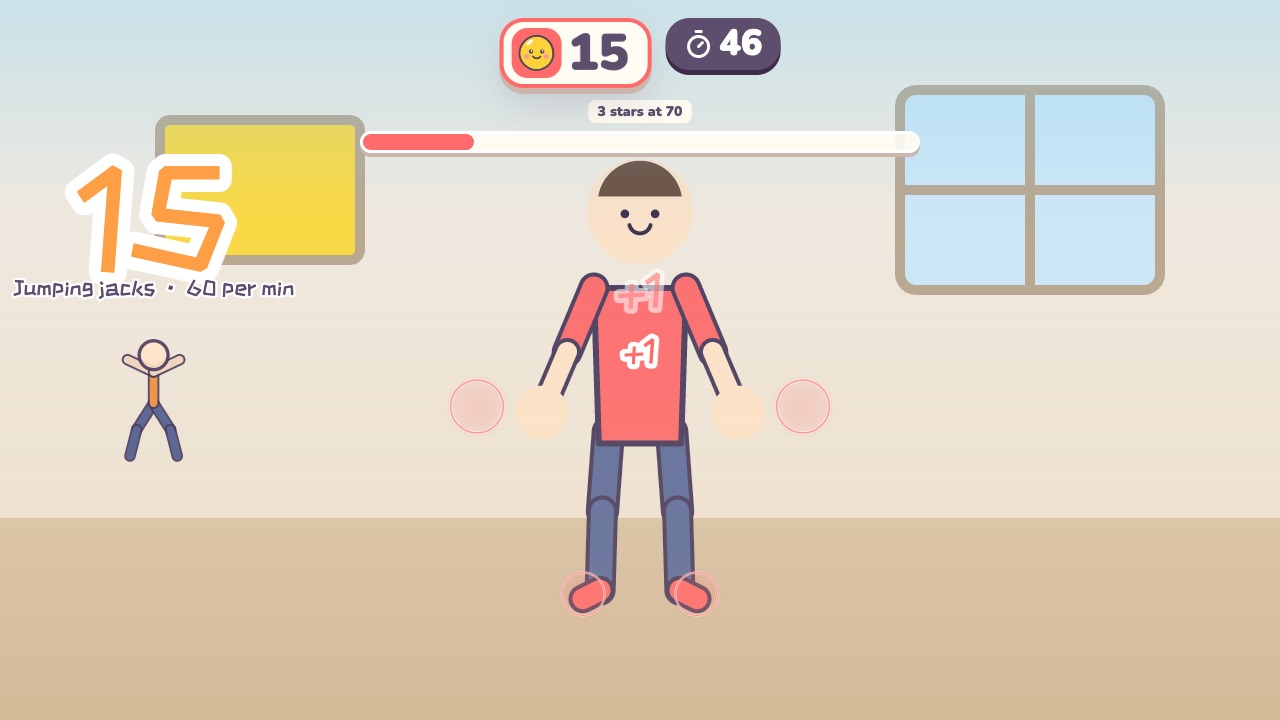 Jumping Jack CounterJump out with hands up, jump in with hands down: that is one. How many in a minute?Ages 6–18 · High activity · Fitness / Whole body
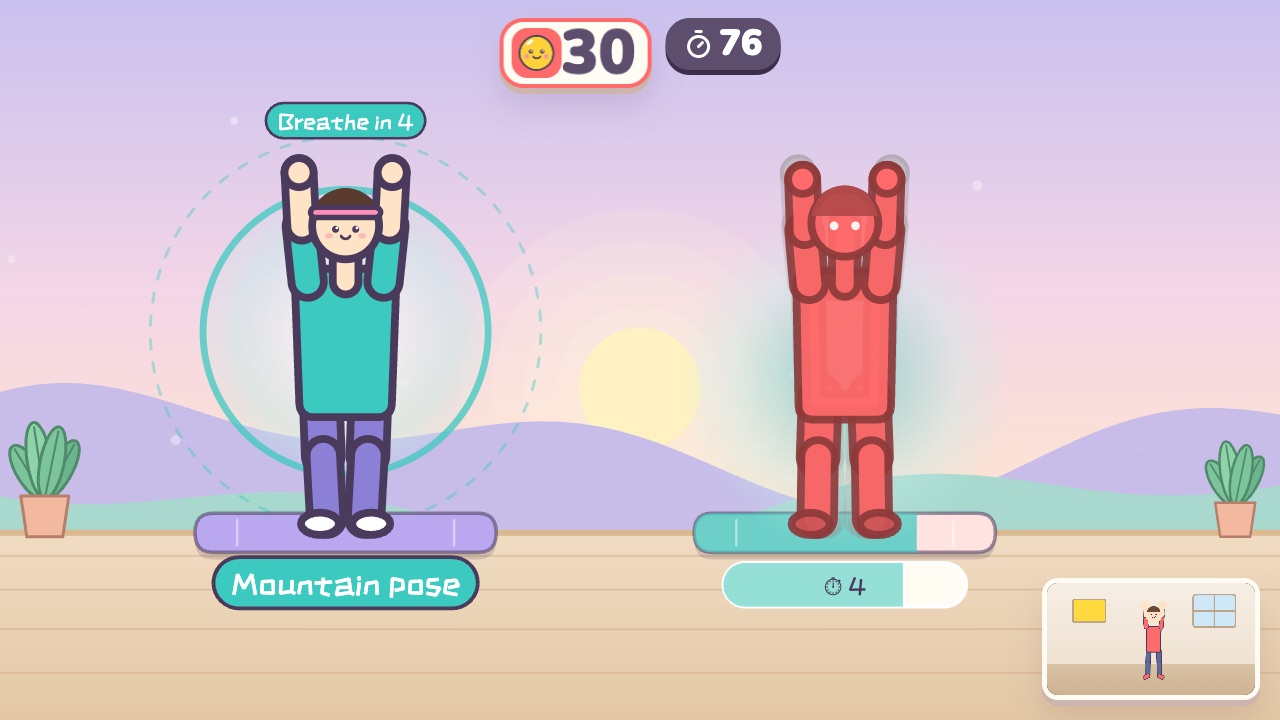 Yoga PosesCopy each yoga pose and hold it steadyAges 12–18 · Light activity · Calm / Fitness / Whole body
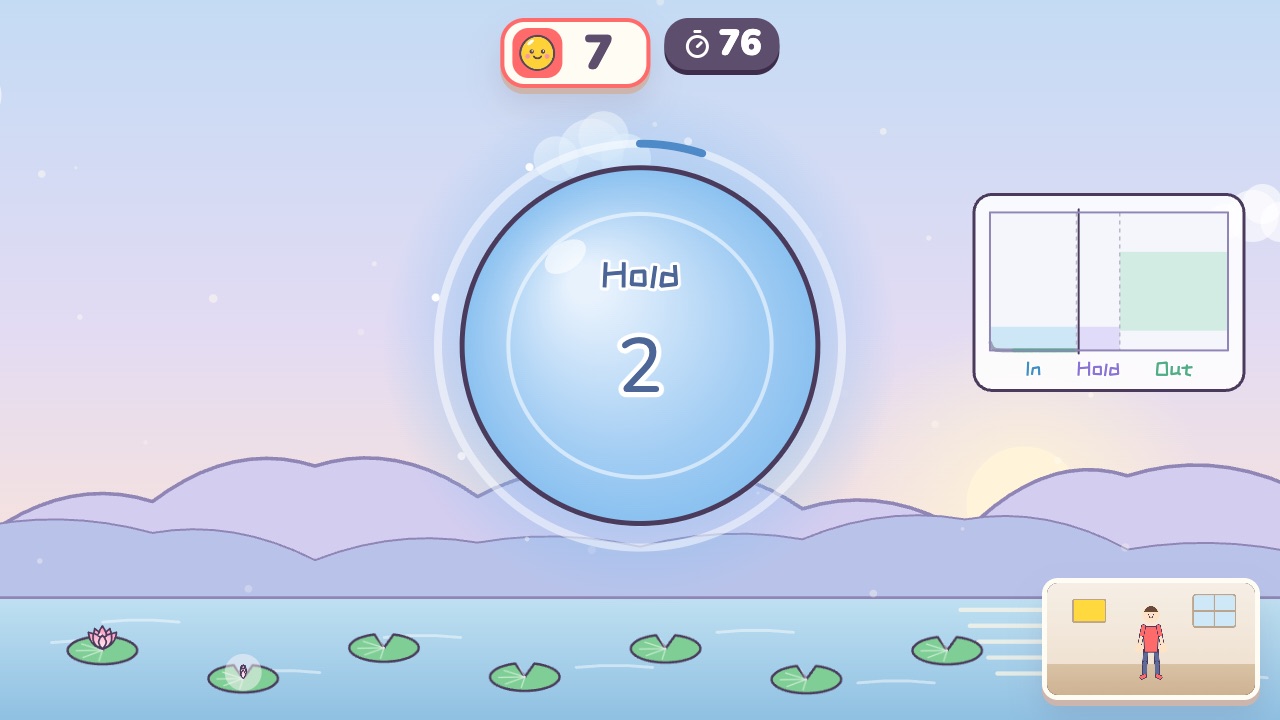 Calm BreathingBreathe in as the circle grows, and breathe out slowly at the microphone as it shrinksAges 10–18 · Light activity · Calm
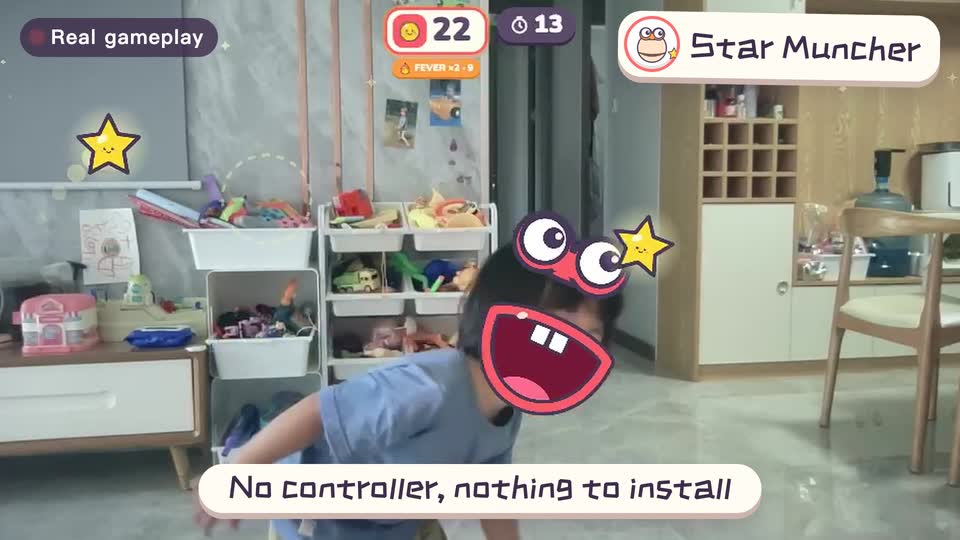
Real footage · 14 s
Kids stand in front of the computer and just move
100+ motion games for ages 3 to 18. Open the website and play: nothing to install, and the camera picture stays on this computer.
Sources
- Energy Cost of Exergaming: A Comparison of the Energy Cost of 6 Forms of Exergaming. Bailey and McInnis, Archives of Pediatrics & Adolescent Medicine. 2011; 39 children with a mean age of 11.5, six exergames at 4.2 to 7.1 METs
- Active Video Games to Promote Physical Activity in Children and Youth: A Systematic Review. Biddiss and Irwin, Archives of Pediatrics & Adolescent Medicine. 2010 systematic review, 18 studies
- Simulated Activity but Real Trauma: A Systematic Review on Nintendo Wii Injuries Based on a Case Report of an Acute Anterior Cruciate Ligament Rupture. Müller et al., Medicine. 2015, 13 injury reports