 DongDong Park
Are motion games good for kids? Benefits, risks and what the research says
Updated
The short answer: studies find that kids move much more playing motion games than sitting, and whole-body games reach light to moderate intensity. There are some small positive results for weight, motor skills and focus, but the research is mostly low quality, and whether motion games make kids more active in the long run is unclear. The safest way to use them is to swap out some sitting screen time and to add a little activity on days you can’t get outside, not to replace PE or outdoor play.
This series sums up systematic reviews, meta-analyses and official guidelines, one question per page, starting with the table below.
The research at a glance
| Question | What studies found | Evidence | More |
|---|---|---|---|
| Does it count as exercise while kids play? | Whole-body games reach light to moderate intensity, higher in older kids; arm-only games are light | Lab measurements, consistent | Exercise intensity |
| Does it make kids more active day to day? | Most programs lasting 6 weeks or more saw no clear rise in everyday activity | Mixed | Weight and fitness |
| Weight | Compared with no program, BMI dropped slightly on average; the effect is small | Low | Weight and fitness |
| Motor skills and balance | Small positive effect at ages 3 to 12; no significant gain in gross motor skills under age 8 | Low to moderate | Motor skills and balance |
| Focus and executive function | Small to moderate gains in cognitive flexibility and inhibitory control; no better than regular exercise | Low to very low | Focus |
| Eyesight | No study has looked at motion games and eyesight directly; more screen time means higher myopia risk, outdoor time protects | Indirect | Eyesight and screen time |
| Safety | Mostly case reports from early motion-game consoles: hand cuts, soft-tissue injuries, a few serious ones | Very low; no injury rate can be calculated | Why they’re so tiring |
| Kids with special needs | Small studies report strong engagement and gains in some fitness and movement measures | Limited | Special education |
The benefits
- Standing and moving instead of sitting. It is still a screen, but whole-body motion games burn two to three times the energy of playing an ordinary video game standing up (ages 10 and up). This is the most consistent finding in the research.
- Reluctant movers join in. Scores, levels and someone to play against keep kids jumping a little longer. A Canadian position statement also accepts that motion games can turn some sitting time into light to moderate activity.
- Something for days you can’t go out. Rainy, cold or very hot days, or a classroom: you can get moving in a small space.
- Mind and body together. Doing math, reading words or remembering rules while moving may help focus and switching between tasks (the evidence is still weak).
The downsides and risks
- It doesn’t replace real exercise. An umbrella review concluded that in schools, motion games “can complement, but not replace” traditional PE, and only about a quarter of programs still showed an effect after they ended.
- It is still screen time. The World Health Organization (WHO) leaves screen-based games that require movement out of “sedentary screen time”, but for ages 5 to 17 it still recommends limiting recreational screen time.
- Moves aren’t always learned right. In some games a flick of the wrist “plays tennis”, and what kids practice may not carry over to the real sport.
- Injuries. Bumping into furniture, slipping, or a swung controller hitting something, all more likely in a cramped space.
How to play it well
- Pick whole-body games. Running, jumping, squatting and dodging games are clearly more intense than hands-only ones: try Jump Rope Champ, Forest Run or Fitness Circuit.
- Keep sessions short. Count motion games as part of the day’s recreational screen time, which WHO advises limiting for ages 5 to 17 (see Eyesight and screen time).
- Go outside afterward. Outdoor time is backed by a randomized controlled trial for preventing myopia; save motion games for when you can’t get out.
- Clear the space and warm up. Move table corners and breakables out of the way, wear non-slip shoes, and stop if anything hurts (see how much space you need).
- Have a grown-up nearby. With younger kids an adult close by keeps things safe, and kids try harder with someone watching.
What official bodies say
- World Health Organization: the glossaries of both its 2019 guidelines for children under 5 and its 2020 guidelines for ages 5 to 17 state that “sedentary screen time” does not include screen-based games that require physical activity. That is a definition, not a recommendation.
- Active Healthy Kids Canada (2013): does not recommend motion games as a way to get kids more active, but considers that they can turn some sitting time into light to moderate activity, and may be useful for motor development and rehabilitation in special populations.
- International clinical practice recommendations on developmental coordination disorder (2019): motion games can be used as an add-on to regular training, with supervision or in a group.
- The document often described as an “American Heart Association recommendation for motion games” is actually a summary of a 2011 workshop the American Heart Association co-hosted with Nintendo of America. It is not a formal scientific statement or recommendation.
Common claims that don’t check out
| The claim | What we found |
|---|---|
| “The American Heart Association recommends motion games” | There is no such scientific statement; the document usually cited is a summary of a 2011 workshop the AHA co-hosted with Nintendo of America |
| “Motion games work as well as PE” | An umbrella review found they can complement but not replace PE in schools; compared head to head with regular exercise, they were no better for executive function |
| “Motion games help kids lose weight” | Pooled randomized controlled trials show only a small drop in BMI, and the evidence is rated “low” |
| “Motion games protect the eyes” / “don’t hurt the eyes” | No study has looked at motion games and eyesight directly; neither claim has evidence behind it |
| “WHO says motion games aren’t screen time, so kids can play as much as they like” | WHO only leaves them out of “sedentary screen time”; for ages 5 to 17 it still recommends limiting recreational screen time |
| “The 2024 Youth Compendium of Physical Activities” | The 2024 updates covered adults, older adults and wheelchair users only; the youth edition is still the 2018 one |
| “Six exergames measured at 4.2 to 7.2 METs” | The original abstract says 4.2 to 7.1, and four of the six are dedicated machines found in gyms and malls |
This series sums up published research. Most studies used game consoles and dedicated equipment; none tested browser-based webcam games. It is not medical advice: if your child has a health condition, follow your doctor’s advice.
Common questions
Are motion games good for kids?
Kids move much more than when sitting, and whole-body games reach light to moderate intensity. There are some small benefits for weight, motor skills and focus, but the evidence is mostly low quality. They are a good swap for some sitting screen time, not a replacement for PE and outdoor play.
Do motion games count as screen time?
WHO leaves screen games that require movement out of “sedentary screen time”, but for ages 5 to 17 it still recommends limiting recreational screen time. So keep motion game sessions short too.
Where can kids try them?
DongDong Park runs in Chrome or Edge on a computer with a webcam, with nothing to install, and camera images stay on the computer. Pick a game to play two free rounds.
In this series
- Do motion games count as exercise? Intensity by game type and age
- Why are motion games so tiring? What’s normal and how to stay safe
- Can motion games help kids lose weight? Weight, fitness and daily activity
- Can motion games build motor skills and balance?
- Motion games and focus: what the executive function research shows
- Are motion games bad for kids’ eyes? Screen time, myopia and outdoor play
- Motion games in special education: what the research says
Games mentioned here
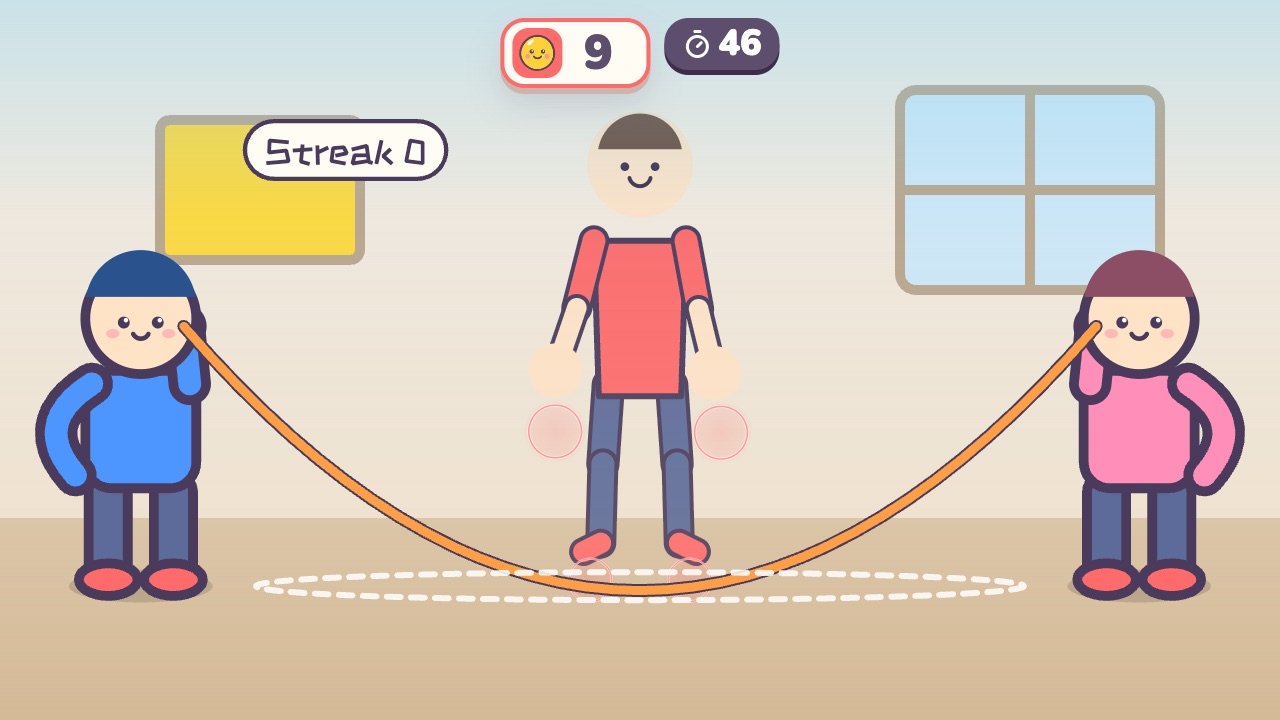 Jump Rope ChampJump when the rope sweeps under your feet. The longer your streak, the faster the ropeAges 6–14 · High activity · Run & jump / Fitness / Rhythm
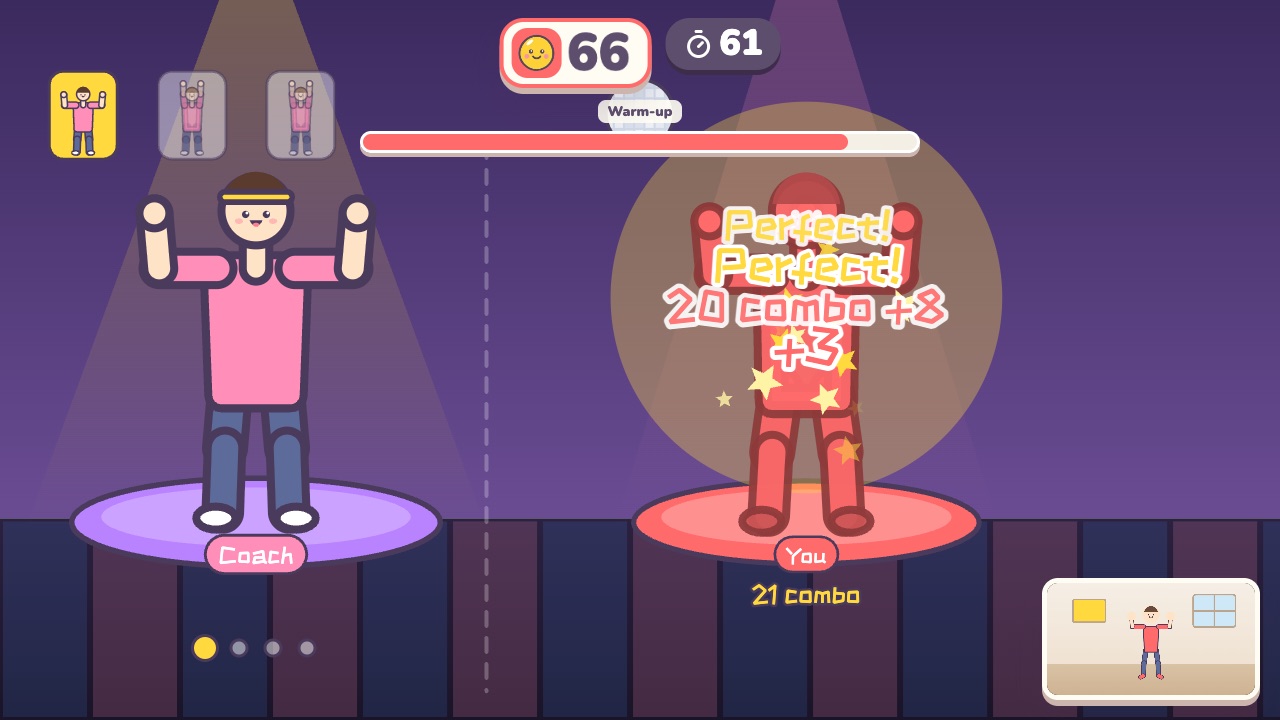 Dance AlongDance with the coach. Every beat is scored on how well you match the moveAges 12–18 · High activity · Rhythm / Whole body
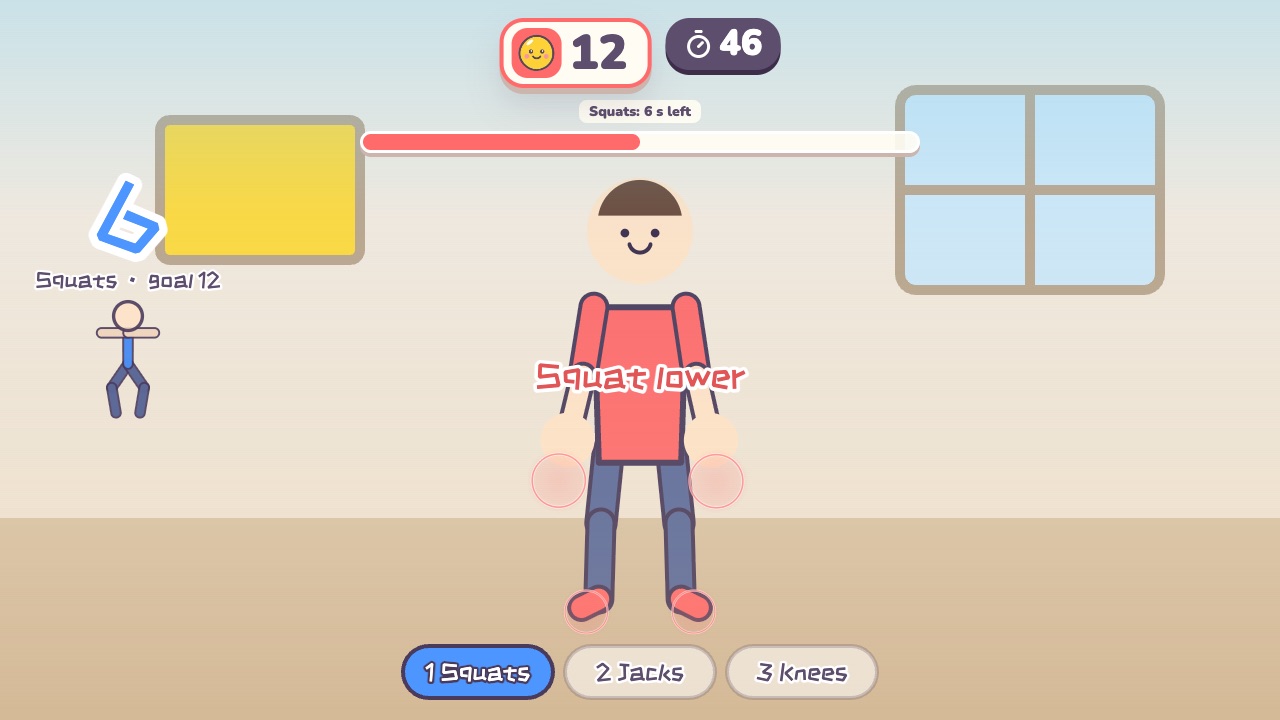 Fitness CircuitSquats, jumping jacks and high knees: three stations, counted for youAges 12–18 · High activity · Fitness / Run & jump / Whole body
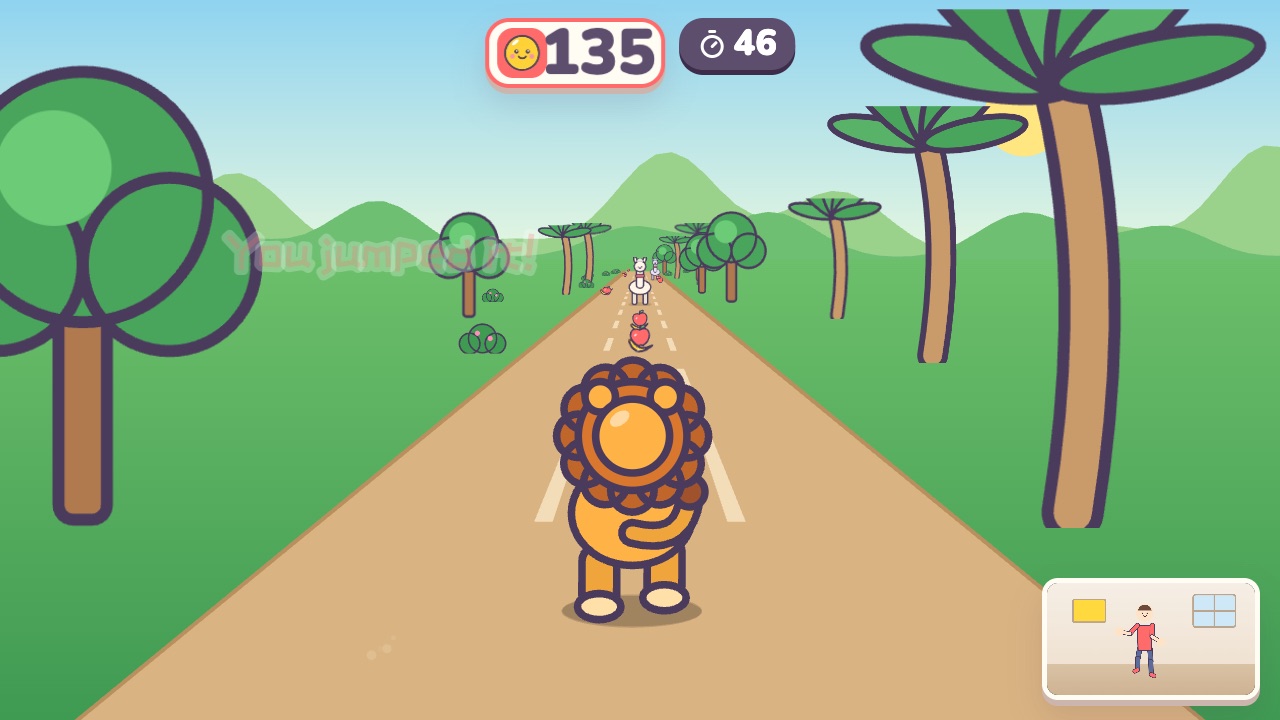 Forest RunRun on the spot, dodge left and right, and jump over the logsAges 4–10 · High activity · Run & jump / Whole body
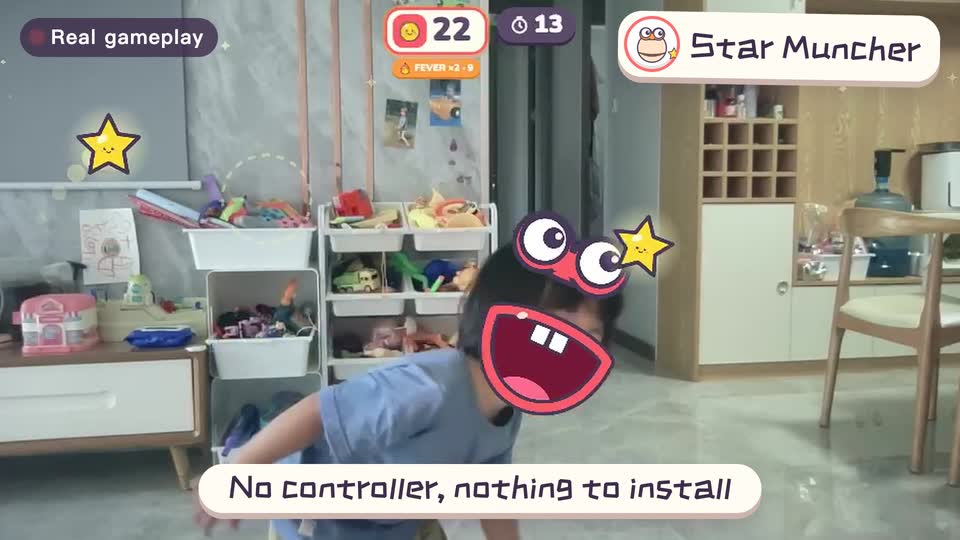
Real footage · 14 s
Kids stand in front of the computer and just move
100+ motion games for ages 3 to 18. Open the website and play: nothing to install, and the camera picture stays on this computer.
Sources
- A Youth Compendium of Physical Activities: Activity Codes and Metabolic Intensities. Butte et al., Medicine & Science in Sports & Exercise. 2018, vol. 50, no. 2; intensities (METy) for 196 activities in four age groups from 6 to 18, with active video games split into “full body” and “upper body”
- Effects of Active Video Games on Children and Adolescents: A Systematic Review with Meta-analysis. Oliveira et al., Scandinavian Journal of Medicine & Science in Sports. 2020; randomized controlled trials only (12)
- Effectiveness of Active Video Games for Promoting Physical Activity: An Umbrella Review. Vera-Ponce et al., Frontiers in Sports and Active Living. 2025 umbrella review of 20 systematic reviews
- Active Video Games and Health Indicators in Children and Youth: A Systematic Review. LeBlanc et al., PLoS One. 2013; 51 studies, 1,992 participants aged 3 to 17
- Active Healthy Kids Canada's Position on Active Video Games for Children and Youth. Active Healthy Kids Canada, Paediatrics & Child Health. 2013 position statement
- Guidelines on physical activity, sedentary behaviour and sleep for children under 5 years of age. World Health Organization. 2019
- WHO guidelines on physical activity and sedentary behaviour. World Health Organization. 2020