 DongDong Park
Types of motion games, with examples
Updated
The most common way to sort motion games is by gameplay, into eight types: dance and rhythm, sports, fitness, reaction and dodging, balance, brain and body, team-up and versus, and calm. You can also sort them by device (light guns, mats and balance boards, motion controllers, cameras, VR, phones) or by number of players and setting.
By gameplay: 8 types
| Type | How you play | What it works on | Examples |
|---|---|---|---|
| Dance and rhythm | Step on the beat, copy moves to the music | Coordination, rhythm, heart and lungs | Dance Along, Rhythm Steps, Air Drums |
| Sports | Copy the moves of ball games, boxing, skiing or archery | Technique, reactions | Bowling, Tennis Rally, Boxing Practice, Slalom Ski |
| Fitness | Count squats, jumping jacks or rope jumps, or cycle through several exercises | Strength, endurance | Fitness Circuit, Jump Rope Champ, Squat Counter |
| Reaction and dodging | Dodge things flying at you, hit targets as they appear | Reaction speed, hand–eye coordination | Dodgeball, Mole Bop, Reaction Lights |
| Balance and body control | Hold a pose, shift your weight | Balance, core strength | Tilt Maze, Surfing, Yoga Poses |
| Brain and body | Math, words or memory, answered with a move | Focus, school subjects | Math Catch, Spelling Catch, Simon Says |
| Team-up and versus | Two players finish it together, or left side races right | Teamwork, playing by the rules | Three-Legged Race, Team Ball Carry, Tug of War |
| Calm | Slow movements, breathing, holding still | Relaxing, focus | Tai Chi Cloud Hands, Calm Breathing, Bubble Pop |
Browse games by type: Rhythm, Fitness, Thinking, Calm, Team up, Versus.
By device: 6 types
| Device | What it senses | Do you hold anything? | Since |
|---|---|---|---|
| Light gun | Where on the screen the gun points | The gun | 1970s–1980s |
| Dance mat, balance board | Where your feet land, where your weight is | You stand on it | From the 1980s |
| Motion controller | How the controller moves and how far it turns | Hold it or strap it on | Widespread from 2006 |
| Camera | How you move in the picture | Nothing | From 2003 |
| VR headset | Where your head and both hands are, and which way they face | Wear the headset, hold two controllers | Widespread from 2016 |
| Phone, tablet | How the phone tilts and shakes | The phone | From 2007 |
How each device came along is told in the history of motion games; how each one “sees” your movement is explained in how motion games work.
By number of players and setting
- One player. One person in front of the screen, playing against their own best score. Good for a few minutes of practice at home every day.
- Two players, one screen. Two people side by side in the same picture, as a team or head to head. Good for a parent and child, or two friends. In DongDong Park, two kids can play on one camera.
- A whole class taking turns. Two or three kids at a time play in front of a big screen while everyone else follows along at their desks. Good for indoor recess and indoor PE (see the indoor PE class plan and the classroom guide).
By how hard they work you
Motion games vary a lot in effort: dancing, boxing and jump rope ask far more of the body than bowling or archery. To work up a sweat, pick whole-body running and jumping games; to calm down, pick slow-movement and breathing games. What studies measured for each kind of game is in do motion games count as exercise?
More in “What is a motion game?”
- What is a motion game? (overview)
- How motion games work: from light guns to webcams
- Motion games, VR and AR: what’s the difference?
- How much space do motion games need, and how far back should you stand?
- Motion gaming glossary
Games mentioned here
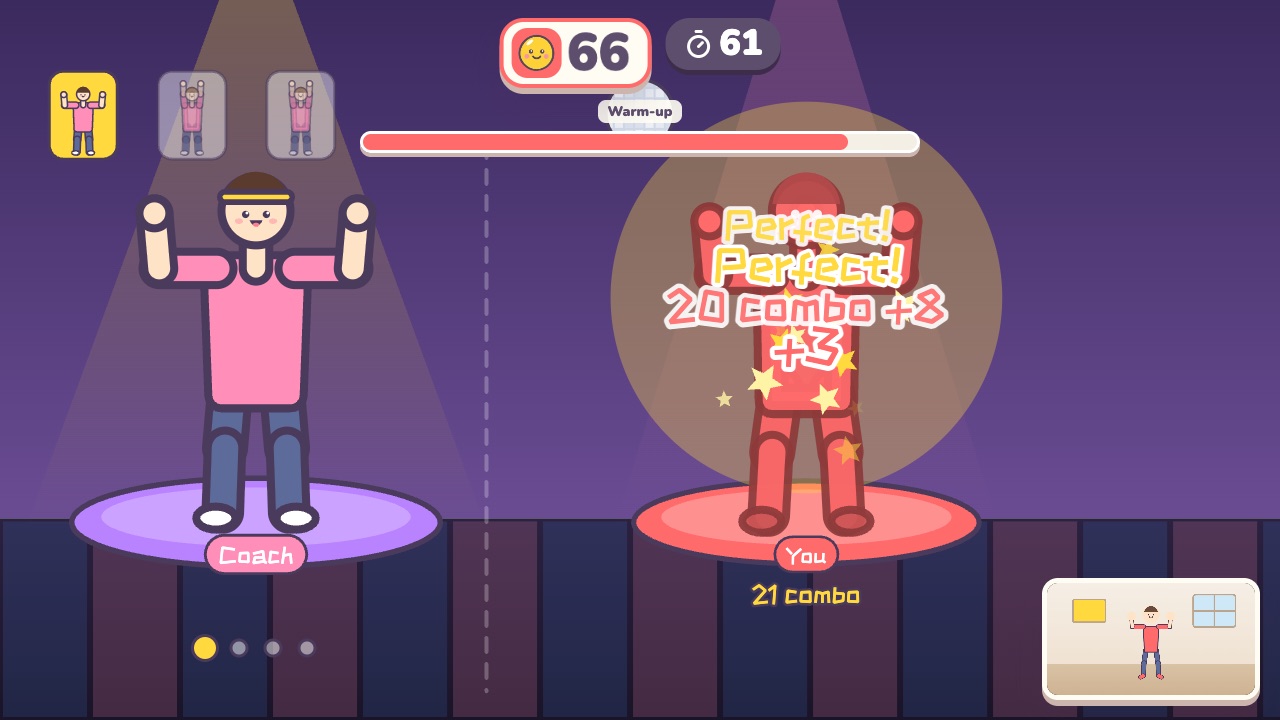 Dance AlongDance with the coach. Every beat is scored on how well you match the moveAges 12–18 · High activity · Rhythm / Whole body
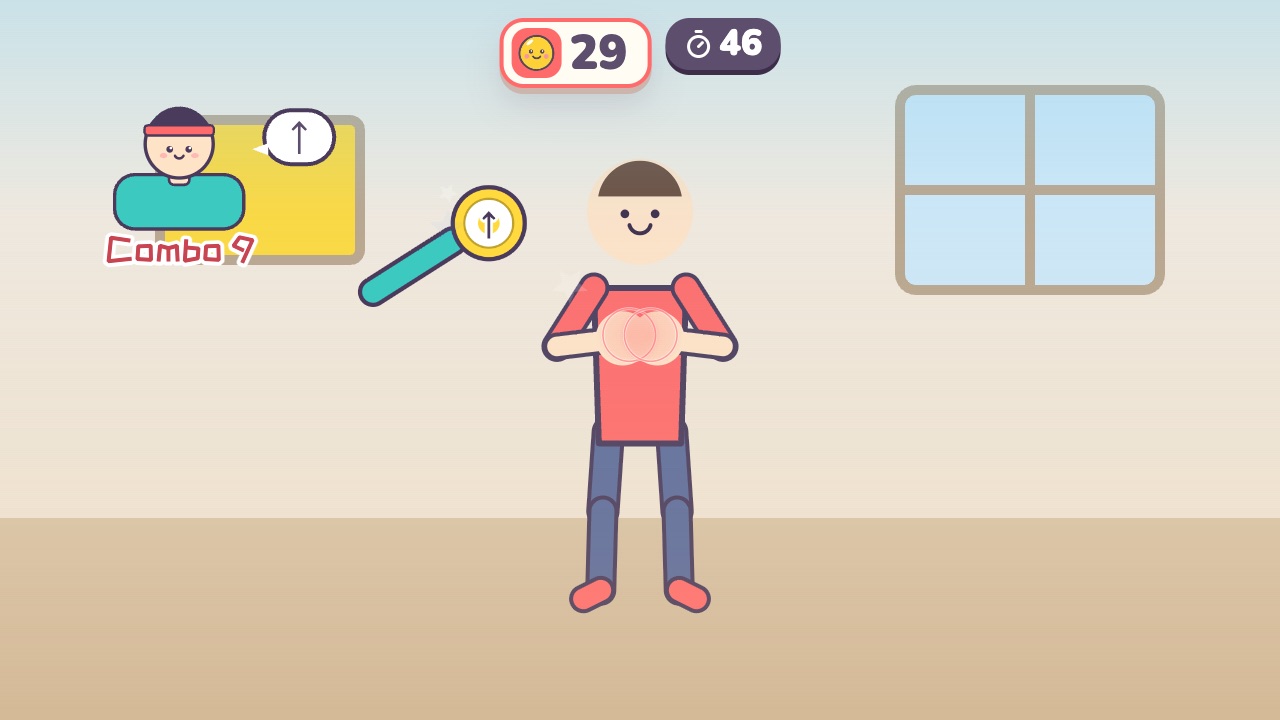 Boxing PracticeThe coach holds up pads: punch left, right and up, dodge the gloves and duck the barAges 9–18 · High activity · Hands / Fitness
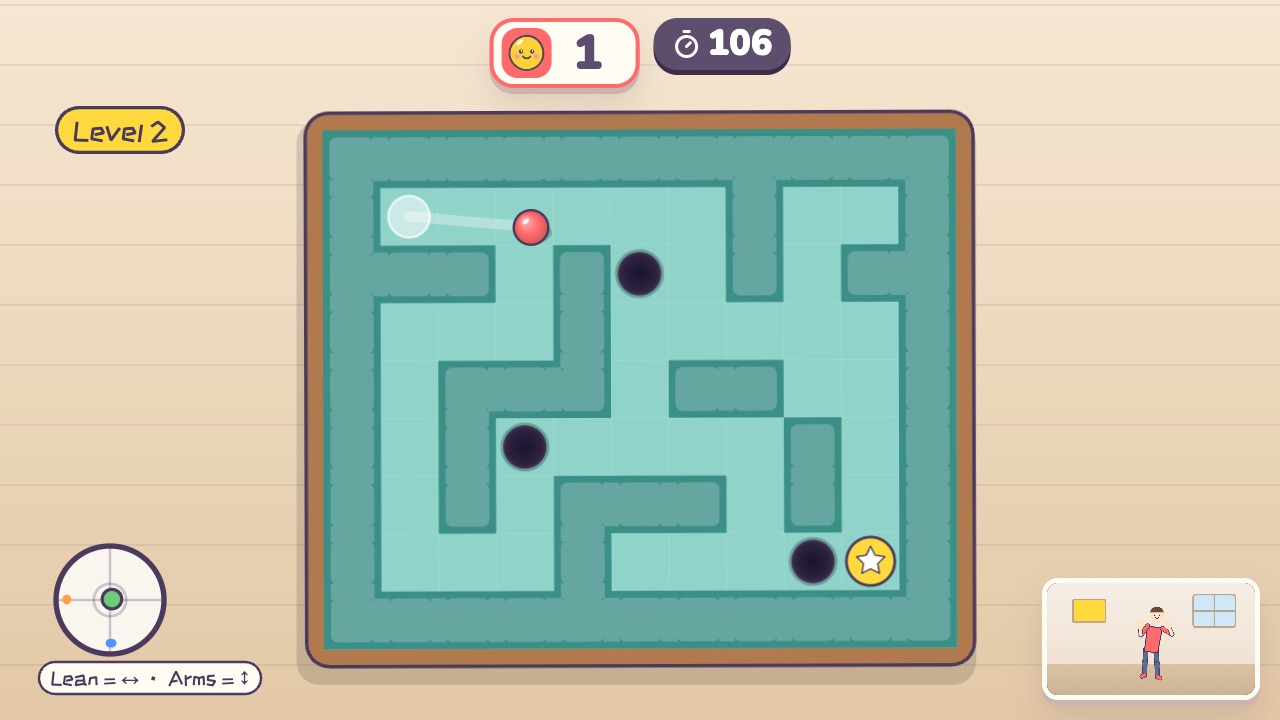 Tilt MazeLean your body to tilt the maze and roll the ball to the finishAges 9–18 · Light activity · Whole body / Thinking / Calm
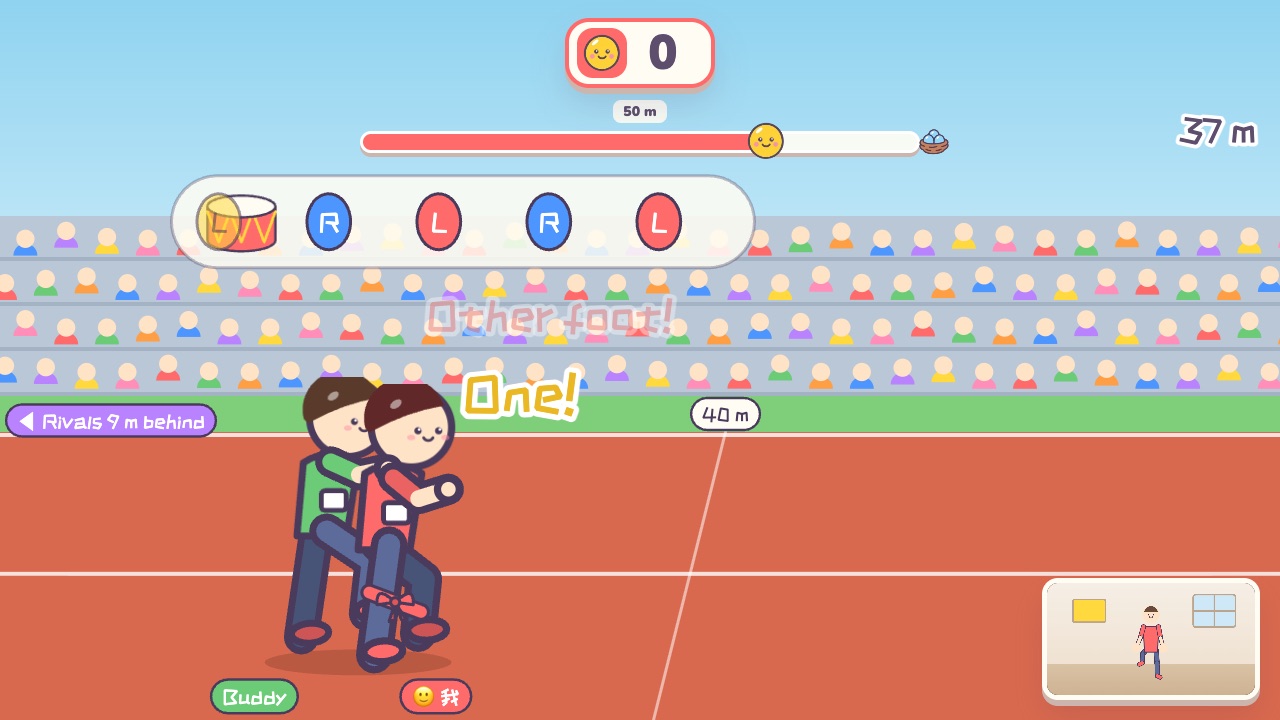 Three-Legged RaceStep in time with your partner to race aheadAges 8–18 · High activity · Team up / Run & jump / Fitness
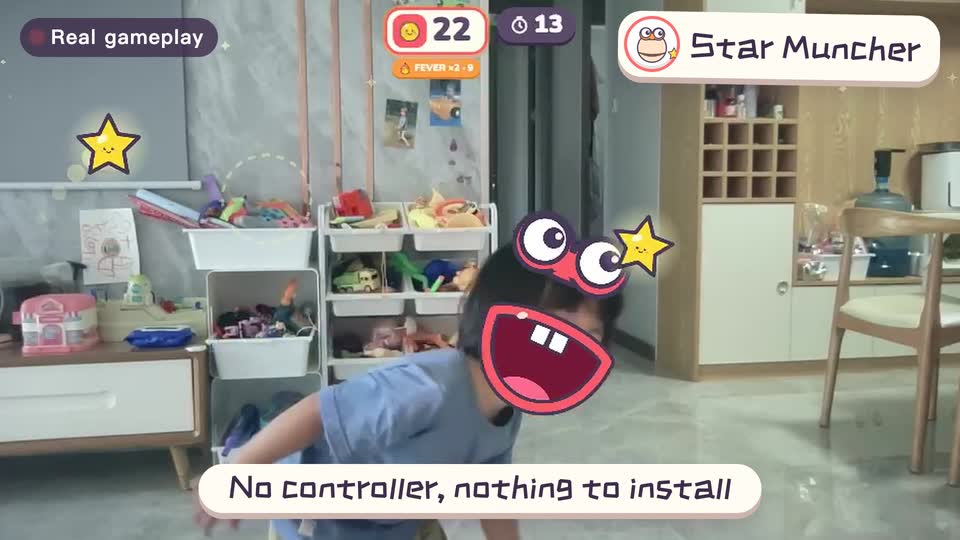
Real footage · 14 s
Kids stand in front of the computer and just move
100+ motion games for ages 3 to 18. Open the website and play: nothing to install, and the camera picture stays on this computer.