 DongDong Park
Do motion games count as exercise? Intensity by game type and age
Updated
Yes, but it depends on what kids play and how. Studies agree that kids burn clearly more energy playing motion games than sitting. Whole-body games (dancing, boxing, running) reach light to moderate intensity, and the numbers rise with age; arm-only games (bowling, golf, balance) count as light activity.
Intensity by age
The Youth Compendium of Physical Activities (2018), developed with support from the US National Collaborative on Childhood Obesity Research, pooled 137 studies of children and lists the intensity of 196 activities for four age groups: 6–9, 10–12, 13–15 and 16–18. Its unit is the METy, which is based on the child’s own resting metabolic rate: the higher the number, the harder the work. It can’t be compared directly with adult METs. These are the entries for motion games:
| Activity | Type | Ages 6–9 | Ages 10–12 | Ages 13–15 | Ages 16–18 |
|---|---|---|---|---|---|
| Video games played standing (comparison) | Standing | 1.8 | 1.8 | 1.7 | 1.7 |
| Running games | Full body | 4.8 | 5.9 | 6.8 | 7.7 |
| Motion game collections | Full body | 3.9 | 4.9 | 5.8 | 6.7 |
| Kinect adventure and sports games | Full body | 3.1 | 4.2 | 5.1 | 5.9 |
| Boxing games | Full body | 3.0 | 4.0 | 4.9 | 5.8 |
| Target-catching games | Full body | 2.6 | 3.6 | 4.5 | 5.4 |
| Dance games | Full body | 2.3 | 3.3 | 4.1 | 5.0 |
| Wii Aerobics | Full body | 2.2 | 3.2 | 4.1 | 4.9 |
| Wii Tennis | Full body | 1.6 | 2.5 | 3.2 | 4.0 |
| Bowling games | Upper body | 2.1 | 2.3 | 2.4 | 2.5 |
| Balance board games | Upper body | 2.2 | 2.3 | 2.5 | 2.6 |
| Golf games | Upper body | 2.0 | 2.2 | 2.3 | 2.4 |
How to read it: within an age group, full-body games are well above playing an ordinary video game standing up, while upper-body games are only a little higher; the same game scores higher as kids get older. The compendium’s authors point out that these are group averages, nearly half of them estimated from models, and can’t tell you how many calories one particular child burned.
A lab study: six exergames at 4.2 to 7.1 METs
In a 2011 study at a fitness research center, 39 children with an average age of 11.5 wore portable metabolic analyzers while playing six exergames. The authors concluded that all six raised energy use to moderate or vigorous intensity:
| Activity | What it is | METs |
|---|---|---|
| Walking (comparison) | 3 miles per hour (about 4.8 km/h) | 4.9 |
| Wii Boxing | Home motion-game console | 4.2 |
| Dance Dance Revolution (DDR) | Stepping on a dance mat to music | 5.4 |
| Cybex Trazer | Dedicated exergaming system (found in gyms and malls) | 5.9 |
| LightSpace | Dedicated exergaming system (found in gyms and malls) | 6.4 |
| Xavix | Dedicated exergaming system (found in gyms and malls) | 7.0 |
| Sportwall | Dedicated exergaming system (found in gyms and malls) | 7.1 |
Keep in mind: the last four are dedicated exergaming machines found in gyms and malls, not home games; every number is a single short bout of play; and these METs are calculated differently from the compendium’s METy above, so the two sets of numbers can’t be compared.
What the reviews say
- A 2010 systematic review (18 studies): energy use while playing was on average 222% above rest and heart rate 64% higher; games driven mainly by the arms used clearly less energy than games that used the legs. Its conclusion: motion games provide light to moderate activity.
- A 2024 systematic review (23 studies): short bouts of play matched moderate intensity (3 to 6 METs), but in programs lasting at least 6 weeks, kids’ energy use and everyday activity showed no significant change.
- A 2025 umbrella review (20 systematic reviews): play stays at light to moderate intensity, but only about 23% of programs still showed an effect after they ended.
So how should you use them?
- To get kids sweating, pick running and jumping games such as Forest Run, Jump Rope Champ or Boxing Practice. Save Bowling and Archery for winding down.
- Keep going for a while. Starting the next round as soon as one ends, or playing several games back to back (the Nonstop card on the games page does this for you), is more intense than one round followed by a long break.
- Treat it as an extra. Motion games fix the “sitting” problem, not the “not moving enough” problem. WHO recommends that kids aged 5 to 17 average at least 60 minutes of moderate to vigorous activity a day (see how much activity kids need), and most of that still has to come from outdoor play and PE.
Every game page on DongDong Park shows an activity level (Light, Moderate or High). It is estimated from the kind of movement, not measured in a lab; the numbers above all come from consoles and dedicated equipment used in studies.
Common questions
Do motion games count as exercise?
Yes, depending on the game. In studies, whole-body motion games (dancing, boxing, running) reach light to moderate intensity, and arm-only ones (bowling, golf) are light. They turn sitting into standing and moving, but they don’t replace PE or outdoor play.
Which motion games give the most exercise?
In the research, whole-body running, boxing and dance games; arm-only bowling, golf and balance games are lowest. The same game measures higher as kids get older.
Can motion games replace PE?
No. Reviews find they can complement PE in schools but not replace it, and most long programs didn’t make kids more active day to day.
More in “Are motion games good for kids? Benefits, risks and what the research says”
- Are motion games good for kids? Benefits, risks and what the research says (overview)
- Why are motion games so tiring? What’s normal and how to stay safe
- Can motion games help kids lose weight? Weight, fitness and daily activity
- Can motion games build motor skills and balance?
- Motion games and focus: what the executive function research shows
- Are motion games bad for kids’ eyes? Screen time, myopia and outdoor play
- Motion games in special education: what the research says
Games mentioned here
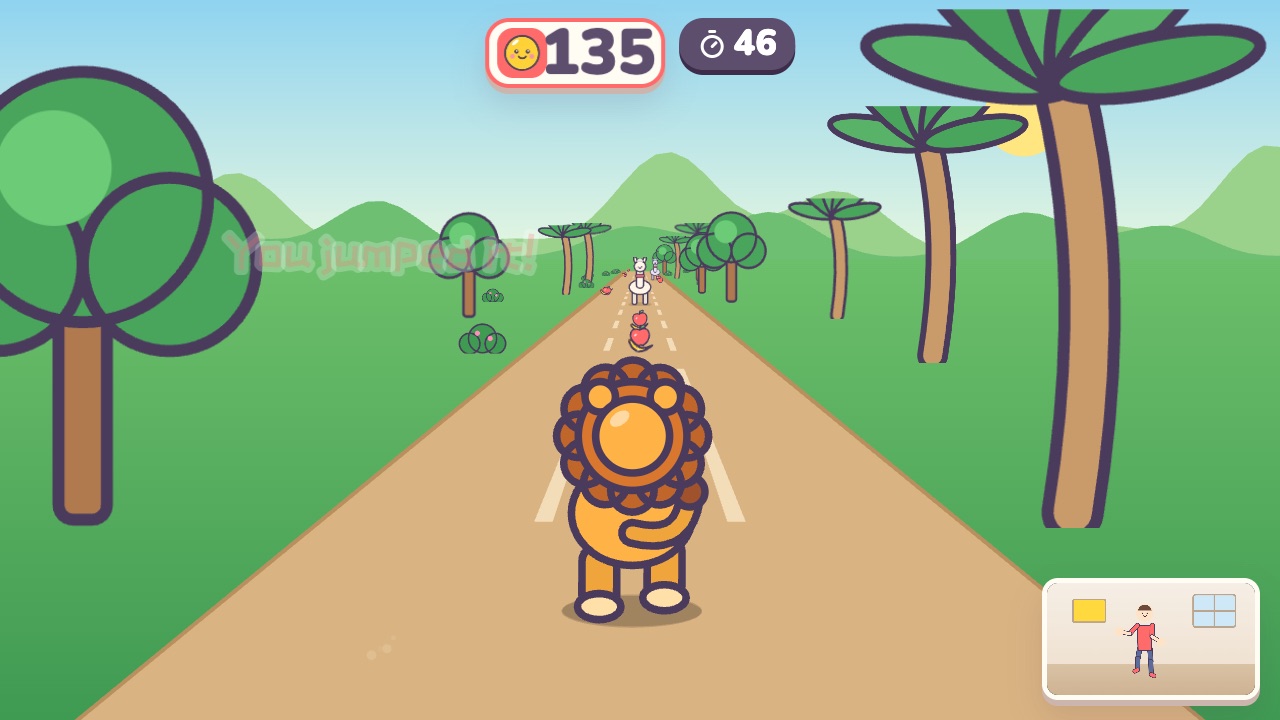 Forest RunRun on the spot, dodge left and right, and jump over the logsAges 4–10 · High activity · Run & jump / Whole body
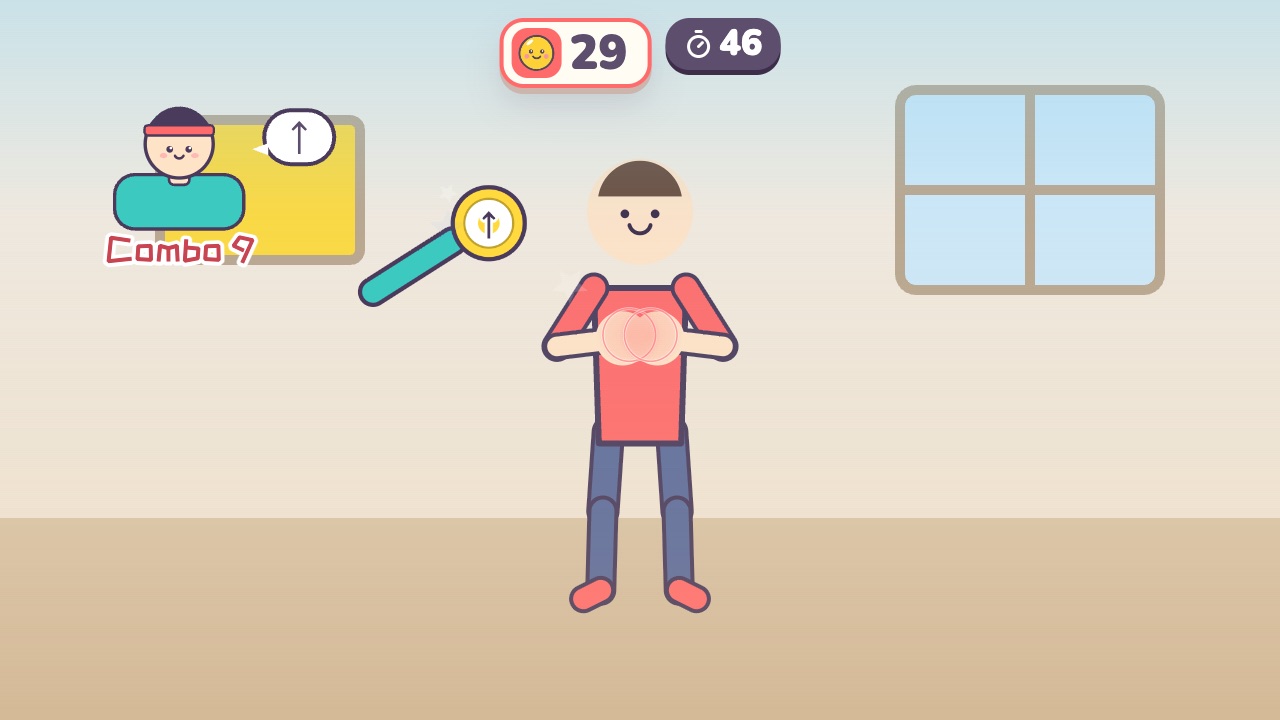 Boxing PracticeThe coach holds up pads: punch left, right and up, dodge the gloves and duck the barAges 9–18 · High activity · Hands / Fitness
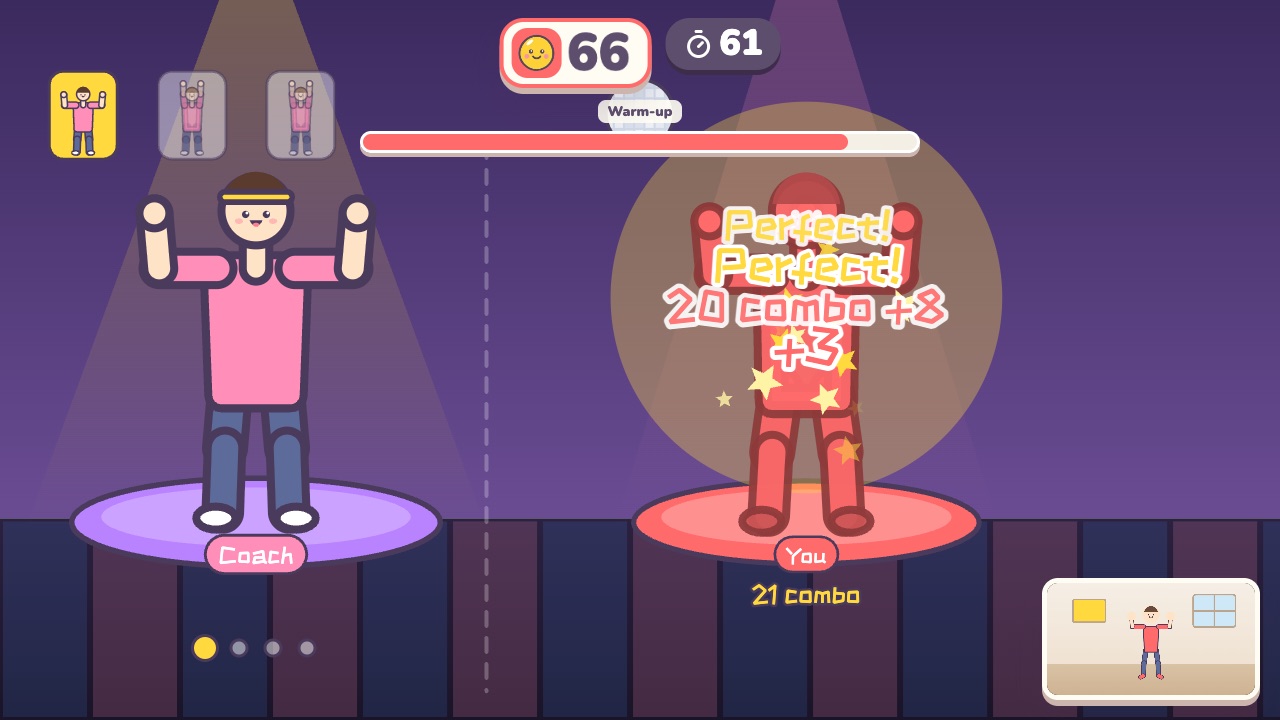 Dance AlongDance with the coach. Every beat is scored on how well you match the moveAges 12–18 · High activity · Rhythm / Whole body
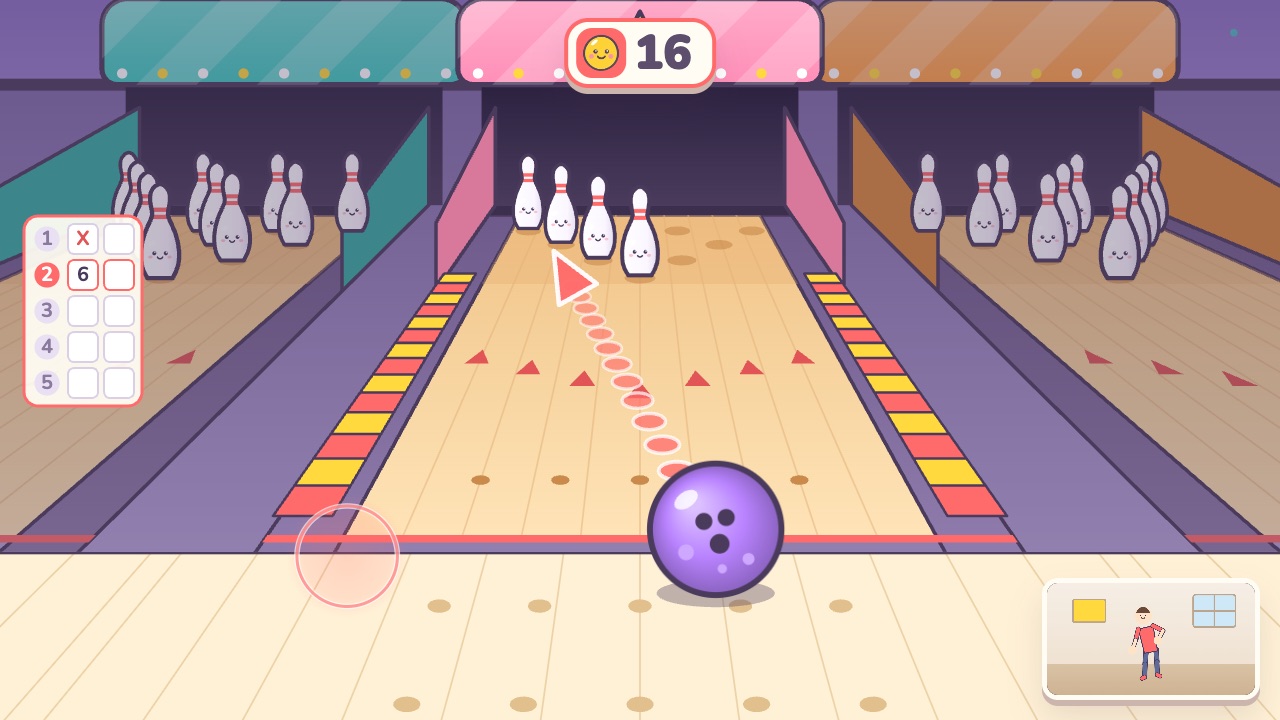 BowlingSwing your arm back and fling the ball forward. Lean your body to aimAges 5–14 · Moderate activity · Hands
Real footage · 14 s
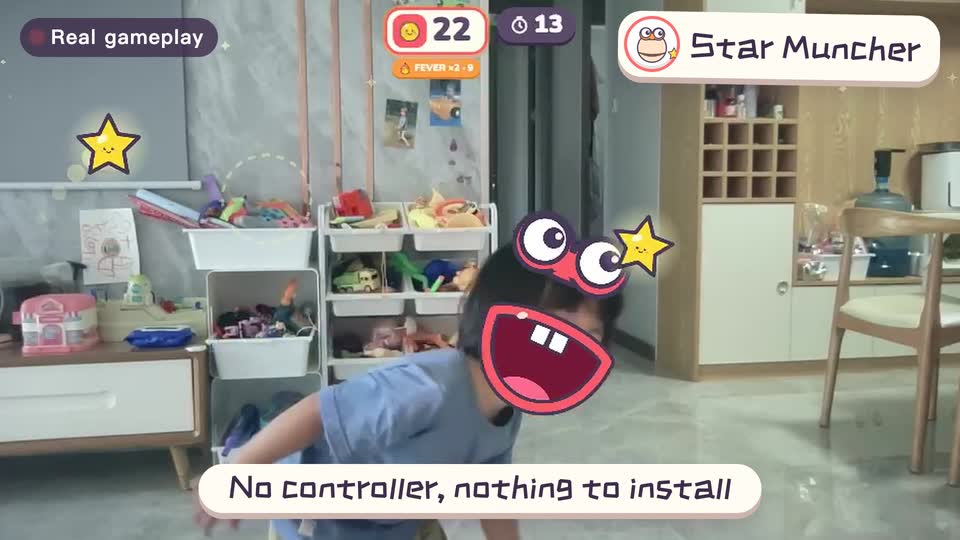
Kids stand in front of the computer and just move
100+ motion games for ages 3 to 18. Open the website and play: nothing to install, and the camera picture stays on this computer.
Sources
- A Youth Compendium of Physical Activities: Activity Codes and Metabolic Intensities. Butte et al., Medicine & Science in Sports & Exercise. 2018, vol. 50, no. 2; intensities (METy) for 196 activities in four age groups from 6 to 18, with active video games split into “full body” and “upper body”
- Energy Cost of Exergaming: A Comparison of the Energy Cost of 6 Forms of Exergaming. Bailey and McInnis, Archives of Pediatrics & Adolescent Medicine. 2011; 39 children with a mean age of 11.5, six exergames at 4.2 to 7.1 METs
- Active Video Games to Promote Physical Activity in Children and Youth: A Systematic Review. Biddiss and Irwin, Archives of Pediatrics & Adolescent Medicine. 2010 systematic review, 18 studies
- Estimated Energy Expenditure in Youth While Playing Active Video Games: A Systematic Review. França et al., Sports. 2024 systematic review, 23 studies
- Effectiveness of Active Video Games for Promoting Physical Activity: An Umbrella Review. Vera-Ponce et al., Frontiers in Sports and Active Living. 2025 umbrella review of 20 systematic reviews