 DongDong Park
Motion games, VR and AR: what’s the difference?
Updated
Motion gaming is about how you control a game: with body movement. VR (virtual reality) is about what you see: you put on a headset and everything in front of your eyes is virtual. AR (augmented reality) adds virtual things to a picture of the real world. Because they sort games from different angles, they often overlap.
Side by side
| Motion games | VR games | AR games | |
|---|---|---|---|
| What it describes | How you control the game | The display (immersive) | The display (overlaid) |
| What you see | A picture on a TV, computer or projector | A 360-degree virtual scene inside the headset; you can’t see the room | The real room or yourself, with virtual things on top |
| Equipment | A console with controllers or a camera; a computer with a webcam | A VR headset and two controllers | A phone or tablet, a camera and a screen, or AR glasses |
| People nearby | See the same screen and can join in | Only the person in the headset sees the game | Anyone watching the screen sees it |
| Space | A patch of clear floor in front of the screen | Everything cleared away, since the player can’t see what they might bump into | Depends on the game |
Where they overlap
- VR + motion. Swinging controllers to slice blocks and dodge obstacles in VR is both a VR game and a motion game.
- AR + motion. The camera shows you on screen, virtual bubbles or fruit float around you, and you reach out to hit them: a motion game with an AR effect, like Bubble Pop or Magic Brush.
- Motion only. Playing tennis with a motion controller in front of an ordinary TV picture is neither VR nor AR.
Can kids use VR?
VR headset makers usually set a minimum age, commonly somewhere from 10 to 13 and up; check the manual for yours. Long sessions can bring on dizziness and tired eyes, and the space around the player has to be cleared. Younger children are better off with motion games on a big screen and no headset: an adult can see what is going on, and several kids can take turns. For more on screens and eyes, see are motion games bad for kids’ eyes?
MR (mixed reality) combines VR and AR: you wear a headset but still see the real room, virtual objects are placed in it, and you can touch them with your hands.
More in “What is a motion game?”
- What is a motion game? (overview)
- Types of motion games, with examples
- How motion games work: from light guns to webcams
- How much space do motion games need, and how far back should you stand?
- Motion gaming glossary
Games mentioned here
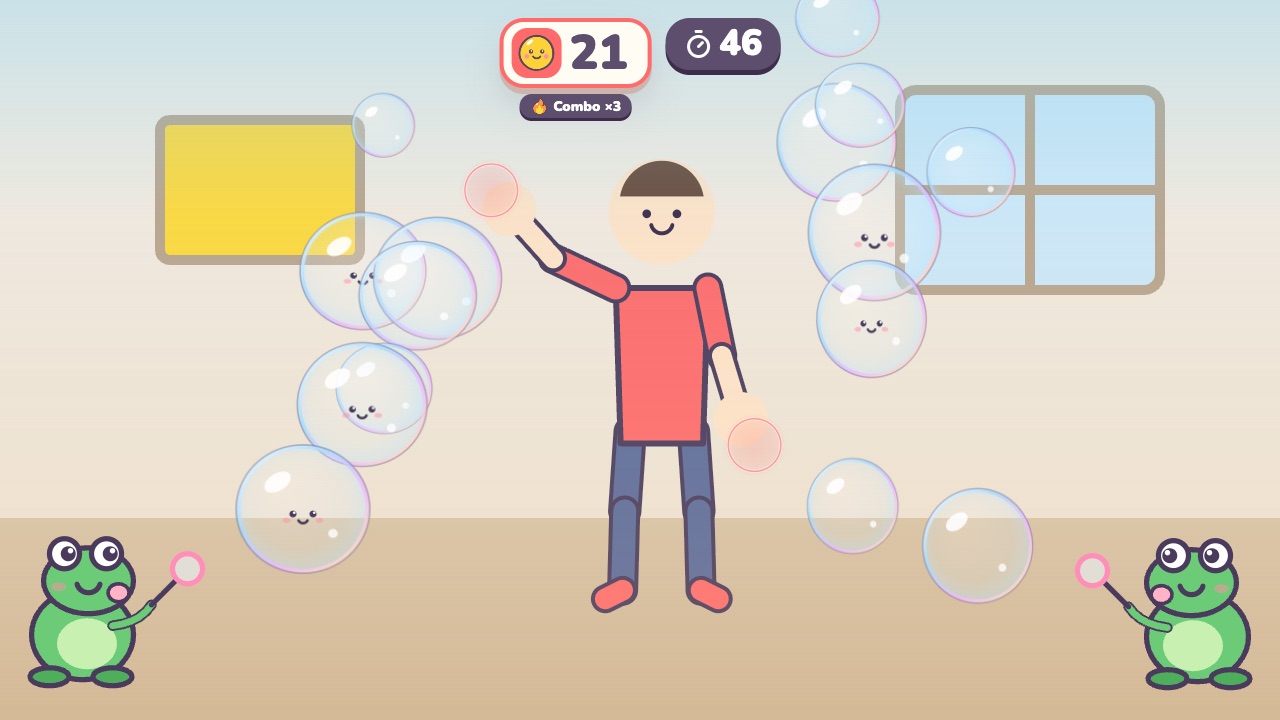 Bubble PopPop the bubbles floating toward youAges 3–7 · Light activity · Hands / Calm
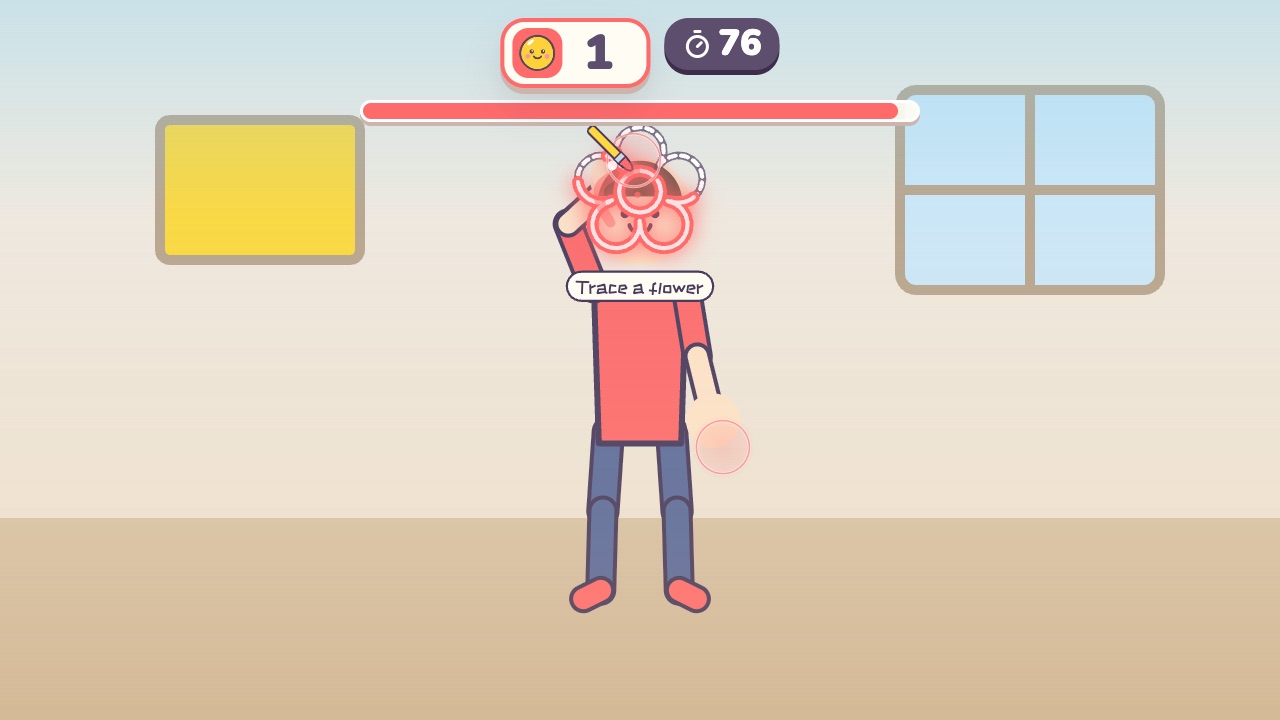 Magic BrushTrace the dotted lines with your hand, and the picture fills with colorAges 3–8 · Light activity · Hands / Calm / Thinking
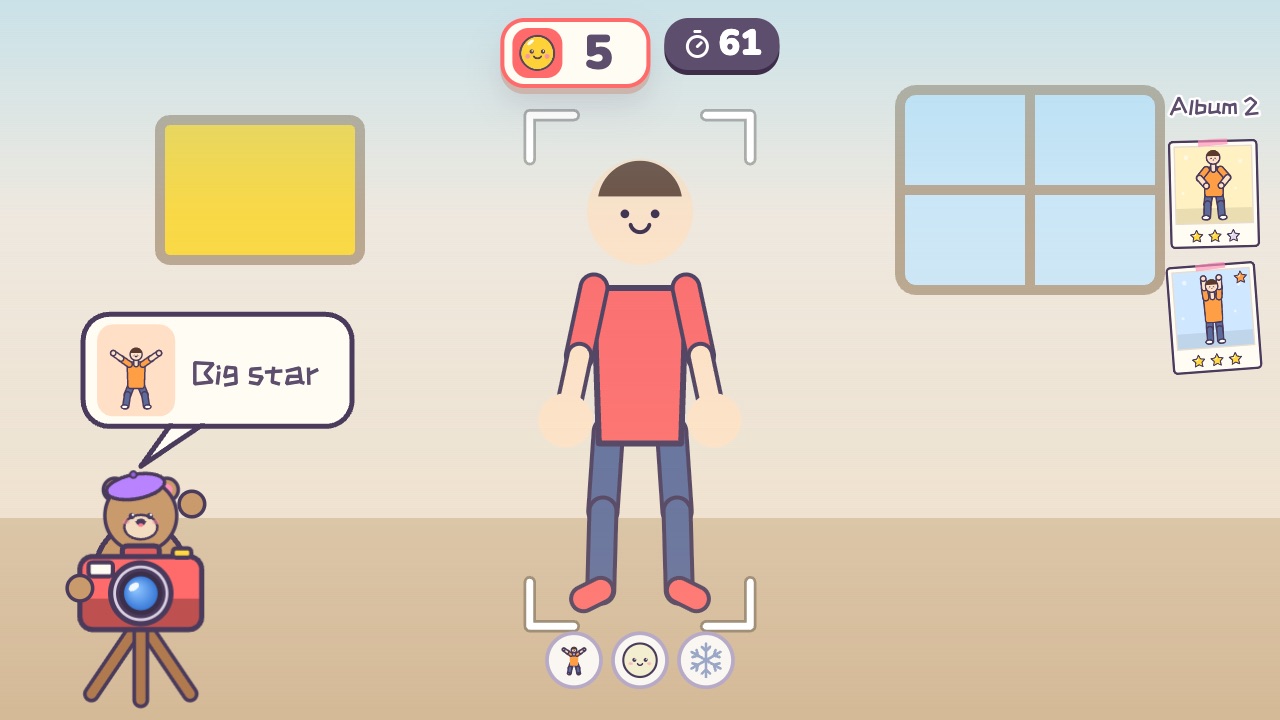 Say CheeseStrike a pose during the countdown, then smile and hold stillAges 3–9 · Light activity · Whole body / Calm
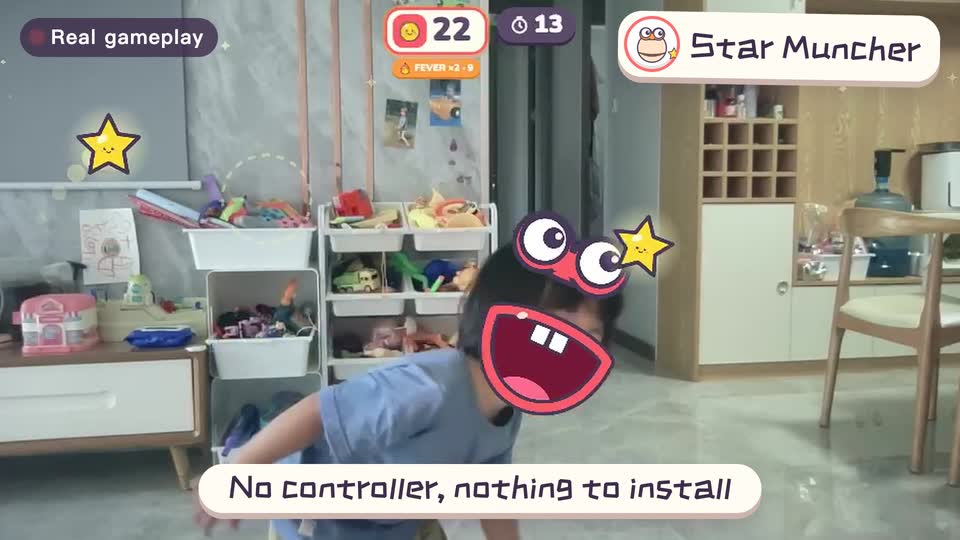
Real footage · 14 s
Kids stand in front of the computer and just move
100+ motion games for ages 3 to 18. Open the website and play: nothing to install, and the camera picture stays on this computer.