 DongDong Park
Motion games in special education: what the research says
Updated
A number of small studies have used motion games with children who are autistic or have ADHD, intellectual disability or developmental coordination disorder. They report gains in fitness, balance, fundamental movement skills and some executive function measures, and some note that the kids were keener to take part. But there are few studies, the samples are small and the methods vary widely. Motion games are not a medical treatment or therapy; in special education, treat them as one form of physical activity.
The research, area by area
| Area | What studies found | Evidence |
|---|---|---|
| Autism spectrum | Improvements in fitness, some executive function measures and self-perception, more moderate to vigorous activity; little effect on emotional regulation, and too few chances to practice motor skills | 2019 review of 10 papers, only 1 randomized controlled trial |
| ADHD | The authors found the evidence insufficient to say whether motion games improve executive function or exercise adherence | 2026 meta-analysis found only 4 randomized controlled trials |
| Intellectual disability | For fitness and motor skills, motion games “appear to be an interesting physical intervention” | 2021 review of 17 randomized controlled trials (all ages) |
| Children with atypical development (several groups) | Gains in locomotor skills (running, jumping) and stability skills (balance, turning), but not in object control (throwing, catching, kicking) | 2022 meta-analysis of 20 papers |
| Developmental coordination disorder (DCD) | International clinical practice recommendations: can be an add-on to regular training, with supervision or in a group | 2019 international recommendations |
The 2013 position statement from Active Healthy Kids Canada also says that motion games “may be useful” for motor development and rehabilitation in special populations. What you can fairly say is that they get more kids willing to move, not that they treat any condition.
How special education teachers can use them
- Talk to the child’s therapists and doctors first. They know how hard a child can work and which movements to avoid.
- Simple, predictable rules. Pick games with one move and one rule, such as Bubble Pop or Red Light, Green Light, run them the same way every time, and demonstrate before starting. Every game also has a demo mode in which a cartoon kid plays a round first.
- Mind the senses. For kids sensitive to sound, turn the volume down first; leave out games with flashing visuals or a fast pace for now.
- Small steps. Start with hand games sitting down, then stand up; start alone, then play alongside a partner in two-player mode (Say Cheese, Animal Moves).
- An adult nearby to model and encourage. Most studies with good results had someone guiding the kids; it isn’t a matter of putting a child in front of a screen and walking away.
- Keep notes. What was played, for how long and how the child felt each time makes it easier to talk with therapists.
For choosing sensory games and which claims to be careful with, see sensory games and is sensory training worth it?
This page sums up research; it is not diagnosis or treatment advice. If you have concerns about a child’s development or behavior, have them assessed by a pediatrician or a developmental specialist, and plan any training with their doctors and therapists.
Common questions
Do motion games help autistic children?
Small studies report gains in fitness and some executive function measures, and kids keener to take part, but there are few studies and only one randomized controlled trial. Motion games aren’t a treatment; use them as one form of physical activity, guided by the child’s therapists.
Can motion games improve attention in kids with ADHD?
The evidence isn’t there yet: a 2026 meta-analysis found only 4 randomized controlled trials, and its authors concluded that no judgment can be made.
How can special education classrooms use motion games?
Check intensity and movements with the child’s therapists first; pick games with simple, predictable rules and demonstrate before playing; turn the sound down for kids sensitive to noise; have an adult model and encourage; and note how each session went.
More in “Are motion games good for kids? Benefits, risks and what the research says”
- Are motion games good for kids? Benefits, risks and what the research says (overview)
- Do motion games count as exercise? Intensity by game type and age
- Why are motion games so tiring? What’s normal and how to stay safe
- Can motion games help kids lose weight? Weight, fitness and daily activity
- Can motion games build motor skills and balance?
- Motion games and focus: what the executive function research shows
- Are motion games bad for kids’ eyes? Screen time, myopia and outdoor play
Games mentioned here
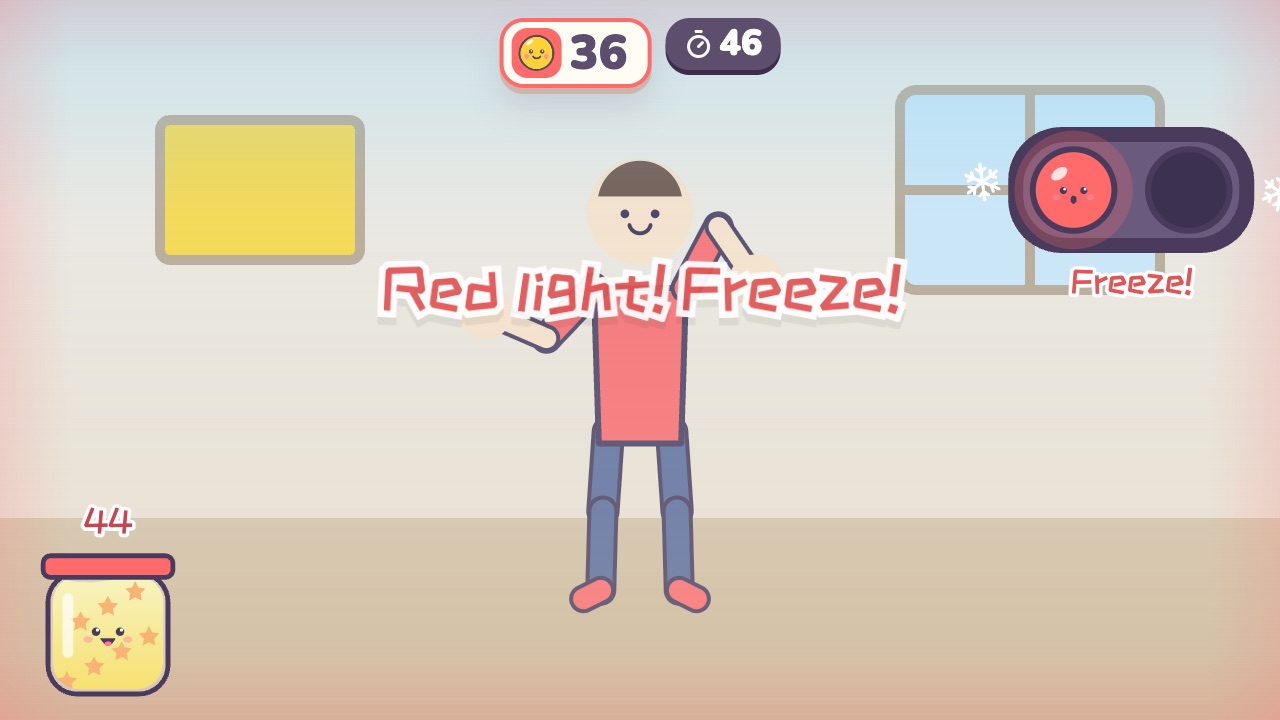 Red Light, Green LightMove like crazy on green light, and freeze the moment you hear red lightAges 3–10 · High activity · Whole body
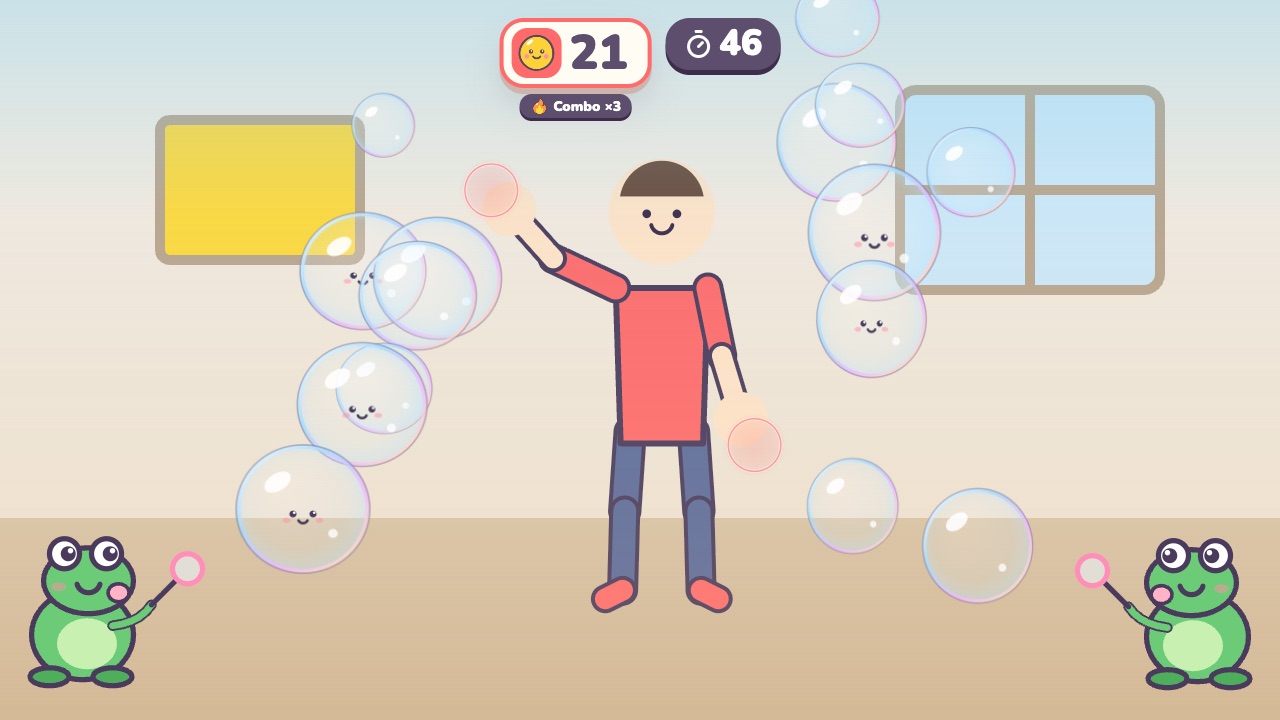 Bubble PopPop the bubbles floating toward youAges 3–7 · Light activity · Hands / Calm
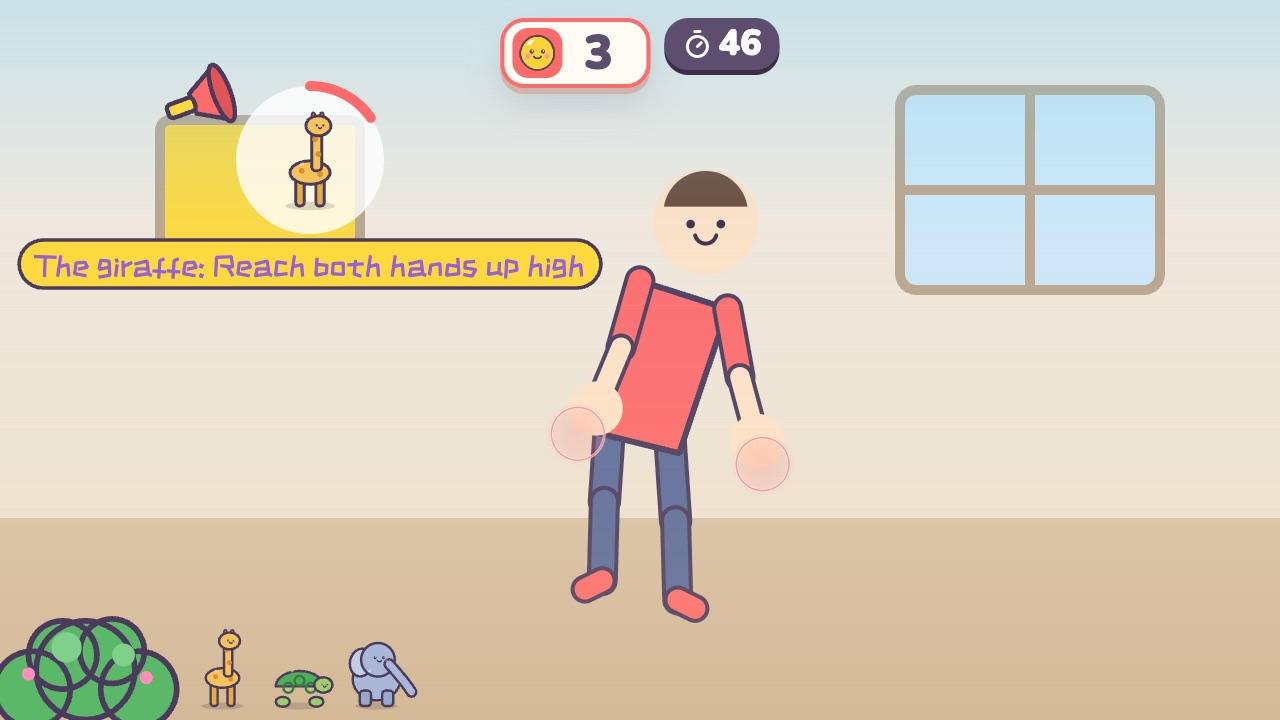 Animal MovesDo the move of whichever animal gets calledAges 3–8 · Moderate activity · Whole body
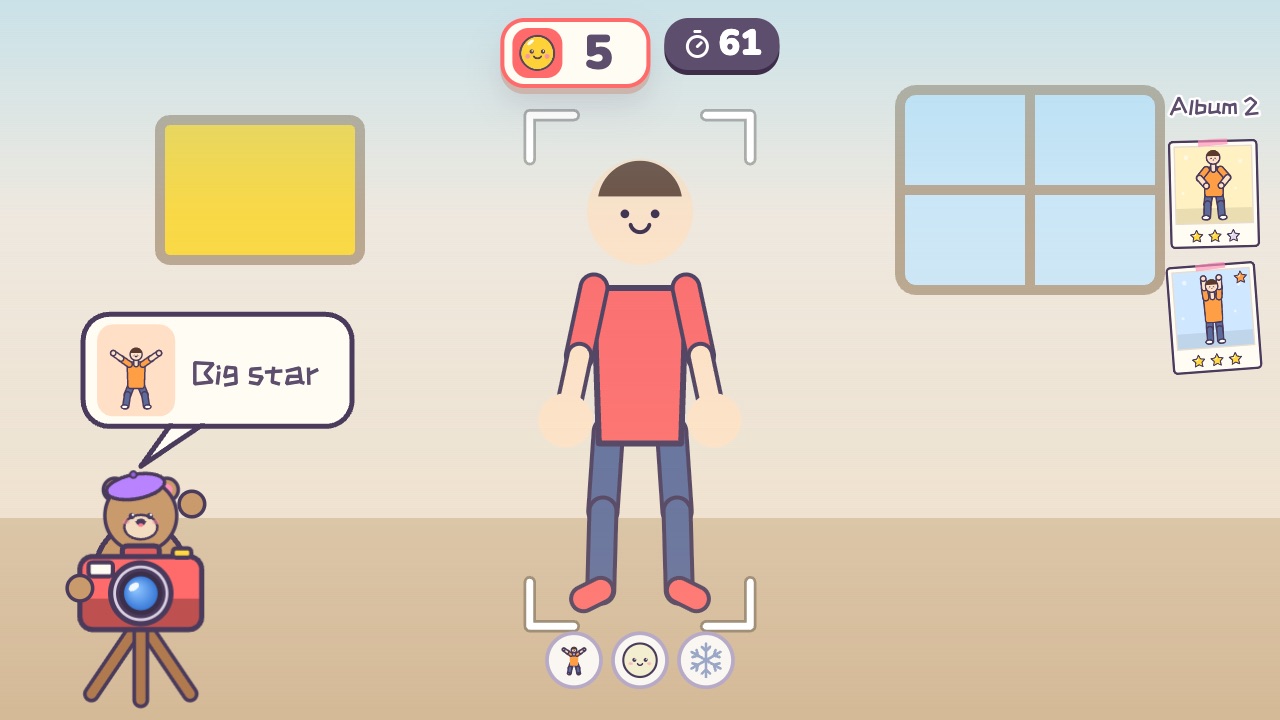 Say CheeseStrike a pose during the countdown, then smile and hold stillAges 3–9 · Light activity · Whole body / Calm
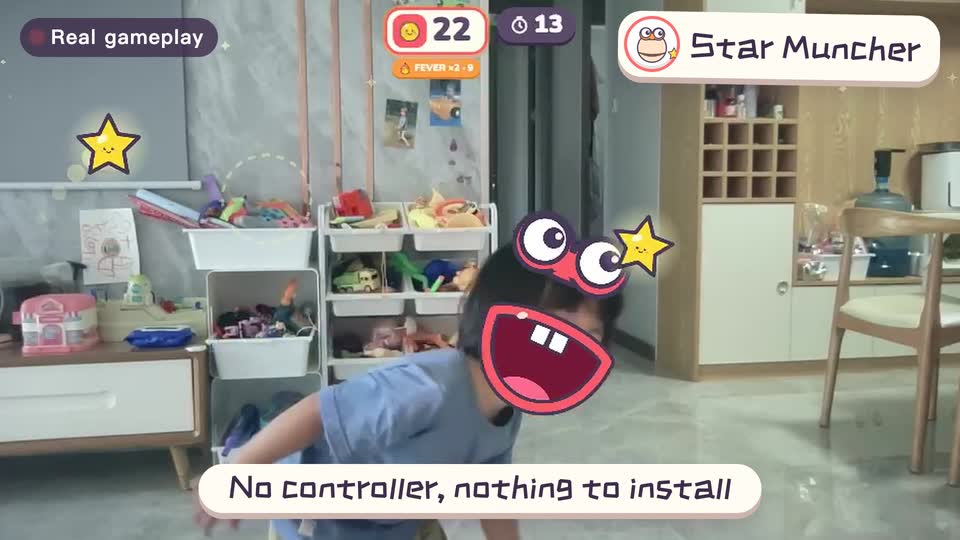
Real footage · 14 s
Kids stand in front of the computer and just move
100+ motion games for ages 3 to 18. Open the website and play: nothing to install, and the camera picture stays on this computer.
Sources
- Effects of Exergaming on Physical and Cognitive Functions in Individuals with Autism Spectrum Disorder: A Systematic Review. Fang et al., Games for Health Journal. 2019, 10 papers
- The Effects of Exergaming on Executive Functions in Children with ADHD: A Systematic Review and Meta-analysis of Randomised Controlled Trials. Pradana et al., Health Psychology and Behavioral Medicine. 2026, 4 randomized controlled trials
- Effects of Videogaming on the Physical, Mental Health, and Cognitive Function of People with Intellectual Disability. Suárez-Iglesias et al., Games for Health Journal. 2021, 17 randomized controlled trials
- Are Active Video Games Useful in the Development of Gross Motor Skills among Non-typically Developing Children? A Meta-analysis. Li et al., BMC Sports Science, Medicine and Rehabilitation. 2022, 20 papers
- International Clinical Practice Recommendations on the Definition, Diagnosis, Assessment, Intervention, and Psychosocial Aspects of Developmental Coordination Disorder. Blank et al., Developmental Medicine & Child Neurology. 2019 international recommendations on developmental coordination disorder (recommendation 25: active video games as a supervised add-on)
- Active Healthy Kids Canada's Position on Active Video Games for Children and Youth. Active Healthy Kids Canada, Paediatrics & Child Health. 2013 position statement