 DongDong Park
Can motion games build motor skills and balance?
Updated
For fundamental movement skills such as running, jumping, throwing and catching, studies find a small positive effect from motion games, with somewhat more results for balance. But for kids aged 8 and under, gross motor skills showed no significant gain. To build good movement, motion games work best alongside real activity and an adult’s coaching.
What studies found
- Typically developing kids aged 3 to 12 (2022, 9 trials, 783 kids): motion games had a small positive effect on fundamental movement skills. The authors caution that there are few studies with wide differences between them, and that in some games “a flick of the wrist plays tennis”, so what kids learn may not carry over to the real sport.
- Kids aged 8 and under (2026, 12 studies): cognitive flexibility and activity levels improved significantly, but gross motor performance did not.
- A 2024 analysis of 37 randomized controlled trials (including kids with special needs): positive results for gross motor skills, fine motor skills and balance, but with large differences between studies.
- Developmental coordination disorder (DCD, also called dyspraxia): the 2019 international clinical practice recommendations consider that motion games can be an add-on to regular training, with supervision or in a group. Whether the skills carry over to daily life has not been studied yet.
Why the effect is limited
- Loose movement standards. Many games only check whether you roughly moved, not whether the move was right.
- No real objects. A real throw, catch or kick has the weight and bounce of a ball; the screen doesn’t.
- Nobody correcting. Some researchers argue that how well kids learn fundamental movement skills depends mostly on coaching and how the activity is set up, not on whether it is a motion game.
How to pair them with real practice
- Screen first, then the real thing. Use Standing Long Jump to practice the arm swing and the timing of take-off, then jump for real on the floor; warm up with Hopscotch, then chalk out a real hopscotch court.
- Pick games that need the move done right. Games where you have to get into a pose and hold it, such as Yoga Poses or Tilt Maze, train control better than games that score any wave.
- Watch the movement, not the score. A high score doesn’t mean good form. Whether the knees bend on take-off and the landing is steady takes an adult’s eye.
If a child is clearly behind in motor development, falls a lot or seems very uncoordinated, start with an assessment by a pediatrician or a pediatric physical or occupational therapist. Motion games are not therapy or treatment.
Common questions
Can motion games improve kids’ coordination and balance?
Studies find a small positive effect, with somewhat more results for balance. But gross motor skills didn’t improve significantly at ages 8 and under, and results depend on whether someone is coaching.
Can motion games replace real ball and jumping practice?
No. The screen has no ball with real weight and bounce, and many games don’t check whether a move is right. Use motion games for timing and motivation, then practice with real equipment.
Can kids with DCD play motion games?
The 2019 international clinical practice recommendations consider that motion games can be an add-on to regular training, with supervision or in a group. Follow your child’s doctor and therapist on how to practice.
More in “Are motion games good for kids? Benefits, risks and what the research says”
- Are motion games good for kids? Benefits, risks and what the research says (overview)
- Do motion games count as exercise? Intensity by game type and age
- Why are motion games so tiring? What’s normal and how to stay safe
- Can motion games help kids lose weight? Weight, fitness and daily activity
- Motion games and focus: what the executive function research shows
- Are motion games bad for kids’ eyes? Screen time, myopia and outdoor play
- Motion games in special education: what the research says
Games mentioned here
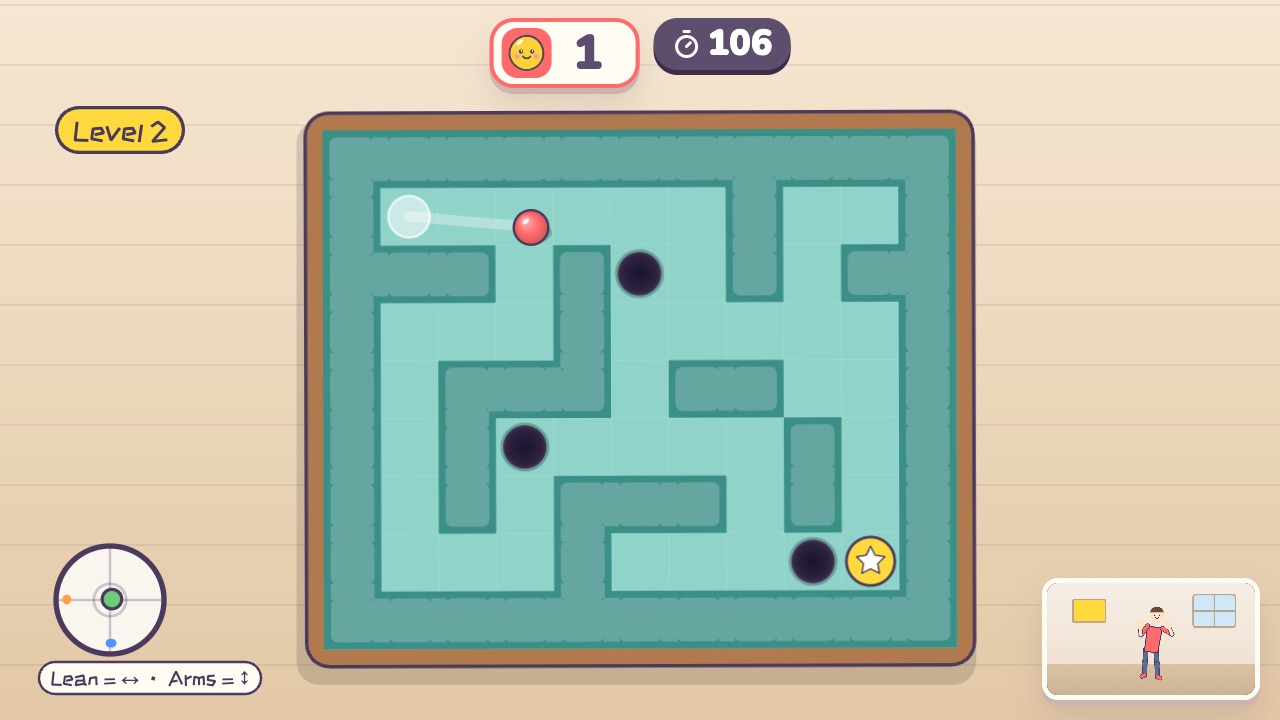 Tilt MazeLean your body to tilt the maze and roll the ball to the finishAges 9–18 · Light activity · Whole body / Thinking / Calm
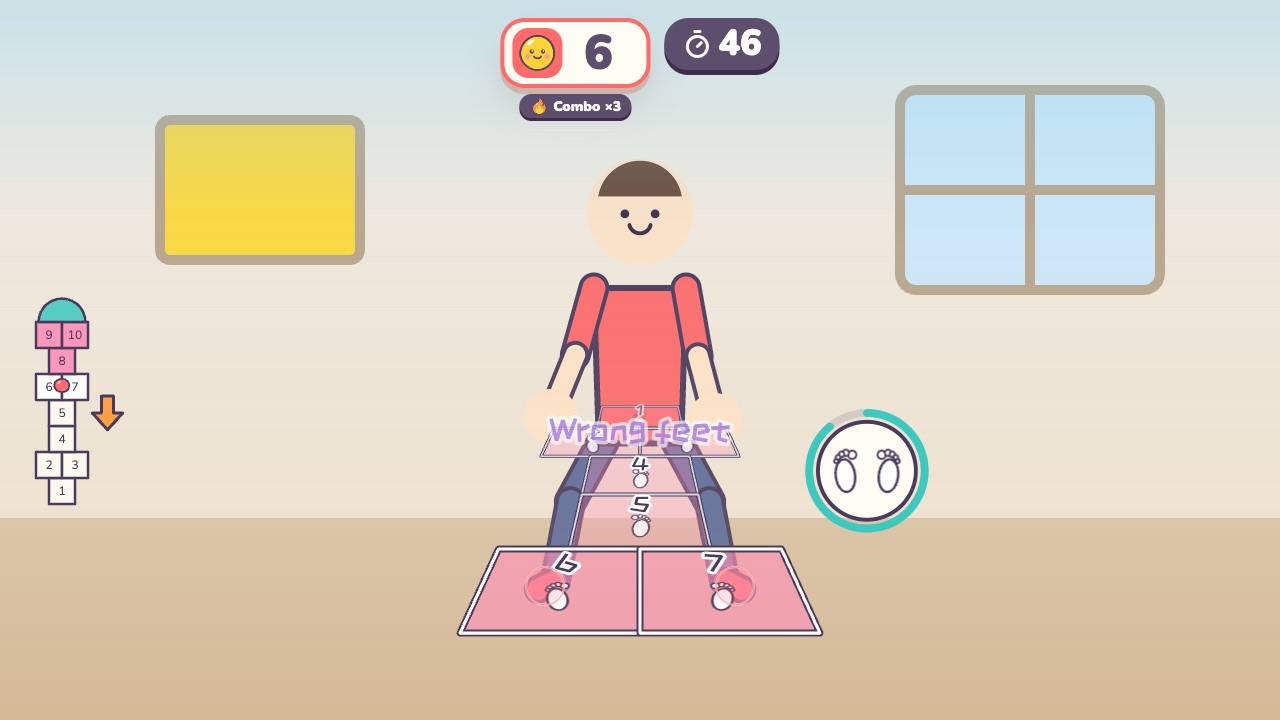 HopscotchOne foot on single squares, two feet on double squares, one row at a timeAges 5–12 · High activity · Run & jump / Fitness
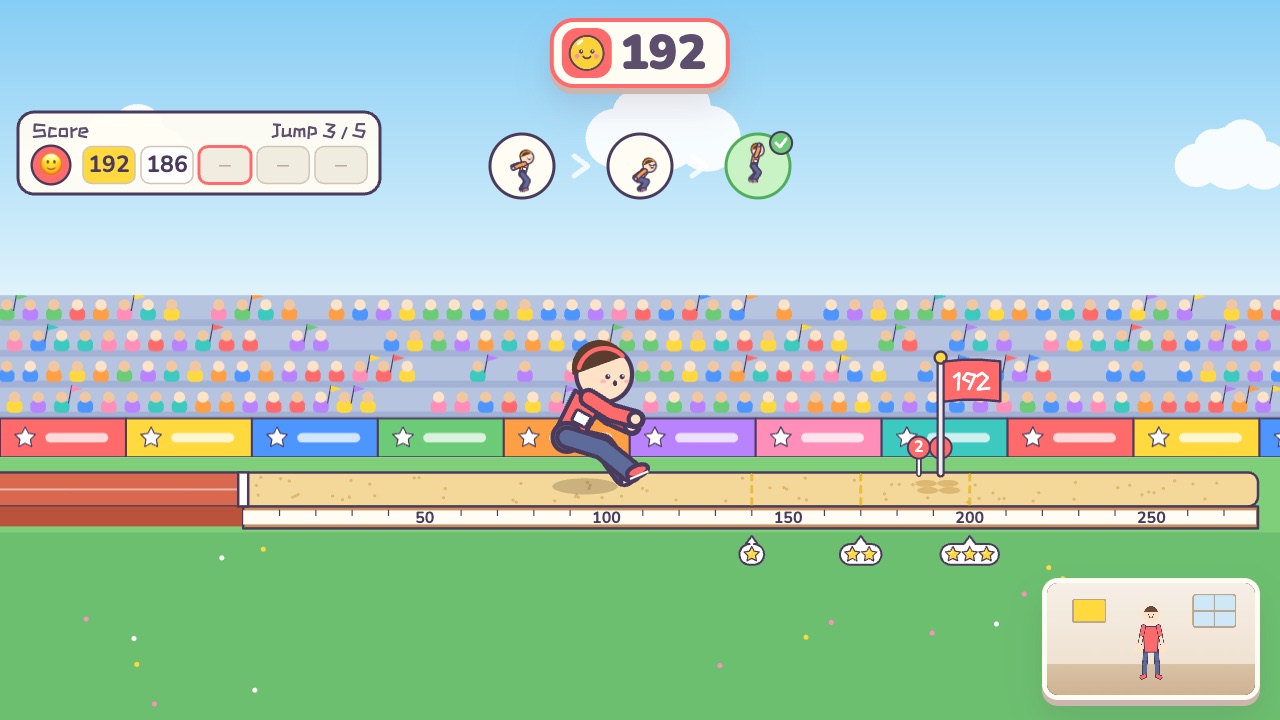 Standing Long JumpSwing, squat, jump! See how far you can goAges 8–18 · Moderate activity · Run & jump / Fitness
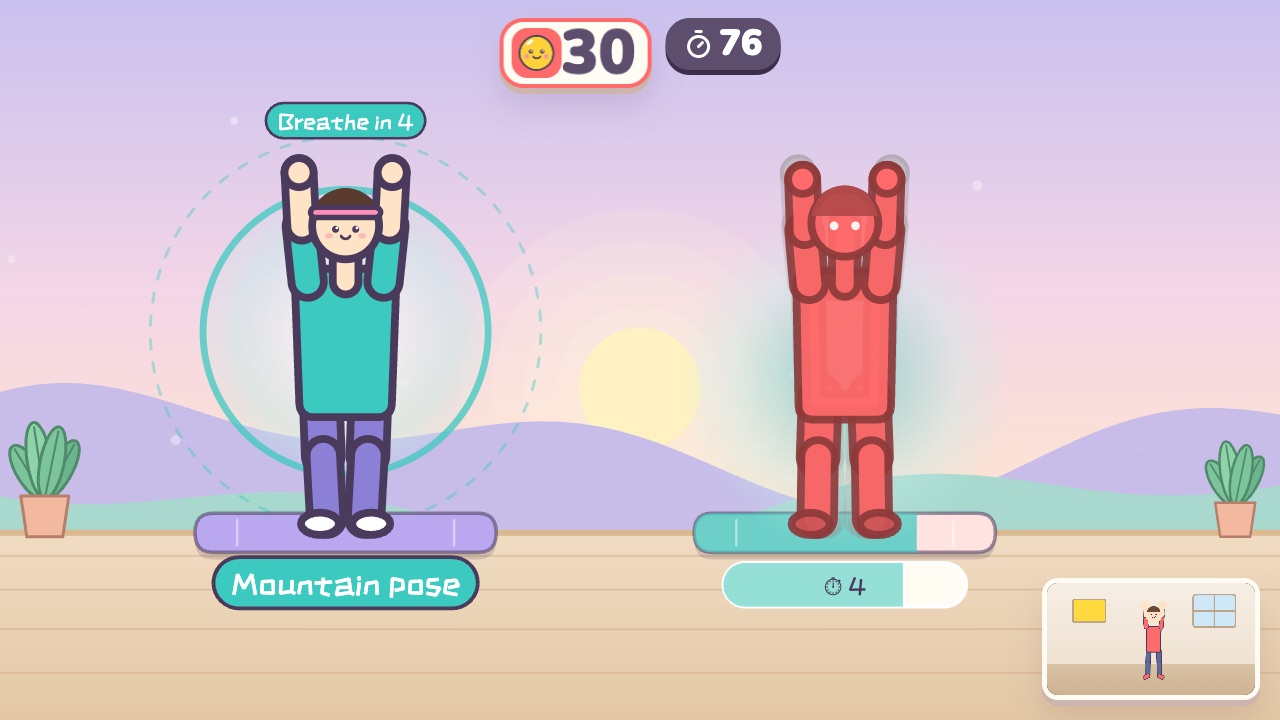 Yoga PosesCopy each yoga pose and hold it steadyAges 12–18 · Light activity · Calm / Fitness / Whole body
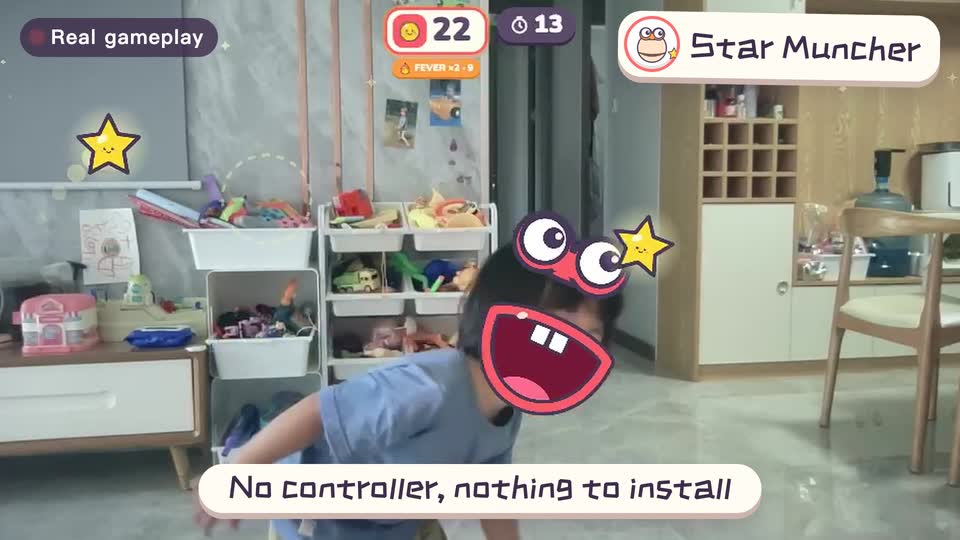
Real footage · 14 s
Kids stand in front of the computer and just move
100+ motion games for ages 3 to 18. Open the website and play: nothing to install, and the camera picture stays on this computer.
Sources
- A Skill Acquisition Perspective on the Impact of Exergaming Technology on Foundational Movement Skill Development in Children 3–12 Years. Oppici et al., Sports Medicine - Open. 2022 systematic review and meta-analysis; 9 trials, 783 children aged 3 to 12
- Effects of Exergaming on Motor Skills, Cognitive Skills, and Physical Activity Among Children in Early Childhood. Kwok et al., Journal of Physical Activity and Health. 2026 systematic review and meta-analysis; children aged 8 and under, 12 studies
- Effects of Exergaming on Executive Function and Motor Ability in Children: A Systematic Review and Meta-analysis. Kou et al., PLoS One. 2024; 37 randomized controlled trials
- International Clinical Practice Recommendations on the Definition, Diagnosis, Assessment, Intervention, and Psychosocial Aspects of Developmental Coordination Disorder. Blank et al., Developmental Medicine & Child Neurology. 2019 international recommendations on developmental coordination disorder (recommendation 25: active video games as a supervised add-on)