 DongDong Park
Sensory games at home: everyday sensory play for ages 3–12
Updated
Sensory games, put simply, are games that get kids using their bodies to feel and to coordinate: walking a narrow line, spinning, crawling, pushing, pulling and carrying, moving on a spoken cue. Most need no equipment, 15 to 20 minutes a day at home is plenty, and kids can start at 3. Below, for each of six senses, are two sets of ideas: motion games on screen (a computer with a camera is all you need) and screen-free games around the house.
What does sensory integration mean?
Sensory integration is the brain putting together what the eyes see, what the ears hear, what the skin touches and the body’s own sense of itself, and then telling the body how to move. Catching a ball takes several senses working together: you track the ball, you know where your hands are, and you judge how hard to grip.
People usually talk about three “foundation” senses, plus sight, hearing and using both sides of the body together:
- Vestibular sense: balance. It tells you when your head tilts, your body turns or you stop suddenly, and it keeps you steady.
- Proprioception: knowing where your arms and legs are, and how much force you’re using, without looking.
- Touch: what the skin feels, whether something is soft or hard, light or heavy.
- Vision and hearing: eyes that keep up with moving things and hands that reach accurately; hearing an instruction clearly, then following it.
- Bilateral coordination: using both hands or both legs together, or taking turns with them.
These skills aren’t learned in a lesson. Kids build them through running, jumping, climbing, rolling and playing with sand and water, over and over again.
Six senses: what to play
| What it works on | On screen (motion games) | Without a screen |
|---|---|---|
| Vestibular sense: balance, staying steady when the head tilts, the body turns or you stop suddenly | Red Light, Green Light · Star Stomp · Slalom Ski · Sky Pilot · Hopscotch | Walk a tape line on the floor, stand on one leg, spin around three times and then stand still, swings, slides |
| Proprioception: body control, knowing where your arms and legs are and how much force you use without looking | Carrot Pull · Shape Wall · Tug of War · Say Cheese · Hoop Shots | Push a box full of books, carry things, bear crawl, push against a wall with both hands, wring out a towel, roll up in a blanket like a burrito |
| Bilateral coordination: both hands or both legs together, or in turn | Clap and Bloom · Saw the Log · Flap Home · Swim Race · Bounce the Ball | Hand-clapping games, passing a beanbag from hand to hand, tearing paper, twisting off bottle caps, jump rope |
| Listening: hear an instruction, remember it, then follow it | Animal Moves · Radish Squat · Simon Says · Musical Chairs · Do the Opposite | Red Light, Green Light in the yard, follow the leader, fetching two or three things in order |
| Vision: eyes that keep up with moving things and hands that reach accurately | Balloon Keep-Up · Gift Catch · Sea Lion Rings · Mole Bop · Fruit Slash | Tossing and catching a soft ball, keeping a balloon in the air, rolling a ball into a “goal” |
| Touch: what the skin feels, soft or hard, warm or cold, light or heavy | A screen can’t help here: it takes real touching | Sand and water play, dough and play clay, a feely box, walking barefoot on grass and mats |
Touch: screens can’t help, so get hands-on
Touch only develops through real touching; games on a screen can’t do it. Things you already have at home are enough:
- Sand, water, rice and dried beans: scoop them up, pour them back and forth, bury small toys and dig them out again (with small items and little kids, an adult stays close).
- Squeeze dough and play clay; help knead bread dough, wash vegetables or shell peas.
- A feely box: put a few familiar things in a cardboard box. No peeking: reach in, feel, and guess what each one is.
- Walk barefoot on different surfaces: grass, sand, a yoga mat, a towel.
- After a bath, rub dry with a towel, then wrap up in it for a cuddle.
Some kids don’t like things that are sticky, wet or scratchy. Don’t press their hands into it; start with what they will accept. Touching it once today is enough.
Choosing by age
- Ages 3–4: simple moves and rules you can say in one sentence. Animal Moves, Bubble Pop, Carrot Pull, Saw the Log, Radish Squat, and Red Light, Green Light, with rounds of a minute or less.
- Ages 4–6: add balance and listening with Star Stomp, Shape Wall, Simon Says and Flap Home; from age 5, Slalom Ski, Hopscotch and Bounce the Ball.
- Ages 6–9: add rhythm and left and right hands with Air Drums, Shuttlecock Kick, Volleyball Keep-Up, Human Clock and Swim Race.
- Ages 9–12: finer control with Surfing, Tilt Maze, Rock Climbing and Flag Code.
A 20-minute daily sensory routine (ages 4–6)
| Time | What happens | Games |
|---|---|---|
| 3 min | Warm-up: move like animals to loosen up | Animal Moves |
| 5 min | Balance: lift a foot and stomp, freeze on cue; then walk a tape line on the floor | Star Stomp, then Red Light, Green Light |
| 5 min | Body control and force: hold poses, squat and stand up; then push against a wall and carry a few books | Shape Wall, Carrot Pull |
| 4 min | Listening and both sides together | Simon Says, Flap Home |
| 3 min | Calm down: soft, slow moves, then wrap up in a blanket for a hug | Bubble Pop |
In preschool and early-years groups
For a whole group, see how to set up a sensory circuit: six stations, what to use instead of special equipment, and a 30-minute schedule.
This page is about everyday play and exercise. It is not therapy, and it can’t tell you whether your child has sensory processing difficulties. If your child is clearly clumsier than other kids the same age, falls a lot, or reacts very strongly to sounds or touch, and it is getting in the way of eating, dressing or preschool, talk to your child’s doctor first about a developmental assessment.
Questions parents ask
Does sensory play at home help, or do we need a therapy center?
For most kids, plenty of running, jumping, climbing and sand and water play every day, plus little games like these, is enough; no special classes are needed. If a child clearly struggles more than other kids the same age and it affects daily life, have a doctor assess them first, then decide on professional therapy. Games are everyday exercise and can’t replace an assessment or treatment.
Do I need to buy sensory equipment?
No. A strip of tape on the floor is a balance beam, pillows and cushions make a tunnel, a box of books is something to push, and a sock filled with rice and sewn shut is a beanbag. The motion games on screen only need a computer with a camera.
How long each day, and from what age?
From age 3. Fifteen to 20 minutes a day, split into a few short bits, does more than an hour once a weekend. A round of a motion game lasts about a minute: play three to five, then switch to screen-free games.
Do motion games on a screen count as sensory play?
They cover the “moving the body” part: kids stand up and lean, balance on one leg, hold poses and move on spoken cues, which works on balance, body control, both-sides coordination and listening. They don’t cover touch, and swinging, rolling and climbing still need the real thing. Treat them as an extra for rainy days, winter, or when there is no room to run around.
How do I know if my child has a sensory processing problem?
You can’t tell by checking a list of signs online or filling in a questionnaire. Kids develop at different speeds, and being careless, fidgety or not liking to be touched is a phase many kids go through. If you are truly worried, ask your child’s doctor for a developmental assessment and follow their advice.
New to DongDong Park? The family guide covers setting up in a living room, and you can play two rounds without signing in: pick a game →
Games mentioned here
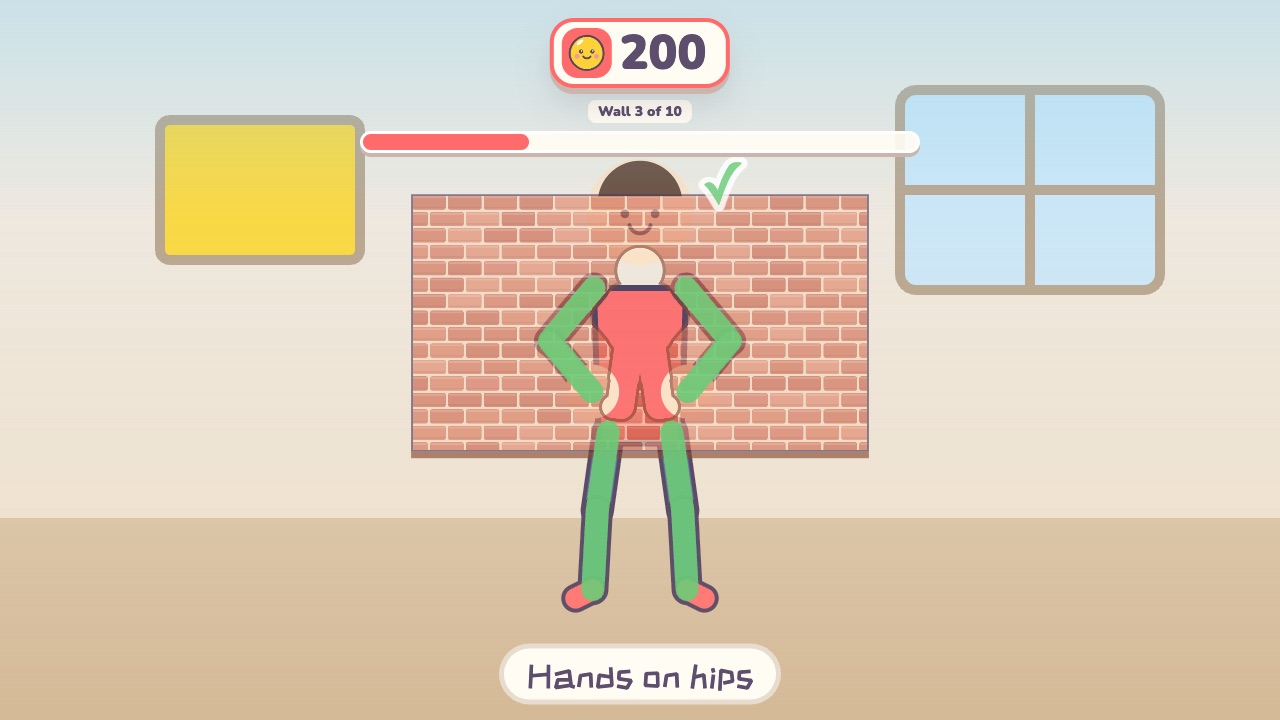 Shape WallMake the same shape as the hole in the wallAges 4–12 · Moderate activity · Whole body / Thinking
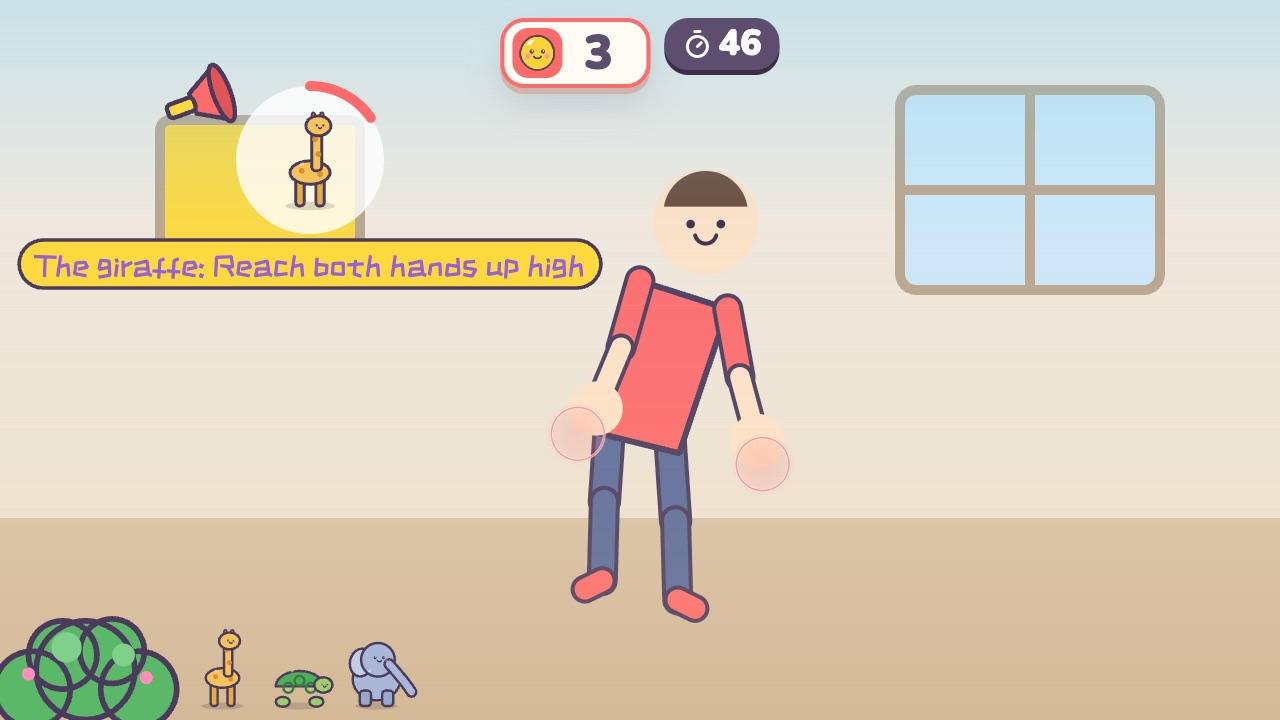 Animal MovesDo the move of whichever animal gets calledAges 3–8 · Moderate activity · Whole body
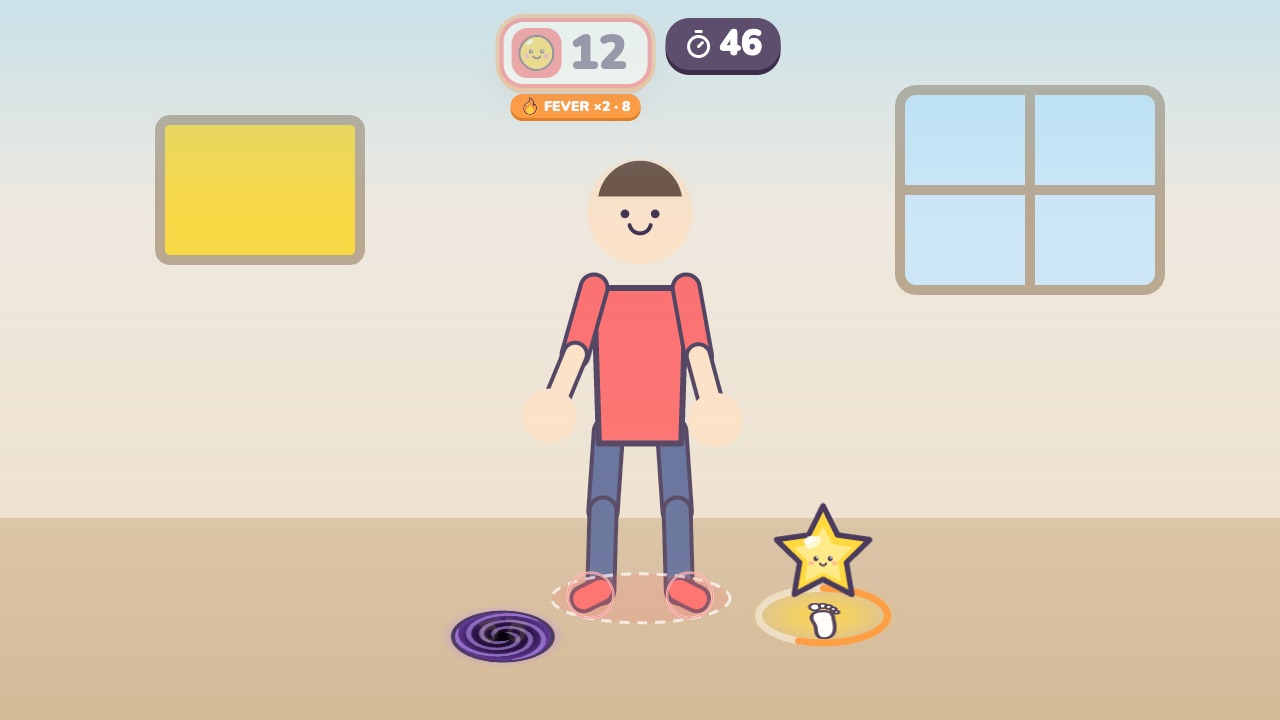 Star StompStars light up in front of your feet. Stomp on themAges 4–12 · Moderate activity · Run & jump
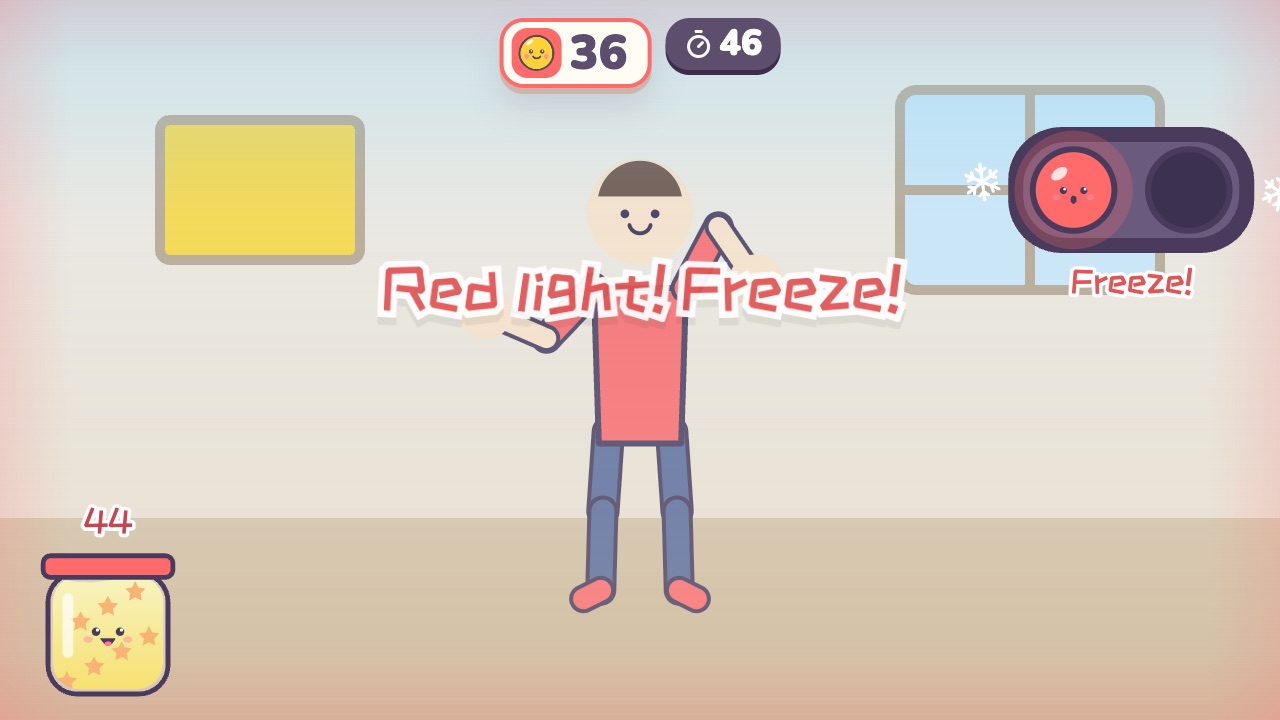 Red Light, Green LightMove like crazy on green light, and freeze the moment you hear red lightAges 3–10 · High activity · Whole body
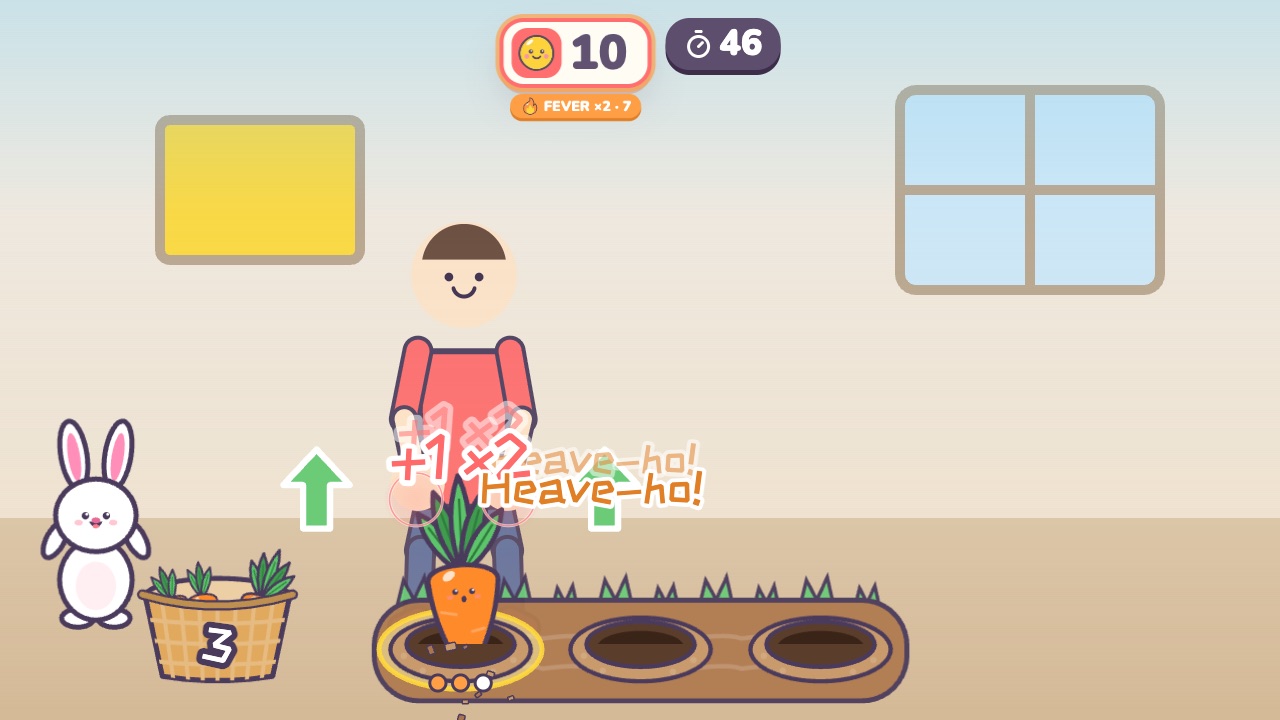 Carrot PullSquat down, grab the leaves and stand up to pull the carrotAges 3–8 · Moderate activity · Whole body / Run & jump / Fitness
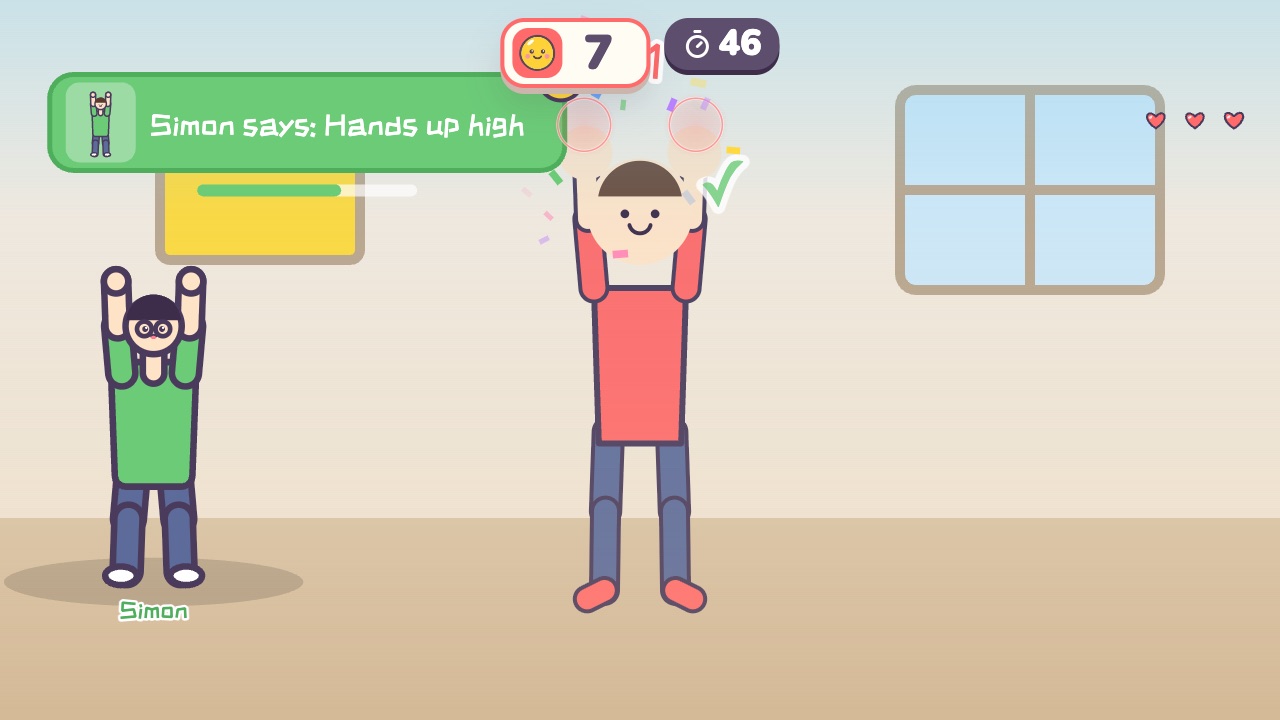 Simon SaysOnly move when Simon says soAges 4–10 · Moderate activity · Whole body / Thinking
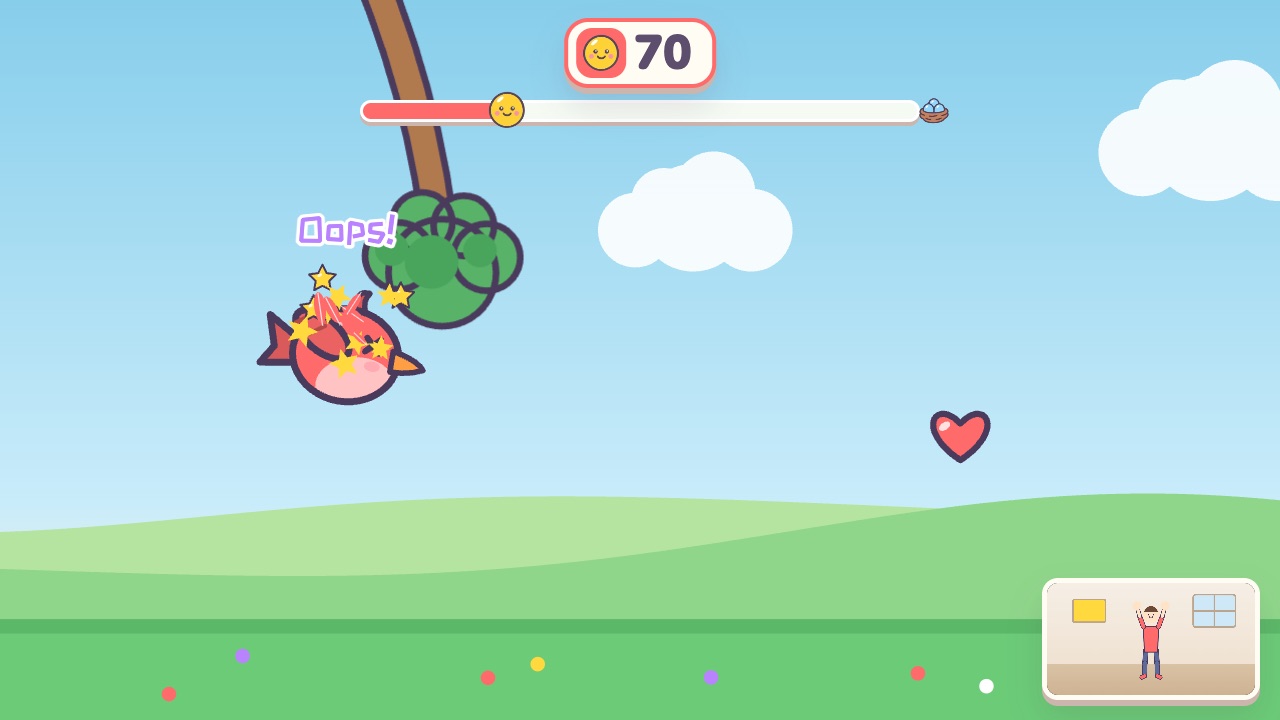 Flap HomeFlap your wings and fly back to the nestAges 4–8 · High activity · Hands / Whole body
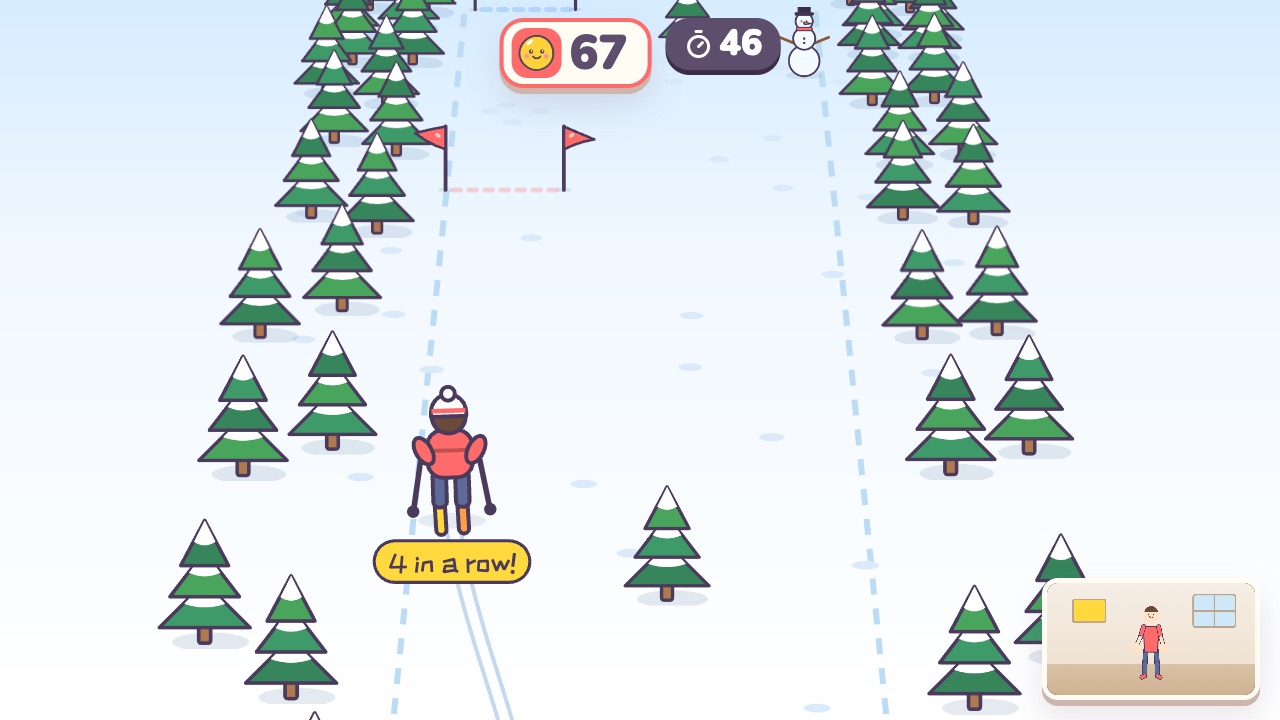 Slalom SkiLean left and right to ski through the flag gatesAges 5–10 · Moderate activity · Whole body
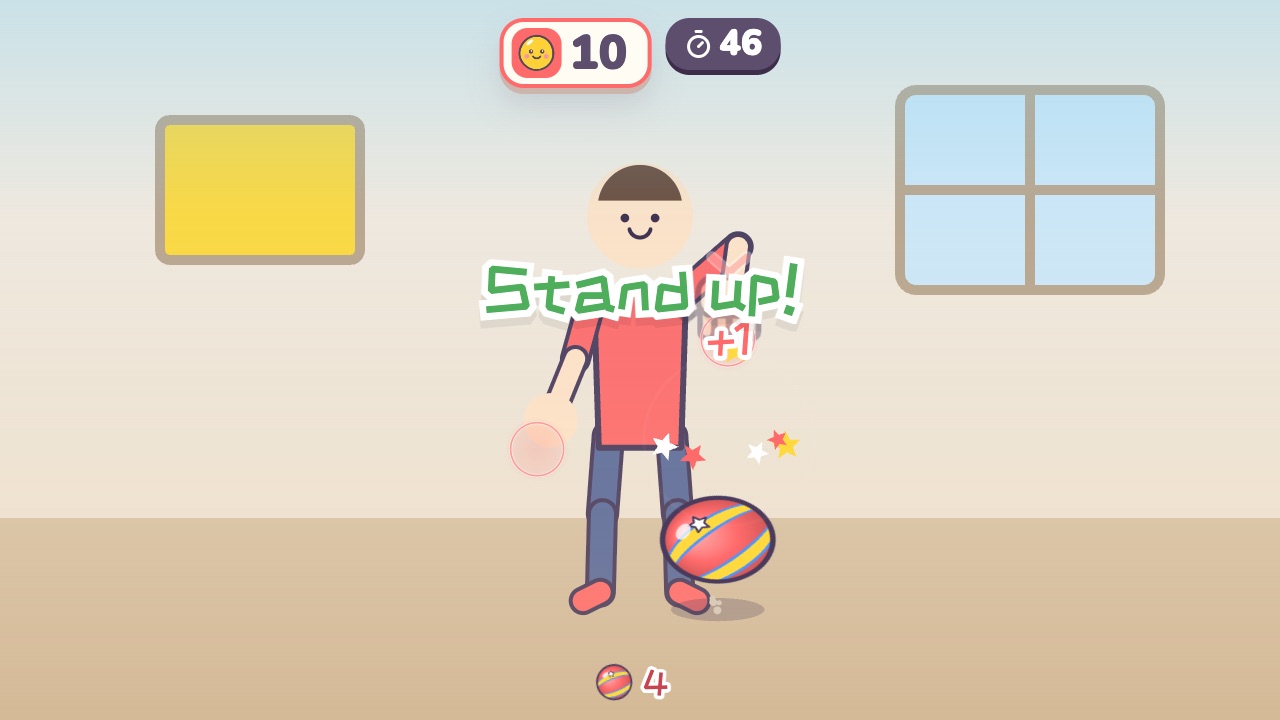 Bounce the BallPush the ball down each time it bounces up, and listen for the callsAges 5–12 · Moderate activity · Hands / Rhythm
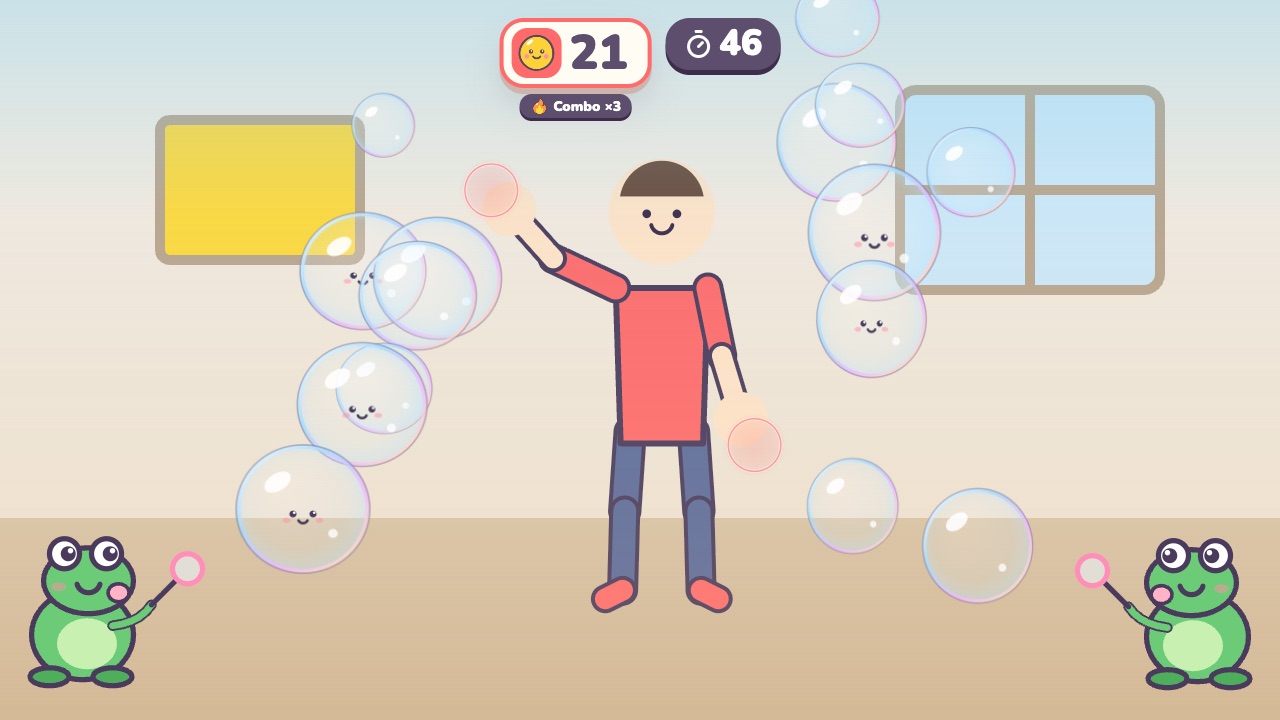 Bubble PopPop the bubbles floating toward youAges 3–7 · Light activity · Hands / Calm
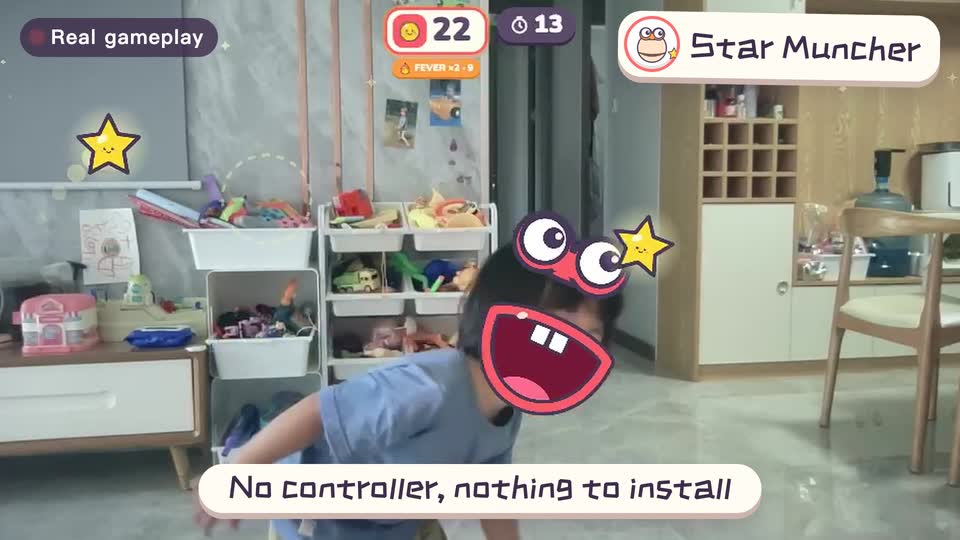
Real footage · 14 s
Kids stand in front of the computer and just move
100+ motion games for ages 3 to 18. Open the website and play: nothing to install, and the camera picture stays on this computer.
Keep reading
- Indoor recess games: a 20-minute rainy-day plan
- Brain breaks: 5-minute movement games for any grade
- Indoor PE class: one computer gets the whole class moving
- Indoor movement games for preschool: morning exercise and rainy days, ages 3 to 6
- Rainy-day obstacle course: 6 stations for a preschool classroom
- PE warm-up and cool-down games: the whole class follows the screen