 DongDong Park
Motion games and focus: what the executive function research shows
Updated
Several meta-analyses find that, compared with control groups that didn’t exercise or did their usual activities, kids who played motion games improved slightly to moderately on some measures of executive function, most consistently cognitive flexibility and inhibitory control. But compared directly with regular exercise, motion games were no better, and the evidence is rated “very low” quality.
What is executive function?
It is the set of skills kids use to manage themselves:
- Inhibitory control: holding back from doing what you shouldn’t (freezing the moment you hear “red light”).
- Working memory: keeping rules and sequences in mind while using them.
- Cognitive flexibility: switching when the rules change (“do the opposite”).
What studies found
- A 2023 meta-analysis (11 studies, 508 kids aged 4 to 12): cognitive flexibility, inhibitory control and working memory all improved. The authors also point to publication bias and inconsistent measures.
- A 2024 analysis (37 randomized controlled trials): cognitive flexibility and inhibitory control improved, working memory didn’t change significantly. Exercise studies can rarely be blinded, which weakens the evidence.
- Kids aged 8 and under (2026, 12 studies): cognitive flexibility improved significantly; working memory and inhibitory control didn’t change significantly.
- Compared with regular exercise (2023, 8 randomized controlled trials): commercial motion games had no significant advantage for overall executive function, and all of the evidence was rated “very low” quality.
How to read this
A fair summary: getting moving may help focus and switching between tasks, and motion games are one way of getting moving. Their strengths are clear rules, instant feedback and kids who want to play. They don’t “boost the brain” more than running, jumping or ball games, and there is no basis for saying they raise intelligence or grades.
How to pick games
Games whose rules make kids hold back, remember or switch are practicing exactly these skills:
- Inhibitory control: Red Light, Green Light and Simon Says (only move when Simon says).
- Cognitive flexibility: Do the Opposite and Reaction Lights.
- Working memory: Memory Match and Dance Along (remembering a routine).
For focus games by age, see focus games for kids and reaction and hand-eye coordination games.
Common questions
Do motion games improve focus?
Meta-analyses find that, compared with not exercising, kids who played motion games improved slightly to moderately in cognitive flexibility and inhibitory control. But they did no better than regular exercise, and the evidence is very low quality. “Moving may help” is fair; “raises intelligence or grades” is not.
What kind of motion games train focus?
Games whose rules make kids hold back, remember or switch: move-only-on-command games (Red Light, Green Light; Simon Says), do-the-opposite games, and games where you remember a sequence or a routine.
Are motion games better for the brain than running or jumping rope?
There is no evidence for that. Studies comparing them directly found motion games no better than regular exercise for executive function; their advantage is that kids want to play, the rules are clear and feedback is instant.
More in “Are motion games good for kids? Benefits, risks and what the research says”
- Are motion games good for kids? Benefits, risks and what the research says (overview)
- Do motion games count as exercise? Intensity by game type and age
- Why are motion games so tiring? What’s normal and how to stay safe
- Can motion games help kids lose weight? Weight, fitness and daily activity
- Can motion games build motor skills and balance?
- Are motion games bad for kids’ eyes? Screen time, myopia and outdoor play
- Motion games in special education: what the research says
Games mentioned here
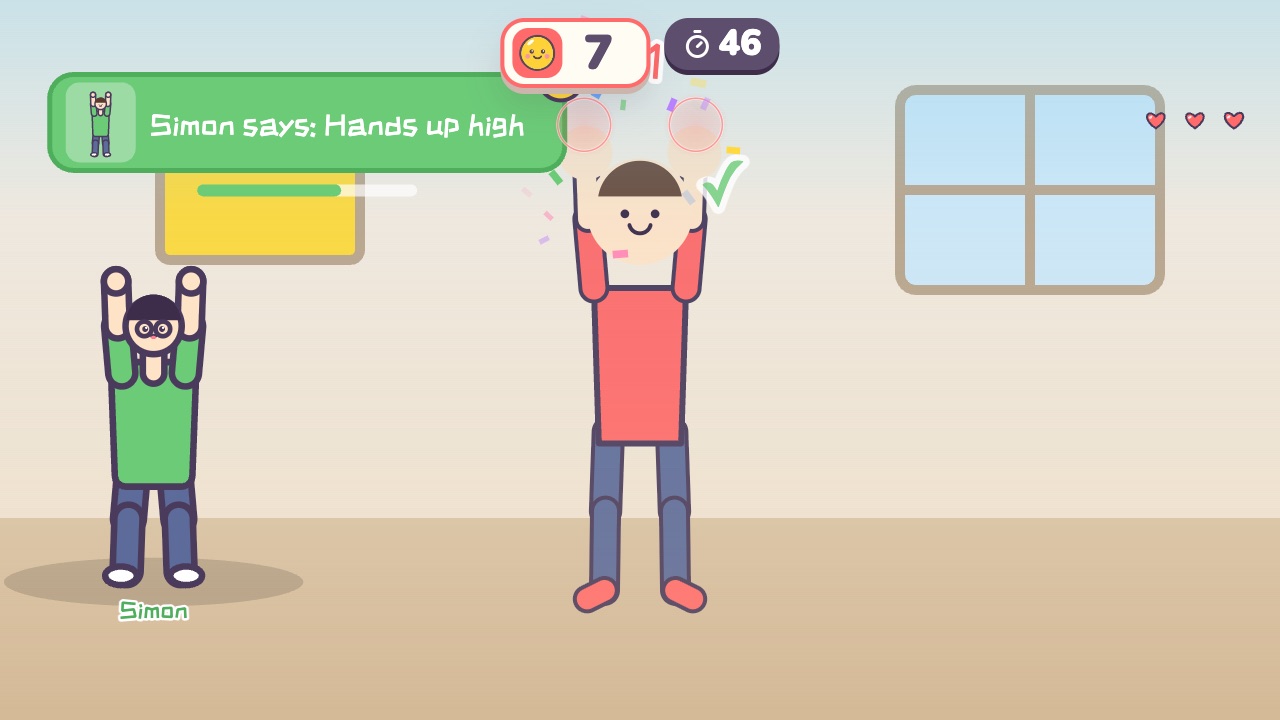 Simon SaysOnly move when Simon says soAges 4–10 · Moderate activity · Whole body / Thinking
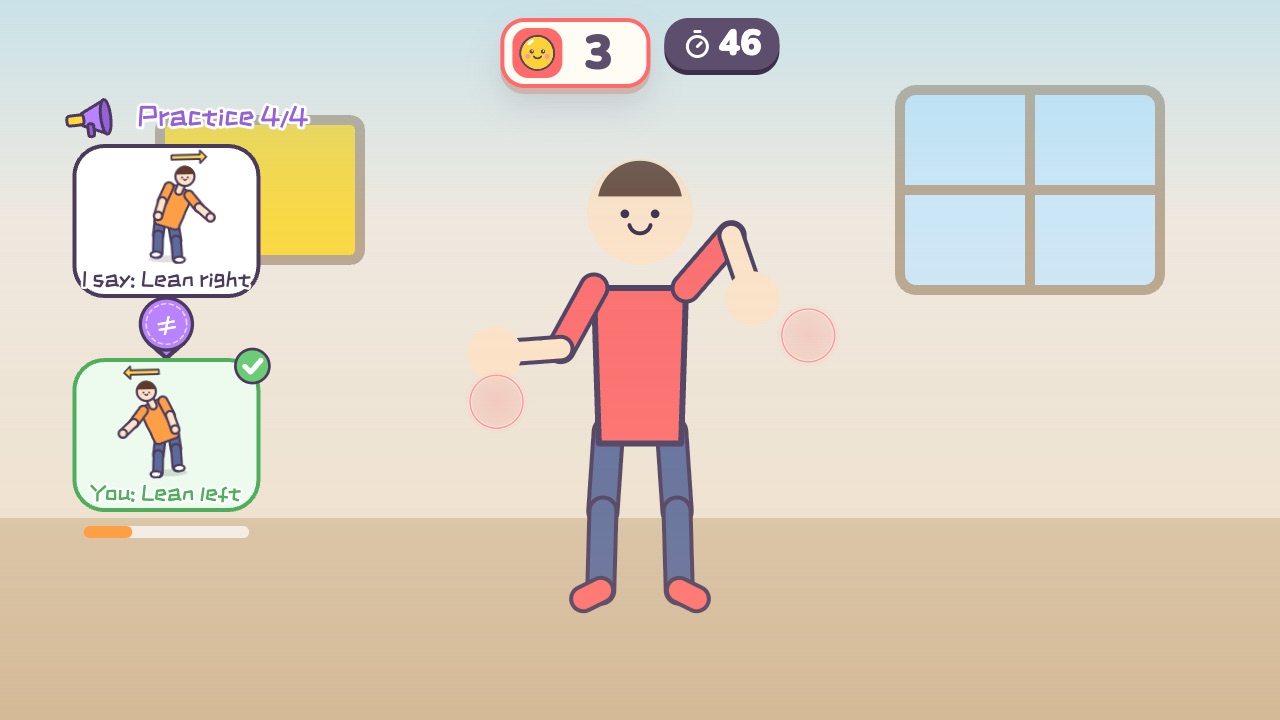 Do the OppositeI say arms up, you squat down. Only the opposite move countsAges 4–10 · Moderate activity · Whole body / Thinking
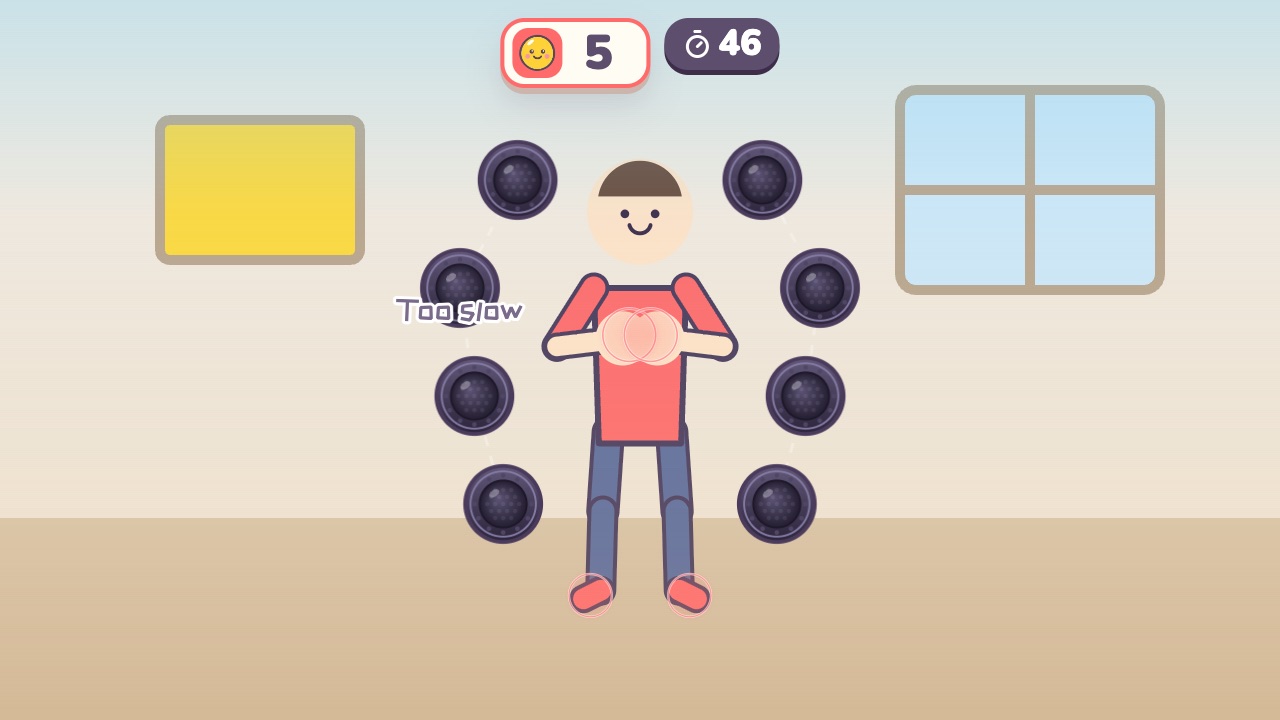 Reaction LightsHit whichever light turns green as fast as you can, and never touch a red oneAges 10–18 · High activity · Fitness / Whole body / Thinking
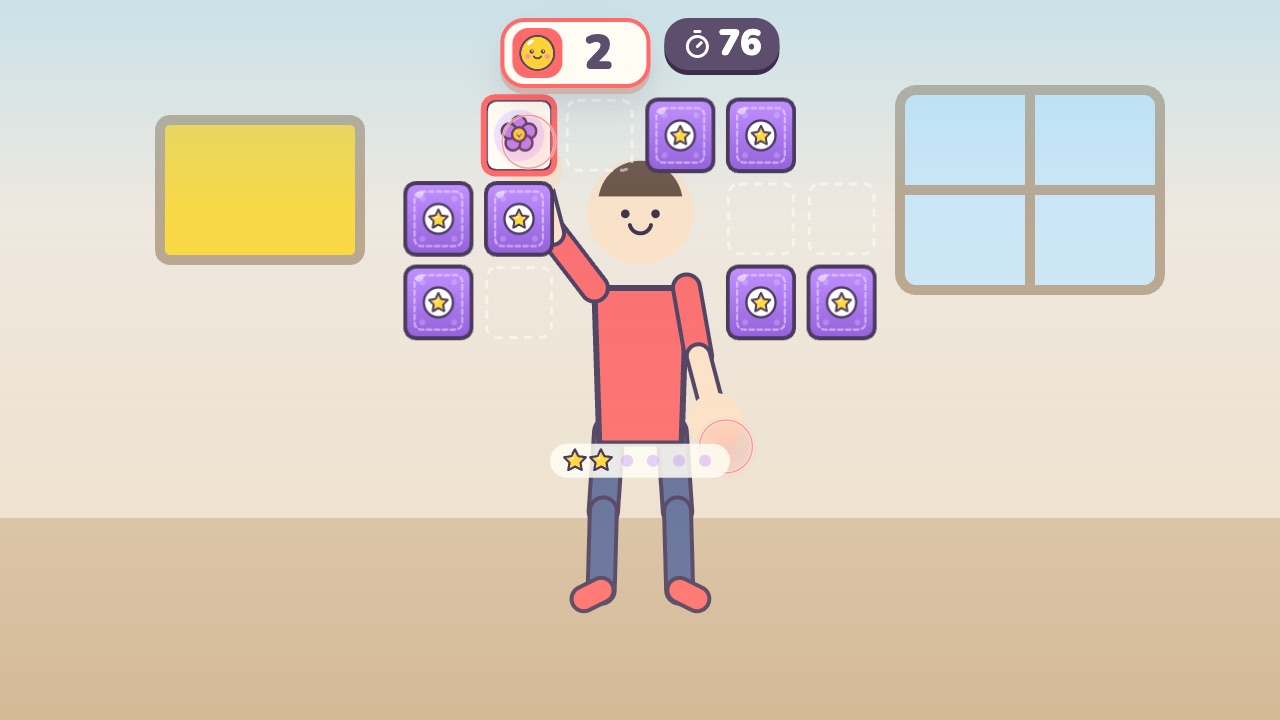 Memory MatchFlip two cards at a time and find the matching pairsAges 5–14 · Light activity · Thinking / Hands
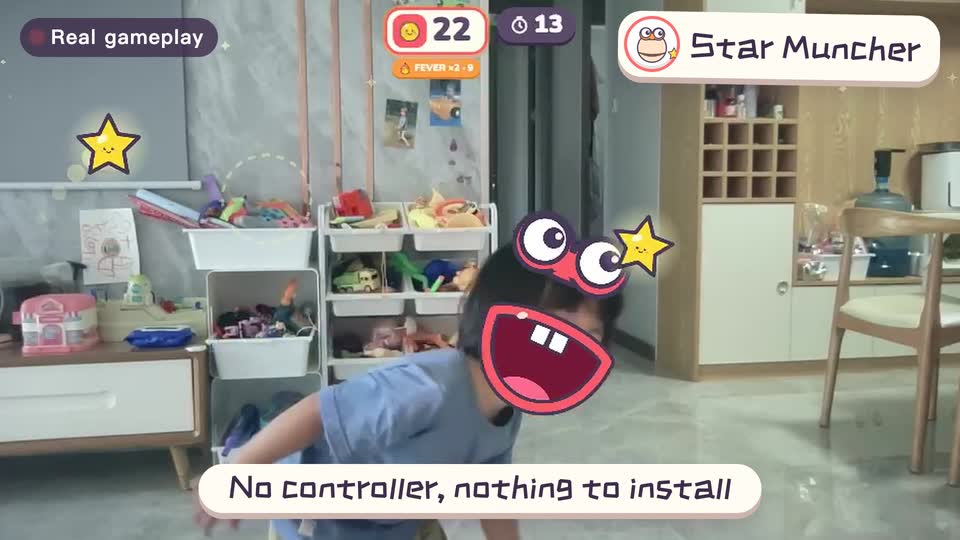
Real footage · 14 s
Kids stand in front of the computer and just move
100+ motion games for ages 3 to 18. Open the website and play: nothing to install, and the camera picture stays on this computer.
Sources
- Effects of Exergaming on Executive Functions of Children: A Systematic Review and Meta-analysis from 2010 to 2023. Chen et al., Archives of Public Health. 2023; 11 studies, 508 children aged 4 to 12
- Effects of Exergaming on Executive Function and Motor Ability in Children: A Systematic Review and Meta-analysis. Kou et al., PLoS One. 2024; 37 randomized controlled trials
- Effects of Commercial Exergames and Conventional Exercises on Improving Executive Functions in Children and Adolescents. Wu et al., JMIR Serious Games. 2023; 8 randomized controlled trials comparing exergames with conventional exercise
- Effects of Exergaming on Motor Skills, Cognitive Skills, and Physical Activity Among Children in Early Childhood. Kwok et al., Journal of Physical Activity and Health. 2026 systematic review and meta-analysis; children aged 8 and under, 12 studies