 DongDong Park
Are motion games bad for kids’ eyes? Screen time, myopia and outdoor play
Updated
No study has looked at motion games and eyesight directly, so you can’t say they “protect the eyes” or that they “don’t hurt the eyes”. What is clear: the more screen time, the higher the risk of myopia (nearsightedness), and time outdoors helps prevent it. So motion games need time limits too, and plenty of outdoor time afterward.
What WHO advises
- Ages 2 to 4: no more than 1 hour of sedentary screen time a day, and less is better. Not recommended for babies under 1.
- What counts: the guidelines’ glossary states that “sedentary screen time” does not include screen-based games that require physical activity.
- Ages 5 to 17: WHO still recommends limiting sedentary time, especially recreational screen time.
In other words, moving in front of a screen isn’t “sedentary screen time” by WHO’s definition, but that doesn’t make it unlimited: it is still recreational time in front of a screen.
What the research says
- A 2025 dose-response meta-analysis (45 studies, about 335,000 people, average age 9.3): each extra hour of screen time a day raised the odds of myopia by about 21%, and under 1 hour a day may be a relatively safe range. The screens studied included game consoles and TV.
- A 2015 randomized controlled trial in Guangzhou, China (12 elementary schools, 1,903 first graders): with one extra outdoor class at school each day, the cumulative rate of new myopia after three years was 30.4%, against 39.5% in the control group.
How to protect kids’ eyes while they play
- Keep it short. Count motion games in the day’s screen total; in the research above, under 1 hour of screen time a day may be a relatively safe range.
- Stand back. Motion games already need kids to stand far enough away for the camera to see the whole body, much farther from the screen than with a phone in hand or a tablet up close. A TV or projector is better than a small screen.
- Keep the room bright. Don’t play in a dark room facing a bright screen.
- Go outside afterward and look into the distance. Save motion games for rainy, cold or very hot days when you can’t get out: Forest Run or Red Light, Green Light gets everyone moving indoors.
- We don’t recommend them for children under 3.
If your child squints at things far away, rubs their eyes a lot or holds things very close, have their eyesight checked by an eye doctor. You may see specific “safe screen distances” online; we couldn’t confirm a figure in official guidance, so we don’t give one here.
Common questions
Are motion games bad for kids’ eyes?
No study has looked at motion games and eyesight directly. Research finds that more screen time means higher myopia risk and outdoor time helps prevent it, so keep motion game sessions short, stand back, and spend plenty of time outdoors afterward.
How long should kids play motion games?
Keep sessions short and count them in the day’s recreational screen time. A large meta-analysis found that under 1 hour of screen time a day may be a relatively safe range for myopia; for ages 2 to 4, WHO advises no more than 1 hour of sedentary screen time a day.
Do motion games count as screen time?
WHO’s glossary leaves screen games that require movement out of “sedentary screen time”, but for ages 5 to 17 it still recommends limiting recreational screen time. Limiting motion games like any other screen use is the safer choice.
More in “Are motion games good for kids? Benefits, risks and what the research says”
- Are motion games good for kids? Benefits, risks and what the research says (overview)
- Do motion games count as exercise? Intensity by game type and age
- Why are motion games so tiring? What’s normal and how to stay safe
- Can motion games help kids lose weight? Weight, fitness and daily activity
- Can motion games build motor skills and balance?
- Motion games and focus: what the executive function research shows
- Motion games in special education: what the research says
Games mentioned here
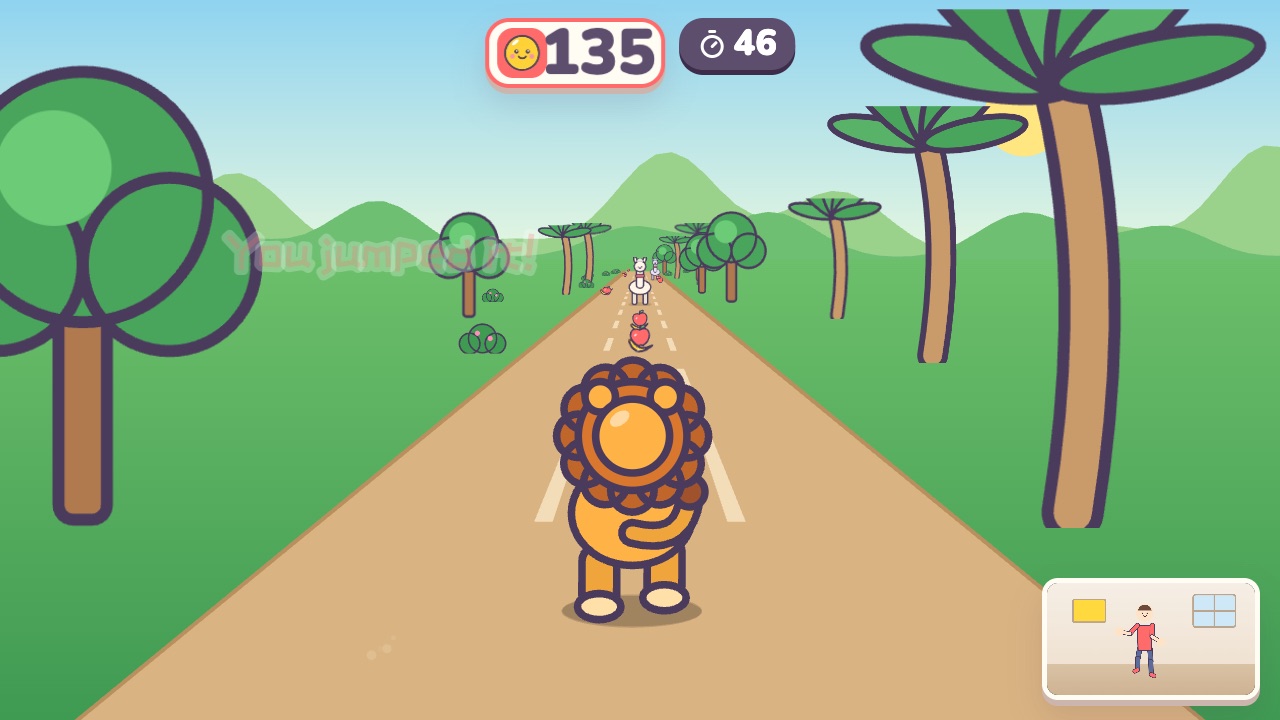 Forest RunRun on the spot, dodge left and right, and jump over the logsAges 4–10 · High activity · Run & jump / Whole body
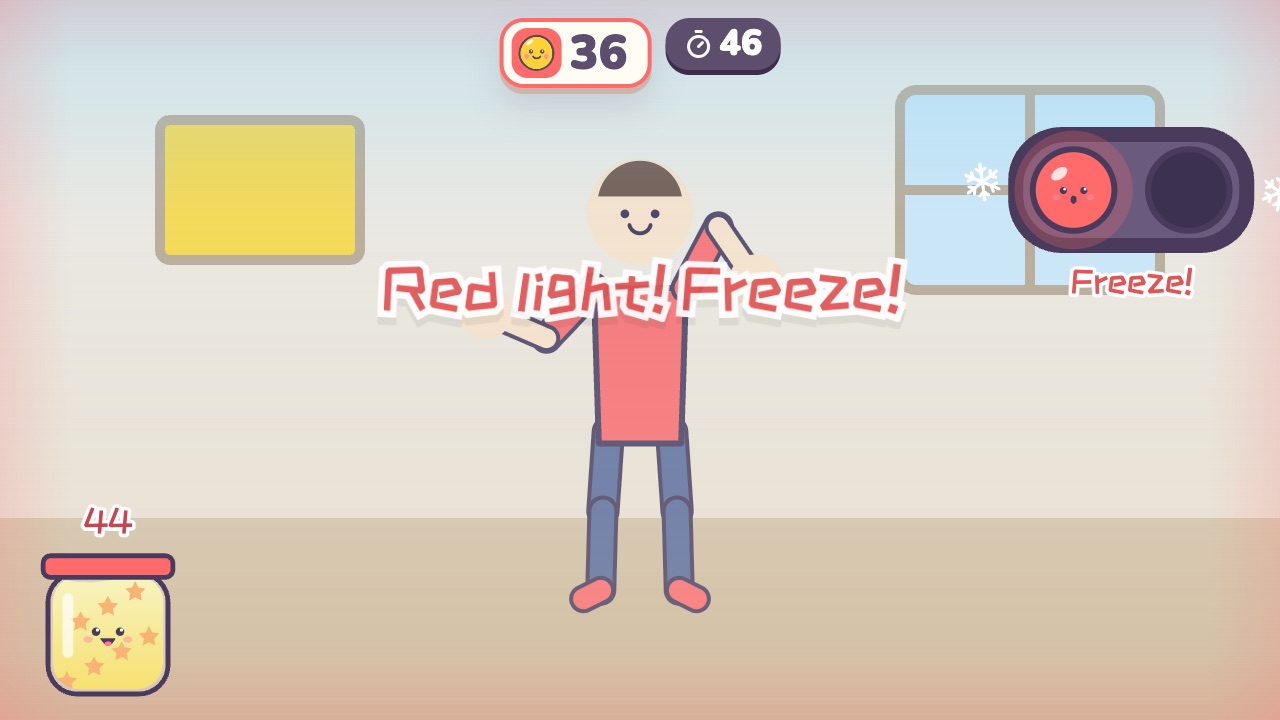 Red Light, Green LightMove like crazy on green light, and freeze the moment you hear red lightAges 3–10 · High activity · Whole body
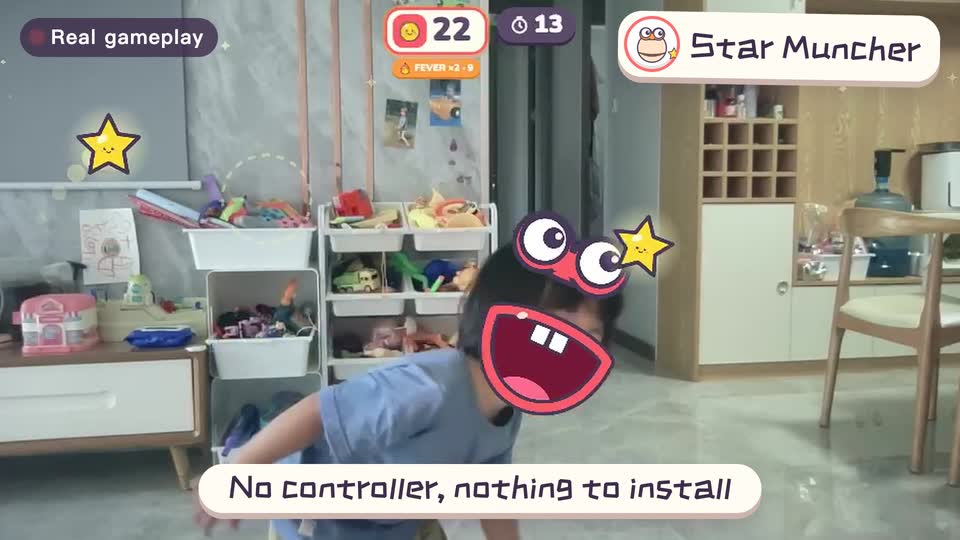
Real footage · 14 s
Kids stand in front of the computer and just move
100+ motion games for ages 3 to 18. Open the website and play: nothing to install, and the camera picture stays on this computer.
Sources
- Guidelines on physical activity, sedentary behaviour and sleep for children under 5 years of age. World Health Organization. 2019
- WHO guidelines on physical activity and sedentary behaviour. World Health Organization. 2020
- Digital Screen Time and Myopia: A Systematic Review and Dose-Response Meta-Analysis. Ha et al., JAMA Network Open. 2025; 45 studies, 335,524 participants
- Effect of Time Spent Outdoors at School on the Development of Myopia Among Children in China: A Randomized Clinical Trial. He et al., JAMA. 2015; 12 elementary schools in Guangzhou, 1,903 first graders