 DongDong Park
How much should kids move each day? What the WHO says, and how to fit it in at home
Updated
Most parents and teachers have heard that kids need “an hour of exercise a day”. But what exactly counts toward that hour, and how much do younger kids need? Here is what the World Health Organization (WHO) recommends, and how to fit it in when you’re stuck indoors.
What the WHO recommends
Ages 5 to 17
- An average of at least 60 minutes a day of moderate-to-vigorous physical activity across the week, mostly aerobic.
- On at least 3 days a week, vigorous aerobic activity, plus activities that strengthen muscles and bones.
- Less time sitting, especially recreational screen time.
Ages 3 to 4
- At least 180 minutes a day of physical activity of any intensity, of which at least 60 minutes is moderate to vigorous. More is better.
- Not held still for more than an hour at a time, such as strapped into a stroller or made to sit.
- No more than an hour of sedentary screen time a day. Less is better.
What “moderate” and “vigorous” feel like
A simple check: during moderate activity, breathing and heart rate clearly speed up, and you can still talk but not sing. During vigorous activity, you’re breathing hard and can only get out a few words at a time. Brisk walking and cycling are usually moderate; running, jumping rope, jumping jacks and chasing games are usually vigorous.
How to add it up indoors
The 60 minutes don’t have to happen all at once. Short bursts through the day add up. Indoors, you could split it like this:
- Right after getting up: 5 minutes of jumping jacks and high knees.
- Between lessons or homework: 5 to 10 minutes of jumping rope or running in place.
- Before dinner: 15 to 20 minutes of motion games with a parent, and see who scores higher.
- Weekends: get outside as much as you can. Indoor activity fills the gaps; it doesn’t replace outdoor play.
Motion games turn moving into playing. Jump Rope Champ counts every jump for you, Fitness Circuit turns squats, jumping jacks and high knees into three stations, and in Forest Run kids run in place and jump to dodge obstacles. A round lasts about a minute, and a few rounds are enough to get hearts pumping.
These guidelines are written for kids in general. If your child has a health condition, check with a doctor first.
Games mentioned here
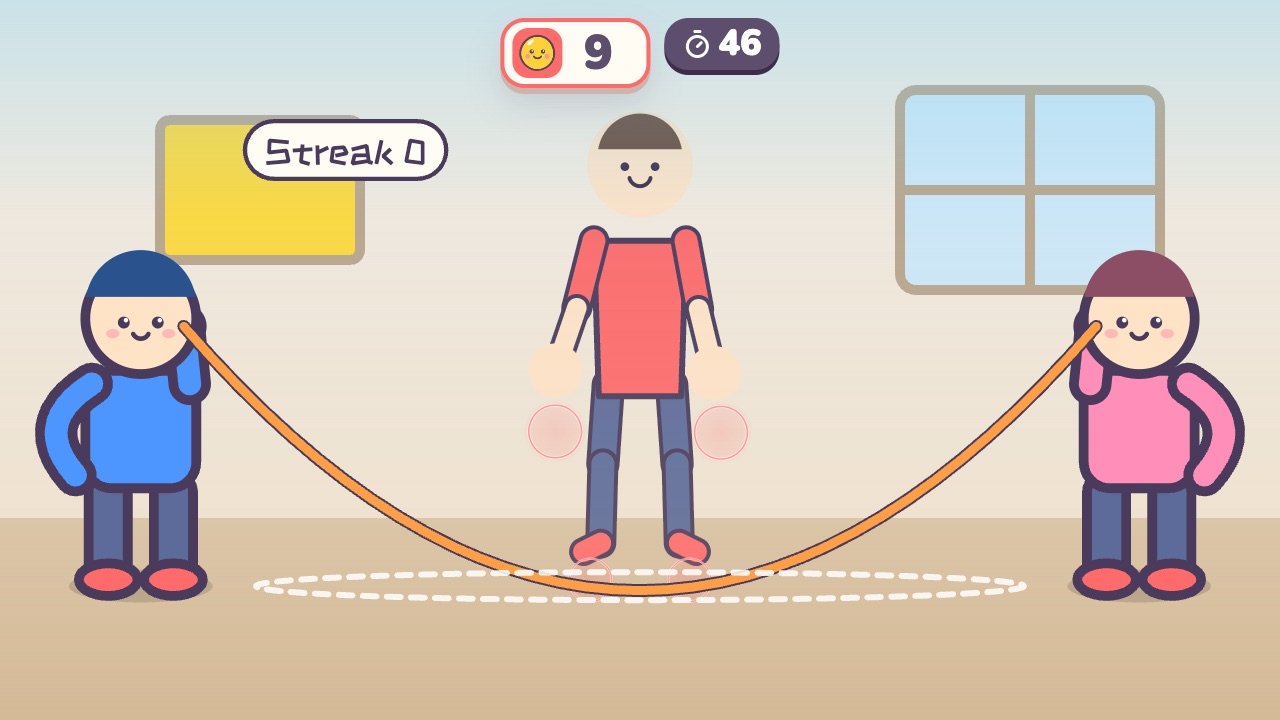 Jump Rope ChampJump when the rope sweeps under your feet. The longer your streak, the faster the ropeAges 6–14 · High activity · Run & jump / Fitness / Rhythm
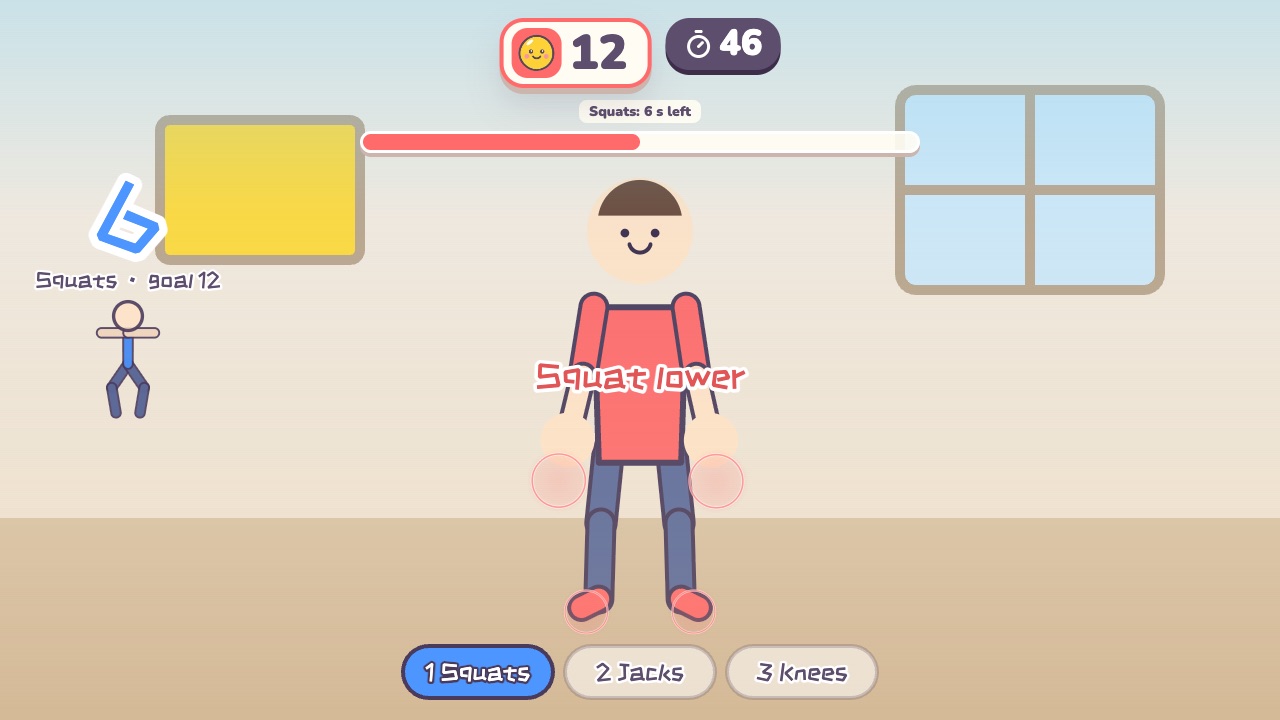 Fitness CircuitSquats, jumping jacks and high knees: three stations, counted for youAges 12–18 · High activity · Fitness / Run & jump / Whole body
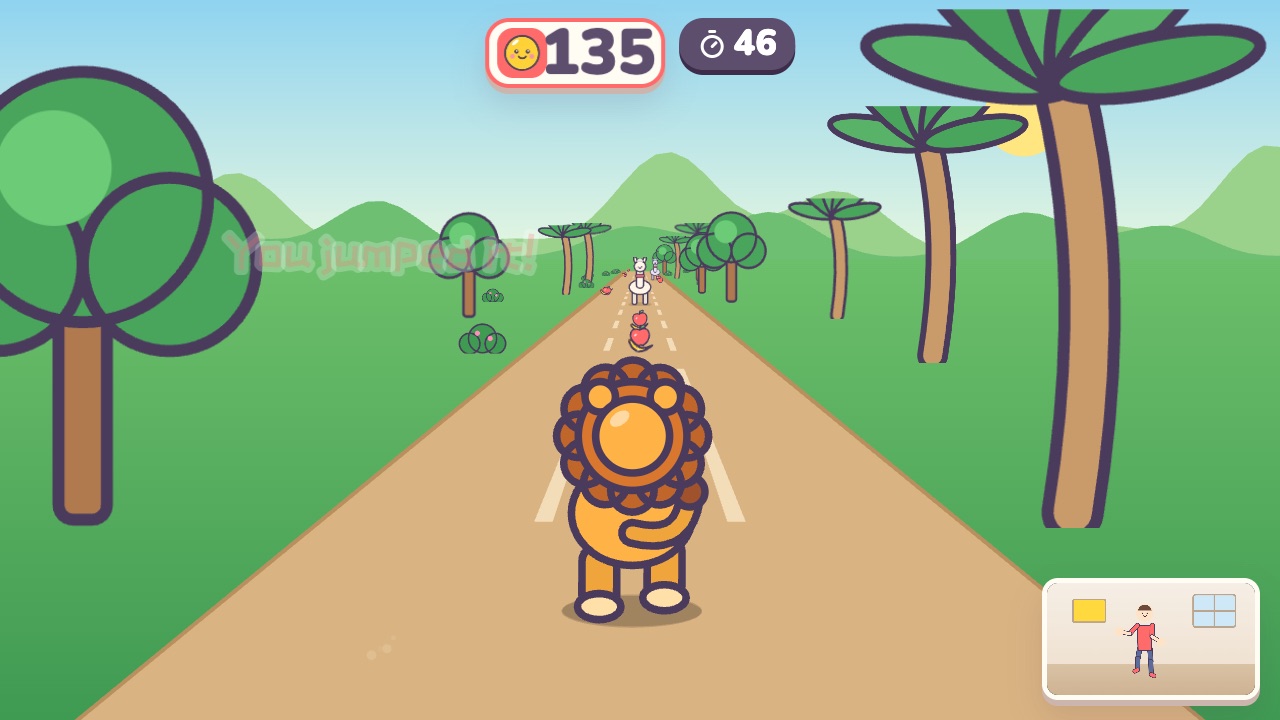 Forest RunRun on the spot, dodge left and right, and jump over the logsAges 4–10 · High activity · Run & jump / Whole body
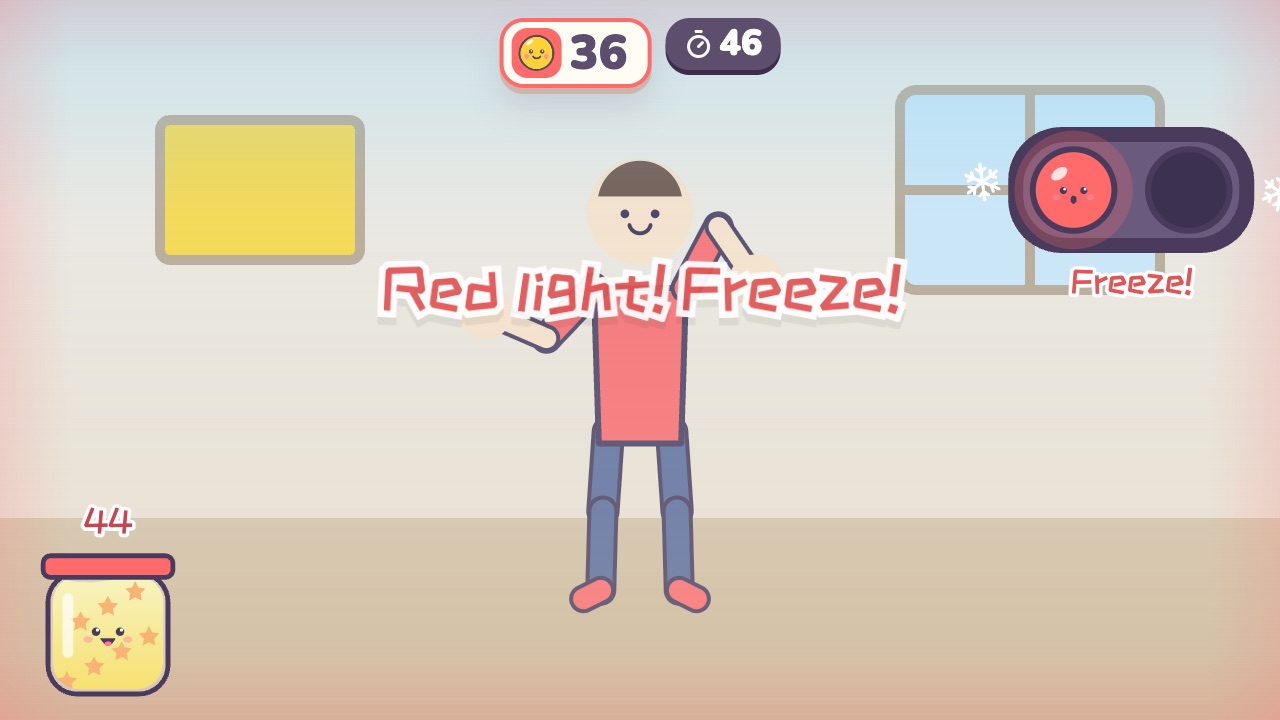 Red Light, Green LightMove like crazy on green light, and freeze the moment you hear red lightAges 3–10 · High activity · Whole body
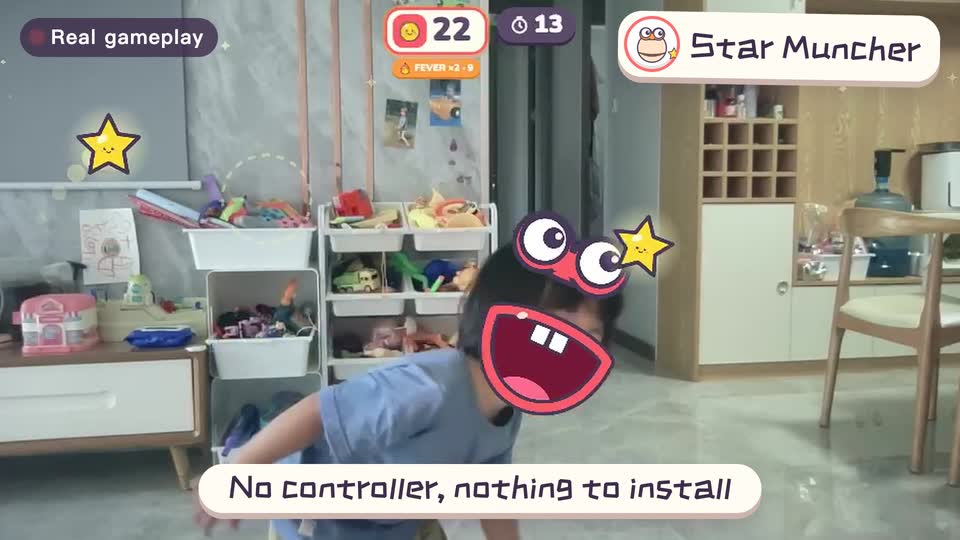
Real footage · 14 s
Kids stand in front of the computer and just move
100+ motion games for ages 3 to 18. Open the website and play: nothing to install, and the camera picture stays on this computer.
Sources
- WHO guidelines on physical activity and sedentary behaviour. World Health Organization. 2020
- Guidelines on physical activity, sedentary behaviour and sleep for children under 5 years of age. World Health Organization. 2019
Keep reading
- Screen time isn’t always sitting time: using screens to get kids moving
- When kids don’t like exercise: 6 ways to turn “I have to” into “I want to”
- Exercise and height: what actually helps kids grow (ages 6–14)
- Kids bouncing off the walls? A quiet 20-minute plan to burn off energy at home (ages 3–10)
- Winter exercise for kids: staying active when it’s too cold to go out
- Rainy day? 8 indoor motion games to get kids moving at home