 DongDong Park
Movement breaks for kids: 40 quick ideas for class, homework and wiggly days
Updated
A movement break is a minute or two of moving between stretches of sitting: jumping jacks before a spelling test, wall push-ups halfway through homework, a slow stretch before reading. Below are 40 ideas sorted by what you need the break to do, how to run them for a whole class or for one child, and what the research says, including for kids with ADHD.
Movement break or brain break?
The same idea under two names. Teachers tend to say brain break for a whole-class game run from the front of the room (see our 5-minute brain breaks). Movement break is also the phrase that turns up in occupational therapy and in school support plans, where it often means one child stepping away for a few minutes. Every idea on this page works both ways, and none of them needs equipment or a screen.
What the research says
- Third and fourth graders: after classroom activity breaks (a program called Energizers), on-task behavior during lessons rose by 8%, and by 20% among the students who had been least on task (Mahar and colleagues, 2006).
- Grades 1 to 3: in a small study of 35 children, a 4-minute break (20 seconds of hard exercise and 10 seconds of rest, eight times) raised on-task behavior by about 10% whether it came in the morning or the afternoon, and by 14% with one of each. Again, the kids who were most off task gained the most (Broad and colleagues, 2023).
- A review of 39 studies found that classroom physical activity improved on-task behavior, but found no clear effect on measures of thinking skills such as executive function, and the studies differed too much for firm conclusions (Watson and colleagues, 2017).
So the honest promise is better focus and behavior during the next stretch of work, not higher scores on thinking tests. That alone is worth it.
40 movement break ideas
Pick by what you need. Each move takes 30 seconds to 2 minutes; string three together for a longer break.
Wake-up moves, for a sluggish room
| Move | How |
|---|---|
| 1. Jumping jacks | 20 together, counting out loud |
| 2. High knees | Run on the spot with knees up to hip height for 30 seconds |
| 3. Popcorn | Crouch low and wait, then jump up high when you hear “pop!” |
| 4. Shake it out | Shake each hand and each foot 5 times, then 4 times, and so on down to 1 |
| 5. Skater hops | Hop sideways from one foot to the other, swinging the arms |
| 6. Squat and reach | Squat to touch the floor, then stand and stretch to the ceiling, 10 times |
| 7. Star jumps | Jump up with arms and legs spread wide like a star, 10 times |
| 8. Mountain climbers | Hands on the floor, bring the knees in one at a time, 20 in all (older kids) |
| 9. One-song dance | Dance in place for one song; freeze whenever the music is paused |
| 10. Follow the leader | A student calls four or five moves, the class copies, and a new leader goes next time |
Strong moves: push, pull and carry
| Move | How |
|---|---|
| 11. Wall push-ups | Hands on the wall at shoulder height, 10 slow push-ups |
| 12. Chair push-ups | Sitting on a steady chair, hands flat on the seat, press down to lift a little and hold for 5 seconds; do it 5 times |
| 13. Palm press | Press the palms together hard in front of the chest for 10 seconds, relax, repeat 3 times |
| 14. Finger pull | Hook the fingers of both hands together at chest height and pull outward for 10 seconds |
| 15. Wall sit | Back against the wall, knees bent as if sitting on a chair, hold 20 to 30 seconds |
| 16. Plank | Forearms and toes on the floor, body straight, hold 15 to 30 seconds |
| 17. Bear walk or crab walk | Across the room and back, on hands and feet (bear) or belly up (crab) |
| 18. Classroom jobs | Carry a stack of books to the library, stack chairs, wipe the board |
Occupational therapists often call moves like these heavy work and use them when a child is wound up. The evidence for specific sensory effects is thin (see is sensory training worth it?), but these moves are quiet, need little room and are easy to do alone. More in proprioception games.
Calm-down moves, before reading or a test
| Move | How |
|---|---|
| 19. Five slow breaths | Smell the flower (in through the nose), blow out the candle (out through the mouth) |
| 20. Melting snowman | Stand tall, then melt slowly to the floor over a count of 10 |
| 21. Tree pose | Stand on one foot with the other foot against the ankle or calf, hands together, count to 10, switch |
| 22. Squeeze and let go | Squeeze the fists, then the shoulders, then the whole body for 5 seconds each, and let go |
| 23. Slow-motion walk | Cross the room as slowly as you can without stopping |
| 24. Shoulder rolls | Roll the shoulders forward 5 times, then backward 5 times |
| 25. Reach and fold | Reach up tall, then fold forward and hang loose for 5 breaths |
| 26. Balance count | Eyes on one spot, stand on one foot while the class counts to 15 together |
At the desk, without standing up
| Move | How |
|---|---|
| 27. Seated march | Lift the knees in turn for 30 seconds |
| 28. Seated twist | Turn to look behind you over one shoulder, then the other, 5 times each side |
| 29. Cross-crawl | Touch the right hand to the left knee, then the left hand to the right knee, 20 times |
| 30. Shrug and drop | Shoulders up to the ears, hold for 3 seconds, drop; 5 times |
| 31. Toe taps | Under the desk: tap the toes fast for 10 seconds, then circle each ankle |
| 32. Air writing | Write this week’s spelling words in the air with a straight arm, as big as possible |
| 33. Finger workout | Touch each fingertip to the thumb in order and back again, faster each round |
| 34. Seated jacks | Arms do jumping jacks while the feet tap out and in |
Moving while learning
| Move | How |
|---|---|
| 35. Spell and jump | One jumping jack per letter while the class spells a word out loud |
| 36. Skip-count squats | Count by 2s, 5s or 10s with one squat per number |
| 37. True or false | Read statements from today’s lesson: stand up for true, sit down for false |
| 38. Hop the answer | Hop the answer to a math fact: 3 + 4 is seven hops |
| 39. Vocabulary charades | A student acts out a word from the week’s list until the class guesses it |
| 40. Compass turns | Label the walls north, south, east and west; call a direction and everyone jumps to face it |
Running movement breaks with a whole class
- Same signal every time. A chime or a countdown starts the break, and the same signal ends it.
- Stay in your spot. Arm’s length from everyone, chairs pushed in, no running between rows.
- End with a calm move. Thirty seconds of breathing or a slow stretch before work starts again.
- Put them on the timetable. Mid-morning, after lunch and mid-afternoon are common slots. The CDC recommends classroom physical activity in bouts of 5 minutes or more, several times a day.
- Let kids choose. Write the 40 ideas on cards and have a student draw one.
- Never take a break away as punishment. SHAPE America lists withholding brain breaks among practices to avoid, and the CDC advises against withholding classroom physical activity.
Movement breaks for one child
When one student needs to move more than the rest, set it up so it doesn’t turn into a reward, a punishment or a show:
- A break card. The child puts the card on the desk and you nod. No discussion needed.
- A set place and a short menu. By the back wall or in the hallway with an adult nearby; three moves from the strong or calm lists rather than the wake-up list.
- A visible timer. Two or three minutes, then back to the desk.
- The same way back in. For example, the first thing on return is reading the next question out loud.
- Scheduled, not only on demand. For example, a break after each 20-minute block of seatwork, rather than waiting until the child is already off task.
Movement breaks and ADHD
The CDC’s guidance on ADHD in the classroom says to allow breaks, because for children with ADHD paying attention takes extra effort and can be very tiring, and to allow time to move and exercise. “Allowing breaks or time to move around” is one of the accommodations it lists for IEPs and 504 plans. What the research can and can’t tell you:
- Classroom studies of movement breaks mostly include all students, not only children with ADHD. In both classroom studies above, the students who were most off task gained the most.
- In a lab study of 52 children aged 8 to 12, boys with ADHD did better on working-memory tasks when they moved more, while typically developing children did slightly worse (Sarver and colleagues, 2015).
- A review of eight small trials found that aerobic exercise improved attention, hyperactivity and impulsivity in children with ADHD (Cerrillo-Urbina and colleagues, 2015). Those were exercise programs run over weeks, not two-minute breaks.
- The CDC also notes that moving while learning can help or distract, depending on the child, and that there is limited information on which accommodations work best.
So treat movement breaks as a support to try and watch, not a treatment. If breaks are written into a child’s plan, the plan sets how often; ask the school team what the child should do during them.
Movement breaks at homework time
- Work, then move. Set a timer for a chunk of homework (around 15 to 20 minutes for younger kids, longer for teens), then take a two-minute break.
- Pick moves that make it easy to sit back down. Wall push-ups, a wall sit or tree pose settle better than a dance party.
- Give screen breaks a clear end. A break that turns into a video rarely ends after two minutes. A timed game round does.
One-minute game breaks with a webcam
With a laptop or classroom computer that has a camera, these games time and count the moves for you. Each round ends on its own after 60 to 90 seconds, so one round is one break.
| Need | Games (ages) |
|---|---|
| Wake up | Jumping Jack Counter, High Knees Counter, Squat Counter (6–18); Red Light, Green Light (3–10); Animal Moves (3–8) |
| Focus | Simon Says, Do the Opposite (4–10) |
| Calm down | Bubble Pop (3–7); Calm Breathing (10–18, uses the microphone); Yoga Poses, Tai Chi Cloud Hands (12–18) |
There’s nothing to install, and the camera images never reach our servers. To run them with a whole class on a projector, see 5-minute brain breaks; by age, kindergarten and preschool and middle and high school. For a morning routine built from these moves, see the sensory circuit.
Common questions
- What is a movement break?
- A short burst of movement, usually one to five minutes, between stretches of sitting. It can be the whole class doing jumping jacks, or one child doing wall push-ups by the back wall.
- How often should kids take movement breaks?
- There is no single rule. The CDC recommends classroom physical activity in bouts of 5 minutes or more, several times a day, and in one classroom study two breaks a day, one in the morning and one in the afternoon, gave the biggest gain in on-task behavior. For one child, a plan made with the school team sets the schedule.
- How long should a movement break be?
- One to five minutes. In a study of grades 1 to 3, a 4-minute break was enough to raise on-task behavior. Finish with 30 seconds of something calm so kids settle back in.
- What is the difference between a brain break and a movement break?
- Mostly wording. Brain break is the usual name for a whole-class activity led from the front of the room. Movement break is also used in occupational therapy and in school support plans, often for one child.
- Do movement breaks help kids with ADHD?
- Breaks and time to move are among the classroom supports the CDC lists for children with ADHD, and in studies of whole classes the students who were most off task gained the most. Research on breaks for children with ADHD specifically is still limited, so try them and watch what happens for that child.
- Can movement breaks be done sitting down?
- Yes. Seated marching, twists, cross-crawls, shoulder shrugs, palm presses and air writing all work at a desk, which helps in a crowded room or for a student who can’t easily stand.
- What movement breaks work for middle and high school students?
- Moves that don’t feel childish: wall sits, stretching, a quick competitive game, or standing up for a discussion. Our page on brain breaks for middle and high school has a full list for ages 11 to 18.
Games mentioned here
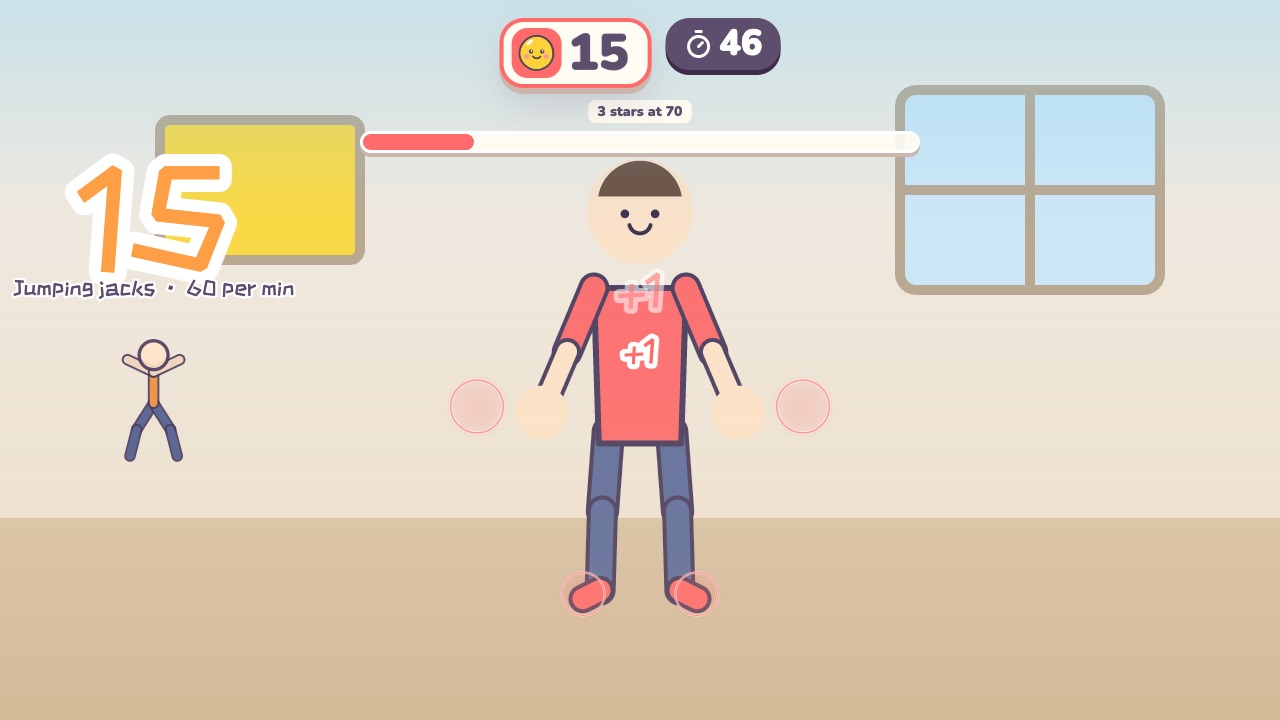 Jumping Jack CounterJump out with hands up, jump in with hands down: that is one. How many in a minute?Ages 6–18 · High activity · Fitness / Whole body
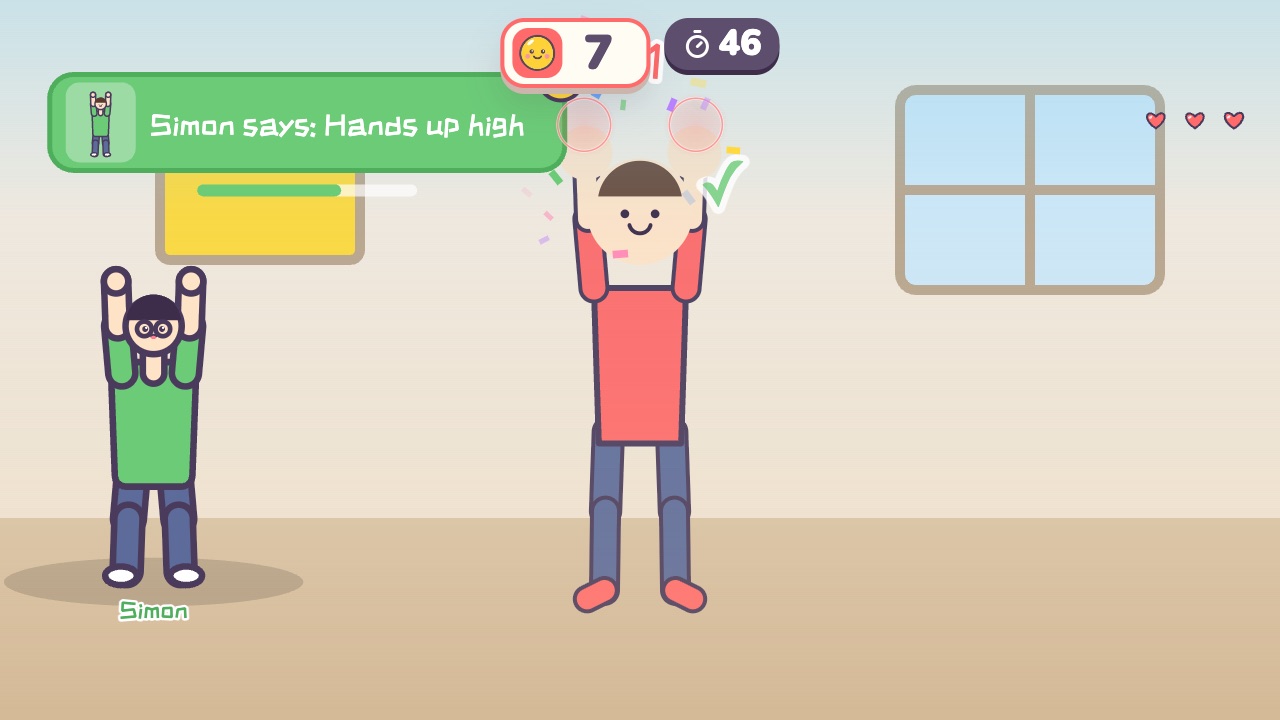 Simon SaysOnly move when Simon says soAges 4–10 · Moderate activity · Whole body / Thinking
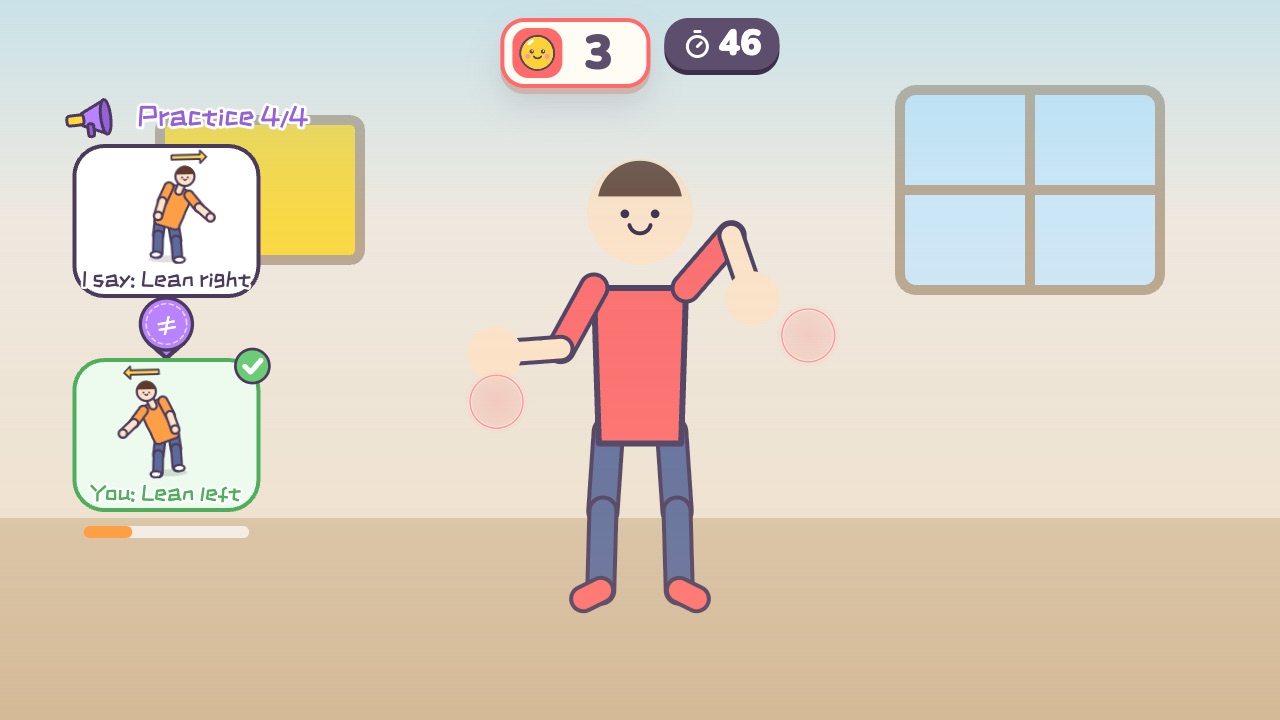 Do the OppositeI say arms up, you squat down. Only the opposite move countsAges 4–10 · Moderate activity · Whole body / Thinking
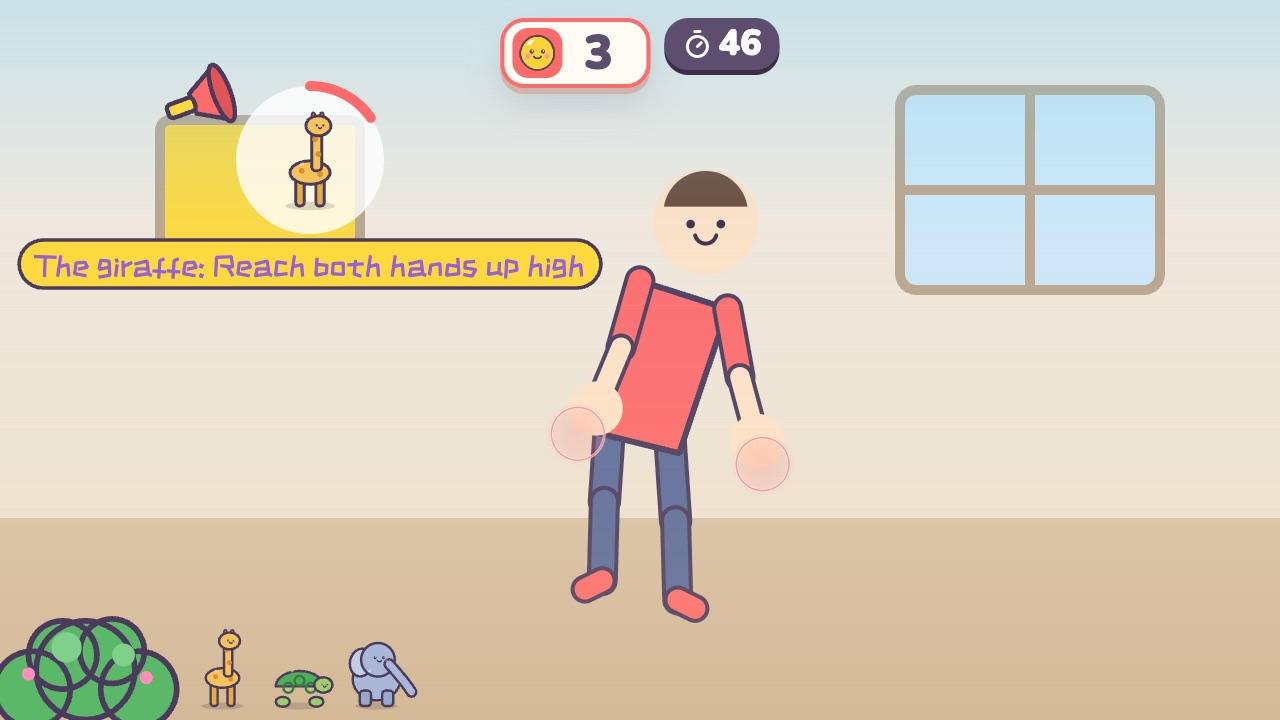 Animal MovesDo the move of whichever animal gets calledAges 3–8 · Moderate activity · Whole body
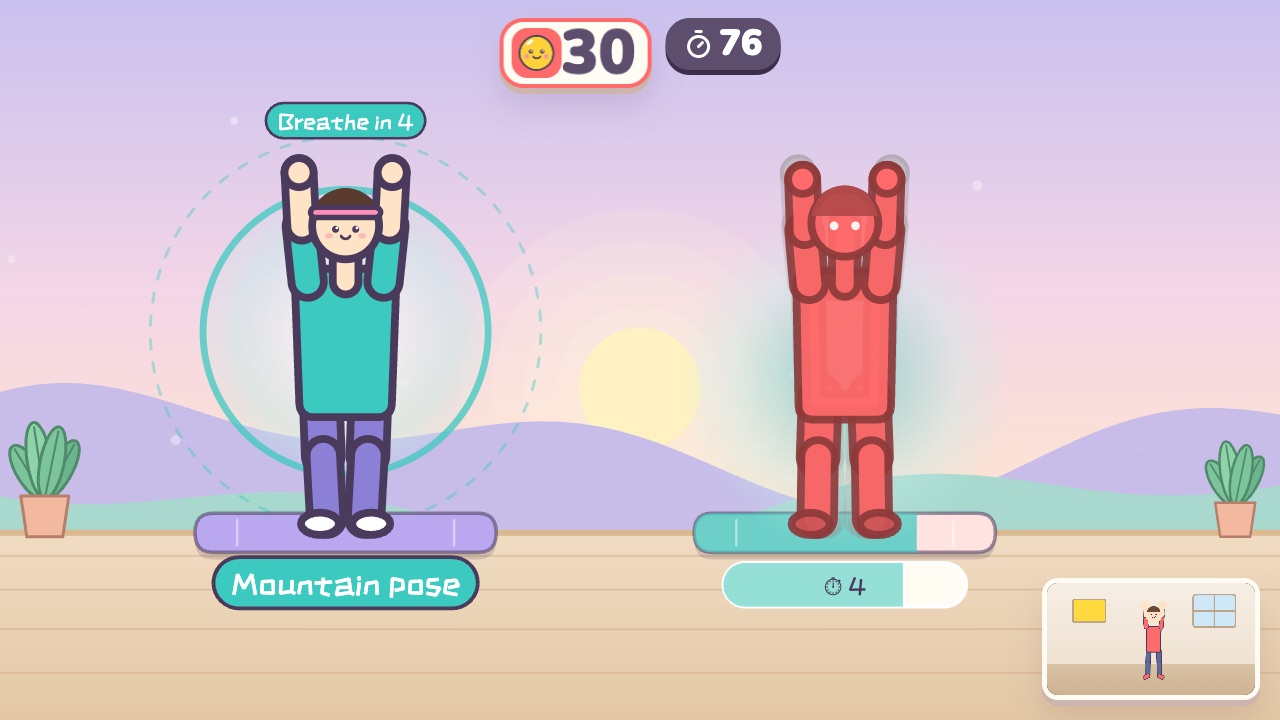 Yoga PosesCopy each yoga pose and hold it steadyAges 12–18 · Light activity · Calm / Fitness / Whole body
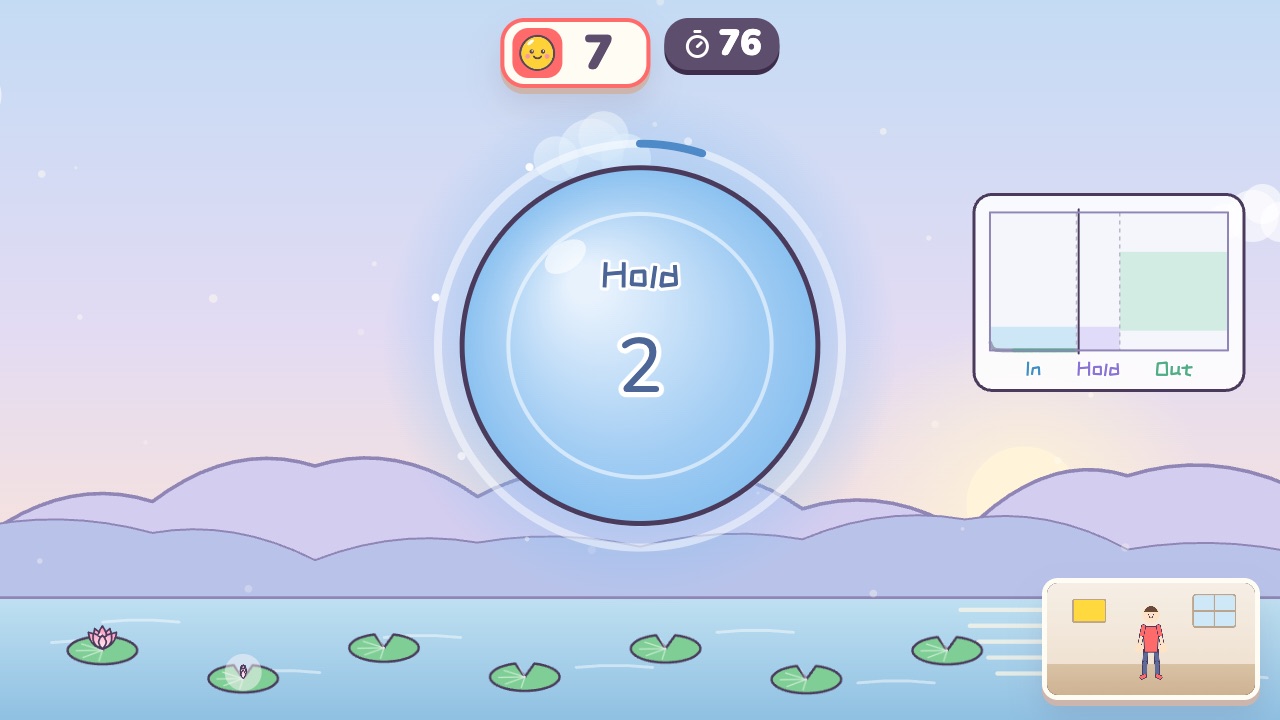 Calm BreathingBreathe in as the circle grows, and breathe out slowly at the microphone as it shrinksAges 10–18 · Light activity · Calm
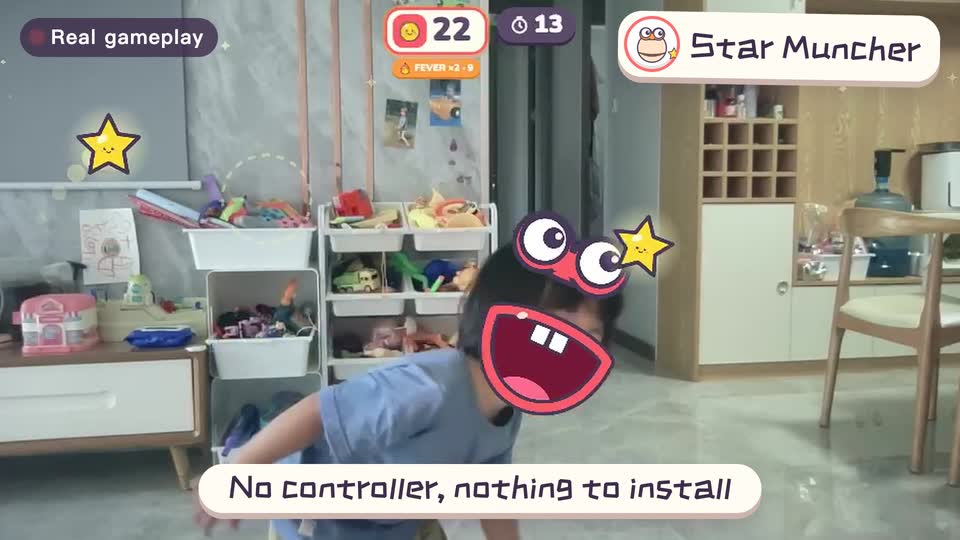
Real footage · 14 s
Kids stand in front of the computer and just move
100+ motion games for ages 3 to 18. Open the website and play: nothing to install, and the camera picture stays on this computer.
Sources
- Effects of a classroom-based program on physical activity and on-task behavior. Mahar MT, Murphy SK, Rowe DA, Golden J, Shields AT, Raedeke TD. Medicine & Science in Sports & Exercise 38(12), 2086–2094, 2006
- Classroom Activity Breaks Improve On-Task Behavior and Physical Activity Levels Regardless of Time of Day. Broad AA, Bornath DPD, Grisebach D, McCarthy SF, Bryden PJ, Robertson-Wilson J, Hazell TJ. Research Quarterly for Exercise and Sport 94(2), 331–343, 2023
- Effect of classroom-based physical activity interventions on academic and physical activity outcomes: a systematic review and meta-analysis. Watson A, Timperio A, Brown H, Best K, Hesketh KD. International Journal of Behavioral Nutrition and Physical Activity 14, 114, 2017
- ADHD in the Classroom. Centers for Disease Control and Prevention. Updated October 2026
- Hyperactivity in Attention-Deficit/Hyperactivity Disorder (ADHD): Impairing Deficit or Compensatory Behavior?. Sarver DE, Rapport MD, Kofler MJ, Raiker JS, Friedman LM. Journal of Abnormal Child Psychology 43(7), 1219–1232, 2015
- The effects of physical exercise in children with attention deficit hyperactivity disorder: a systematic review and meta-analysis of randomized control trials. Cerrillo-Urbina AJ, García-Hermoso A, Sánchez-López M, Pardo-Guijarro MJ, Santos Gómez JL, Martínez-Vizcaíno V. Child: Care, Health and Development 41(6), 779–788, 2015
- Strategies for Classroom Physical Activity in Schools. Centers for Disease Control and Prevention. 2018
- Physical Activity Should Not Be Used as Punishment and/or Behavior Management. SHAPE America. Position statement, 2021
Keep reading
- Indoor recess games: a 20-minute rainy-day plan
- Brain breaks: 5-minute movement games for any grade
- Brain breaks for middle and high school: movement teens won’t call babyish
- Brain breaks for kindergarten and preschool: short, silly and mostly screen-free
- Smartboard games that get the whole class moving, not just one kid at the board
- Homeschool PE made simple: a weekly plan, a fitness log and indoor games for bad-weather days