 DongDong Park
Clumsy or uncoordinated? How to build coordination with games (ages 4–12)
Updated
Arms and legs that get in each other’s way when running, a ball that never quite gets caught, a jump rope that keeps catching the feet: most of the time this isn’t a clumsy kid, just coordination that hasn’t been practiced yet. Coordination isn’t one skill but four: hand-eye, arms and legs, left-right, and rhythm. And you don’t build it by repeating one move a hundred times, but by trying lots of different ones. Ten minutes a day, with a few games picked for your kid’s age, is enough.
The four kinds of coordination
- Hand-eye: where the eyes see something and where the hand reaches match up. Catching, bouncing a ball and slicing fruit all use it.
- Arms and legs: the upper and lower body working together. Running needs an arm swing; jumping rope means turning with the hands while jumping with the feet.
- Left-right: the two sides of the body taking turns or doing different things, like switching hands while dribbling, high knees or side steps.
- Rhythm: landing moves on the beat, as in jumping rope, bamboo dancing or moving to music.
A kid who seems uncoordinated is often weak in just one or two of these. While they play, watch for it: are they not judging where things are, are their arms and legs out of sync, or are they half a beat behind?
Why “lots of different moves” works
Coordination is teamwork between the nerves and the muscles. Each new movement pattern a kid learns adds one more to the body’s “library,” so the next similar move is quicker to pick up. Repeating one move only makes that one move smooth; switch to something else and it’s back to square one. That’s why kids this age should try many kinds of play: ball games, jumping, climbing, balancing and rhythm, a bit of everything.
Ages 4–6: get the body to listen
- Shape Wall (ages 4–12): a wall slides toward you with a body-shaped hole in it, and you make the same pose quickly to pass through. It teaches kids where their own arms and legs are.
- Animal Moves (ages 3–8): hop like a bunny, swing your trunk like an elephant, flap like a bird. One round switches between several movement patterns.
- Bounce the Ball (ages 5–12): push the ball down each time it bounces up, and listen for the calls to switch hands or bounce it low. Hand-eye and left-right in one game.
- Hopscotch (ages 5–12): one foot on single squares, two feet on double squares, up to ten and back again. One-foot balance and jumping coordination in one.
Ages 6–9: hand-eye plus rhythm
- Volleyball Keep-Up (ages 6–15): bump the ball with your arms together when it drops to your waist, set it with your hands up when it’s over your head, and first walk to the circle where it will land. Judging height plus footwork.
- Frisbee Dog (ages 6–12): catch the frisbee, then throw it just before the puppy reaches the circle. Catching, plus throwing ahead of a moving target.
- Air Drums (ages 6 and up): a drum kit floats around you, with a drum on each side, two cymbals and a bass drum at your feet. Hit whichever one the note falls on. Each hand does its own job, and the feet join in.
- Rhythm Steps (ages 6–16): step left, step right, jump and squat to the beat, with the whole body landing on time.
Ages 9–12: faster and more complex
- Bamboo Dance (ages 8–16): two bamboo poles open and close to the drumbeat. When they open, jump in with feet together; when they close, jump out with feet apart. Rhythm and jumping at once, and miss a beat and the poles catch you.
- Rhythm Steps and Air Drums get a level harder: more arrows and notes, so reactions and coordination are trained together.
- Beyond that come reaction and hand-eye skills on their own: see reaction and hand-eye coordination games. For balance and body control, see sensory motor games at home.
A 10-minute day
- Pick two or three games and play each once or twice. Rotate them day to day, and over a week all four kinds get covered.
- Start on Easy. Getting it right seven or eight times out of ten is the sweet spot: too easy is boring, too hard and kids give up.
- Screen-free play is just as good: bouncing a ball, jumping rope, hopscotch, beanbag toss, keeping a balloon or a hacky sack in the air. Get outside when you can.
- Don’t rush them with “faster!” Accuracy first, then speed. Once the move is right, the speed comes by itself.
Pick games for the weak spot
- Can’t catch a ball or slice the fruit: hand-eye is the weak spot. Play more Bounce the Ball, Volleyball Keep-Up and Frisbee Dog, starting with slow, big targets.
- Arms and legs out of sync when running, feet caught in the rope: arm-and-leg teamwork is the weak spot. Play more Hopscotch and Rhythm Steps, slowly at first until the moves flow.
- Both hands always move together and won’t separate: left-right is the weak spot. Play more Air Drums, and switch hands in Bounce the Ball. A step-by-step plan is in bilateral coordination games.
- Can’t keep the beat, always half a beat behind: rhythm is the weak spot. Play more Bamboo Dance and Rhythm Steps, and listen to the beat a few times before starting.
How to see progress
The results screen keeps every round’s score, so you don’t have to write anything down. The clearer signs are in everyday life: ten jumps in a row with the rope, catching a ball without closing their eyes first, arms that no longer stay stiff at their sides while running. Coordination usually improves visibly within a few weeks, as long as kids move a little every day rather than for an hour once a weekend.
If your child is much clumsier than other kids the same age, falls often, can’t manage shoelaces or hold a spoon steadily, and it’s affecting daily life, ask your pediatrician about a developmental assessment rather than putting it down to “not enough practice.”
Games mentioned here
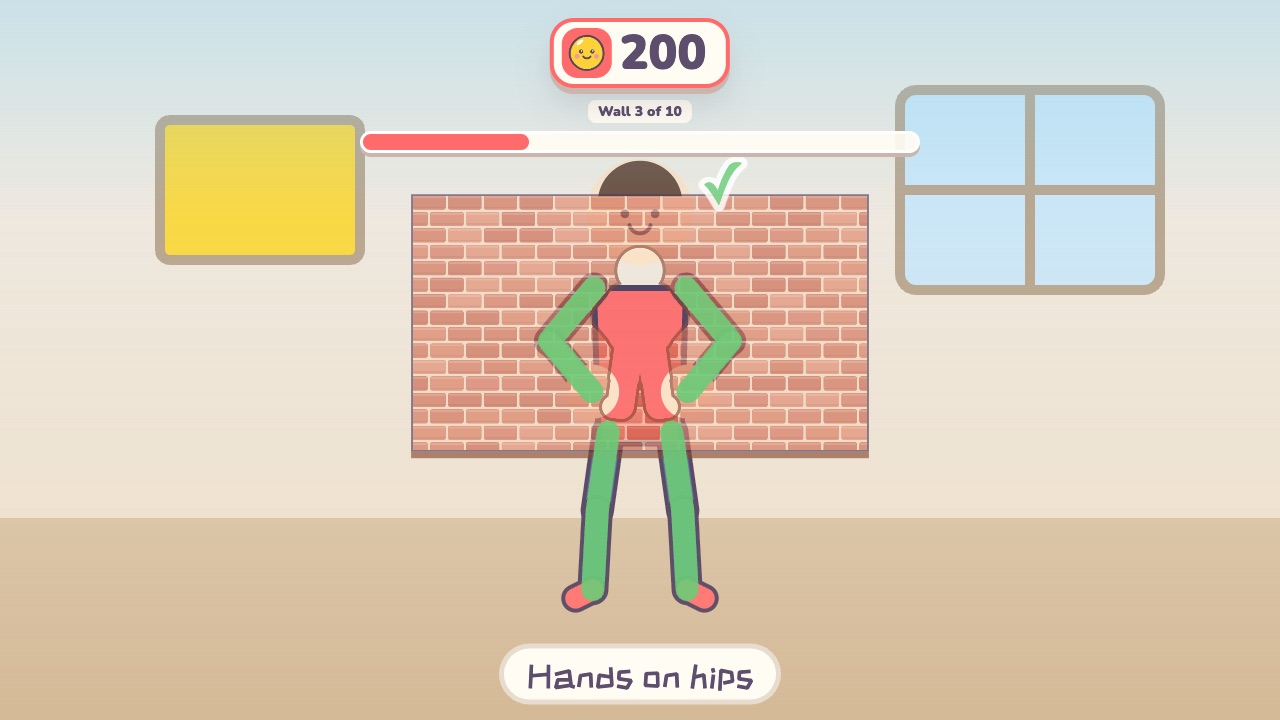 Shape WallMake the same shape as the hole in the wallAges 4–12 · Moderate activity · Whole body / Thinking
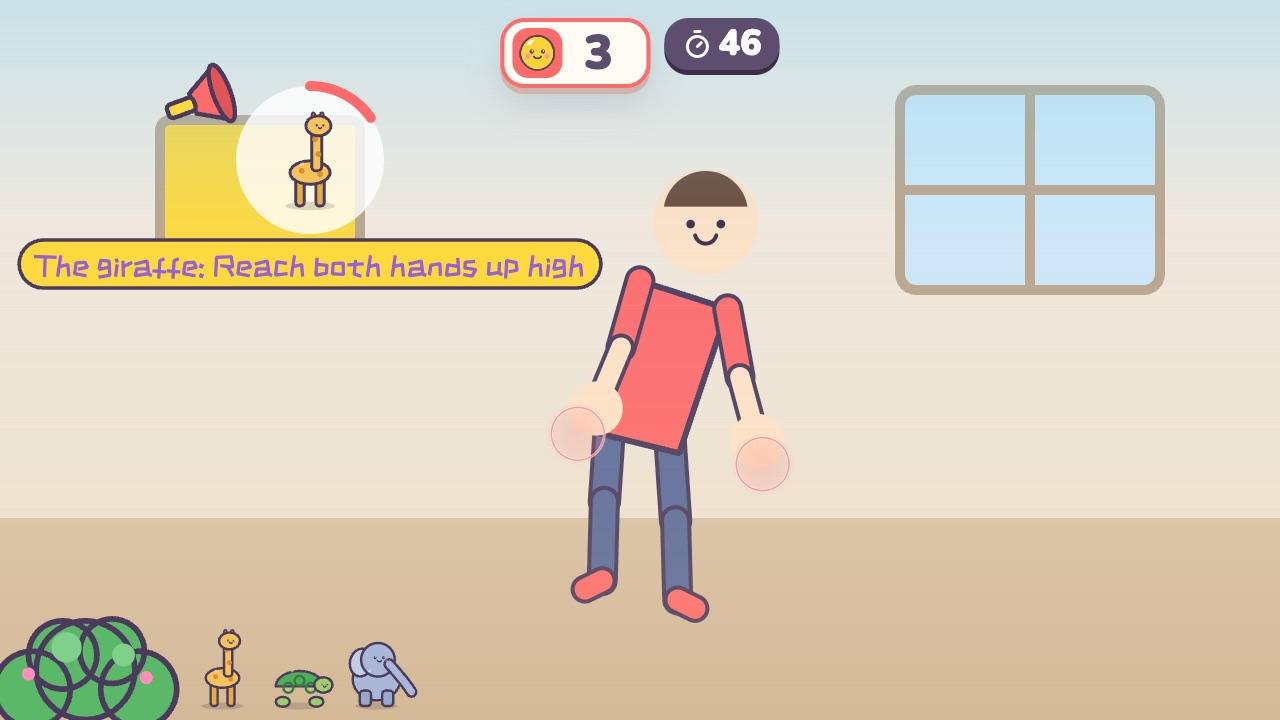 Animal MovesDo the move of whichever animal gets calledAges 3–8 · Moderate activity · Whole body
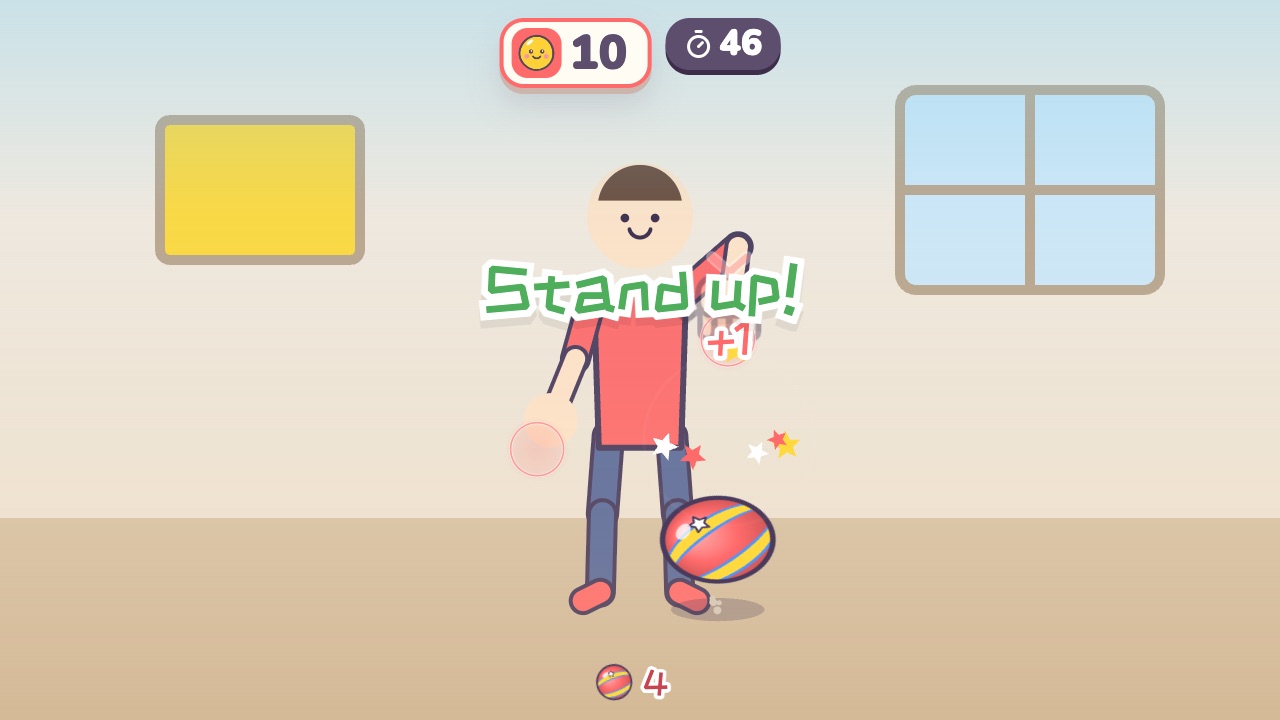 Bounce the BallPush the ball down each time it bounces up, and listen for the callsAges 5–12 · Moderate activity · Hands / Rhythm
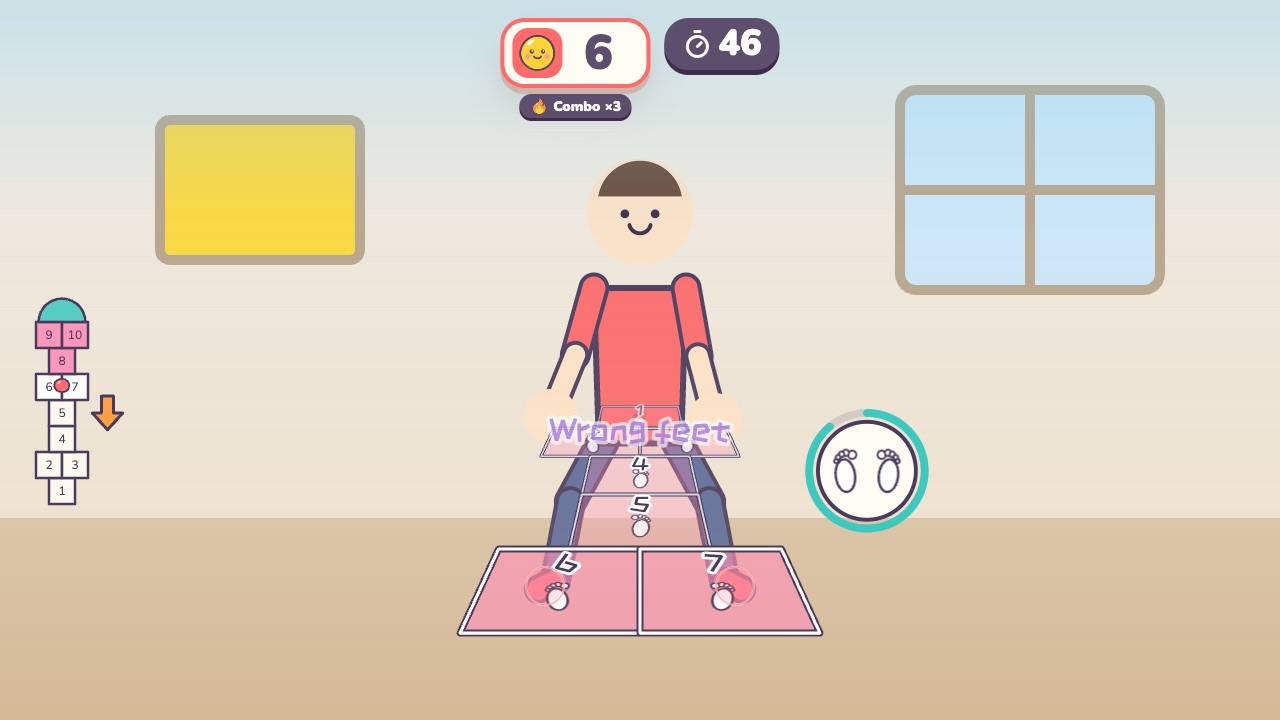 HopscotchOne foot on single squares, two feet on double squares, one row at a timeAges 5–12 · High activity · Run & jump / Fitness
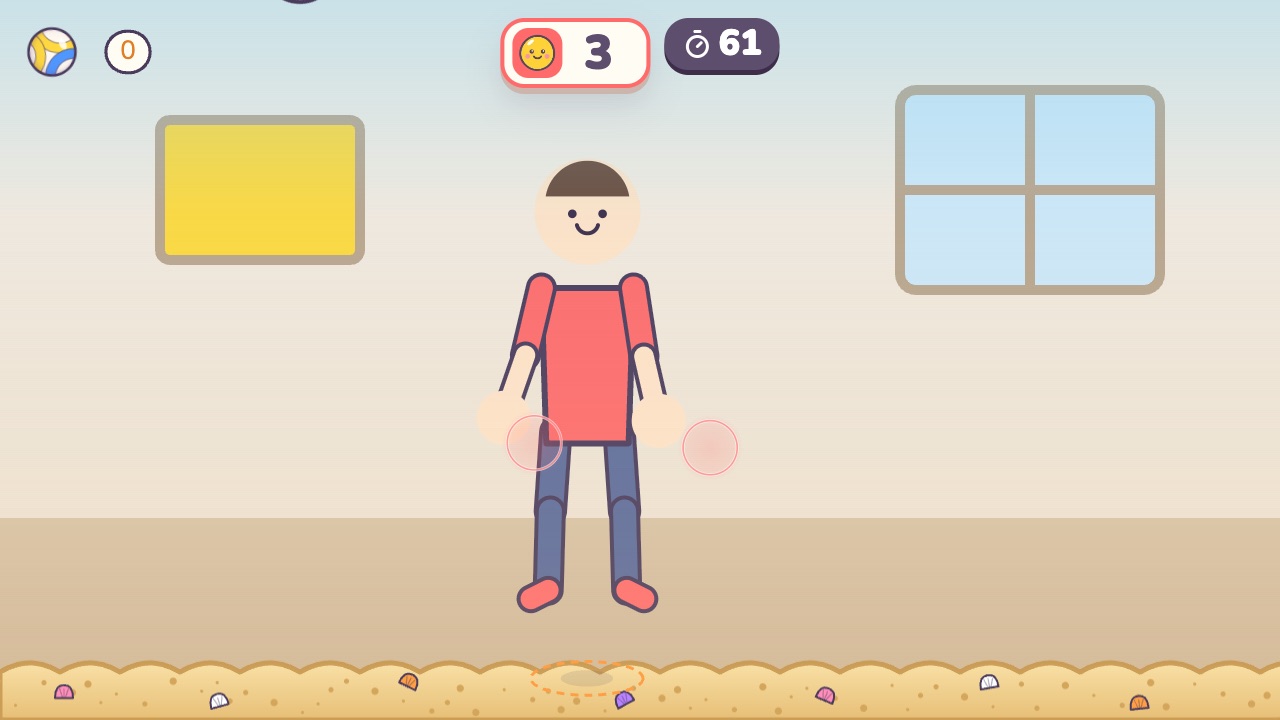 Volleyball Keep-UpBump low balls with your arms together, and set high balls with your hands upAges 6–15 · Moderate activity · Hands / Whole body
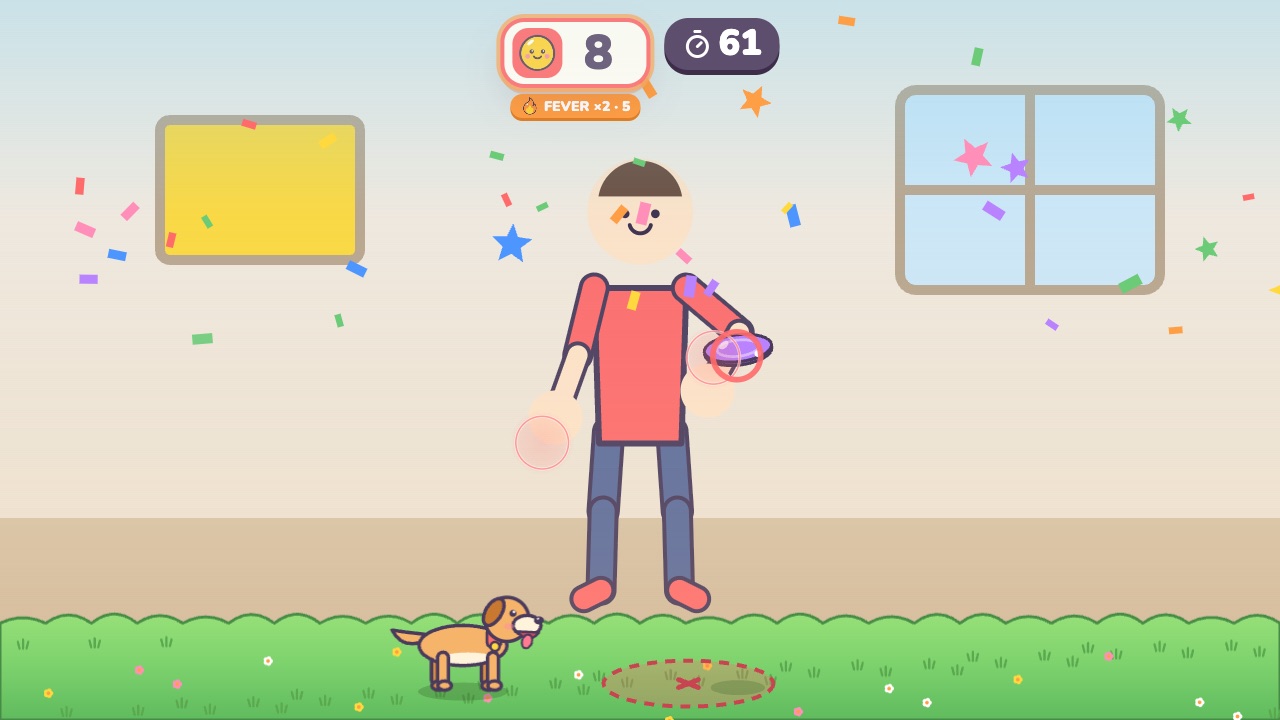 Frisbee DogCatch the frisbee, then time your throw to the running puppyAges 6–12 · Moderate activity · Hands
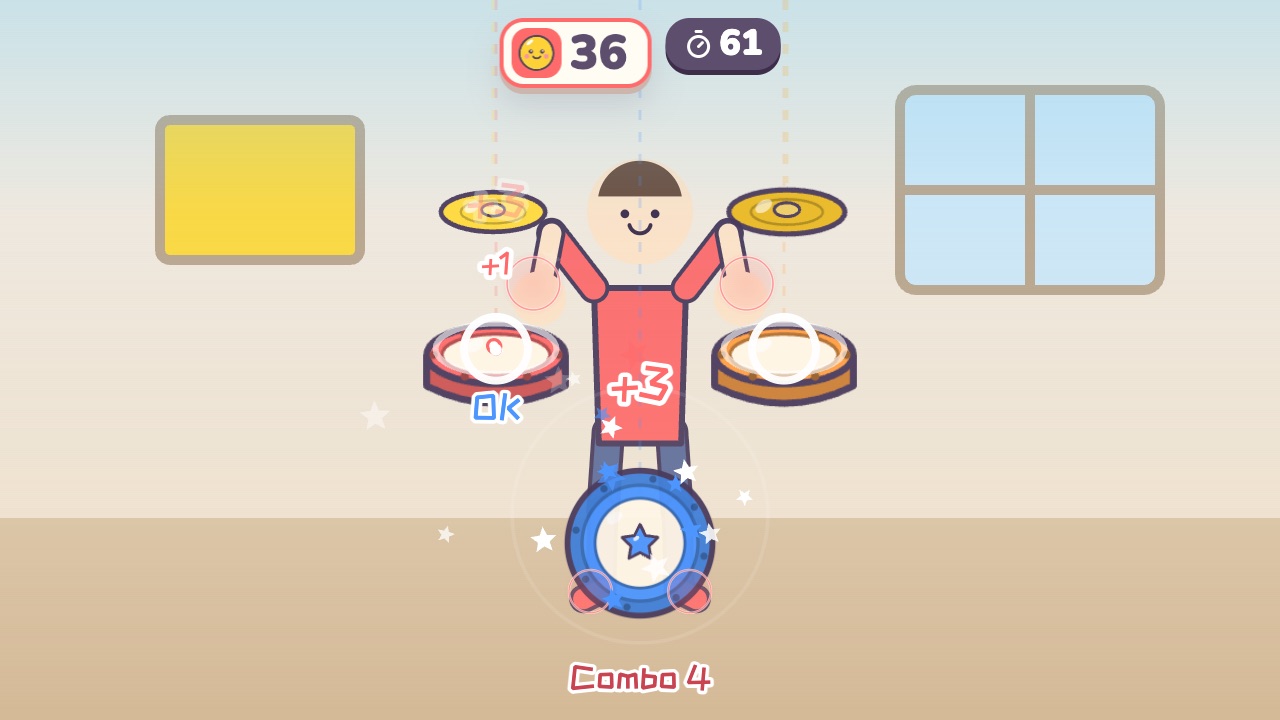 Air DrumsA drum kit floats around you. Hit the drums as the notes fallAges 6–18 · Moderate activity · Rhythm / Hands
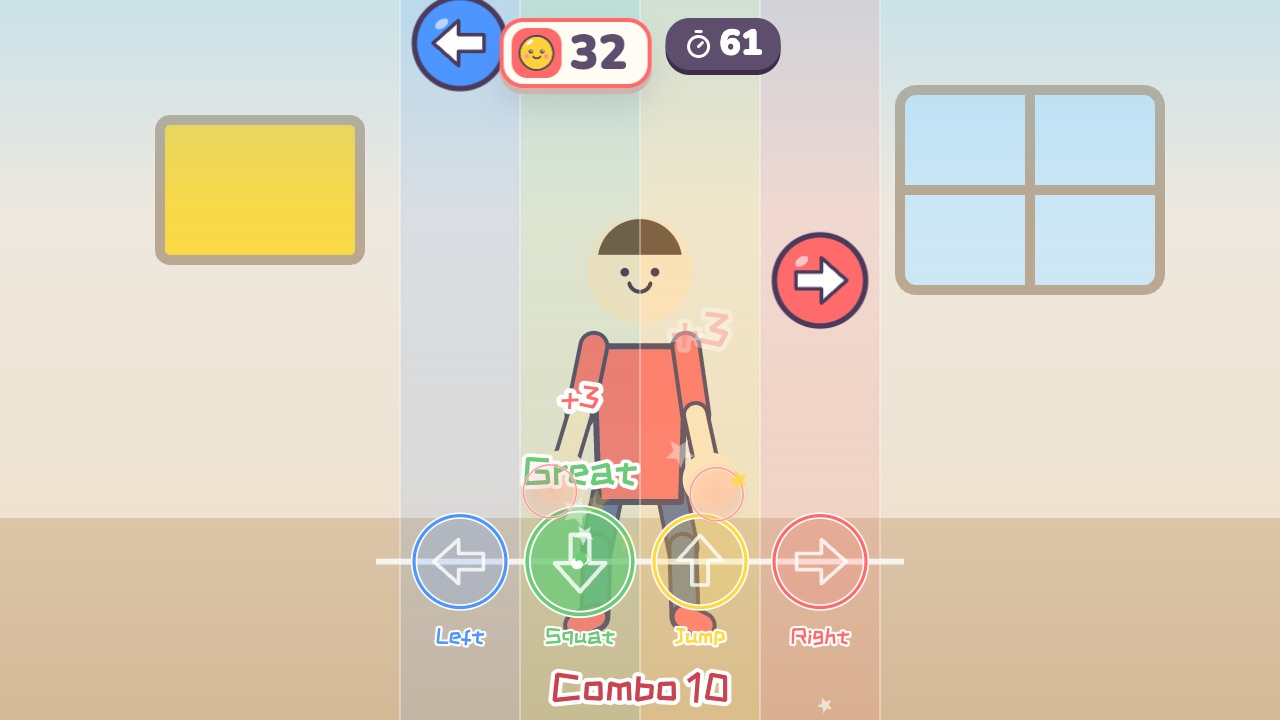 Rhythm StepsFollow the beat: step left, step right, jump and squatAges 6–16 · High activity · Rhythm / Whole body / Run & jump
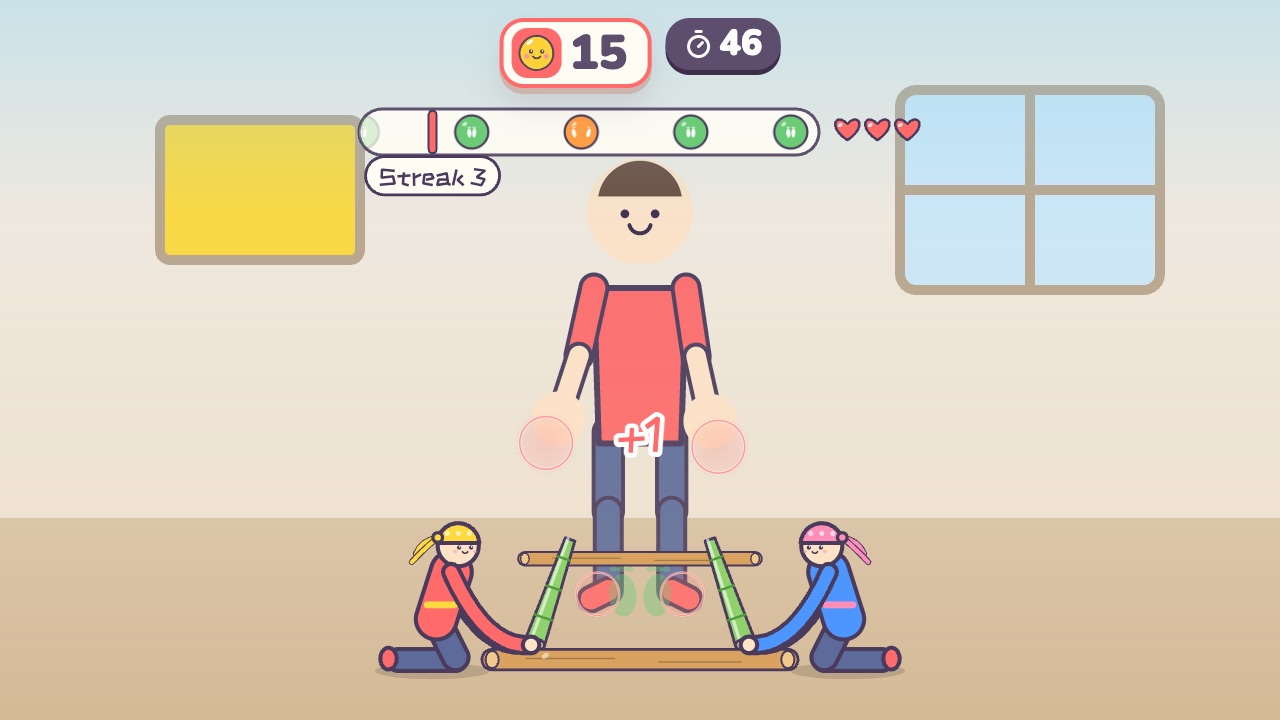 Bamboo DanceJump in when the poles open and jump out when they closeAges 8–16 · High activity · Rhythm / Run & jump / Fitness
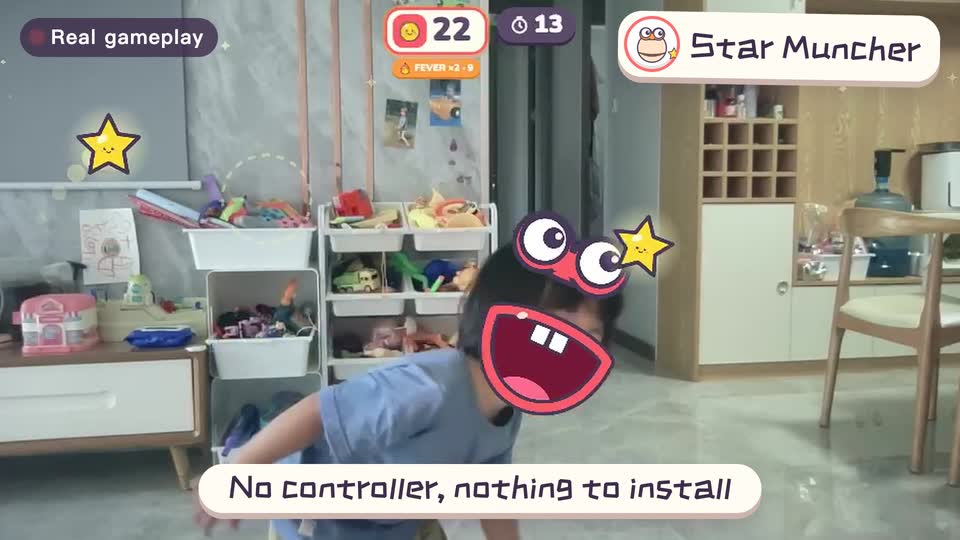
Real footage · 14 s
Kids stand in front of the computer and just move
100+ motion games for ages 3 to 18. Open the website and play: nothing to install, and the camera picture stays on this computer.
Keep reading
- How much should kids move each day? What the WHO says, and how to fit it in at home
- Screen time isn’t always sitting time: using screens to get kids moving
- When kids don’t like exercise: 6 ways to turn “I have to” into “I want to”
- Exercise and height: what actually helps kids grow (ages 6–14)
- Kids bouncing off the walls? A quiet 20-minute plan to burn off energy at home (ages 3–10)
- Winter exercise for kids: staying active when it’s too cold to go out