 DongDong Park
Screen time isn’t always sitting time: using screens to get kids moving
Updated
The World Health Organization’s advice on kids and screens is worth reading closely. What it recommends limiting is sedentary screen time, especially for entertainment. The real problem is sitting still.
Two kinds of screen time
Watching videos or scrolling on a phone while sitting on the couch means the body barely moves. That is textbook sedentary behavior. Motion games are different: kids stand up, jump, run and wave their arms, and the screen just tells them what to do next. We call it screen time on your feet.
It’s still a screen
Moving doesn’t mean unlimited. A few house rules help:
- Set a time. 15 to 30 minutes per session, with breaks for water.
- Set a place. Play in a shared space, like the living room or a classroom, with a grown-up nearby.
- Keep it extra. When the weather is good, go outside first. Motion games are for rainy days, evenings and short breaks.
- Look after eyes. Stay at least about 6½ feet (2 m) from the screen (the standing spot is that far back anyway), and look at something far away for a bit after playing.
Help kids want to move
“Go get some exercise” rarely works. Kids are much more easily moved by “I’ve got one task left today”, “my flame is on a 5-day streak” or “I want to unlock the gold crown”. Levels, small daily tasks and friend challenges in DongDong Park are there to give moving a steady supply of small goals.
Try Dance Along, Rhythm Steps or Boxing Practice: one round is enough to work up a light sweat.
Games mentioned here
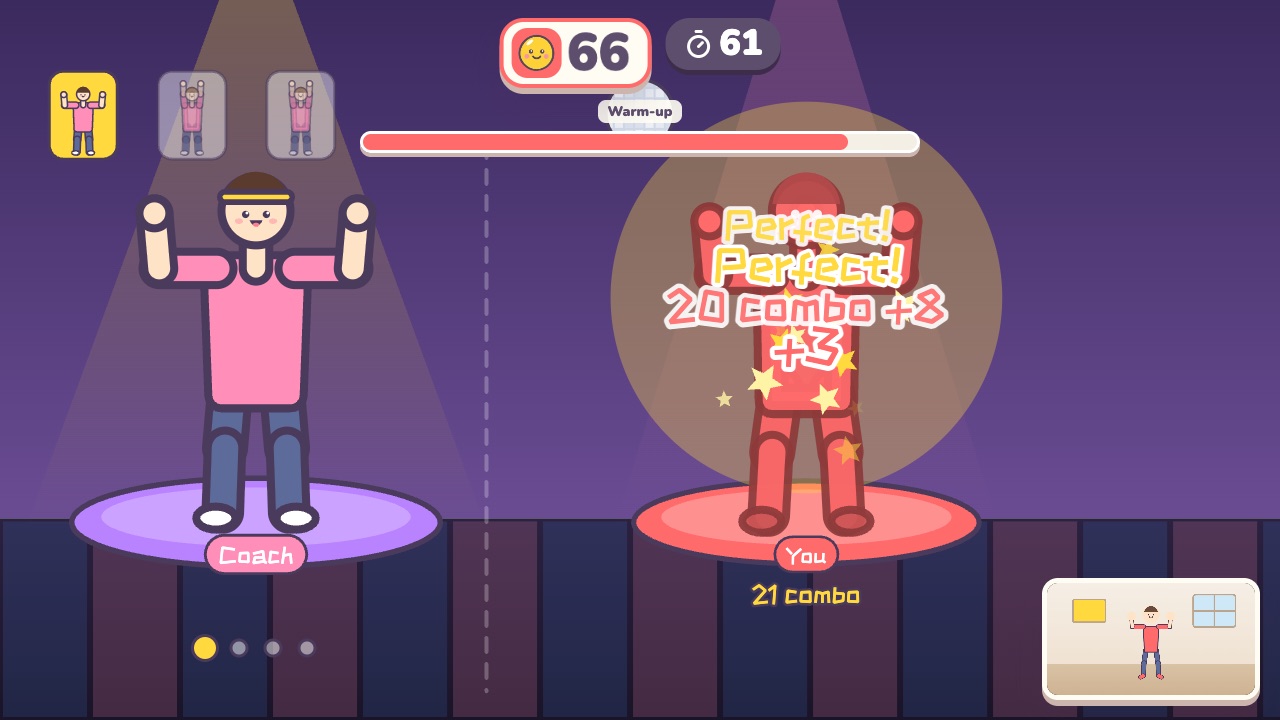 Dance AlongDance with the coach. Every beat is scored on how well you match the moveAges 12–18 · High activity · Rhythm / Whole body
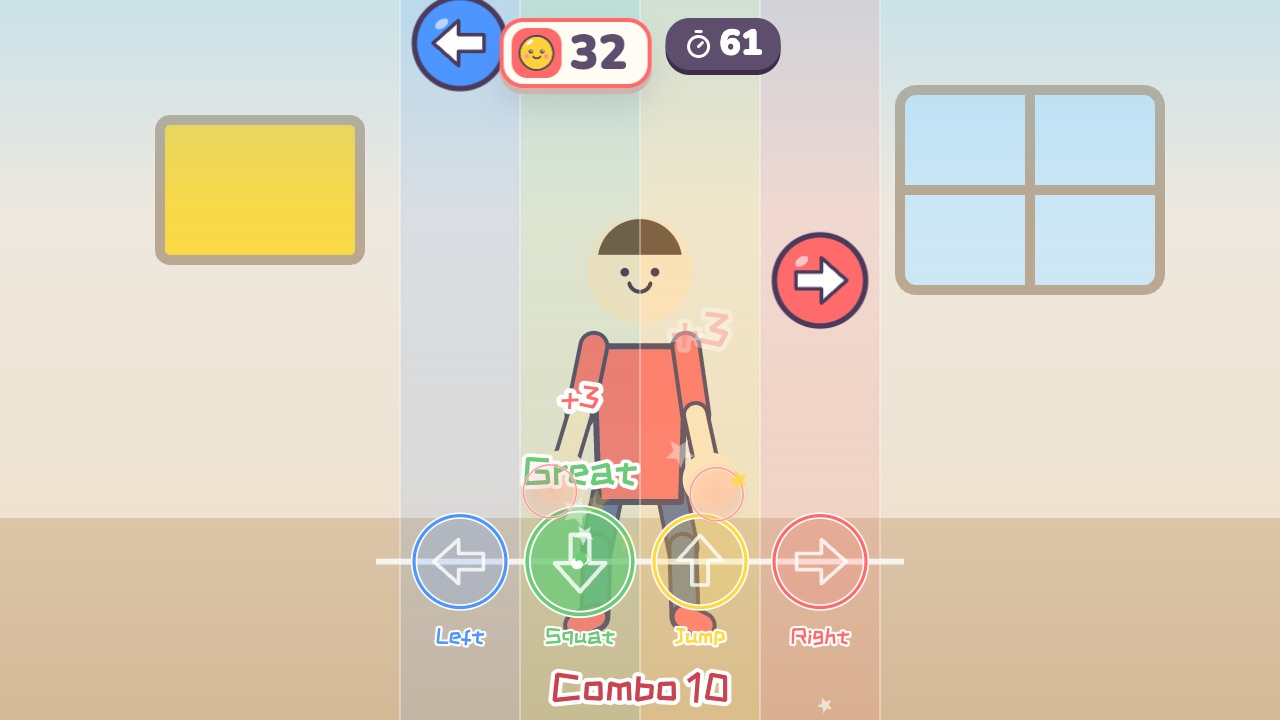 Rhythm StepsFollow the beat: step left, step right, jump and squatAges 6–16 · High activity · Rhythm / Whole body / Run & jump
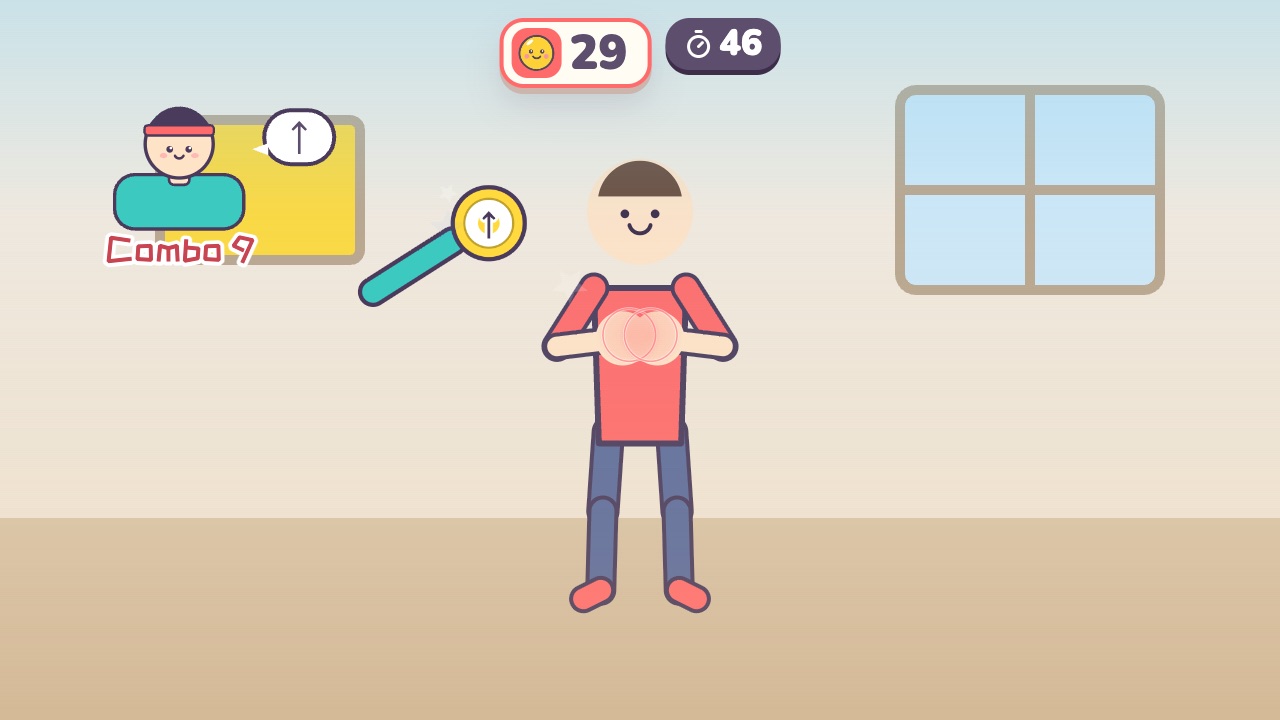 Boxing PracticeThe coach holds up pads: punch left, right and up, dodge the gloves and duck the barAges 9–18 · High activity · Hands / Fitness
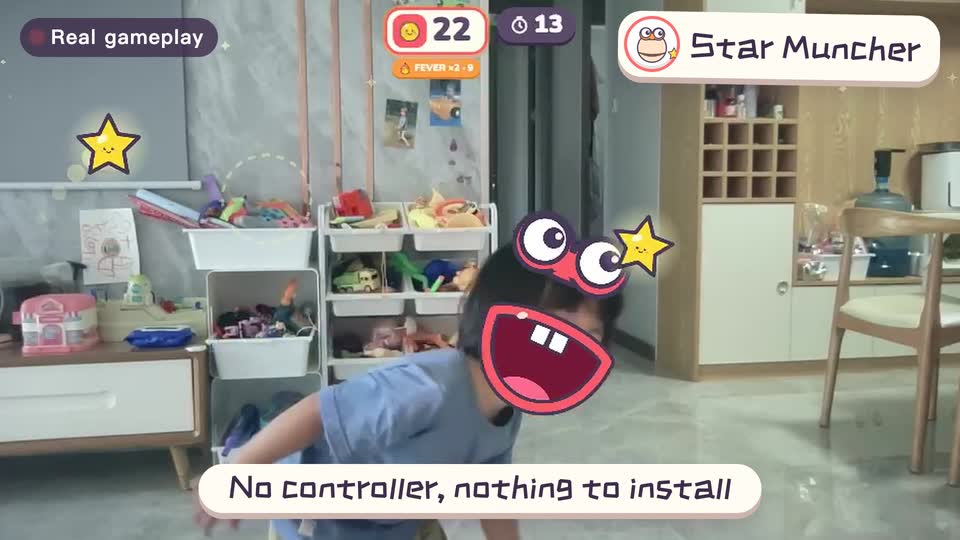
Real footage · 14 s
Kids stand in front of the computer and just move
100+ motion games for ages 3 to 18. Open the website and play: nothing to install, and the camera picture stays on this computer.
Sources
- WHO guidelines on physical activity and sedentary behaviour. World Health Organization. 2020
- Guidelines on physical activity, sedentary behaviour and sleep for children under 5 years of age. World Health Organization. 2019
Keep reading
- How much should kids move each day? What the WHO says, and how to fit it in at home
- When kids don’t like exercise: 6 ways to turn “I have to” into “I want to”
- Exercise and height: what actually helps kids grow (ages 6–14)
- Kids bouncing off the walls? A quiet 20-minute plan to burn off energy at home (ages 3–10)
- Winter exercise for kids: staying active when it’s too cold to go out
- Rainy day? 8 indoor motion games to get kids moving at home