 DongDong Park
Gross motor activities for preschoolers: 50 ideas by skill, plus milestones from 18 months to 5 years
Updated
Gross motor skills are the big movements: running, jumping, climbing, balancing, throwing, catching and kicking. Preschoolers build them through play, but studies say these skills don’t simply arrive with age; they get better with practice and a little teaching. Below: what the CDC checklists expect at each age, 50 activities sorted by skill, how to run them so they help, and when to talk to your child’s doctor.
Gross motor or fine motor?
Gross motor skills use the large muscles of the arms, legs and trunk. Fine motor skills are the small, precise hand movements: holding a crayon, doing up buttons, using a fork. The two grow side by side, and the CDC’s checklists put both under one heading, “Movement/Physical Development”. This page is about the big ones. For using both sides of the body together, see bilateral coordination.
Gross motor milestones from 18 months to 5 years
The CDC’s milestone checklists were revised in 2022 by an expert group convened by the American Academy of Pediatrics. They list things most children (75% or more) can do by a given age. That bar was chosen on purpose, so that a missed milestone is a reason to check rather than to wait and see. Most children manage these earlier.
| Age | On the CDC checklist |
|---|---|
| 15 months | Takes a few steps on their own |
| 18 months | Walks without holding onto anyone or anything; climbs on and off a couch or chair without help |
| 2 years | Kicks a ball; runs; walks (not climbs) up a few stairs with or without help |
| 30 months | Jumps off the ground with both feet |
| 3 years | None: the movement items at 3 are hand and self-care skills (stringing large beads, putting on some clothes, using a fork) |
| 4 years | Catches a large ball most of the time |
| 5 years | Hops on one foot |
Pedaling a tricycle, galloping, skipping and walking along a line aren’t on the checklists, so there is no CDC age to measure them against. Treat them as things to practice, not tests.
Where to start, going by the checklist (our suggestions; the numbers refer to the activities below):
- Under 2½: walking, climbing, crawling, and rolling or kicking a big ball. Try 1, 2, 28, 33, 39 and 42.
- 2½ to 3½: jumping with both feet, running and stopping, walking a line, tossing. Try 4, 10 to 14, 19 and 29.
- 3½ to 5: catching, hopping, galloping, kicking a moving ball, standing on one foot. Try 5, 16, 17, 21 and 30 to 34.
How much active play preschoolers need
- U.S. guidelines say preschool-aged children (3 to 5) should be active throughout the day, and adults should encourage active play and aim for at least 3 hours a day, at any intensity.
- The WHO recommends at least 180 minutes a day of varied activity for 1- and 2-year-olds, at any intensity. For 3- and 4-year-olds it is also at least 180 minutes, of which at least 60 are moderate to vigorous, spread through the day. Children shouldn’t be strapped into a stroller or high chair for more than an hour at a time.
Most of those hours are ordinary play: the walk to the park, the climbing frame, dancing in the kitchen. The activities below are for the part you plan.
Does free play teach these skills?
- A meta-analysis of motor skill programs for children put it plainly: “Children do not develop FMS naturally through maturational processes. These skills need to be learned, practised and reinforced.” (FMS means fundamental movement skills.) Planned programs improved running and jumping skills and ball skills about equally; the comparison groups, who had free play instead, showed no significant change. Longer programs didn’t give bigger gains (Logan and colleagues, 2012).
- In childcare and kindergarten: 30 trials with 6,126 children aged about 3 to 5½ found that programs lasting at least 4 weeks improved fundamental movement skills, with the larger effects on ball skills and on running and jumping. The authors rated the certainty of the evidence as very low, and nobody checked whether the gains lasted (Wick and colleagues, 2017).
- Why it matters later: children with better motor skills tend to be more active, fitter and stronger, to have a healthier weight and to feel more capable. Which comes first is still an open question (Robinson and colleagues, 2015).
So free play matters for getting the hours in, but don’t count on it alone to teach a good throw, catch or hop. A few minutes of playful, planned practice on most days, with an adult showing how, is a reasonable way to put this to use.
50 gross motor activities, by skill
Most need nothing more than masking tape, a big soft ball, a balloon, a few beanbags or rolled-up socks.
Running, galloping and chasing
| Activity | How |
|---|---|
| 1. Bubble chase | Blow bubbles; kids run to pop them before they land |
| 2. Chase me | An adult jogs slowly and lets the child catch them, then they swap |
| 3. Color run | Call a color; kids run to touch something that color and run back |
| 4. Red Light, Green Light | Run (or walk fast) on green, freeze on red |
| 5. Pony gallop | One foot stays in front and the back foot catches up; gallop around the room like ponies |
| 6. Crab slide | Side-step along a line facing forward, then slide back the other way |
| 7. Follow the leader | The leader runs, tiptoes, marches or stomps; everyone copies |
| 8. Fast and slow | Fast drumming: jog; slow drumming: walk like a giant with big steps |
| 9. Empty the basket | Run to a basket, bring back one beanbag at a time until it is empty |
Jumping and hopping
| Activity | How |
|---|---|
| 10. Popcorn | Jump on the spot with both feet together, “popping” as high as you can |
| 11. Frog jumps | Squat with hands on the floor, then jump forward and land in a squat |
| 12. Step jump | Jump from the bottom stair or a low, steady step onto a cushion, landing on two feet, with an adult beside |
| 13. Puddle jumps | Paper or tape “puddles” on the floor; jump from one to the next |
| 14. Jump the river | Two tape lines are the river banks; jump across, and widen the river as they get better |
| 15. Long jump line | Jump as far as you can from a tape line, mark the landing with a sticker, try to beat it |
| 16. Hop to the cone | Hop on one foot toward a cone, then switch feet; count the hops |
| 17. Hopscotch | Chalk or tape squares; start by jumping with both feet into each square, then try hopping |
| 18. Jump and touch | Hang a streamer or balloon just above reach and jump to touch it |
Balance
| Activity | How |
|---|---|
| 19. Tightrope | Walk along a tape line or a rope on the floor, arms out to the sides |
| 20. Mouse walk | Tiptoe across the room without making a sound |
| 21. Flamingo | Stand on one foot and count how long; then the other foot |
| 22. Freeze statues | Dance, and freeze in a pose when the music stops |
| 23. Beanbag hat | Walk slowly with a beanbag or a folded sock on your head |
| 24. Stepping stones | Step across carpet squares on a non-slip floor without touching the “water” |
| 25. Walk the plank | Walk along a wide plank or a low beam on the floor, holding a hand at first |
| 26. Backward walk | Walk backward along a line, looking over one shoulder |
| 27. Tree pose | One foot on the other ankle or calf, hands up like branches |
More balance games, including spinning and swinging, are in vestibular and balance games.
Throwing, catching and kicking
| Activity | How |
|---|---|
| 28. Ball roll | Sit facing each other with legs apart and roll a big ball back and forth |
| 29. Beanbag toss | Toss beanbags into a laundry basket; take one step back after each one that goes in |
| 30. Big-ball catch | Toss a large soft ball from close up into the child’s arms; step back as the catches get surer |
| 31. Balloon tap | Keep a balloon in the air with your hands; it moves slowly, so it is a good start before balls |
| 32. Bounce and catch | Drop a big ball, let it bounce once, catch it |
| 33. Wall kicks | Kick a big ball against a wall and stop it with your foot when it comes back |
| 34. Shoe goal | Kick a ball between two shoes; move the shoes closer together to make it harder |
| 35. Sock-ball target | Throw rolled-up socks overarm at a paper target taped to the wall |
| 36. Cup bowling | Roll a ball at stacked plastic cups or bottles |
| 37. Scarf catch | Toss a light scarf up and catch it as it floats down |
| 38. Balloon bat | Hit a balloon with a pool noodle or a paper-plate paddle |
Crawling, climbing and strength
| Activity | How |
|---|---|
| 39. Tunnel crawl | Crawl through a play tunnel, under a row of chairs, or under a blanket over two chairs |
| 40. Bear walk | Hands and feet on the floor, bottom up, walk like a bear |
| 41. Crab walk | Sit, put the hands behind you, lift your bottom and walk |
| 42. Cushion mountain | Climb over a pile of couch cushions, with soft floor all around |
| 43. Wheelbarrow | Hold the child at the hips or thighs while they walk a few steps on their hands |
| 44. Push the box | Push a laundry basket with a few books inside across the room |
| 45. Towel tug | Pull on a towel with a partner; an adult partner gives just enough |
Pushing, pulling, carrying and crawling are what therapists call heavy work; see proprioception games.
Putting it together
| Activity | How |
|---|---|
| 46. Simon Says | “Simon says touch your toes, jump two times, stand on one foot” |
| 47. Animal moves | Hop like a bunny, stomp like an elephant, waddle like a penguin, slither like a snake |
| 48. Freeze and move | Dance; when the music stops, call a move: jump, spin, squat |
| 49. Obstacle path | Crawl under the table, jump the river, walk the tightrope, throw a beanbag into the basket |
| 50. Sheet parachute | A few people hold a bedsheet, lift it high, run underneath, shake it fast and slow |
How to make practice count
- Show it, don’t explain it. Do the move yourself, then give one short tip at a time: “eyes on the ball”, “swing your arms back, then forward” for a jump, “step with the other foot” for a throw.
- Set it up to succeed. Big soft balls, short distances, wide lines. Move back or narrow the line once they get it most of the time.
- More turns, less waiting. One ball or beanbag per child if you can, and pairs rather than one long line.
- Use both sides. Kick with the other foot and hop on the other leg too.
- Wrap it in a story. “Cross the river”, “feed the bear”, “frogs in the pond”: pretend play keeps three-year-olds going longer than drills do.
- Praise the move, not only the result: “you watched the ball all the way into your hands.”
Indoors and in small spaces
Push the furniture back and use a rug or mat. These work in a living room or classroom: tightrope, mouse walk and flamingo (19 to 21), freeze statues (22), stepping stones on a non-slip floor (24), balloon tap and scarf catch (31, 37), sock-ball target and cup bowling (35, 36), tunnel crawl and animal walks (39 to 41), push the box (44), Simon Says and animal moves (46, 47). Save the chasing games and long jumps for a hallway, the gym or outside.
Planning a whole rainy-day session for a class? See indoor movement games for preschool and the 6-station indoor obstacle course.
When to talk to your child’s doctor
The CDC’s advice: “If your child is not meeting one or more milestones, has lost skills he or she once had, or you have other concerns, act early. Talk with your child’s doctor, share your concerns, and ask about developmental screening.” It also suggests asking for a referral to a specialist who can evaluate your child, and calling your state or territory’s early intervention program to find out if your child can get services.
The activities on this page are good for every child, but they don’t replace that check. A pediatric physical or occupational therapist can tell you what to work on.
Webcam games for rainy days
A screen doesn’t teach a throw or a catch: in studies of children aged 8 and under, motion games did not significantly improve gross motor skills (see what the research says). What they do well is get small kids moving on a day you can’t go outside, and practice copying a move, jumping, side-stepping and squatting. Keep it short (the American Academy of Pediatrics suggests no more than an hour a day of screen media for ages 2 to 5), and do the real-ball version afterwards.
| Game (ages) | What kids do |
|---|---|
| Animal Moves (3–8) | Do the move of whichever animal gets called |
| Red Light, Green Light (3–10) | Move as much as you can on green, freeze on red |
| Carrot Pull (3–8) | Squat down, grab the leaves and stand up to pull the carrot |
| Radish Squat (3–10) | Squat when your color is called, stay still when it isn’t |
| Sea Lion Rings (3–9) | Run side to side and squat to catch the rings |
| Star Stomp (4–12) | Stomp on the stars that light up in front of your feet |
| Bamboo Dash (4–10) | Run on the spot, dodge left and right, jump over fallen bamboo |
| Soccer Shootout (4–10) | Send the ball into the goal with your feet, knees and head |
| Hopscotch (5–12) | One foot on single squares, two feet on double squares |
| Trampoline Stars (5–12) | Time your jumps to bounce higher and collect the stars |
Stand 7 to 10 feet (2 to 3 m) back; for little kids, put the camera at about chest height so the whole body is in the picture. A voice reads every instruction, so nobody needs to read. You can play two rounds without signing in: pick a game →
More for this age: brain breaks for kindergarten and preschool, indoor games for ages 3 to 6 and listening games.
Common questions
- What are gross motor activities for preschoolers?
- Play that uses the big muscles of the arms, legs and trunk: running, jumping, climbing, balancing, throwing, catching and kicking. Bubble chases, animal walks, walking along a tape line, beanbag tosses and hopscotch are all gross motor activities.
- What gross motor skills should a 3-year-old have?
- The CDC’s checklist for age 3 has no running or jumping items; its movement milestones at that age are hand and self-care skills. The big-movement ones come just before: by 2, most children run, kick a ball and walk up a few stairs, and by 30 months they jump off the ground with both feet. If your child isn’t doing these, or has lost a skill, talk with your child’s doctor.
- What gross motor skills should a 4- or 5-year-old have?
- By 4, most children catch a large ball most of the time; by 5, they hop on one foot. The CDC picked milestones that 75% or more of children reach by that age, so most children get there earlier.
- What is the difference between gross motor and fine motor skills?
- Gross motor skills are large movements of the arms, legs and whole body, like running and throwing. Fine motor skills are small hand movements, like holding a crayon or doing up buttons. Children need both, and the CDC lists them together.
- How much physical activity does a preschooler need?
- U.S. guidelines say children aged 3 to 5 should be active throughout the day, with at least 3 hours a day as a target. The WHO says at least 180 minutes a day for ages 1 to 4, and for 3- and 4-year-olds at least 60 of those minutes should be moderate to vigorous.
- Do children learn gross motor skills through free play alone?
- Not reliably. In a meta-analysis of motor skill programs, children in planned programs got better at skills like running, jumping, throwing and catching, while comparison groups who had free play instead did not improve significantly. Free play still matters for getting the hours in; add a few minutes of planned, playful practice.
- What are good indoor gross motor activities?
- Tightrope walks along a tape line, freeze statues, animal walks, crawling through a tunnel of chairs, balloon taps, throwing sock balls at a target on the wall and bowling with plastic cups all fit in a living room or classroom.
Games mentioned here
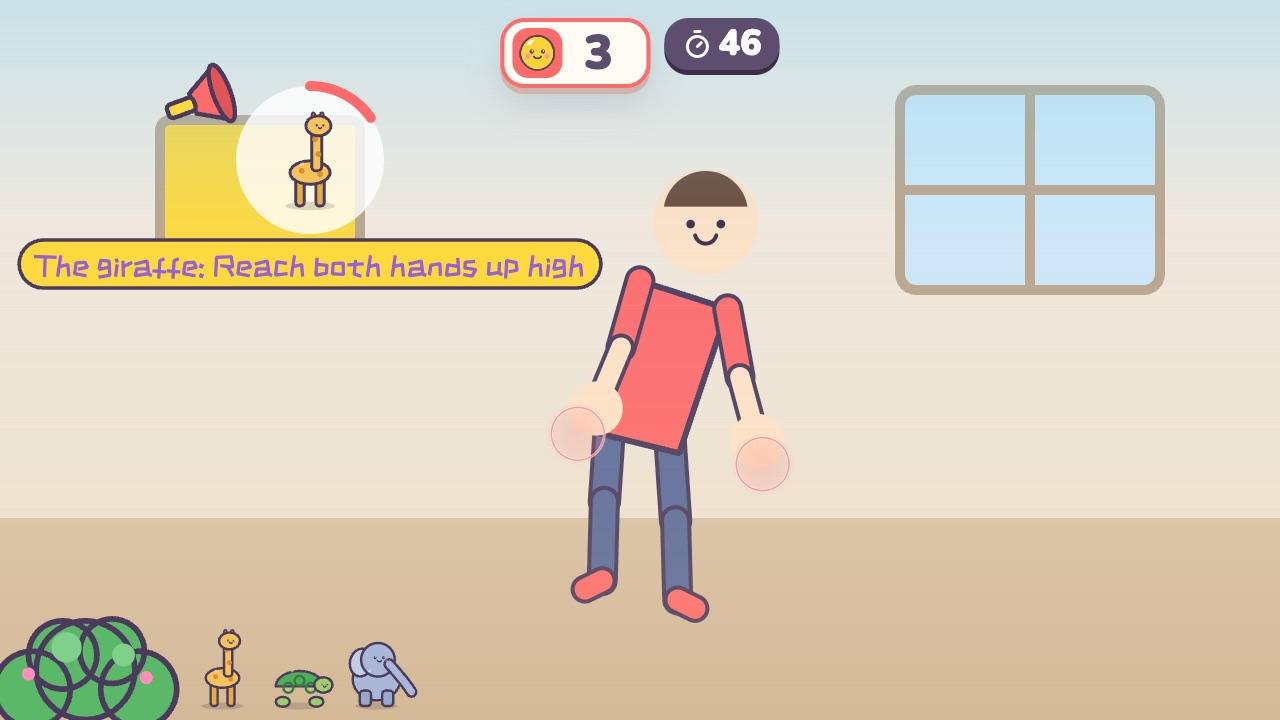 Animal MovesDo the move of whichever animal gets calledAges 3–8 · Moderate activity · Whole body
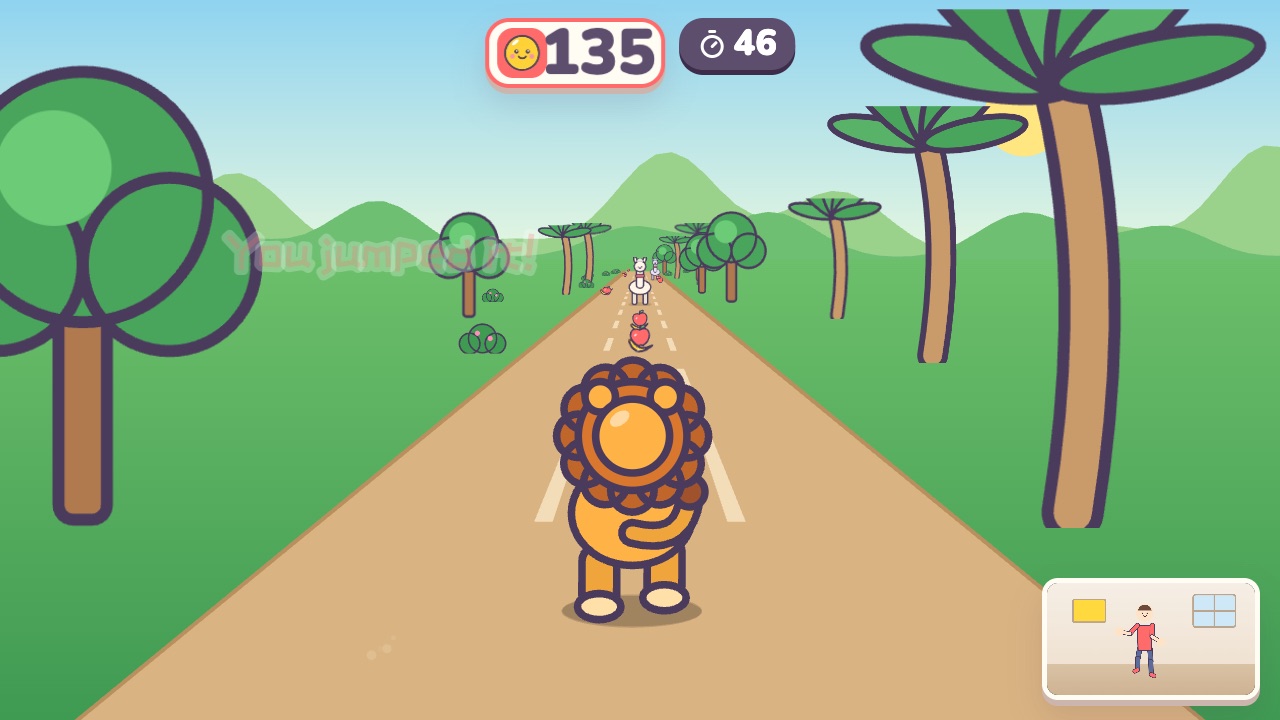 Bamboo DashRun on the spot, switch paths around the rocks and jump the bambooAges 4–10 · High activity · Run & jump / Whole body
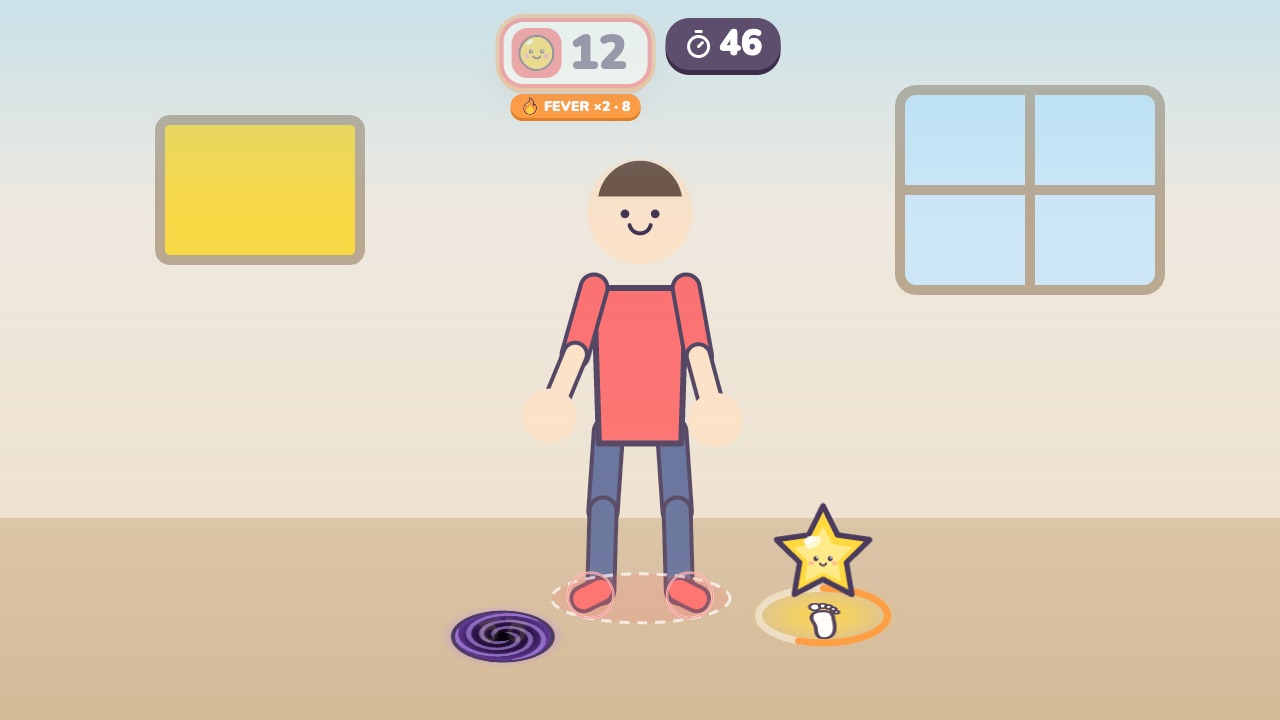 Star StompStars light up in front of your feet. Stomp on themAges 4–12 · Moderate activity · Run & jump
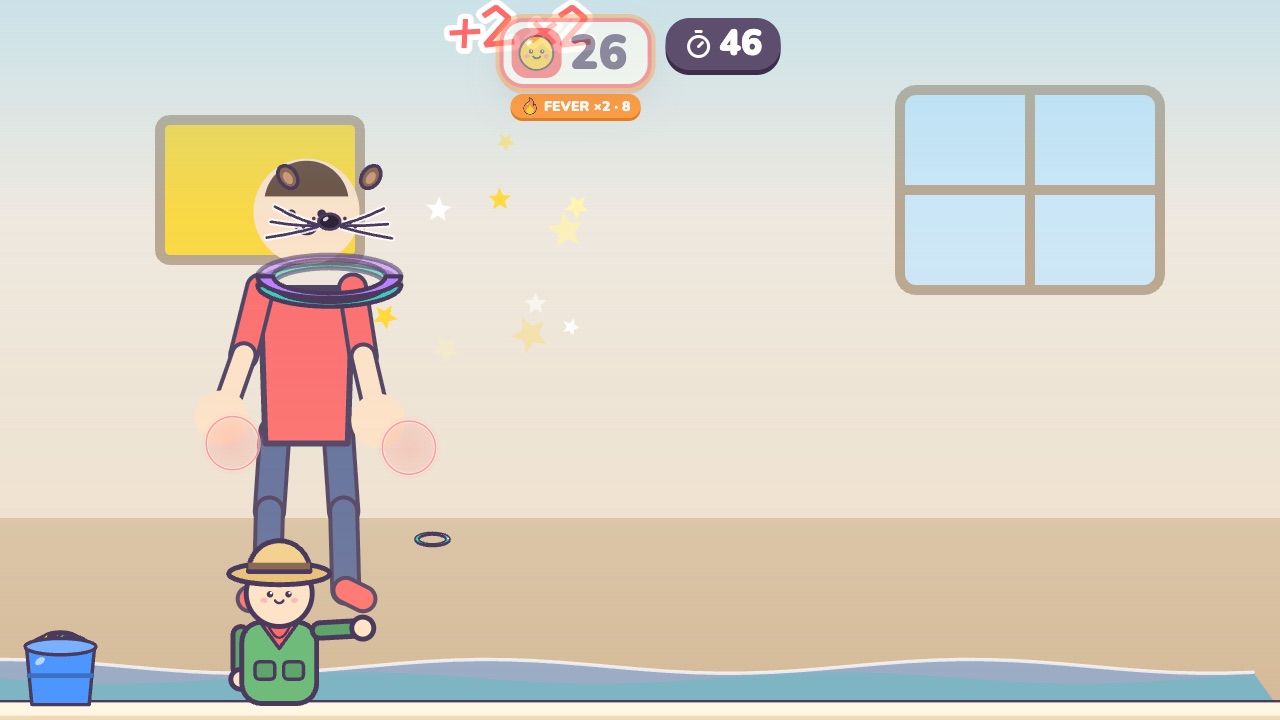 Sea Lion RingsYou're the little sea lion. Run over and catch the keeper's rings around your neckAges 3–9 · High activity · Whole body / Run & jump
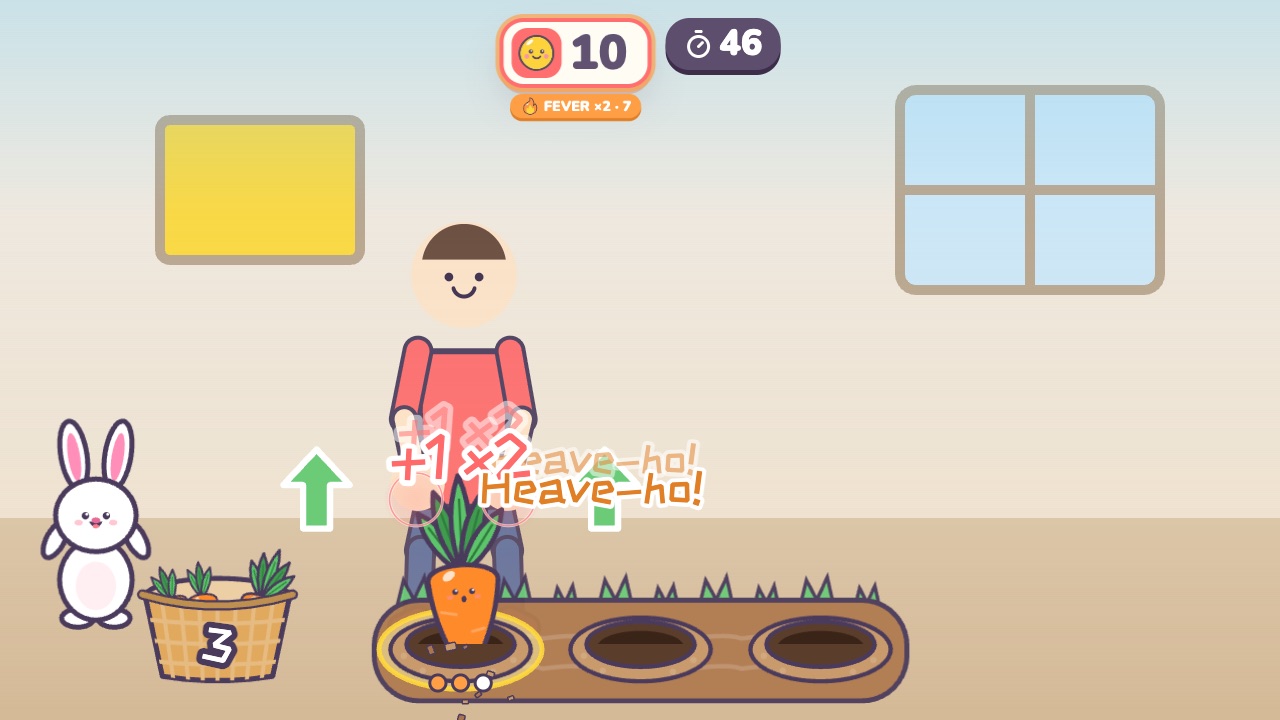 Carrot PullSquat down, grab the leaves and stand up to pull the carrotAges 3–8 · Moderate activity · Whole body / Run & jump / Fitness
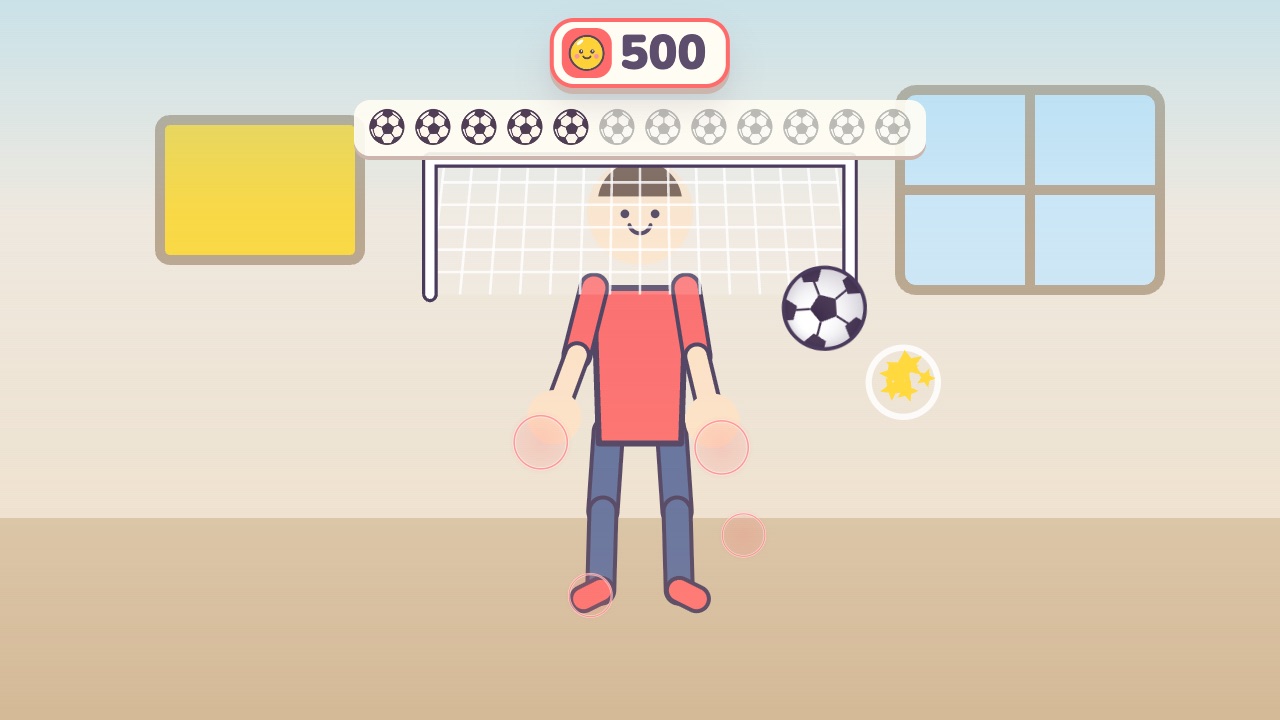 Soccer ShootoutScore with your feet, knees and head, but not your handsAges 4–10 · High activity · Run & jump / Whole body
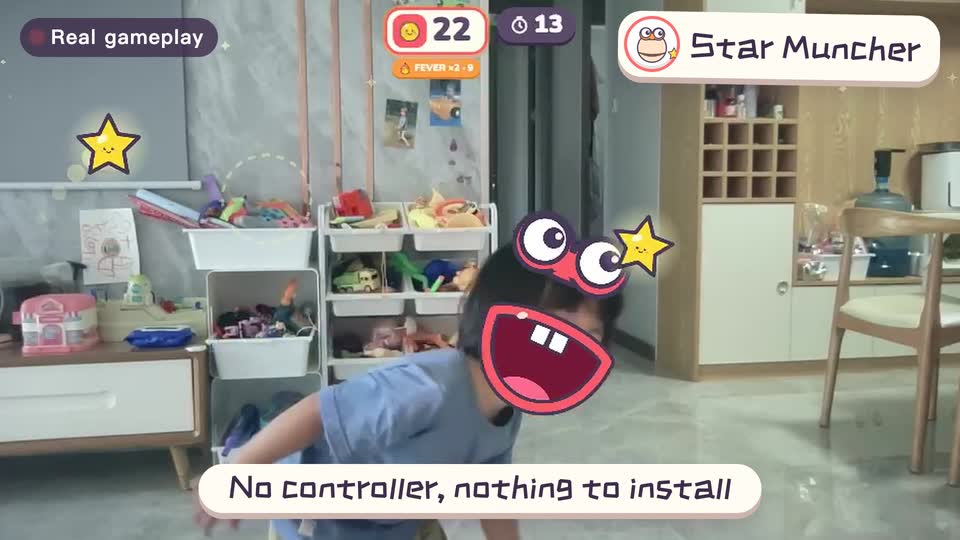
Real footage · 14 s
Kids stand in front of the computer and just move
100+ motion games for ages 3 to 18. Open the website and play: nothing to install, and the camera picture stays on this computer.
Sources
- CDC’s Developmental Milestones. Centers for Disease Control and Prevention, Learn the Signs. Act Early.. Milestone checklists by age, updated May 2026
- Evidence-Informed Milestones for Developmental Surveillance Tools. Zubler JM, Wiggins LD, Macias MM, et al.. Pediatrics 149(3), e2021052138, 2022
- Getting the fundamentals of movement: a meta-analysis of the effectiveness of motor skill interventions in children. Logan SW, Robinson LE, Wilson AE, Lucas WA. Child: Care, Health and Development 38(3), 305–315, 2012
- Interventions to Promote Fundamental Movement Skills in Childcare and Kindergarten: A Systematic Review and Meta-Analysis. Wick K, Leeger-Aschmann CS, Monn ND, et al.. Sports Medicine 47(10), 2045–2068, 2017
- Motor Competence and its Effect on Positive Developmental Trajectories of Health. Robinson LE, Stodden DF, Barnett LM, Lopes VP, Logan SW, Rodrigues LP, D’Hondt E. Sports Medicine 45(9), 1273–1284, 2015
- Top 10 Things to Know About the Second Edition of the Physical Activity Guidelines for Americans. Office of Disease Prevention and Health Promotion
- Guidelines on physical activity, sedentary behaviour and sleep for children under 5 years of age. World Health Organization. 2019
- Media and Young Minds. American Academy of Pediatrics, Council on Communications and Media. Pediatrics 138(5), 2016
Keep reading
- Indoor recess games: a 20-minute rainy-day plan
- Brain breaks: 5-minute movement games for any grade
- Brain breaks for middle and high school: movement teens won’t call babyish
- Brain breaks for kindergarten and preschool: short, silly and mostly screen-free
- Smartboard games that get the whole class moving, not just one kid at the board
- Homeschool PE made simple: a weekly plan, a fitness log and indoor games for bad-weather days