 DongDong Park
Kids mixing up left and right? Try a wristband and movement games (ages 4–8)
Updated
A four- or five-year-old who can’t tell left from right, or a six- or seven-year-old who still has to stop and think, is completely normal. The best way to help isn’t to sit them down with pictures and ask “which one is the left hand?” It’s to mark the body first, then get them moving to commands. Five minutes a day, rotating a few games, and within a few weeks you’ll see a difference.
Why kids mix up left and right
- Up and down have the sky and the ground to go by, and front and back have the way your face points. Left and right have nothing outside to go by: they depend only on your own body, which makes them the hardest.
- Left and right also “switch sides.” When two people face each other, the other person’s left is on your right, and plenty of grown-ups have to pause on that one.
- So mixing them up before school is a normal stage of development. Getting it wrong now and then in the early grades usually just means not enough practice, not a problem.
Step 1: help the body learn which side is right
- A wristband or a sticker. Put a band or a small sticker on the right wrist and call it “the sticker hand” at first. After a few days, call it “the right hand,” and let the sticker go.
- Anchor it to the hand they use most. Most kids eat and draw with their right hand, and “the hand you eat with is your right hand” is easier to remember than just “right hand.” (For left-handed kids, flip it.)
- Hold off on “the other person’s left and right.” Get their own left and right sorted first. That step usually takes a few weeks.
Step 2: commands plus movement work better than worksheets
Worksheets (“circle the bunny on the left”) ask a child to turn the picture around in their head first, which is too abstract for little kids. When a command comes and the body moves right away, the hands and feet remember it by themselves. All of these games are “hear the command, move your body”:
- Cross the Street (ages 3–8): when the light turns green, look left, then look right, then march in place across the crosswalk. The order never changes and a round repeats it a dozen times or more, so “left first, then right” sticks without anyone noticing. It doubles as road safety practice.
- Star Stomp (ages 4–12): when a star lights up on the left in front of your feet, stomp it with your left foot; on the right, your right foot. Feet have even less time to think than hands, which is the point: it trains the body’s own reaction.
- Color Touch (ages 3–7): shapes hang on both sides of the body, and the speaker says something like “the red circle.” Kids have to see which side it’s on before they reach. A grown-up can chime in: “Is it on your left or your right?”
- Do the Opposite (ages 4–10): one of its pairs is “lean left ↔ lean right,” so when you hear left, you lean right. Kids have to work out which side is left and then flip it, a step harder than just doing it. Best for kids who can mostly tell them apart already.
Ages 7–8: add rhythm and “each hand on its own”
- Rhythm Steps (ages 6 and up): step left, step right, jump and squat to the beat. The arrows come fast, with no time to think, so it relies on reactions that are already in place.
- Flag Code (ages 8 and up): the two arms point in different directions to make different letters, so kids have to keep track of where the left arm and the right arm each are. It’s the advanced level of left and right.
A 5-minute day
- Check the wristband first: “Which one is your right hand? Hold it up.”
- Play one round of Cross the Street or Star Stomp, about a minute.
- Then a minute with no screen: “Left hand on your right ear,” “Stamp your right foot twice,” “Left hand on your hip.” If they get it wrong, laugh and go again.
- Switch to a different game each day. Playing the same one for a whole week gets boring.
Practice it in everyday life, no screen needed
- Getting dressed: “Right shoe first,” “Left arm in the sleeve.” Things you do every day are the easiest to turn into habits.
- Setting the table: fork on the left, knife and spoon on the right. Put your kid in charge of setting it for the whole family.
- Out on a walk: before you leave, say “we turn left at the corner,” and when you get there, let them point the way.
- Songs: action songs with left and right in them, like the Hokey Pokey (“you put your right hand in”). Preschool teachers know plenty, and singing along at home is all it takes.
- Drawing: “Draw the sun in the top left corner and the grass in the bottom right,” combining left and right with up and down.
How to tell they’ve really got it
Look for three stages. First, they raise the right hand straight away without checking the wristband. Second, the hands and feet move as soon as the command comes, without looking down first. Third, they can point to “your left” when facing you. Most kids reach the second stage around age 6, and the third often not until the middle years of elementary school, so there’s no rush.
A few easy mistakes to avoid
- Don’t say “wrong again” when they slip up. They’re guessing to begin with, so a wrong guess is normal. When they get it right, make a fuss about it.
- When showing a move face to face, mirror it: ask your kid to raise their right hand while you raise your left, so it looks like the same side to them. Or simply stand facing the same way as your kid.
- Shoes on the wrong feet and reversed b’s and d’s are also common at this age. They belong to the same family as left and right; give it time.
These are everyday games. If your child still often mixes up left and right in second or third grade and also has clear difficulties with reading and writing, consider a professional child development or educational assessment rather than drawing conclusions yourself.
More in this series: coordination games by age and listening games.
Games mentioned here
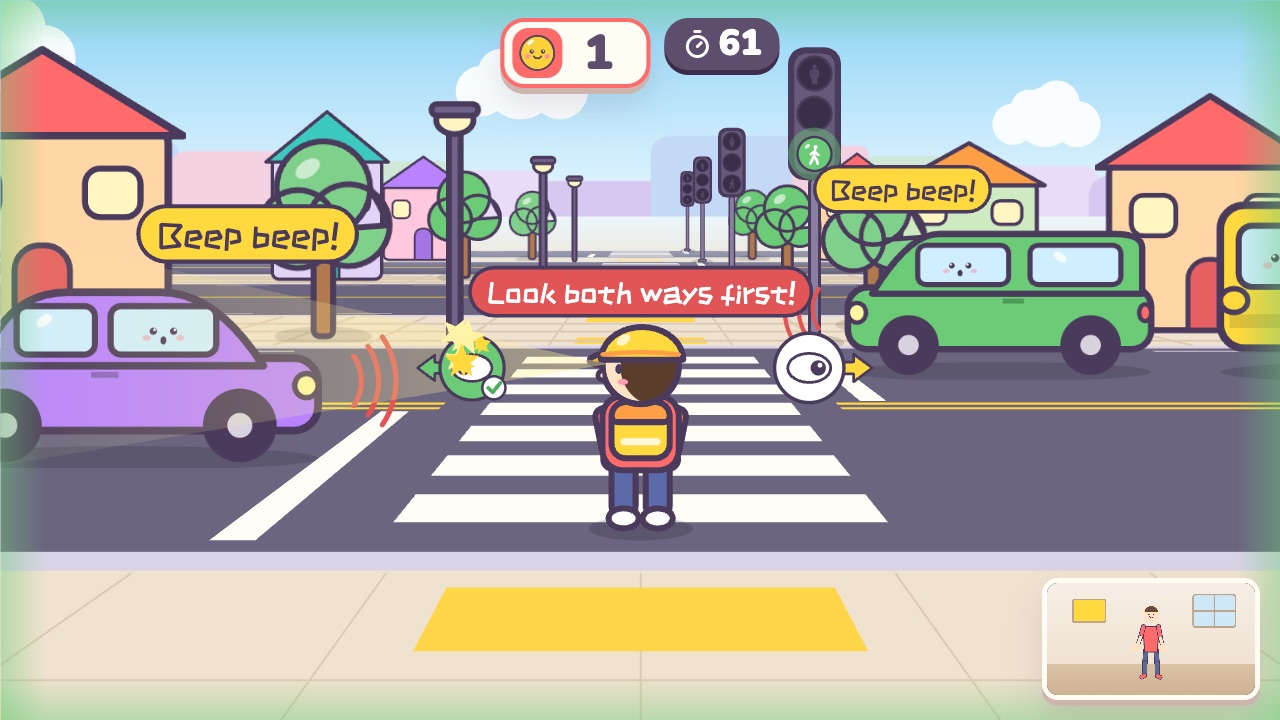 Cross the StreetLook left and right before you cross, and stop right away on redAges 3–8 · Moderate activity · Whole body / Thinking
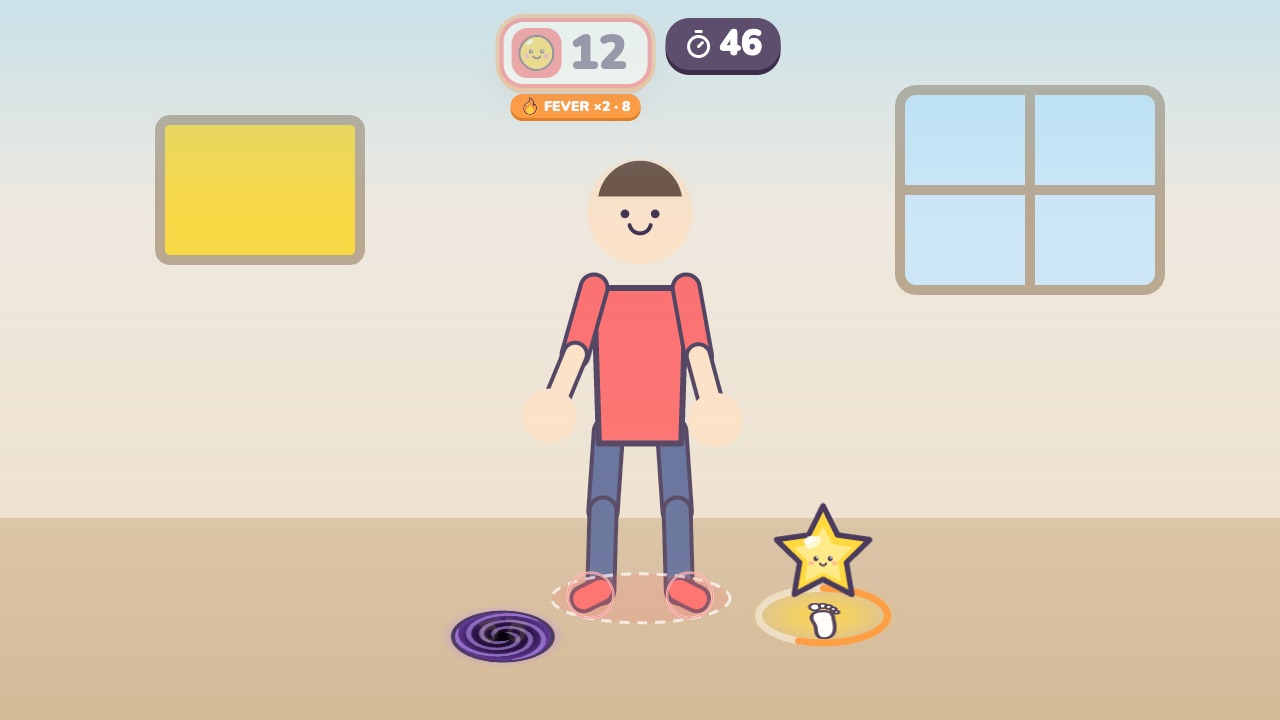 Star StompStars light up in front of your feet. Stomp on themAges 4–12 · Moderate activity · Run & jump
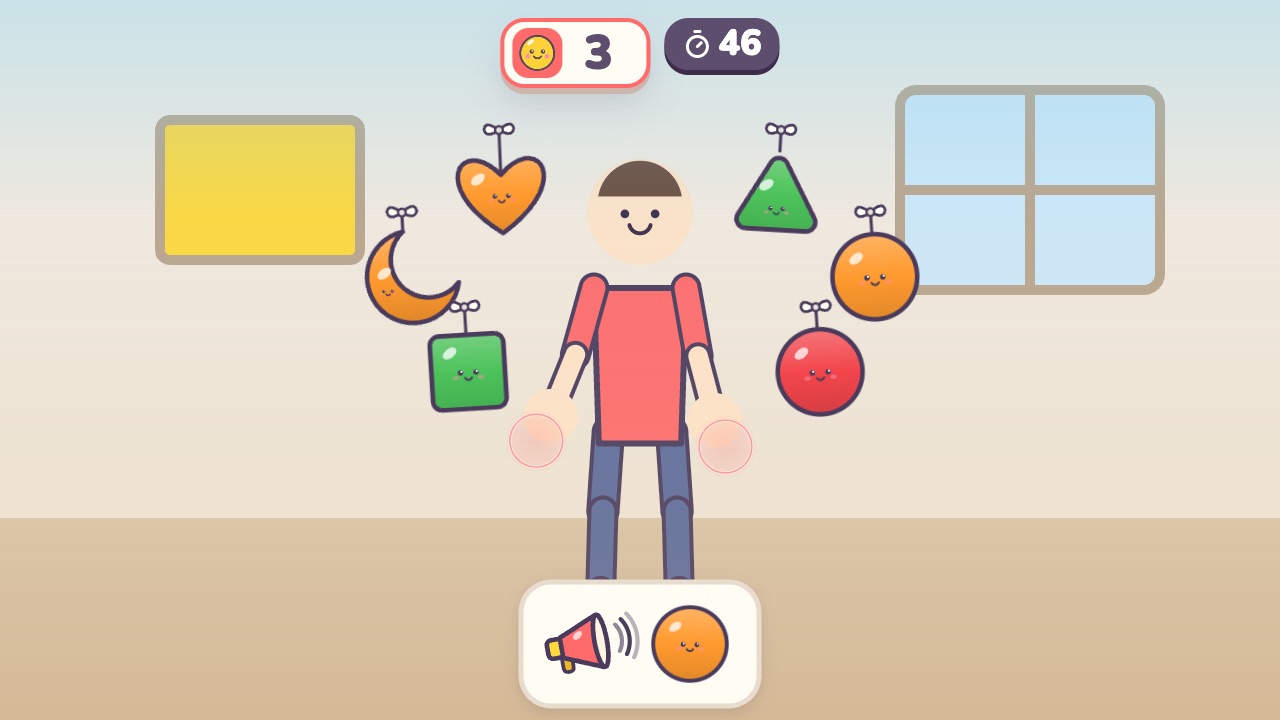 Color TouchListen and touch the right color and shapeAges 3–7 · Light activity · Thinking / Hands
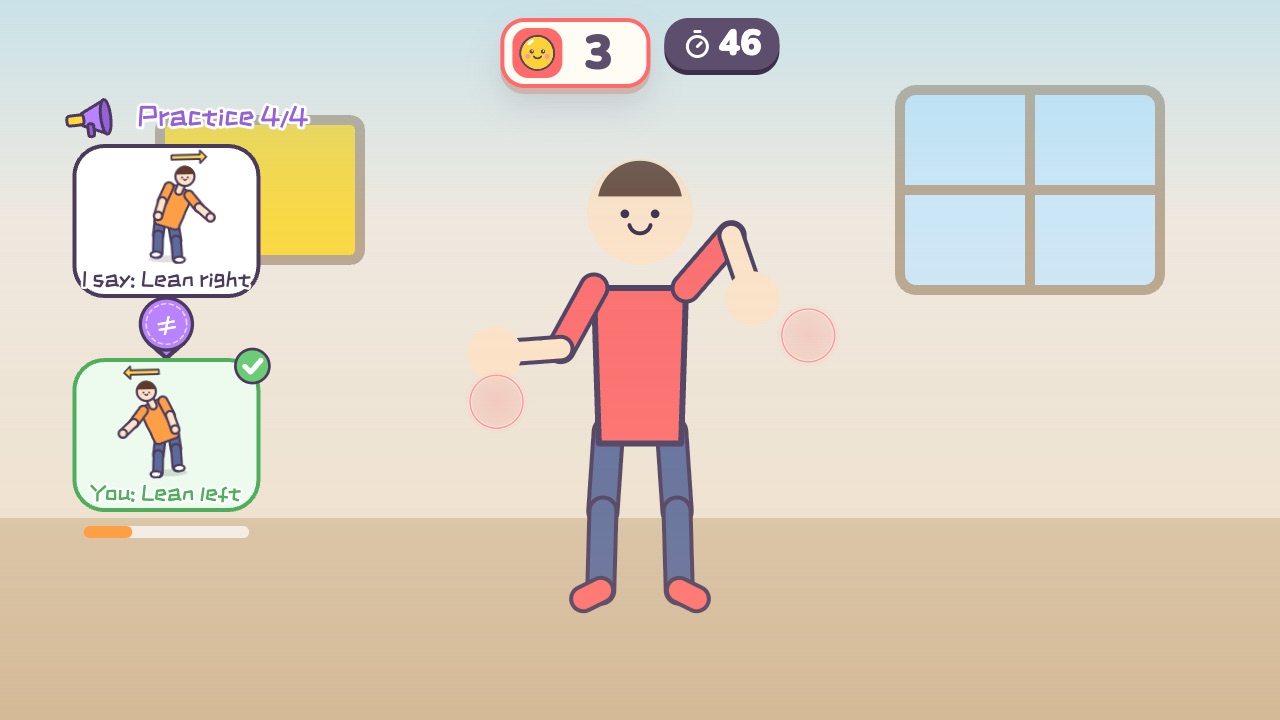 Do the OppositeI say arms up, you squat down. Only the opposite move countsAges 4–10 · Moderate activity · Whole body / Thinking
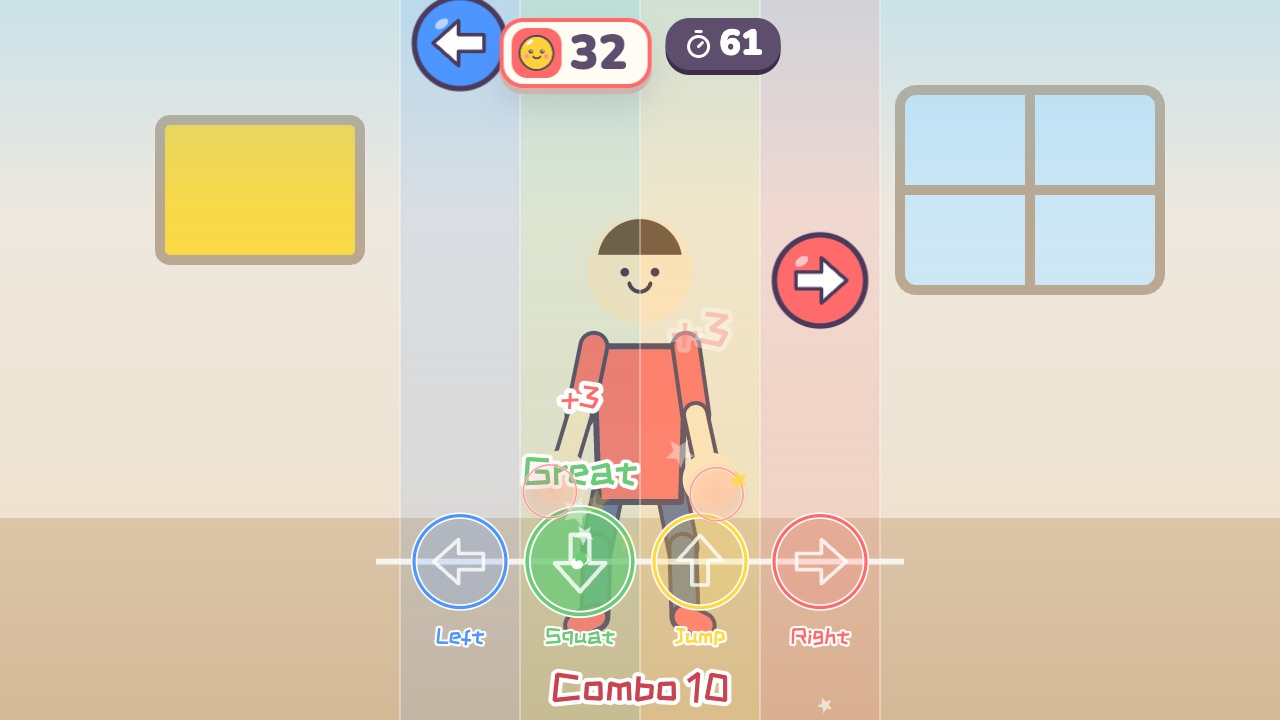 Rhythm StepsFollow the beat: step left, step right, jump and squatAges 6–16 · High activity · Rhythm / Whole body / Run & jump
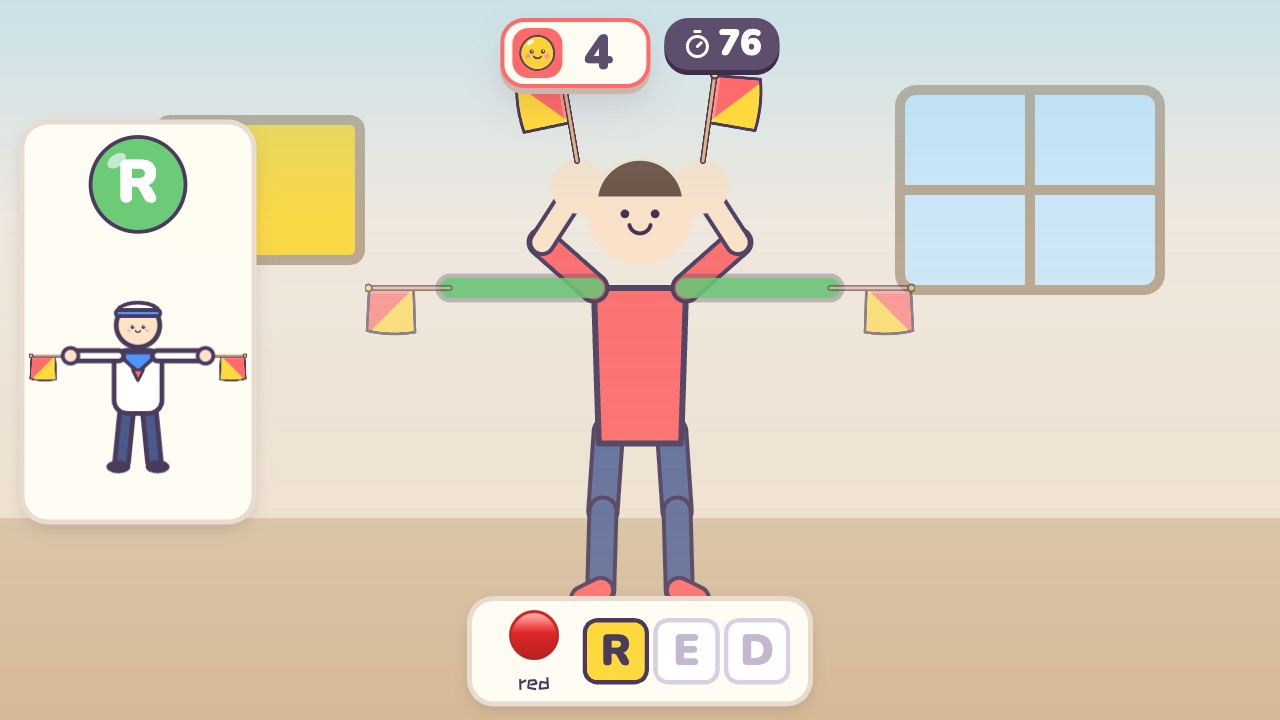 Flag CodePoint your arms in different directions to spell words with flagsAges 8–16 · Moderate activity · Thinking / Whole body
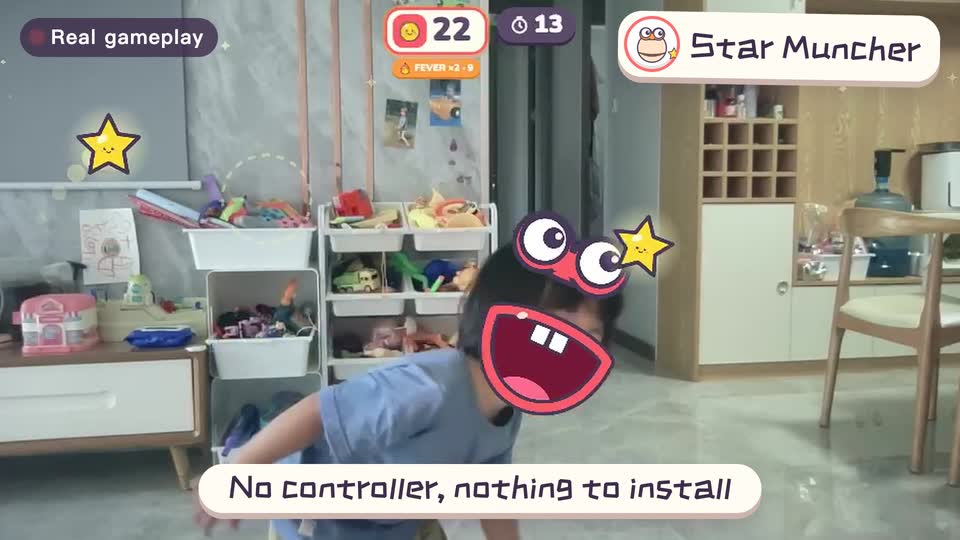
Real footage · 14 s
Kids stand in front of the computer and just move
100+ motion games for ages 3 to 18. Open the website and play: nothing to install, and the camera picture stays on this computer.
Keep reading
- How much should kids move each day? What the WHO says, and how to fit it in at home
- Screen time isn’t always sitting time: using screens to get kids moving
- When kids don’t like exercise: 6 ways to turn “I have to” into “I want to”
- Exercise and height: what actually helps kids grow (ages 6–14)
- Kids bouncing off the walls? A quiet 20-minute plan to burn off energy at home (ages 3–10)
- Winter exercise for kids: staying active when it’s too cold to go out