 DongDong Park
Brain breaks: 5-minute movement games for any grade
Updated
A brain break is a few minutes of movement in the middle of class. The CDC calls it classroom physical activity and recommends short bouts of 5 minutes or more, done several times a day. Here are three kinds of break, the games for each, and a sample day.
Three kinds of brain break
| Kind | When | On the projector | No screen |
|---|---|---|---|
| Wake-up | After lunch, a long stretch of seatwork | Jumping Jack Counter, High Knees Counter, Squat Counter | Count to 30 together while doing jumping jacks |
| Focus reset | Before a test or a new topic | Simon Says, Do the Opposite, Red Light, Green Light | Teacher calls moves; only move when the rule is followed |
| Calm-down | After recess or gym, before reading | Calm Breathing for grades 5 and up, Bubble Pop for the youngest | Slow stretches, five deep breaths |
How to run one with a projector
- One or two kids stand in front of the webcam, about 7 to 10 feet back.
- Everyone else stands behind their desks and copies the moves, so the whole class is moving, not watching.
- Play two or three one-minute rounds, swapping players each time. That’s the five minutes.
A sample day
| Time | Break |
|---|---|
| Mid-morning, between literacy and math | Focus reset, 5 minutes |
| Right after lunch | Wake-up, 5 minutes |
| Mid-afternoon | Wake-up or a short head-to-head game, 5 minutes |
| After recess or PE | Calm-down, 3 to 5 minutes |
Four breaks add up to about 20 minutes of movement. Federal guidelines call for 60 minutes or more of moderate-to-vigorous activity a day for ages 6 to 17, so brain breaks, recess and PE together get kids most of the way.
Two rules worth keeping
- Never take a brain break away as punishment. The CDC advises against withholding classroom physical activity as discipline, and SHAPE America lists withholding brain breaks among practices to avoid.
- Keep it short and on a schedule. Kids settle faster when they know a break is coming.
On rainy days, stretch it into indoor recess games; for a full lesson, see PE warm-up games and motion games at recess and in PE. Looking beyond videos? Compare options in GoNoodle alternatives.
Games mentioned here
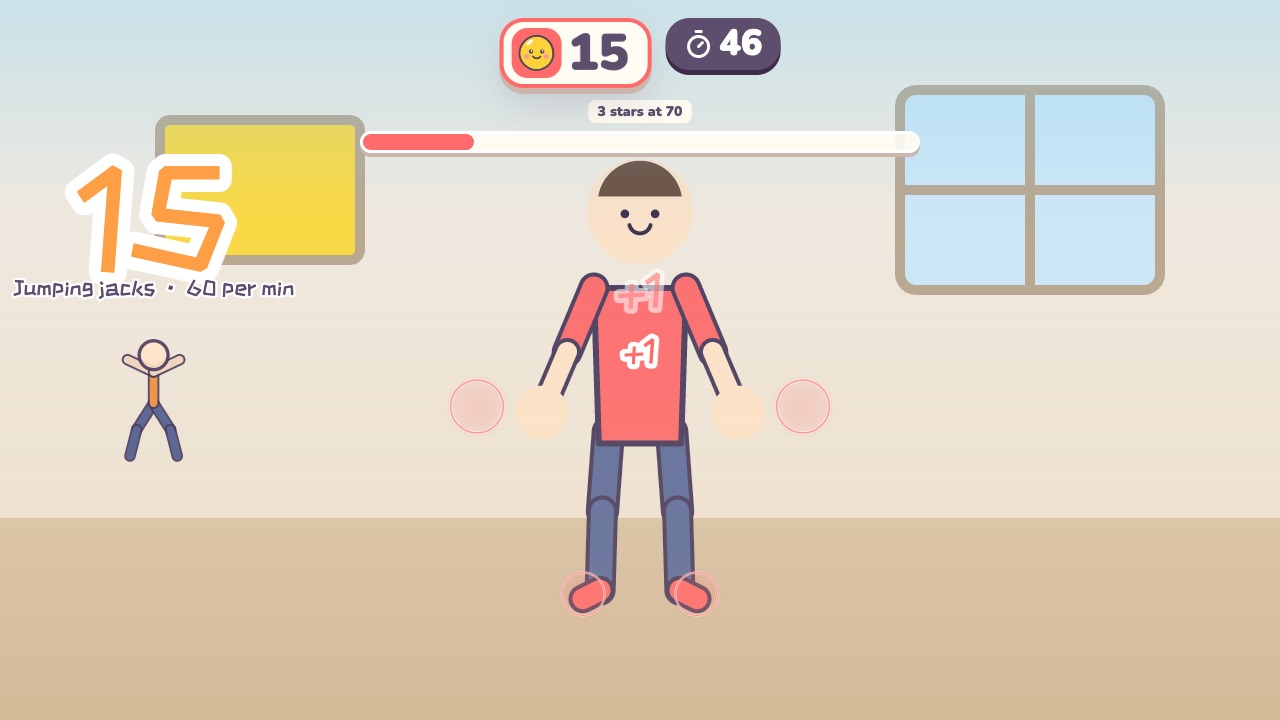 Jumping Jack CounterJump out with hands up, jump in with hands down: that is one. How many in a minute?Ages 6–18 · High activity · Fitness / Whole body
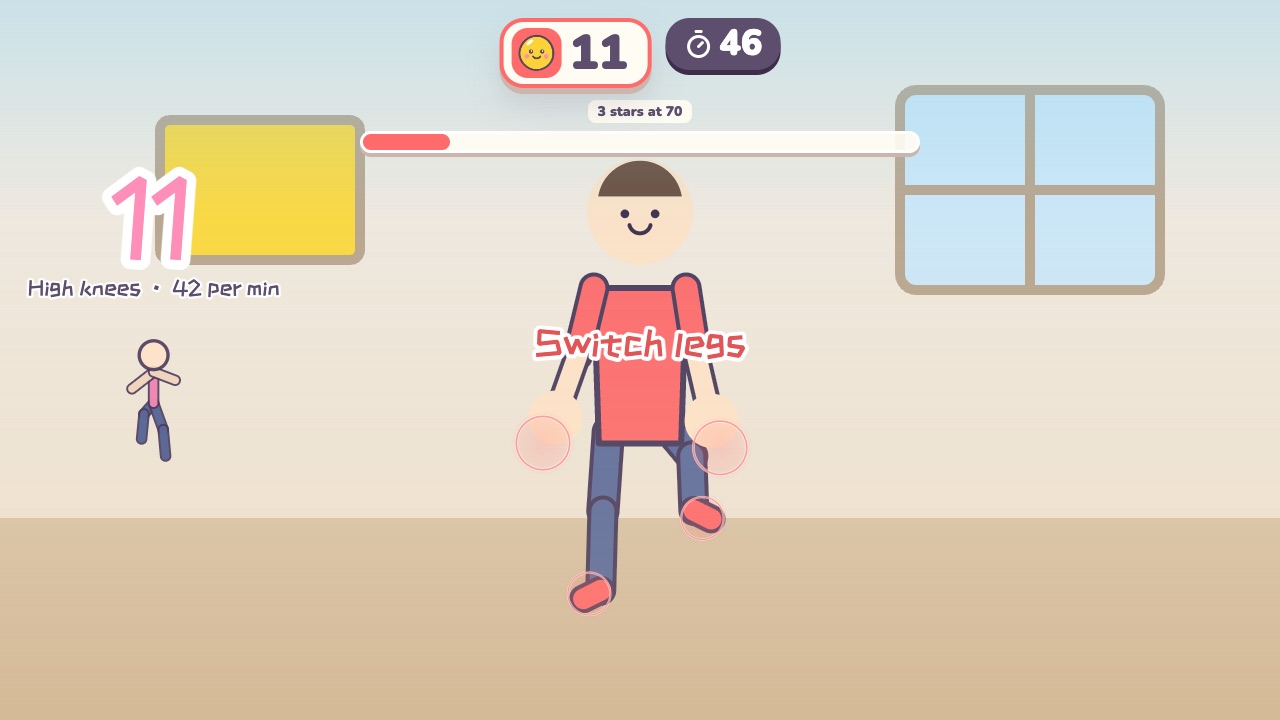 High Knees CounterLift your knees to hip height, left and right in turn. How many in a minute?Ages 6–18 · High activity · Fitness / Run & jump
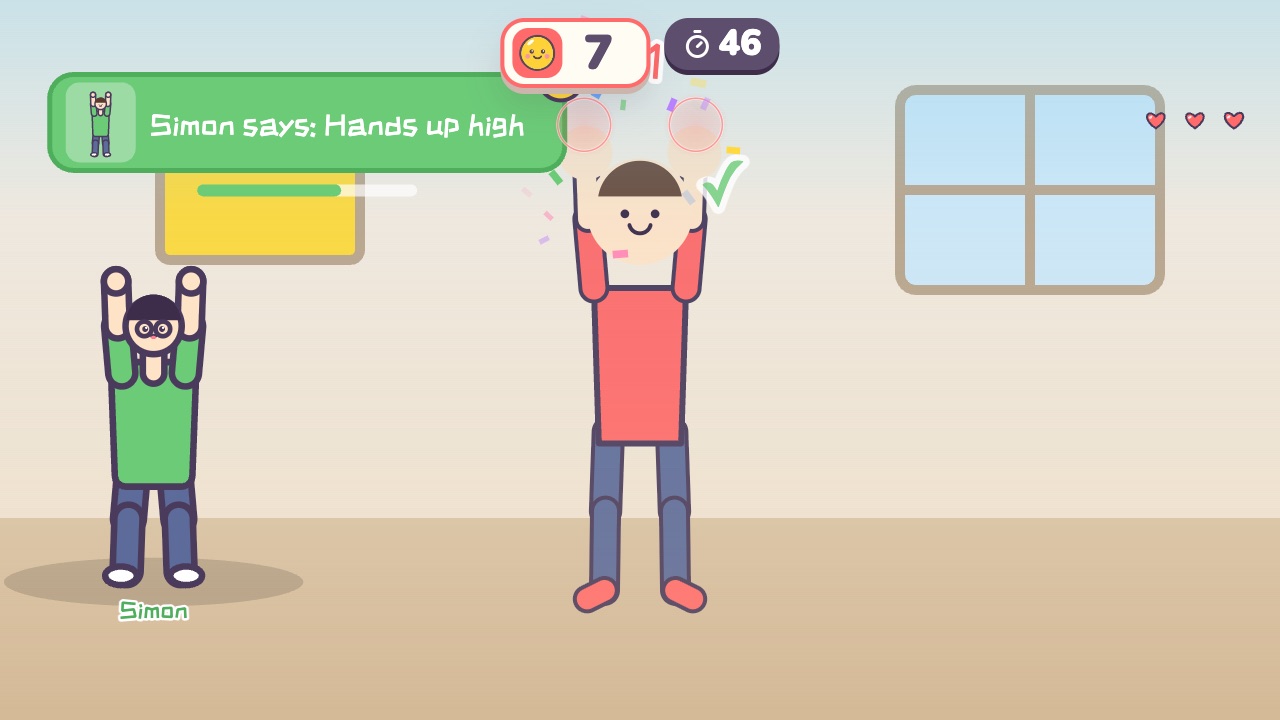 Simon SaysOnly move when Simon says soAges 4–10 · Moderate activity · Whole body / Thinking
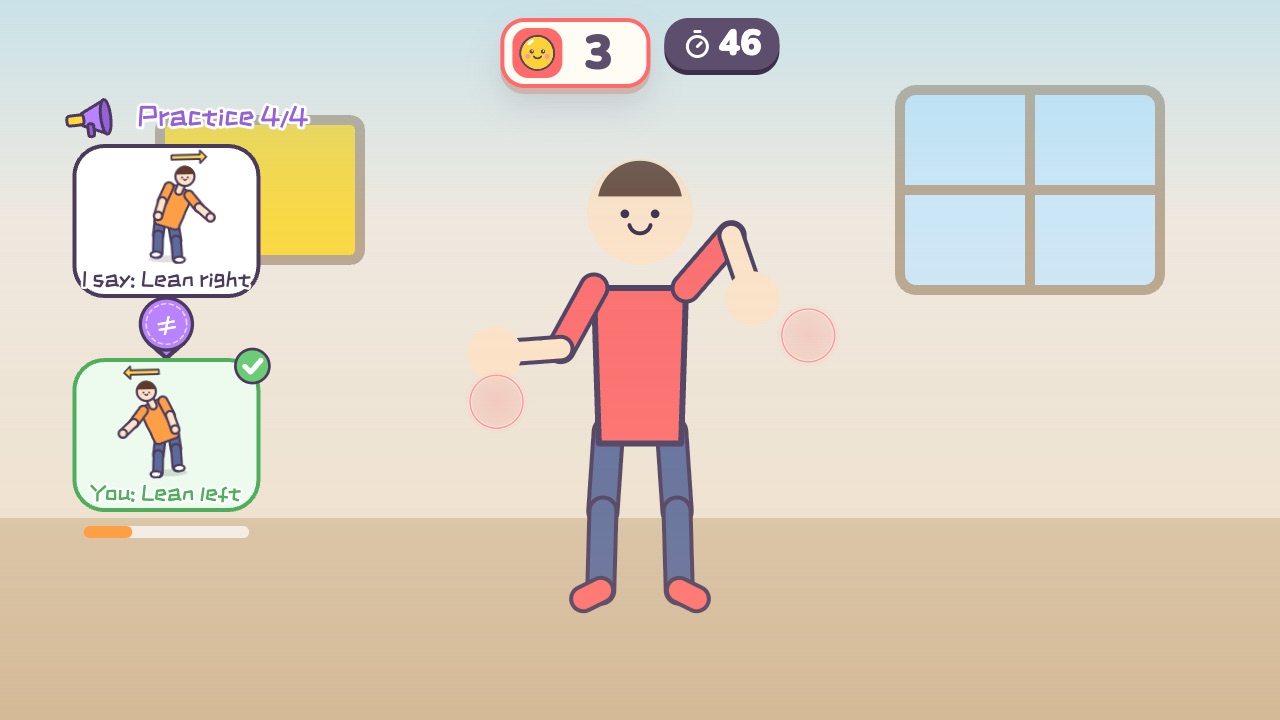 Do the OppositeI say arms up, you squat down. Only the opposite move countsAges 4–10 · Moderate activity · Whole body / Thinking
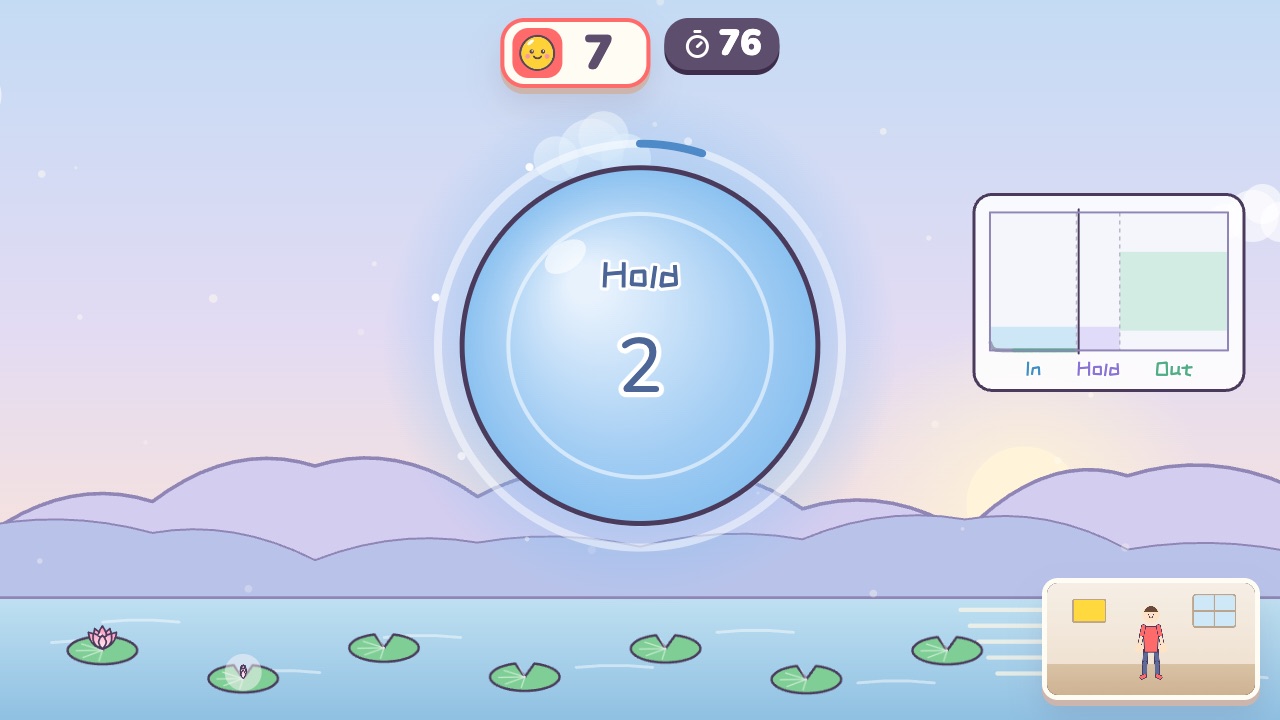 Calm BreathingBreathe in as the circle grows, and breathe out slowly at the microphone as it shrinksAges 10–18 · Light activity · Calm
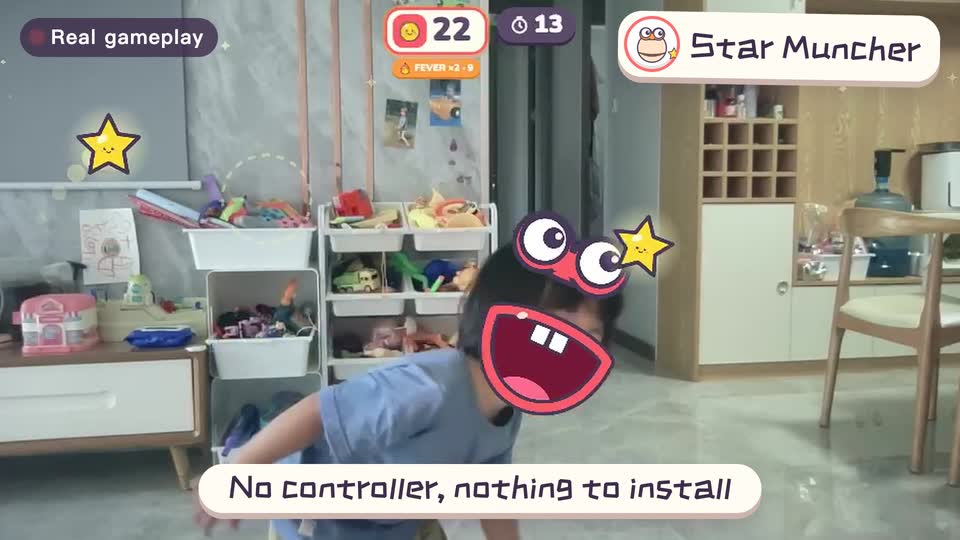
Real footage · 14 s
Kids stand in front of the computer and just move
100+ motion games for ages 3 to 18. Open the website and play: nothing to install, and the camera picture stays on this computer.
Sources
- Strategies for Classroom Physical Activity in Schools. Centers for Disease Control and Prevention. 2018
- Physical Activity Should Not Be Used as Punishment and/or Behavior Management. SHAPE America. Position statement, 2021
- Physical Activity Guidelines for Americans, 2nd edition. U.S. Department of Health and Human Services. 2018
Keep reading
- Indoor recess games: a 20-minute rainy-day plan
- Indoor PE class: one computer gets the whole class moving
- Indoor movement games for preschool: morning exercise and rainy days, ages 3 to 6
- Rainy-day obstacle course: 6 stations for a preschool classroom
- PE warm-up and cool-down games: the whole class follows the screen
- Parent and kid games: side by side, and the grown-up plays too