 DongDong Park
How to set up a sensory circuit: six indoor stations for preschool
Updated
A sensory circuit works like any other circuit: set up a few stations around the room and groups of kids rotate through them. The difference is that each station targets one sense: balance, body control, touch, or using both sides of the body together. You can set one up without any special sensory equipment. Here are six stations that fit in a classroom or playroom; split the class into six groups and one lap takes exactly 30 minutes.
Six stations: what to set up and what each one trains
- Crawling station (body control, both sides together): line up mats as a “meadow” with two arches in the middle, or use two small tables as a “cave”. Kids crawl through on hands and knees with a beanbag on their back, trying not to drop it.
- Balance station (balance): a low balance beam, or two strips of tape on the floor about 6 inches (15 cm) apart. Kids walk across with a beanbag on their head, or holding a plate with a ball on it in both hands. Put mats under a balance beam.
- Rolling station (balance, body control): join two or three mats. Kids lie straight and log roll sideways across them; older kids can also hug their knees and rock back and forth like a roly-poly toy.
- Push-pull station (how much force to use): a cardboard box with a few books in it, pushed to the far side and pulled back; or two kids carry a basket of blocks together to “move house”. Aim for a load kids can move, but only with some effort.
- Texture path (touch): join different materials into a path, such as a yoga mat, towels, artificial turf, bubble wrap and a bumpy massage mat, and walk it barefoot or in socks. Put a “feely box” next to it: no peeking, just reach in and guess what’s inside.
- Motion game station (balance, body control, listening): a computer connected to a TV or classroom display, with the camera facing an open space. Choose “Nonstop” on the games page and the next game starts by itself after each round; kids take turns, and those waiting do the moves alongside. This station needs no equipment, and you don’t have to watch it all the time.
No special equipment? What to use instead
| Typical sensory equipment | Mainly trains | Use instead |
|---|---|---|
| Balance beam, balance board | Balance | Tape lines on the floor, long blocks laid end to end |
| T-stool (one-legged stool) | Balance | Standing on one leg like a flamingo: who can last the longest? |
| Scooter board (the kind you lie on), barrel | Balance, body control | Log rolls on a mat; lying on a mat and “paddling” forward with both hands |
| Large therapy ball | Body control, touch | Rolling up in a blanket like a burrito; a gentle press through a big cushion |
| Textured balls, tactile boards | Touch | A path of towels, bubble wrap and artificial turf; a feely box |
| Beanbags, ring toss | Both sides together, hand-eye coordination | A sock filled with rice and sewn shut, passed from hand to hand or tossed into a basket |
How to rotate
Split the class into six groups, each starting at a different station. Every 5 minutes the groups move on (play some music, and when it stops, everyone switches), so one lap takes 30 minutes. Choose a “station helper” at each station to remind everyone of the rules, and stay near the balance and rolling stations yourself.
- Ages 3–4: cut it to 4 stations (crawling, balance, texture path, motion games) of 4 minutes each, and keep balance to walking a tape line. For the motion games: Bubble Pop, Animal Moves and Carrot Pull.
- Ages 4–5: all six stations, with a beanbag on the head at the balance station. Motion games: Star Stomp, Shape Wall, Simon Says, and Red Light, Green Light.
- Ages 5–6: make it harder and add races, such as carrying a ball on a plate at the balance station and relays at the crawling station. Motion games: Slalom Ski, Sky Pilot, Hopscotch and Bounce the Ball.
How it differs from a fitness circuit: a fitness circuit is mostly running, jumping and throwing, while a sensory circuit focuses on balance, control and touch, at a slower pace. You can schedule each once or twice a week, and go outside when the weather is good.
For sensory play at home, see sensory games at home, with ideas for each sense.
This is an everyday play activity for the whole class, not a therapy session, and there is no need to “test” anyone’s senses. If a kid is scared of heights, of spinning or of going barefoot, don’t push: let them watch first and start with an easier station. If a kid keeps clearly struggling, talk with the family and suggest a developmental assessment with their doctor.
A 40-minute sensory circuit (ages 4–5, 6 groups, 6 stations)
| Time | What happens | Games |
|---|---|---|
| 5 min | Warm-up: the whole class copies animals on the big screen, loosening wrists, ankles and neck | Animal Moves |
| 30 min | Six stations, 5 minutes each; switch when the music stops | Motion game station on Nonstop (Star Stomp, Shape Wall, Red Light, Green Light, Simon Says) |
| 3 min | Cool-down: slow, gentle moves; then in pairs, roll a small ball along a partner’s back | Bubble Pop |
| 2 min | Wrap-up: which station was hardest, and how did you get through it? Thank the station helpers | — |
Questions teachers ask
Can we do this without sensory equipment?
Yes. Tape on the floor stands in for the balance beam, log rolls on mats for barrels and scooter boards, and a path of towels, bubble wrap and artificial turf for tactile boards. The motion game station only needs a computer with a camera, connected to a TV or classroom display.
The room is small and the class is big. How do we avoid long lines?
Ideally, two or three kids can use each station at once: set up two side-by-side paths for crawling and for the texture path, and run the motion game station on “Nonstop”, one kid per round, with those waiting doing the same moves alongside. Or cut it to 4 stations of 6 minutes each.
How often? Does it clash with a fitness circuit?
It doesn’t clash. A fitness circuit is mostly running, jumping and throwing; a sensory circuit focuses on balance, control and touch. Once or twice a week each works, and go outside when the weather is good.
Some kids won’t walk the beam or go barefoot. What then?
Don’t push. At the balance station, start with the tape line on the floor while you hold one hand. The texture path can be walked in socks, and only the parts a kid is willing to try. Most kids want a turn after watching their friends a few times.
What about safety?
Put mats wherever kids balance or roll, and stay close. Rolling means sideways log rolls only, no forward rolls. Keep the push boxes light enough, keep the paths clear of anyone standing in the way, and have all groups rotate in the same direction.
Do I need an account?
You can try two rounds without signing in. After that, a teacher signs in with an email address or Google: the Free plan has a few scored rounds a day, and the Class plan on the pricing page has no daily limit.
Games mentioned here
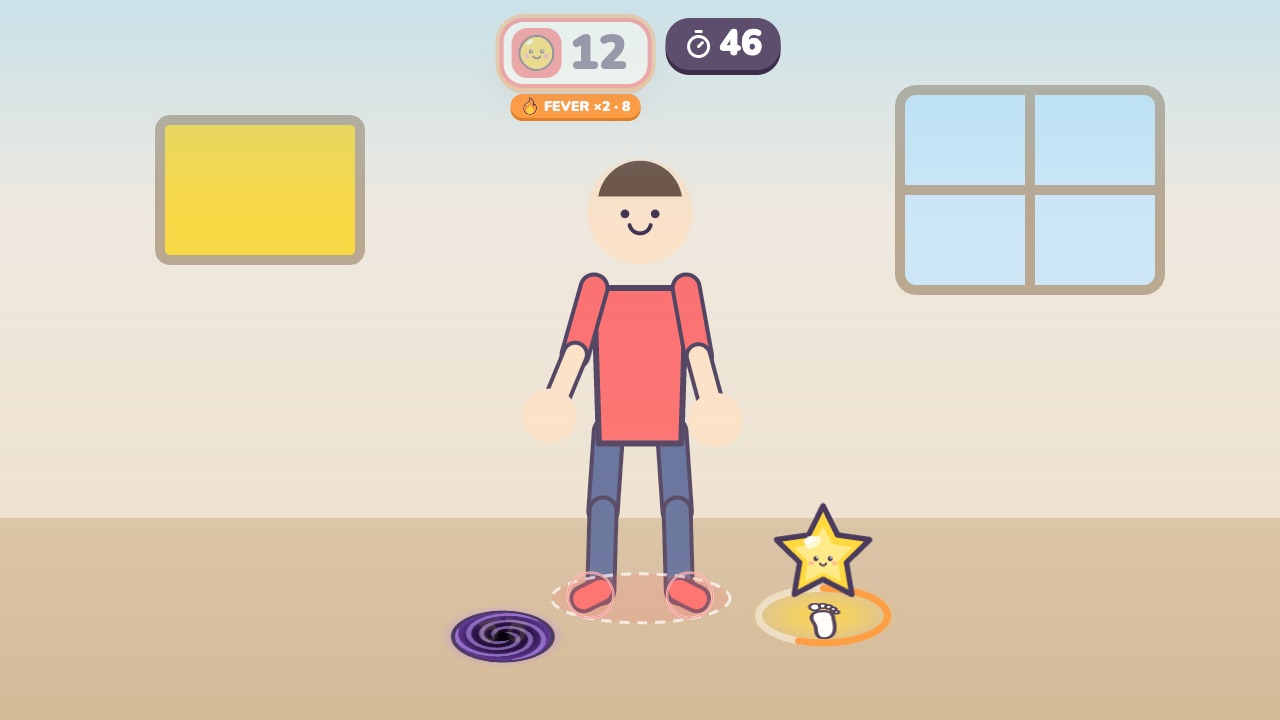 Star StompStars light up in front of your feet. Stomp on themAges 4–12 · Moderate activity · Run & jump
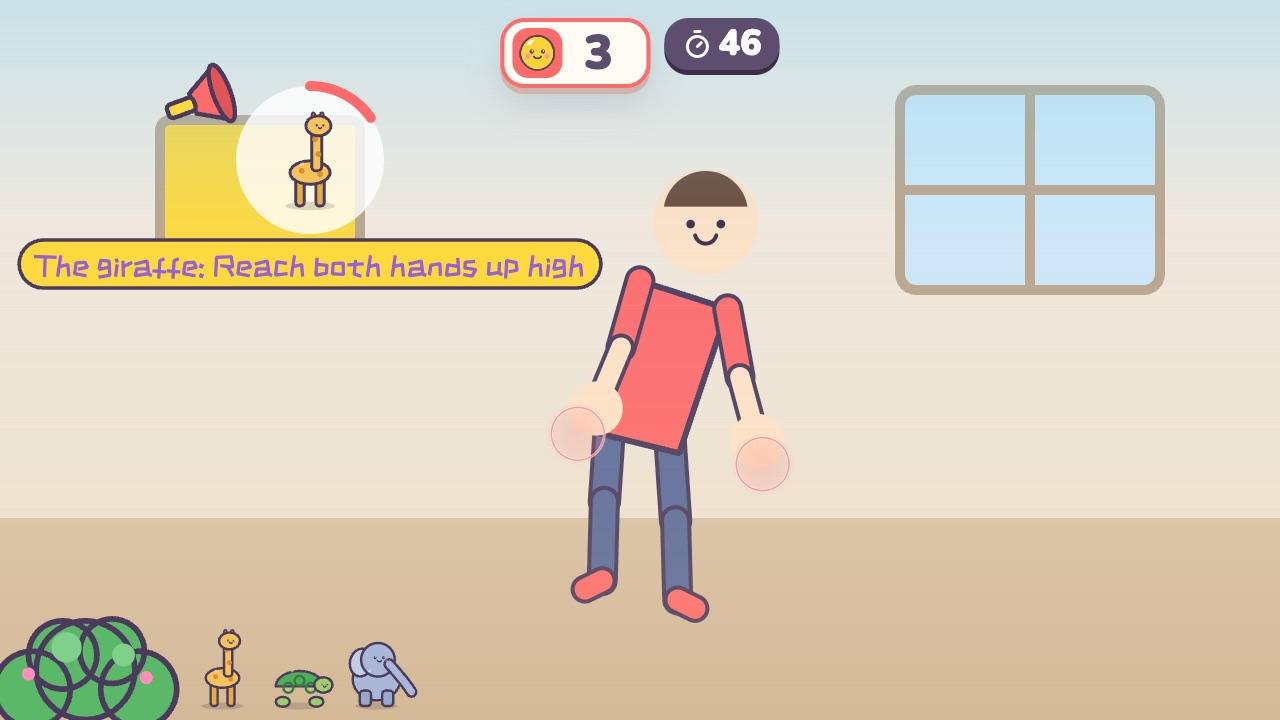 Animal MovesDo the move of whichever animal gets calledAges 3–8 · Moderate activity · Whole body
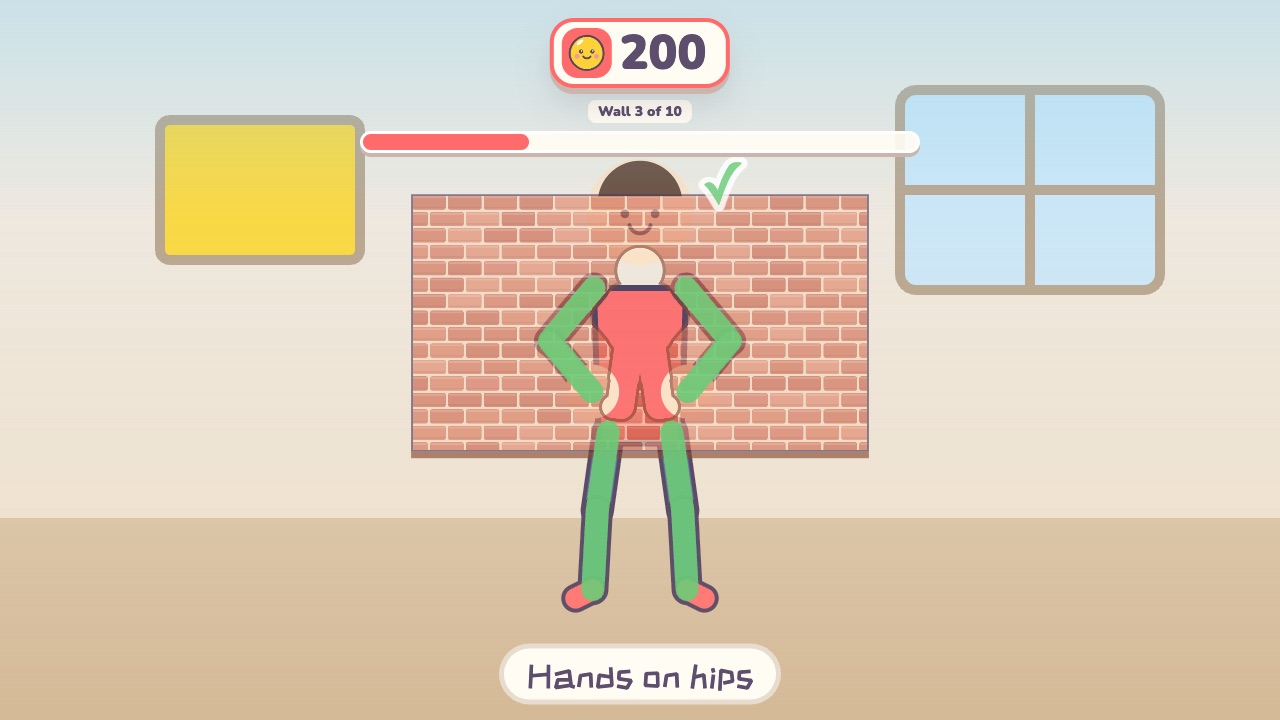 Shape WallMake the same shape as the hole in the wallAges 4–12 · Moderate activity · Whole body / Thinking
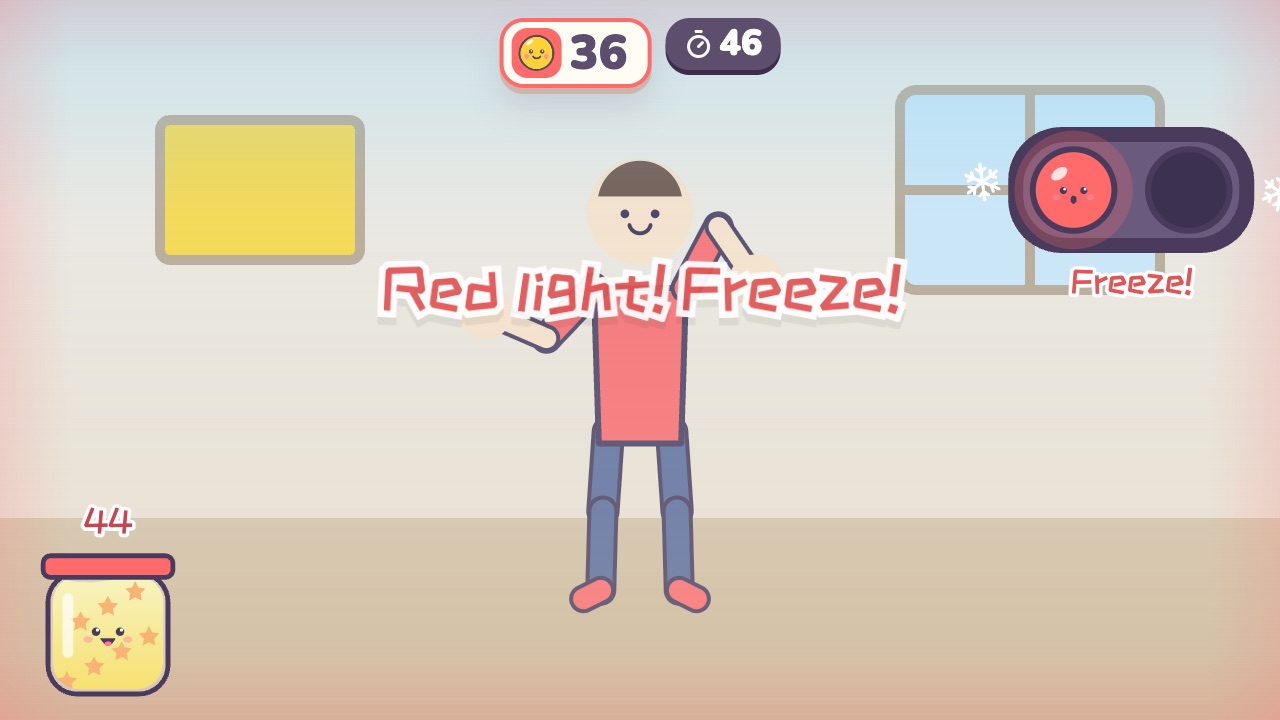 Red Light, Green LightMove like crazy on green light, and freeze the moment you hear red lightAges 3–10 · High activity · Whole body
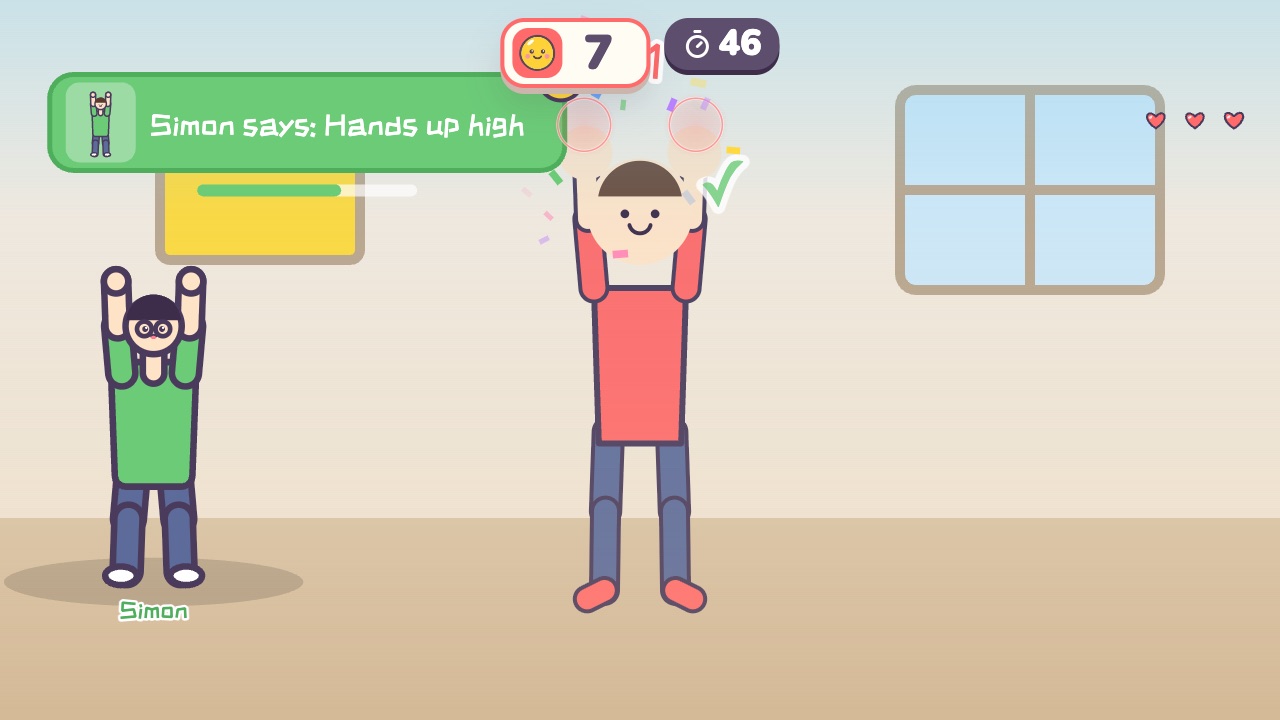 Simon SaysOnly move when Simon says soAges 4–10 · Moderate activity · Whole body / Thinking
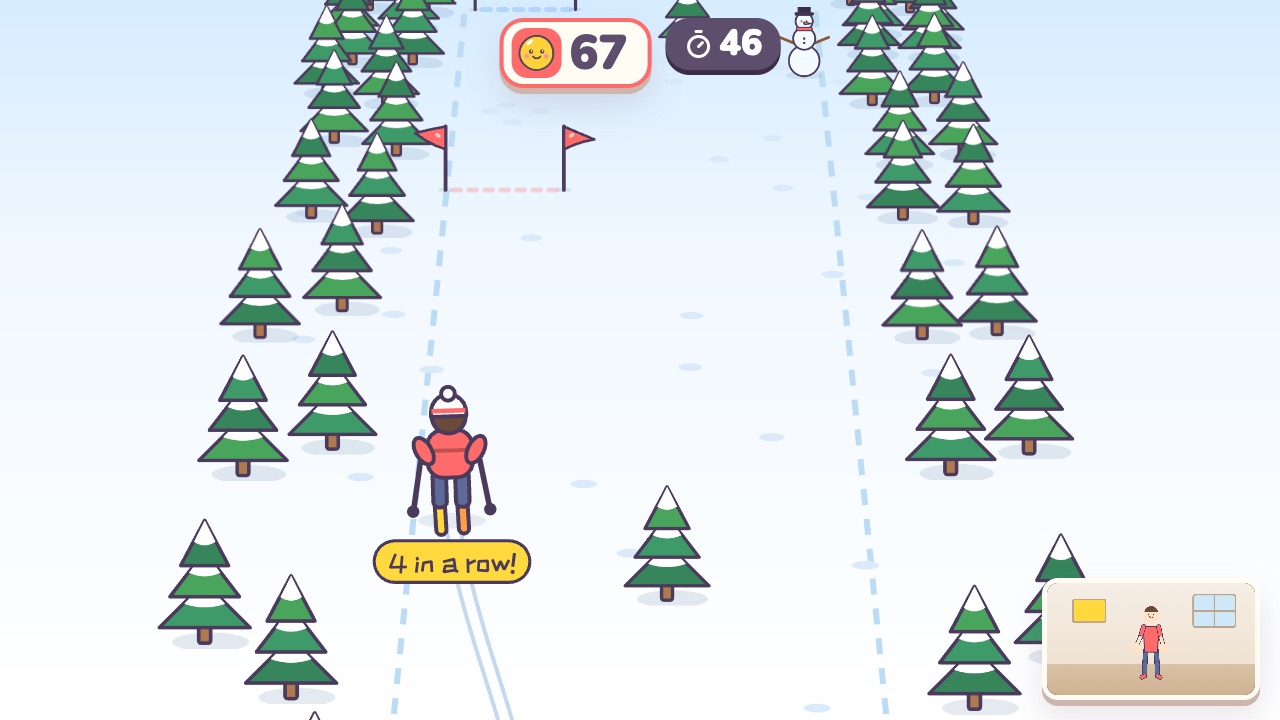 Slalom SkiLean left and right to ski through the flag gatesAges 5–10 · Moderate activity · Whole body
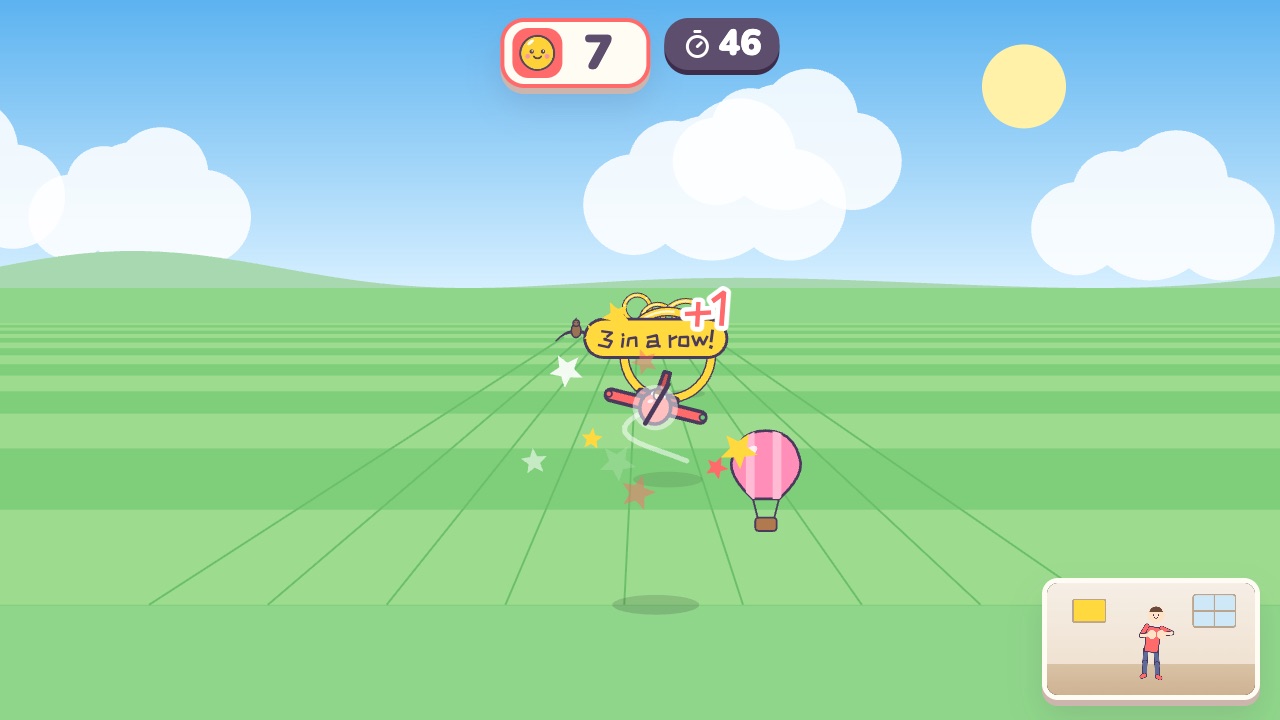 Sky PilotSpread your arms like wings, lean to turn, and fly through the golden ringsAges 5–14 · Moderate activity · Whole body
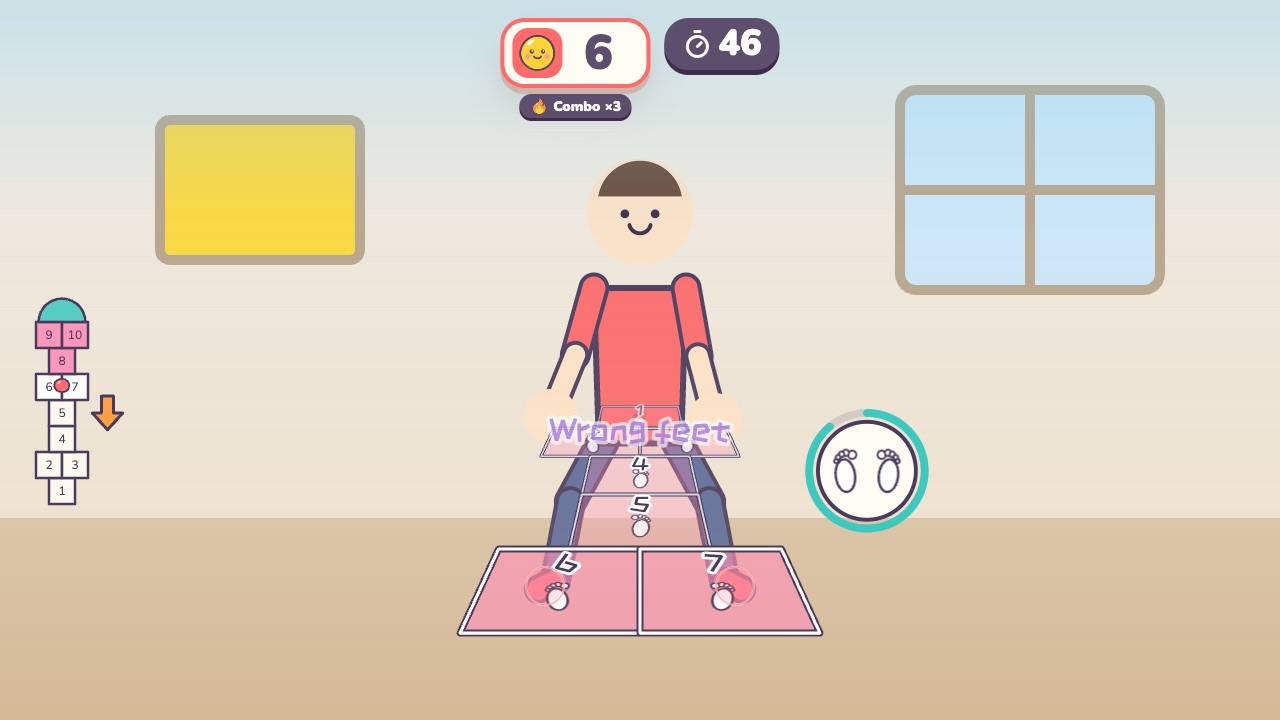 HopscotchOne foot on single squares, two feet on double squares, one row at a timeAges 5–12 · High activity · Run & jump / Fitness
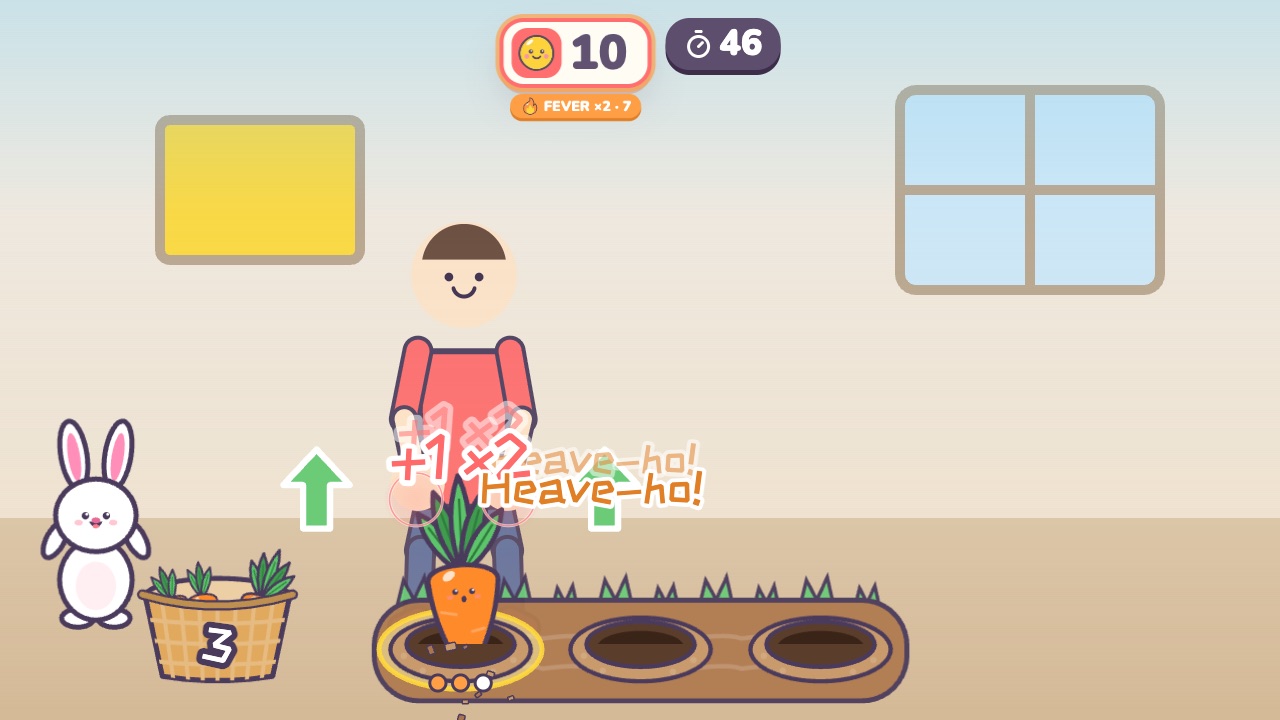 Carrot PullSquat down, grab the leaves and stand up to pull the carrotAges 3–8 · Moderate activity · Whole body / Run & jump / Fitness
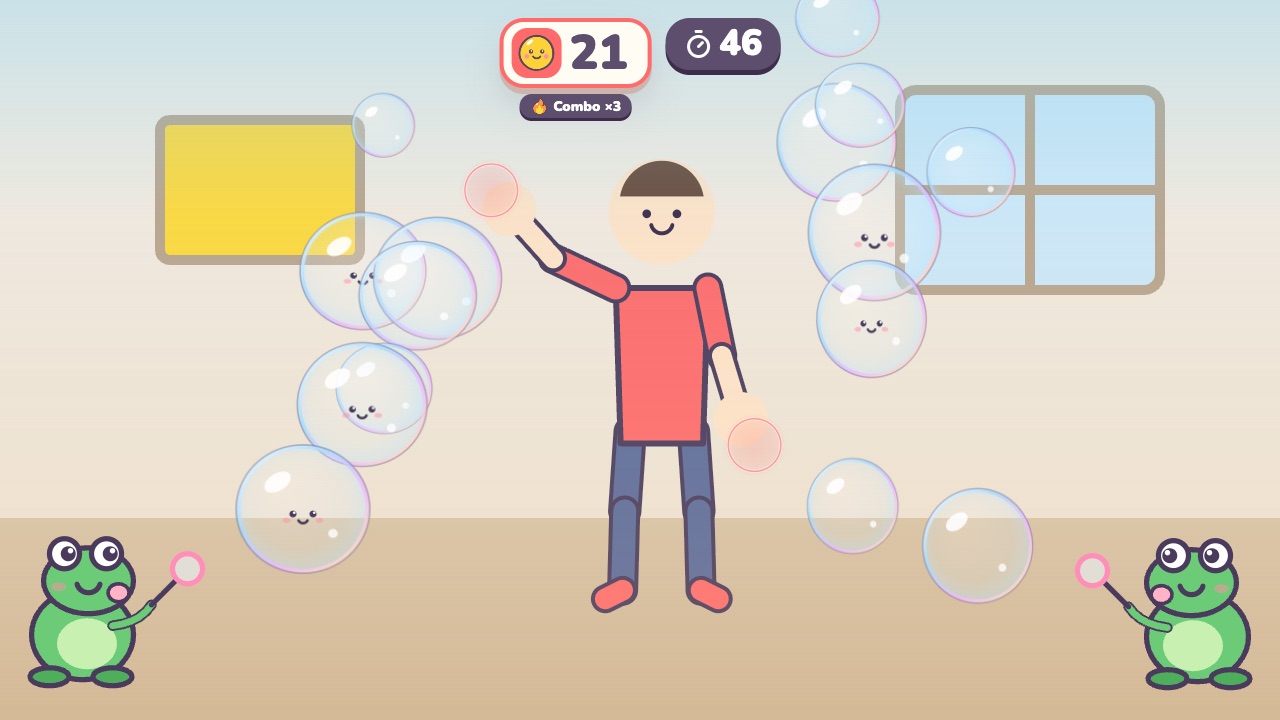 Bubble PopPop the bubbles floating toward youAges 3–7 · Light activity · Hands / Calm
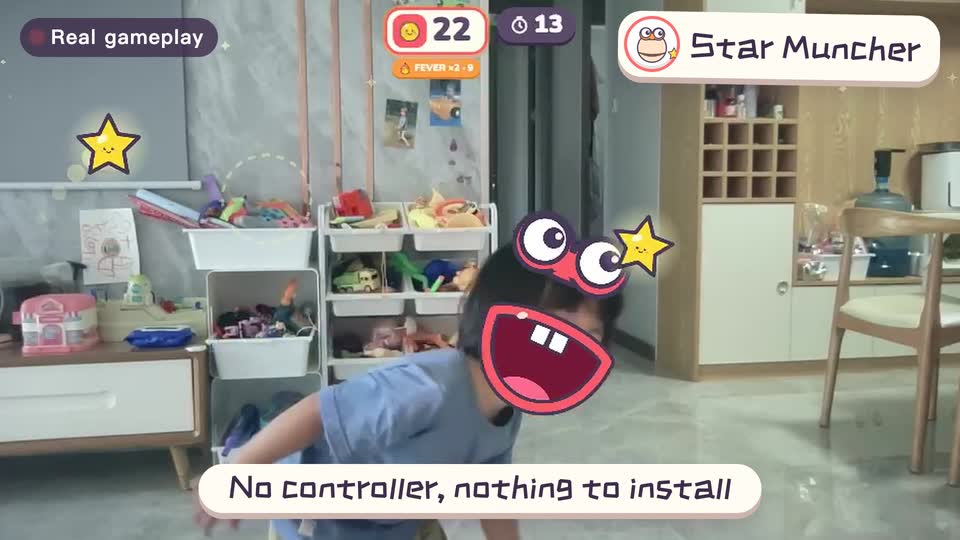
Real footage · 14 s
Kids stand in front of the computer and just move
100+ motion games for ages 3 to 18. Open the website and play: nothing to install, and the camera picture stays on this computer.
Keep reading
- Indoor recess games: a 20-minute rainy-day plan
- Brain breaks: 5-minute movement games for any grade
- Indoor PE class: one computer gets the whole class moving
- Indoor movement games for preschool: morning exercise and rainy days, ages 3 to 6
- Rainy-day obstacle course: 6 stations for a preschool classroom
- PE warm-up and cool-down games: the whole class follows the screen