 DongDong Park
First-grade math facts without the battle: 5 minutes a day, on the move
Updated
First graders are learning to add and subtract within 10, then within 20. Getting quick and accurate comes from a little practice every day, not a hundred problems in one sitting. Six-year-olds don’t sit still for long, and a worksheet can turn into a standoff. Put the math together with jumping, clapping and catching, and five minutes a day is much easier to keep up. Below are three ways to practice, which level to choose, a weekly plan and answers to common questions.
What first graders are working on
Most first-grade math starts with addition and subtraction within 10, then moves on to within 20, including the harder facts that cross ten, like 8 + 5 or 13 − 6. The order differs a little between schools and textbooks, so follow your child’s class. Multiplication comes later; there’s no need to get ahead of it.
The goal is fluency: right first, then fast. A few minutes every day, without skipping days, does more than a few pages crammed in on the weekend.
Way 1: catch the right answer in Math Catch
In Math Catch (ages 5–9), a problem appears on the screen, a few answers fall from the sky, and your child catches the right one with a hand. A round lasts 60 seconds. The score is the number of problems answered correctly, so the only way to more stars is getting them right. On the games page, tap “+” or “−” under the Math Catch card (there are also “123” for counting and “×” for multiplication), then choose a difficulty. With the Elementary age group, the levels give these problems:
| Difficulty (Elementary) | Addition and subtraction | Multiplication | When to use it |
|---|---|---|---|
| Grades 1–2 | Within 5 | 1–2 × 1–5 | The first weeks of school, or as a warm-up |
| Grades 3–4 | Within 10 | 1–5 × 1–5 | While the class is learning facts within 10 |
| Grades 5–6 | Within 20 | Times tables from 2 to 9 | Once facts within 20 have been taught (and “×” only after times tables at school) |
The levels are named after school grades, but the math ranges are set on the gentle side. Choose by the table above, not by the name.
Way 2: compare amounts with Balance Scale
In Balance Scale (ages 6–12), your child’s arms are the scale: lower the hand on the heavier side, and keep both arms level when the two sides weigh the same. On “Grades 5–6”, the weights carry math problems (addition and subtraction within 20, and times tables), and sometimes both sides are problems, such as 8 + 5 against 6 + 6. Your child has to get both right and then compare them. “Grades 3–4” is counting and addition and subtraction within 10.
Way 3: jump the answer (no screen needed)
- You say a problem. Your child says the answer, then jumps that many times on the spot (jumping jacks or two-footed jumps), counting out loud.
- Answers in the teens mean a lot of jumps, which is good exercise. For a quieter evening, clap instead, or play Clap and Count (ages 3–7), where kids count the animals and clap that many times.
- Swap roles: your child makes up problems to test you. Get one wrong on purpose and let them correct you.
Want to know how many jumping jacks your child can do in a minute? Jumping Jack Counter counts them for you. Read the number on the screen together and compare it with yesterday’s.
A 5-minute daily routine
- Warm up: three “jump the answer” problems.
- Two rounds of Math Catch: one with addition, one with subtraction.
- One round of Balance Scale, or a few more “jump the answer” problems.
- Finish by asking: which problem was hardest today? Write it down and start with it tomorrow.
| Day | Focus | How to play |
|---|---|---|
| Monday | Addition | Jump the answer + Math Catch with “+” |
| Tuesday | Subtraction | Jump the answer + Math Catch with “−” |
| Wednesday | Comparing | Two rounds of Balance Scale |
| Thursday | Addition and subtraction mixed | Math Catch, one round each of “+” and “−” |
| Friday | Tricky ones again | Turn the hard problems you wrote down this week into jump-the-answer problems |
| Weekend | Rest, or your child asks the questions | Your child quizzes you, and you do a few jumps after each answer |
Common questions
Should I correct every mistake right away?
No need to stop and explain each one. Note the problems that keep coming up wrong (usually the ones that cross ten), then practice them a few extra times the next day with jump the answer.
Should we time it and race?
Right first, then fast. Once your child is confident, compare how many problems they got right in a round with their own score from yesterday, not with other kids.
How does this fit with math homework?
Keep doing the homework as usual. Use the games as a warm-up before homework, or as a five-minute movement break when your child is getting tired, then go back to it.
Should we start multiplication early?
No need. Follow the school’s pace. Reciting the times tables early isn’t the same as understanding what multiplication means.
Playing on the computer for the first time? Run the one-minute device check, then start a round of Math Catch.
Learning to tell time too? See clock games for learning to tell time.
Games mentioned here
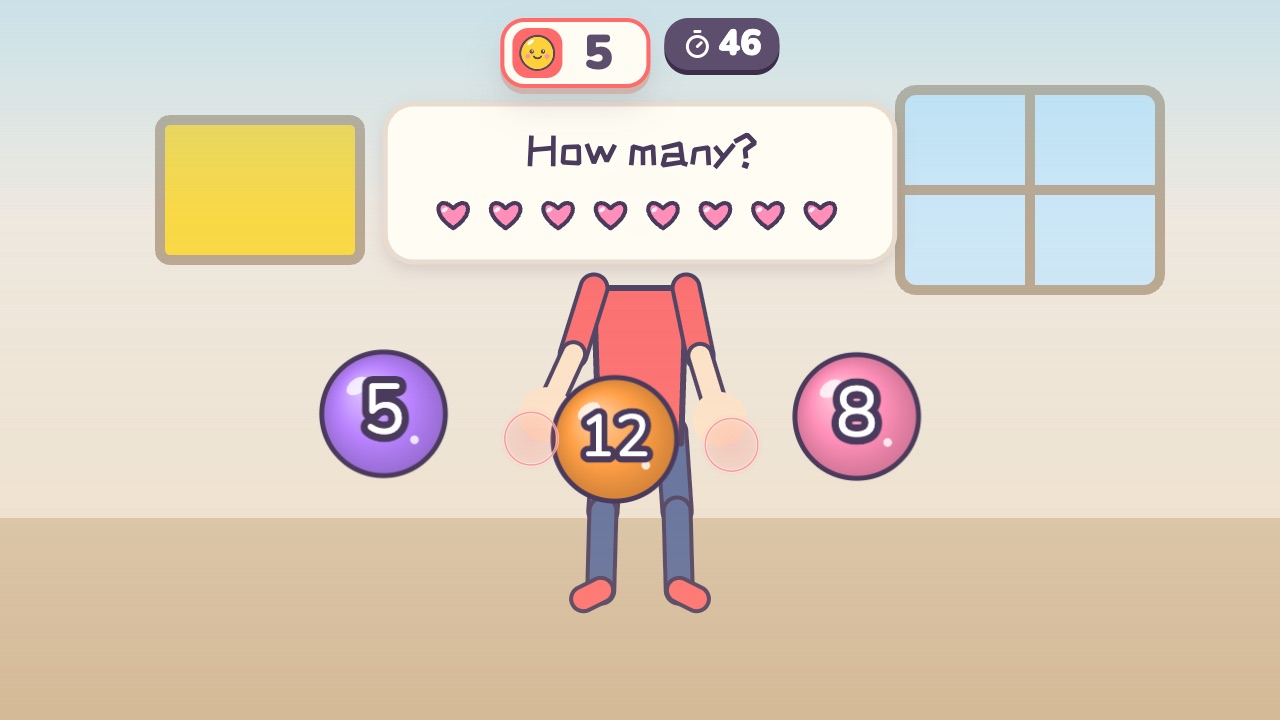 Math CatchThink it through and catch the right answerAges 5–9 · Light activity · Hands / Thinking / Calm
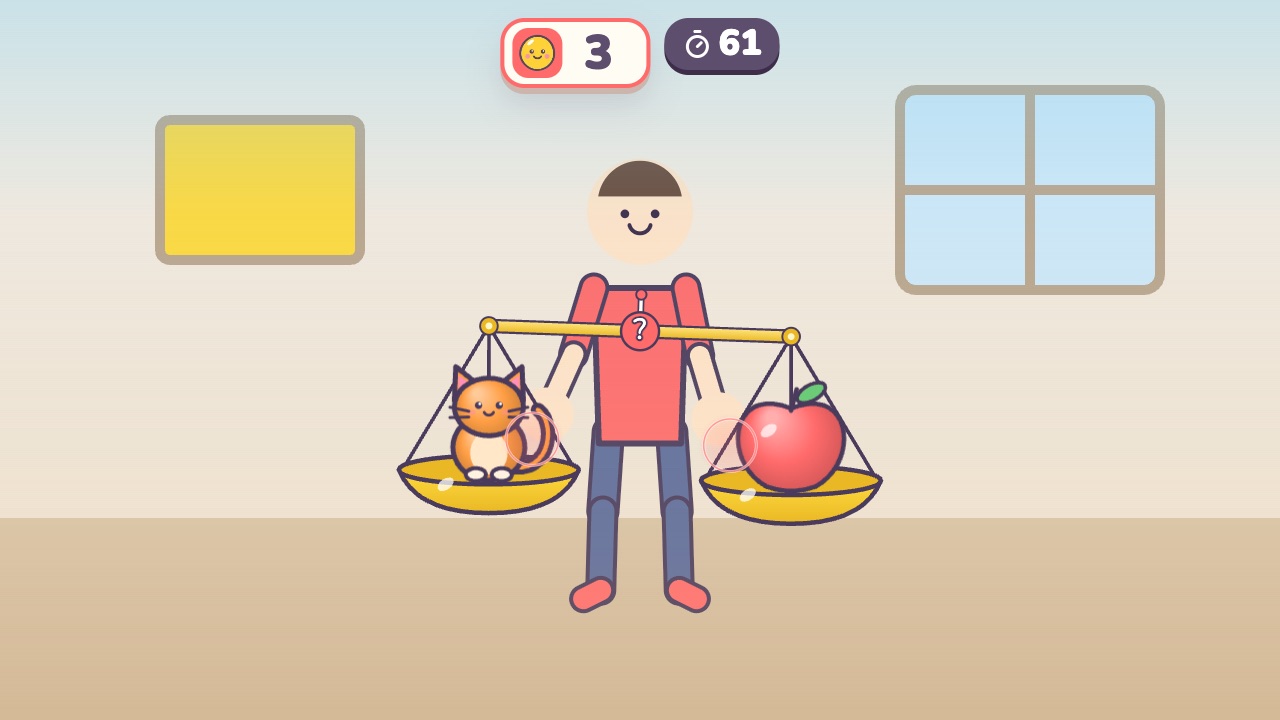 Balance ScaleYour arms are the scale. Lower the side that is heavierAges 6–12 · Light activity · Thinking / Calm
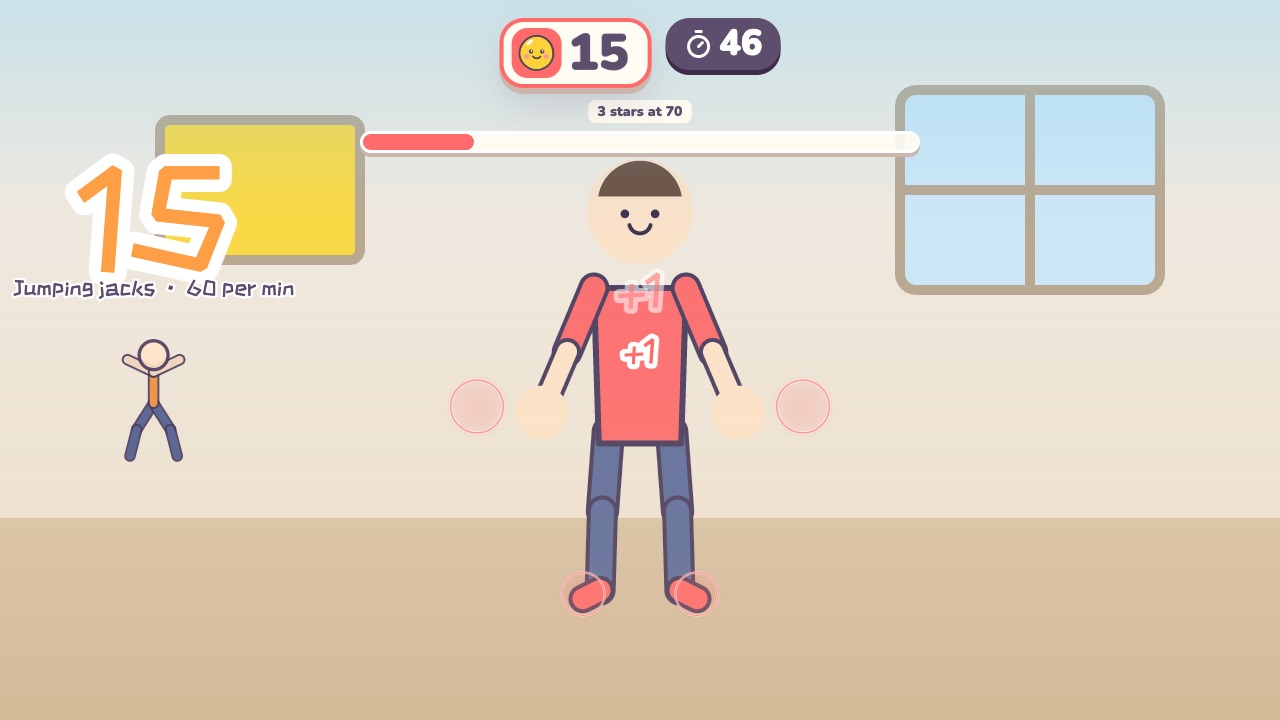 Jumping Jack CounterJump out with hands up, jump in with hands down: that is one. How many in a minute?Ages 6–18 · High activity · Fitness / Whole body
 Clap and CountCount the little animals and clap that many timesAges 3–7 · Light activity · Thinking / Hands
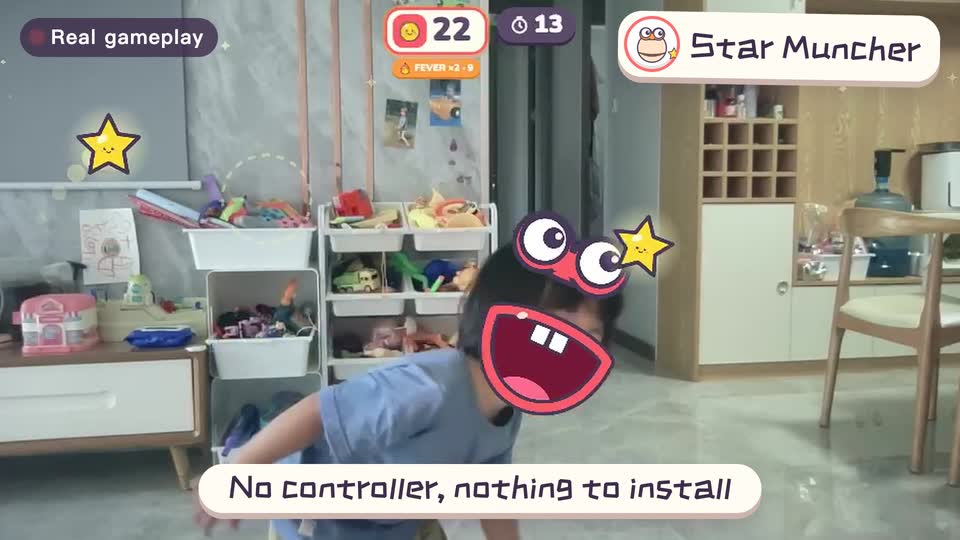
Real footage · 14 s
Kids stand in front of the computer and just move
100+ motion games for ages 3 to 18. Open the website and play: nothing to install, and the camera picture stays on this computer.
Keep reading
- How much should kids move each day? What the WHO says, and how to fit it in at home
- Screen time isn’t always sitting time: using screens to get kids moving
- When kids don’t like exercise: 6 ways to turn “I have to” into “I want to”
- Exercise and height: what actually helps kids grow (ages 6–14)
- Kids bouncing off the walls? A quiet 20-minute plan to burn off energy at home (ages 3–10)
- Winter exercise for kids: staying active when it’s too cold to go out