 DongDong Park
Telling time games: o’clock, half past, quarter past and quarter to
Updated
Kids usually learn o’clock first, then half past, then quarter past and quarter to. They tend to get stuck in three places: telling the hour hand from the minute hand, misreading half past, and saying quarter to. Making the clock with their own two arms sticks better than staring at a clock face.
Where kids get stuck, and how to explain it
Mixing up the hour hand and the minute hand
The minute hand is long and the hour hand is short; the minute hand moves fast and the hour hand moves slowly. Arms make it easy to see: a straight, long arm is the minute hand, and a bent, short arm is the hour hand.
Misreading half past
At half past three, the minute hand points to 6 and the hour hand sits halfway between 3 and 4. Kids often say “half past four” because the hour hand is so close to 4. It is half past three: the hour hand has gone past 3 but hasn’t reached 4 yet.
Quarter past and quarter to
Split the clock face into four equal parts: each part is a quarter of an hour, 15 minutes. When the minute hand points to 3, it is quarter past; at 6, half past (30 minutes); at 9, quarter to (45 minutes). Quarter to is the hardest, because it names the next hour: at 3:45 the hour hand is nearly at 4, and it is quarter to four. Say the digital time too (“three forty-five”), so kids hear both ways of saying it.
Make the time with Human Clock
In Human Clock (ages 6 to 11), the kid is the clock: the face is drawn on their chest, the straight arm is the minute hand and the bent arm the hour hand. The game says a time, such as “Show me half past three!”, and kids move their arms to it. When both hands point the right way and they hold still for a moment, the answer counts. The questions follow the difficulty (choose the Elementary age group):
- Grades 1–2: o’clock only. The question card always shows a small clock to copy, and after a few seconds a dotted hint appears on the big clock face.
- Grades 3–4: o’clock and half past.
- Grades 5–6: quarter past, half past and quarter to, and the hour-hand arm has to be bent (shorter than the minute-hand arm).
The screen works like a mirror: when the kid faces the screen, 3 o’clock is on their right-hand side. A parent standing opposite the child sees the clock flipped left to right, so keep that in mind when you judge an answer.
Clock games without a screen
- A giant floor clock. Tape a big clock face on the floor. Call out a time, and the child runs to the number the hour hand should point to. For half past, they stand between the two numbers.
- Two people, one clock. The parent is the minute hand (arm straight) and the child is the hour hand (arm bent). Stand back to back in the middle of the clock and make the time together.
- Find the time in the day. When it is time to get up, eat or go to bed, have the child look at the clock and say the time. Linking times to everyday events is the whole point.
A one-week plan
| Days | What to practice | How to play |
|---|---|---|
| Days 1–2 | O’clock | Two rounds of Human Clock on Grades 1–2; five runs on the floor clock |
| Days 3–4 | O’clock and half past | Two rounds of Human Clock on Grades 3–4; two people, one clock |
| Day 5 | Time in everyday life | Look at the clock and say the time at wake-up, a meal and bedtime |
| Days 6–7 | Quarter past and quarter to (once they’ve met them at school) | Two rounds of Human Clock on Grades 5–6 |
After the quarters come five-minute steps (five past, ten to). The same floor clock works for those: count around the numbers by fives.
Once they know the clock: clock directions
A clock face can also describe directions: imagine you are standing in the middle of a clock, with 12 straight ahead, and use the 12 numbers to point the way. Kids who can read a clock face can keep playing: say “3 o’clock”, and the child turns that way and takes three steps. Or hide a small toy and draw a treasure map in clock directions and steps (“2 o’clock, five steps”) for the child to follow.
Common questions
Everything is digital now. Do kids still need to read a clock with hands?
Yes. Plenty of places, from classrooms to train stations, still use clocks with hands.
Should preschoolers learn it first?
No need to teach it formally. Talk about how the numbers on the clock tell you when things happen. By age 5 or 6, reading o’clock is plenty; half past and quarters can wait.
My child keeps swapping the hour and minute hands. What helps?
Practice o’clock only at first: the minute hand always points to 12, and only the hour hand moves. Once o’clock is solid, add half past.
More games that mix thinking and moving: Math Catch, Balance Scale and the rest of the thinking games.
Games mentioned here
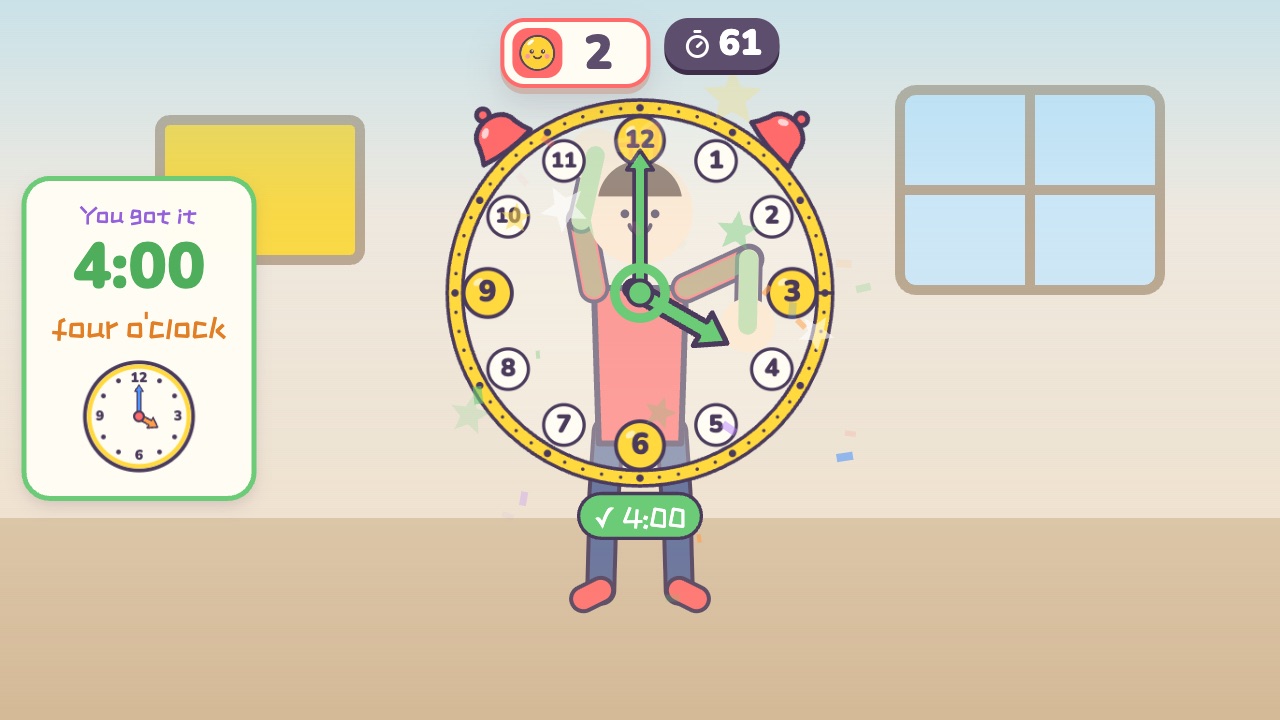 Human ClockYour straight arm is the minute hand, and your bent arm is the hour handAges 6–11 · Light activity · Thinking / Calm
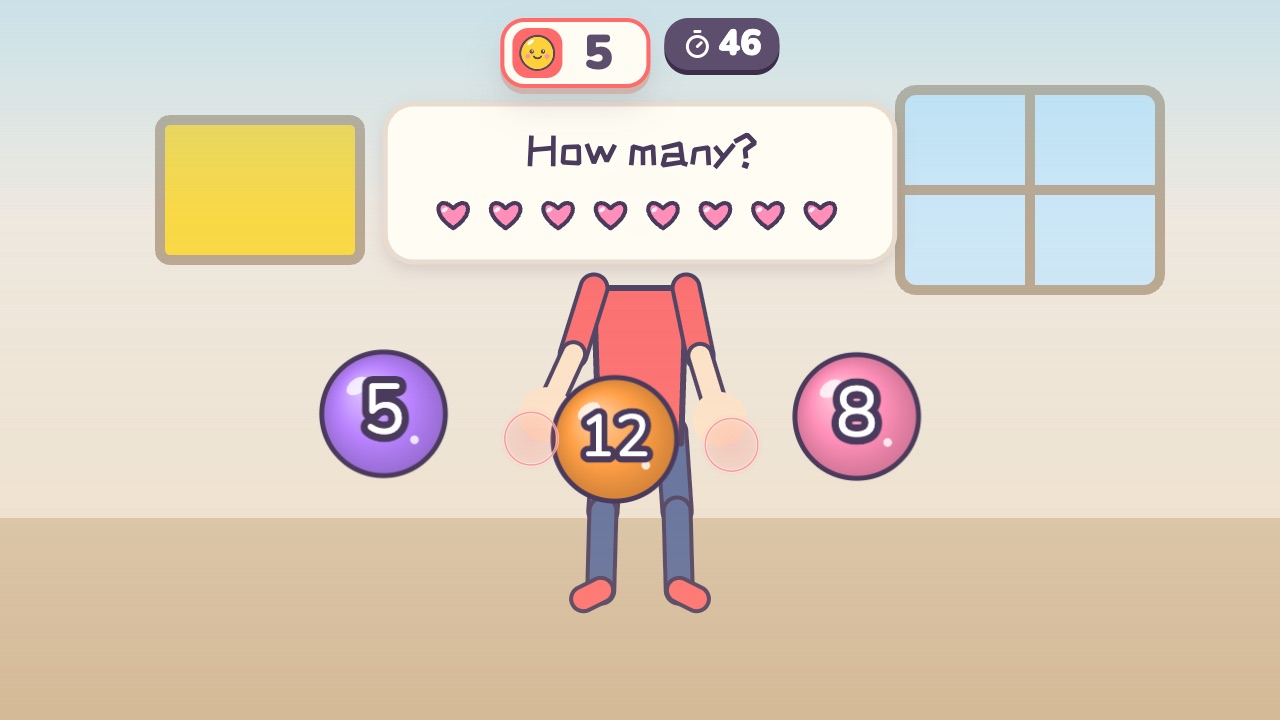 Math CatchThink it through and catch the right answerAges 5–9 · Light activity · Hands / Thinking / Calm
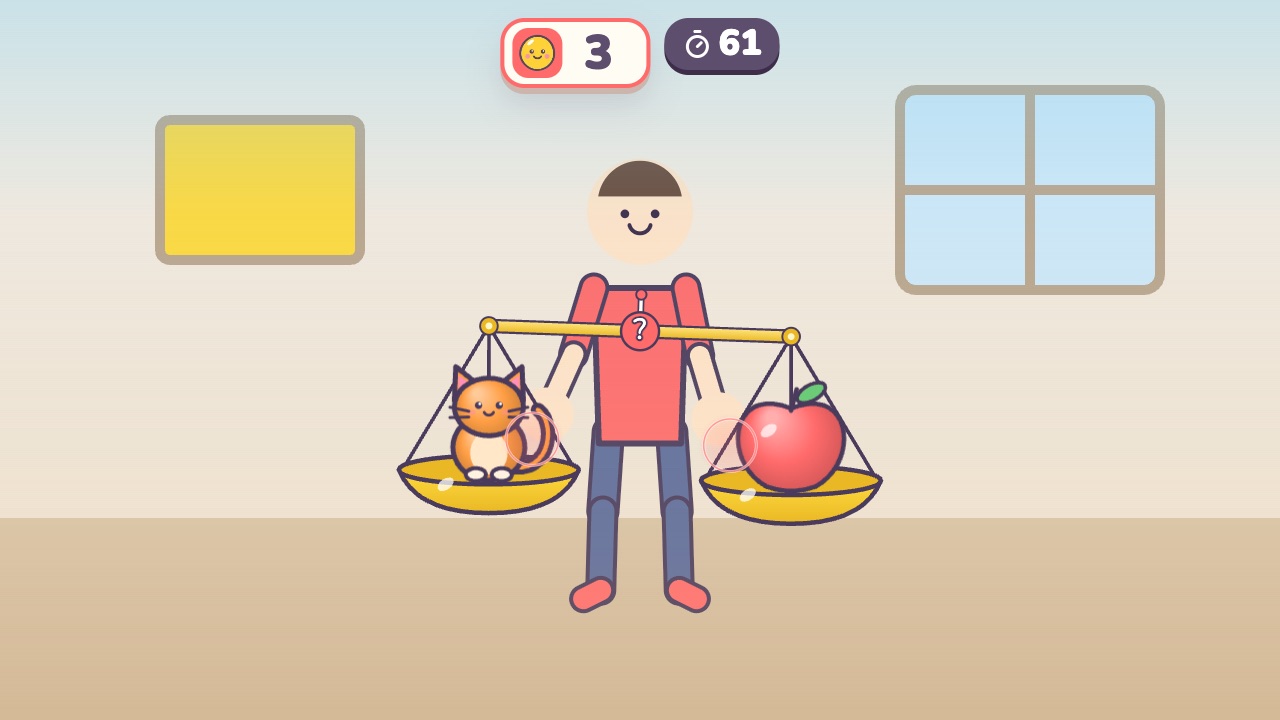 Balance ScaleYour arms are the scale. Lower the side that is heavierAges 6–12 · Light activity · Thinking / Calm
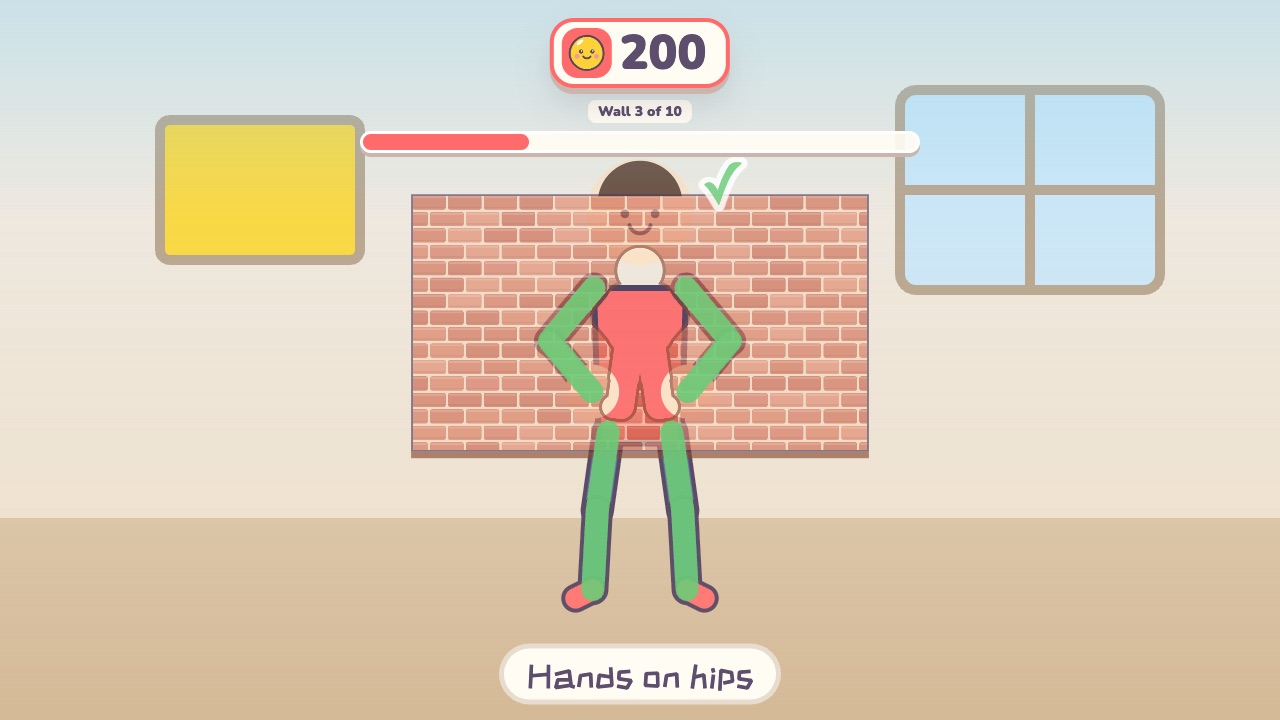 Shape WallMake the same shape as the hole in the wallAges 4–12 · Moderate activity · Whole body / Thinking
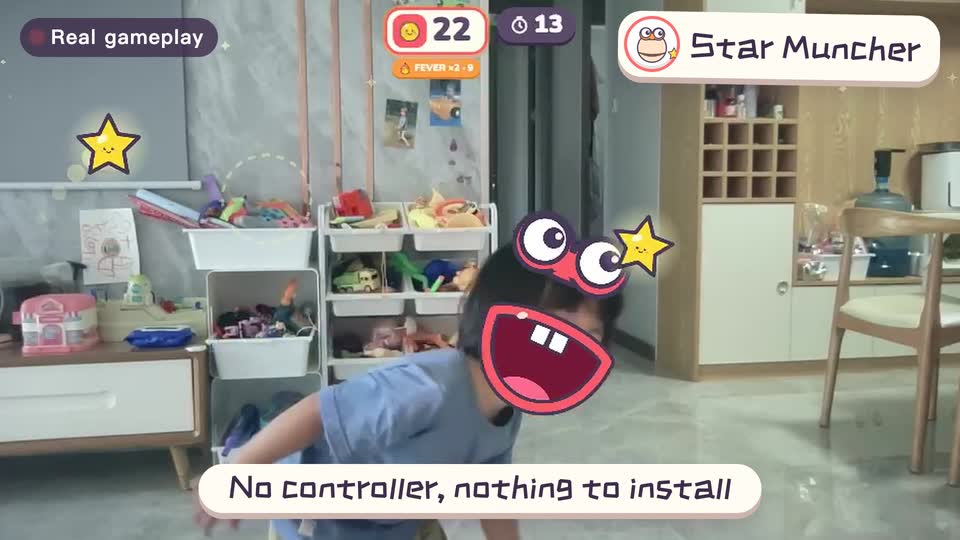
Real footage · 14 s
Kids stand in front of the computer and just move
100+ motion games for ages 3 to 18. Open the website and play: nothing to install, and the camera picture stays on this computer.
Keep reading
- How much should kids move each day? What the WHO says, and how to fit it in at home
- Screen time isn’t always sitting time: using screens to get kids moving
- When kids don’t like exercise: 6 ways to turn “I have to” into “I want to”
- Exercise and height: what actually helps kids grow (ages 6–14)
- Kids bouncing off the walls? A quiet 20-minute plan to burn off energy at home (ages 3–10)
- Winter exercise for kids: staying active when it’s too cold to go out