 DongDong Park
Indoor active games for 3- to 6-year-olds, age by age
Updated
Before school age, one year makes a big difference: a 3-year-old is just learning to follow simple directions, while a 5-year-old already wants to win. When you pick a game, check three things: can they do the moves, can they understand the rules, and can they keep going for a whole round?
Age 3: big moves, few rules
- Bubble Pop: bubbles drift slowly toward them and pop at a touch, so it is almost impossible to fail.
- Balloon Keep-Up: reach up and tap the balloon back into the air.
- Animal Moves: hop like a bunny, swing a trunk like an elephant.
- No screen: crawl across a mat, wriggle through a cardboard-box tunnel, toss soft balls into a basket.
Age 4: listening for the call
- Red Light, Green Light: move on green, and freeze the moment they hear “red light”.
- Color Touch: listen, then touch the right color and shape.
- Cross the Street: look left, look right, then cross, and stop right away on red. A little road safety comes with it.
- No screen: walk along a line of tape on the floor, or stand on one foot for a few seconds.
Age 5: ready to compete
- Soccer Kick: get the ball into the goal with a foot, a knee or a header, and see who scores more, kid or parent.
- Clap and Count: count the little animals and clap that many times, so counting and moving go together.
- No screen: hopscotch, bouncing a ball, a race against a grown-up.
Age 6: getting ready for school
- Bounce the Ball: push the ball down each time it bounces up, and listen for the calls to switch hands or bounce it low.
- Jump rope: first practice jumping with both feet together, then learn to turn the rope yourself.
Setting the right level
On the games page, choose the Preschool age group. Its three difficulties are named after the ages they suit: Ages 3–4, Ages 4–5 and Ages 5–6. Not sure a game will work for your child? Every game has a demo mode, where a cartoon kid plays a round first.
How long to play
The World Health Organization recommends that 3- and 4-year-olds get at least 180 minutes of physical activity of different kinds over the day, and no more than 1 hour of sitting in front of a screen, with less being better. Motion games are played standing up, but they are still a screen: we suggest 10 to 15 minutes at a time, with a grown-up close by. Outdoor play still comes first.
Every game is in the full game list, and setting up the living room is covered in the guide for families.
Games mentioned here
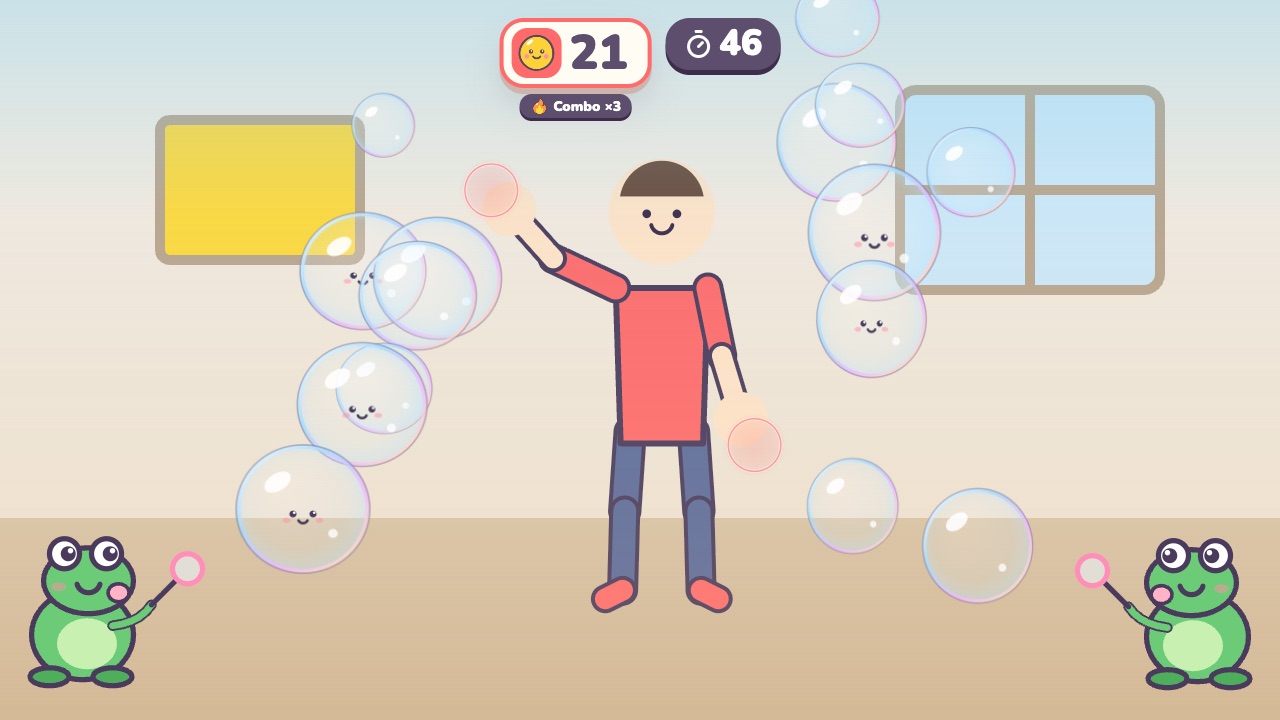 Bubble PopPop the bubbles floating toward youAges 3–7 · Light activity · Hands / Calm
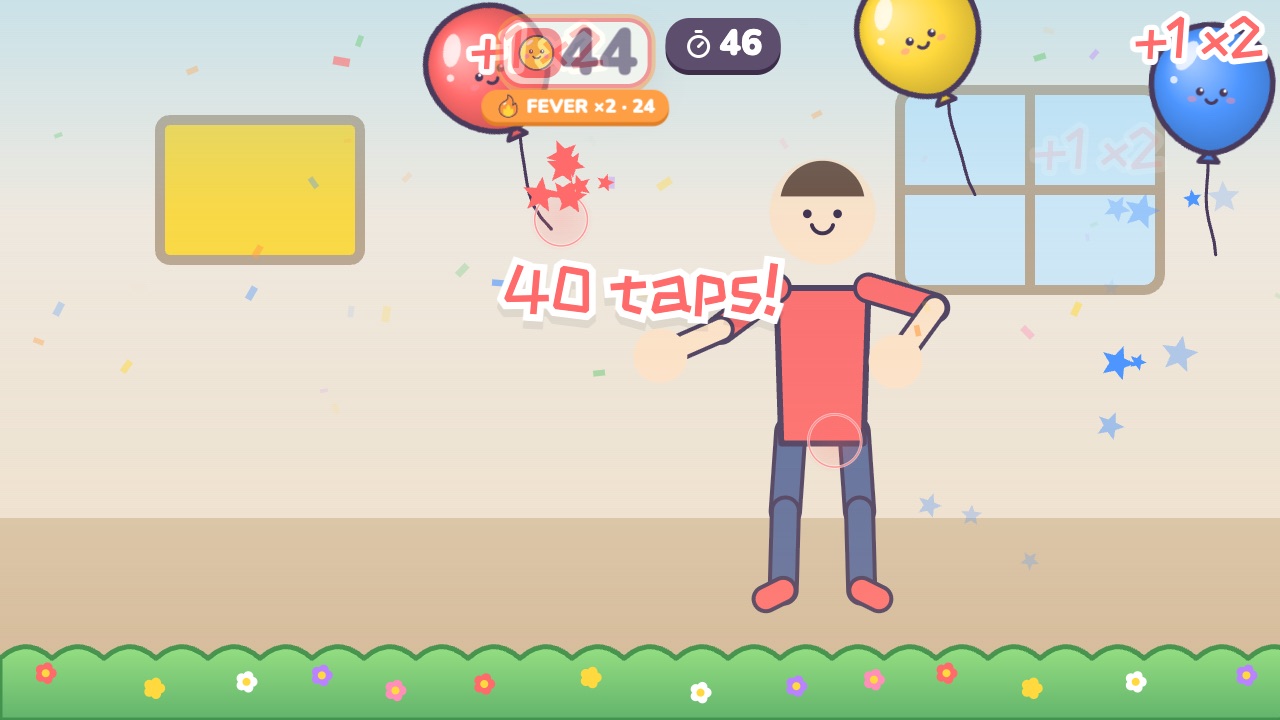 Balloon Keep-UpTap the balloon back up and keep it off the groundAges 3–8 · Moderate activity · Hands / Whole body
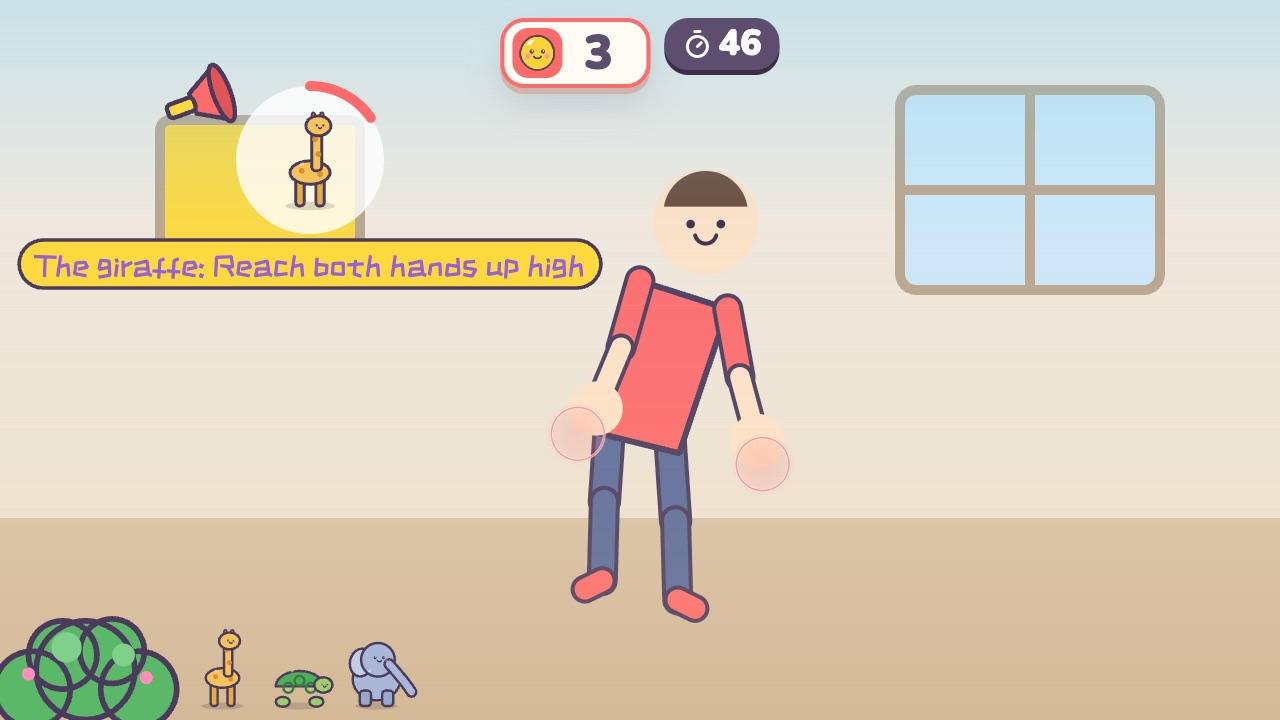 Animal MovesDo the move of whichever animal gets calledAges 3–8 · Moderate activity · Whole body
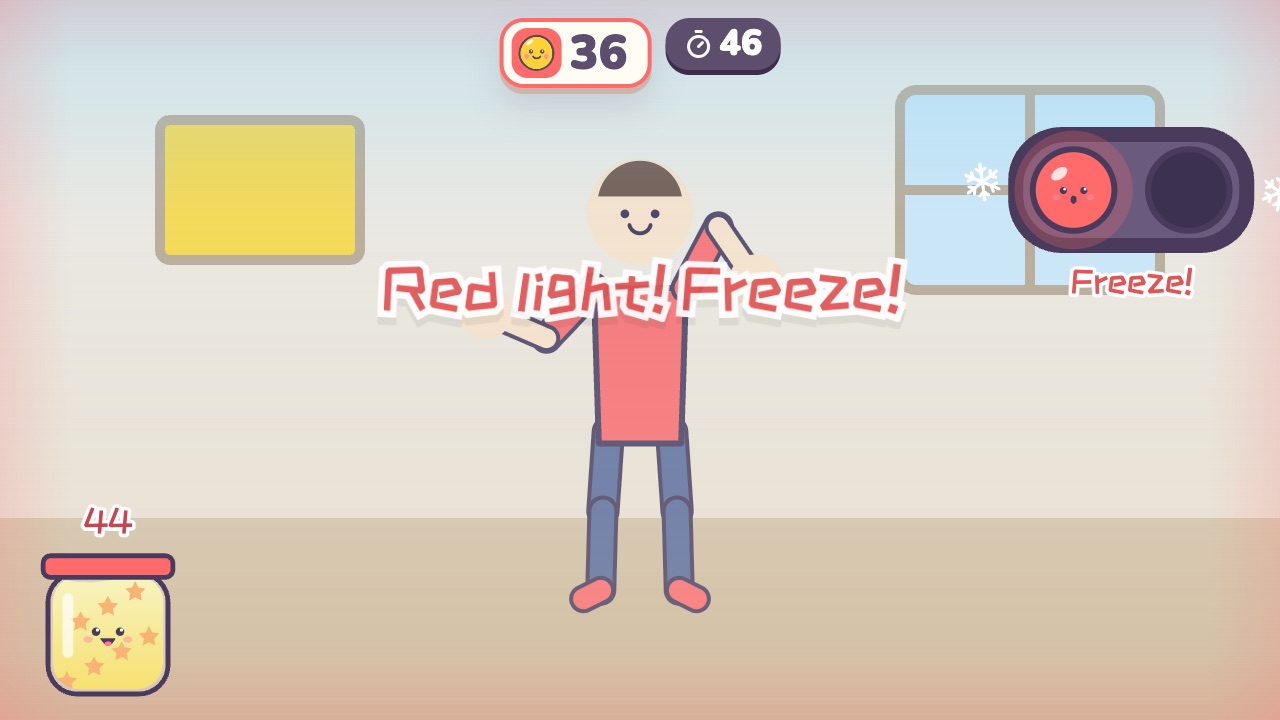 Red Light, Green LightMove like crazy on green light, and freeze the moment you hear red lightAges 3–10 · High activity · Whole body
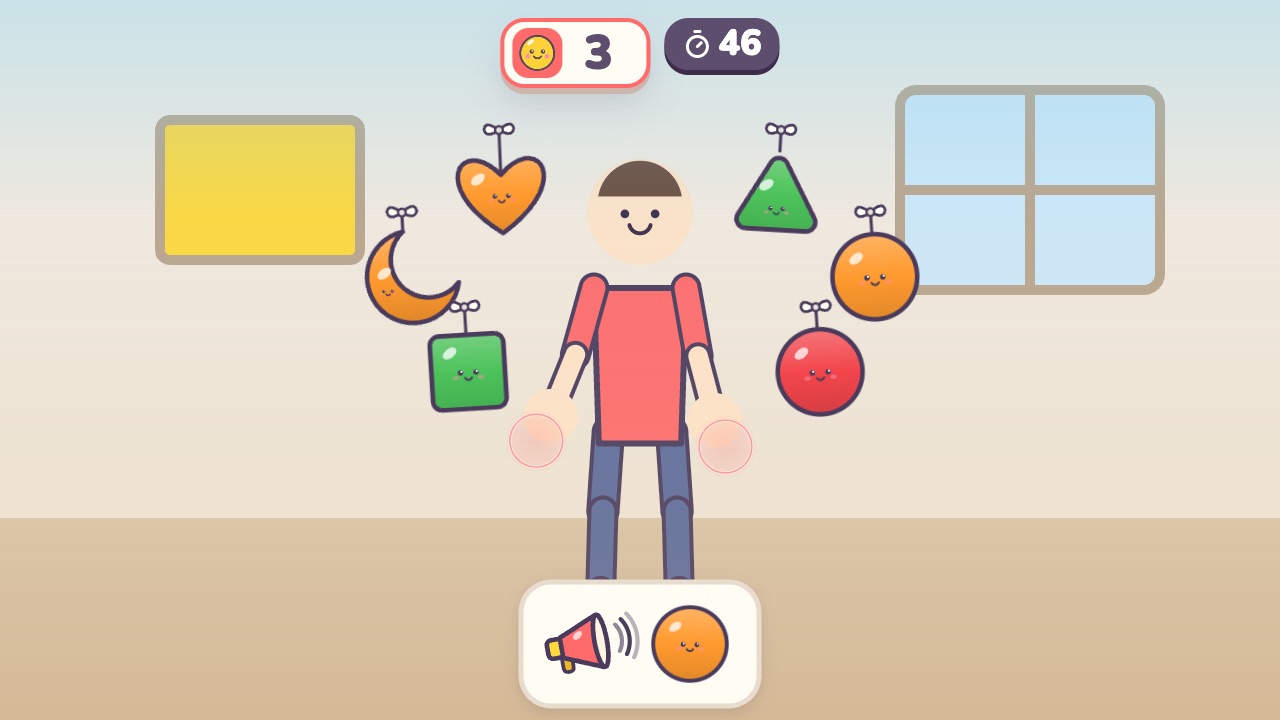 Color TouchListen and touch the right color and shapeAges 3–7 · Light activity · Thinking / Hands
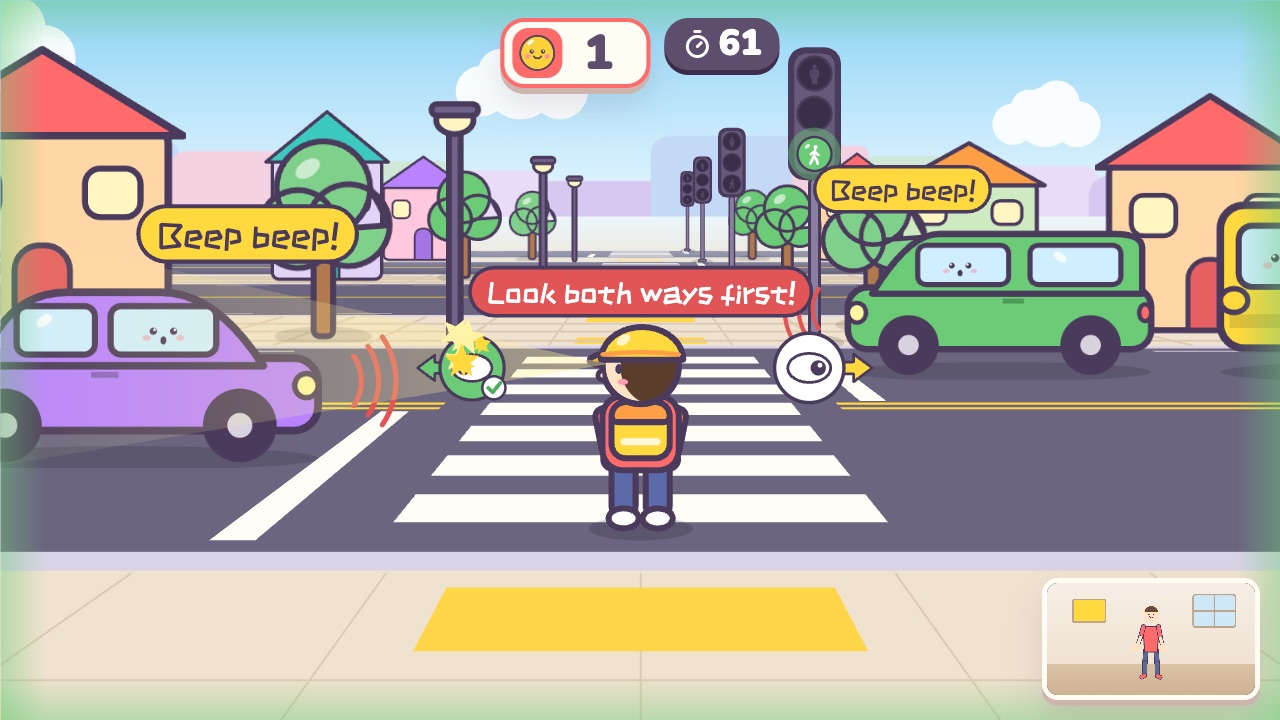 Cross the StreetLook left and right before you cross, and stop right away on redAges 3–8 · Moderate activity · Whole body / Thinking
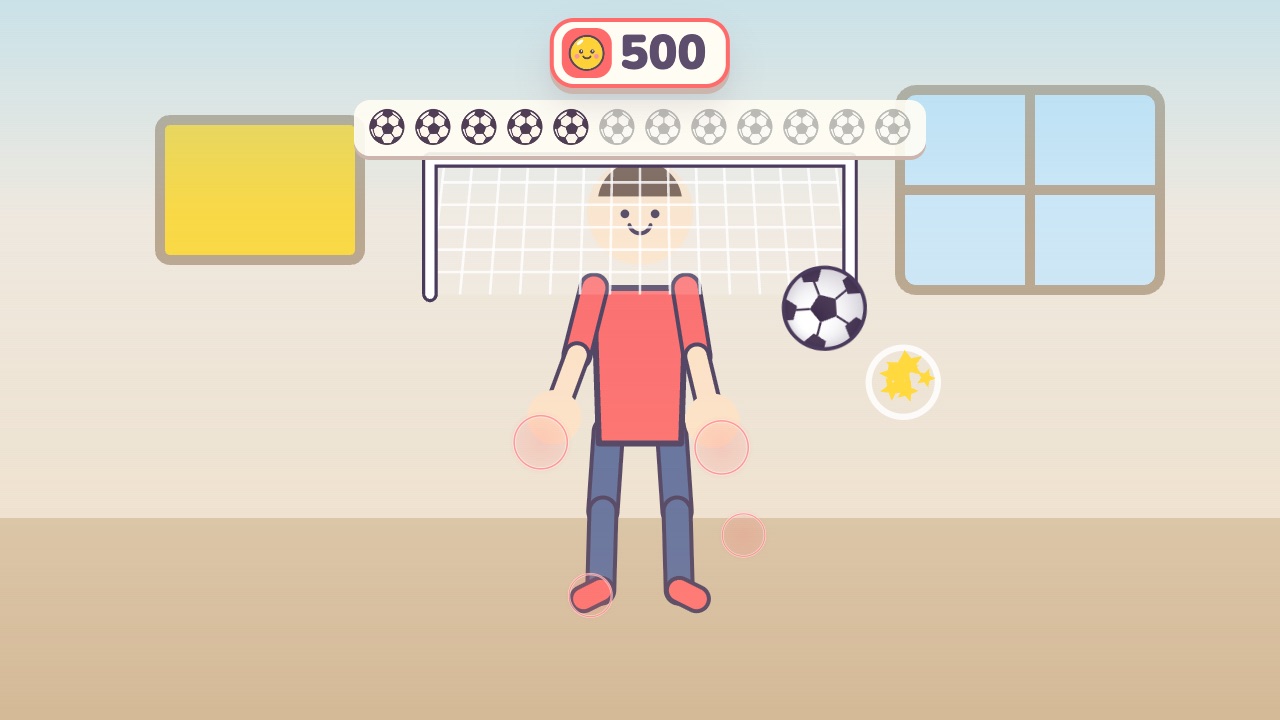 Soccer KickUse your feet, knees and head to send the ball into the goalAges 4–10 · High activity · Run & jump / Whole body
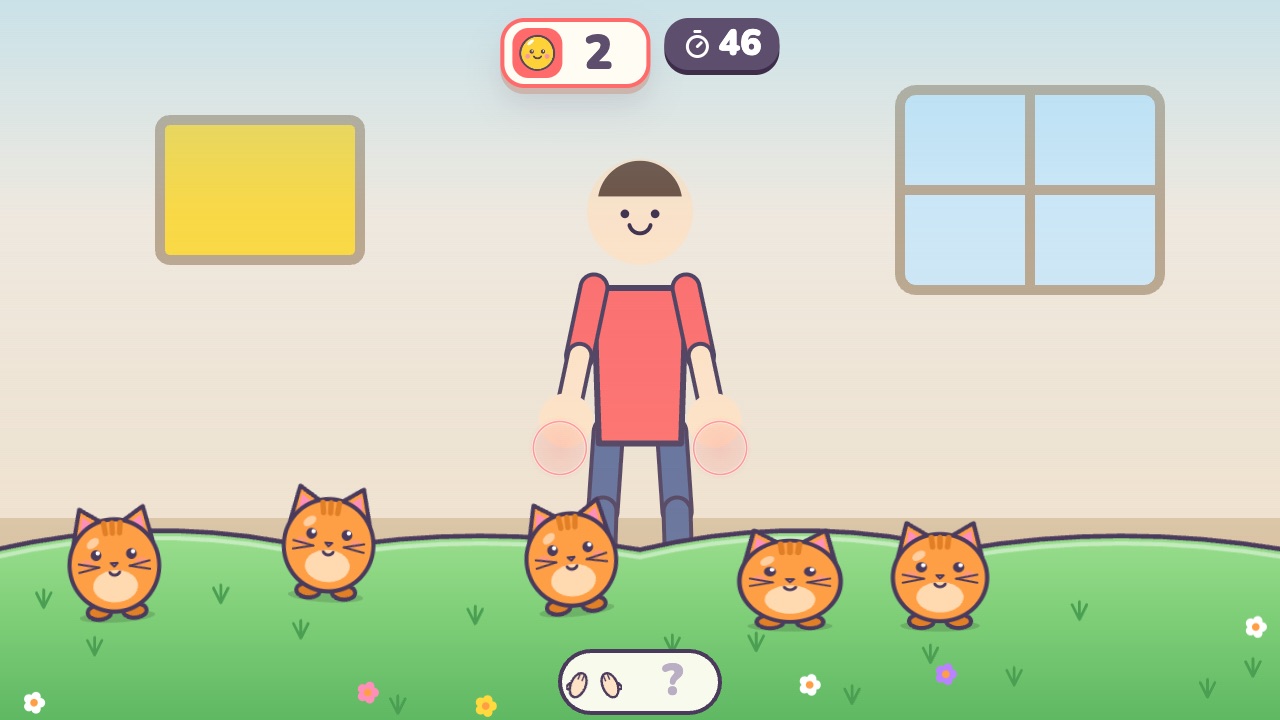 Clap and CountCount the little animals and clap that many timesAges 3–7 · Light activity · Thinking / Hands
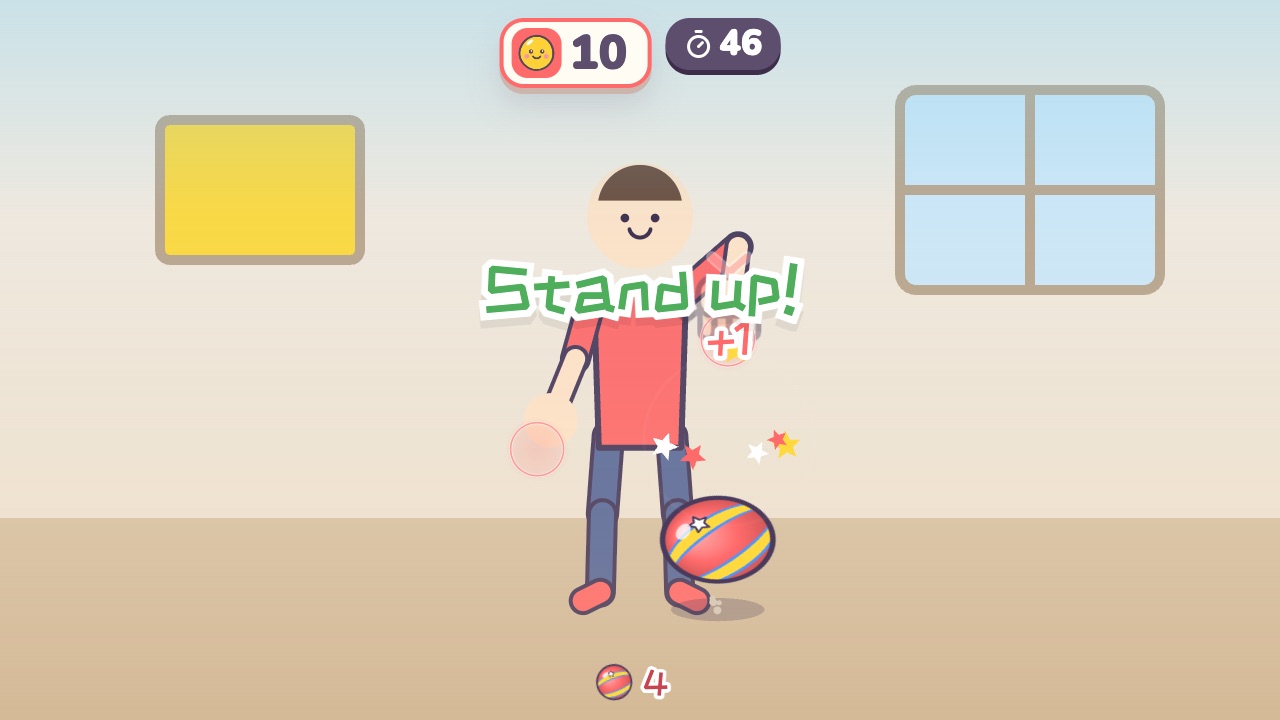 Bounce the BallPush the ball down each time it bounces up, and listen for the callsAges 5–12 · Moderate activity · Hands / Rhythm
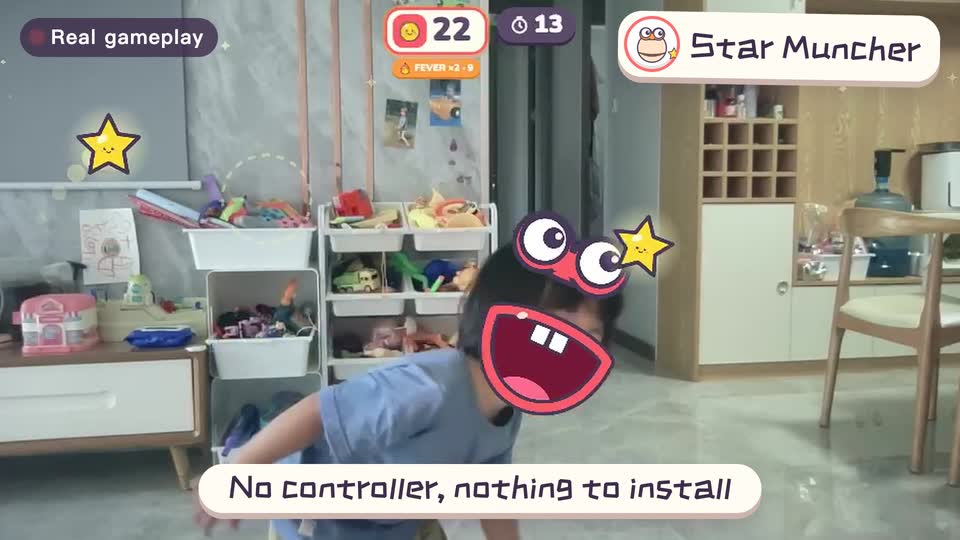
Real footage · 14 s
Kids stand in front of the computer and just move
100+ motion games for ages 3 to 18. Open the website and play: nothing to install, and the camera picture stays on this computer.
Sources
- Guidelines on physical activity, sedentary behaviour and sleep for children under 5 years of age. World Health Organization. 2019
Keep reading
- How much should kids move each day? What the WHO says, and how to fit it in at home
- Screen time isn’t always sitting time: using screens to get kids moving
- When kids don’t like exercise: 6 ways to turn “I have to” into “I want to”
- Exercise and height: what actually helps kids grow (ages 6–14)
- Kids bouncing off the walls? A quiet 20-minute plan to burn off energy at home (ages 3–10)
- Winter exercise for kids: staying active when it’s too cold to go out