 DongDong Park
ESL movement games: Total Physical Response with a webcam
Updated
Young English learners often understand far more than they can say. Total Physical Response (TPR), the method psychologist James Asher described in 1969, builds on that: the teacher gives a command, learners act it out, and speaking comes later. These webcam games run the routine for you, so the whole class practices listening while they move.
How TPR works
- The teacher says a command and acts it out: “Touch your head!”
- Learners do it together with the teacher.
- The teacher says it without acting it out; learners do it alone.
- Commands are mixed up and new ones are added.
- Learners take turns giving the commands.
The games cover steps 2 to 4: they say the command, show a picture only when it’s needed, and check whether the child did the move.
Listen and Move: classroom commands
A megaphone calls out a command in English and kids do the move. On the easy level a picture comes with every command; on harder levels the picture comes later, so kids rely on listening. Nobody gets stuck: when kids miss a command, a little figure shows the move and the voice says it again.
| Level | Commands |
|---|---|
| Easy | Jump! · Clap your hands! · Hands up! · Squat down! · Touch your head! · Open your arms! |
| Medium adds | Touch your shoulders! · Touch your knees! · Stand on one leg! · Lean left! · Lean right! |
| Hard adds | Left hand up! · Right hand up! · Left leg up! · Right leg up! · two-step commands like “Clap, then jump!” and “Hands up, then touch your knees!” |
Listen and Touch: vocabulary
Pictures hang on both sides of the player. A voice names one, and the child reaches out to touch it. Touch the wrong one and the voice says what it was, which is one more word learned. Harder levels show more pictures, mix the sets, and ask for two words in order.
| Set | Words |
|---|---|
| Animals | cat, dog, fish, bird, duck, pig, rabbit, monkey, panda, tiger, elephant, bear |
| Food | apple, banana, orange, pear, grapes, watermelon, egg, cake, bread, milk, ice cream, rice |
| Things | ball, book, car, bus, bike, hat, bag, pencil, clock, balloon, umbrella, key |
More games that practice English
- Simon Says (4–10): classic TPR with a twist; only move when Simon says so.
- Color Touch (3–7): colors and shapes.
- Clap and Count (3–7): count the animals and clap the number.
- Animal Moves (3–8): animal names, acted out.
- Spelling Catch (6–12): catch the letters in order to spell the word in the picture.
A 15-minute TPR lesson with the projector
| Minutes | What happens |
|---|---|
| 0–3 | The teacher models the six easy commands with gestures; the class copies |
| 3–7 | Listen and Move on easy: two kids on camera, the class does the moves at their desks |
| 7–10 | Listen and Move on medium with new players; the class says each command out loud as they do it |
| 10–14 | Show the animal pictures first, then play Listen and Touch with the animal set |
| 14–15 | A volunteer gives commands (“Touch your knees!”) and the class follows |
Tips for ESL teachers
- Pre-teach new words with a gesture before the game, so the game is practice, not a test.
- Once kids are comfortable, have them say the command while they do it.
- In two-player mode, two kids hear the same command side by side, each with their own score: good for pair practice.
- For older beginners, go straight to the hard level and its two-step commands, or play Simon Says.
- At home, parents don’t need to speak English: the game speaks every word. A few rounds a day fit easily (see parent-and-child games).
More listening practice: listening games for kids. For whole-class setups, see the classroom guide.
Common questions
- What is TPR in ESL?
- Total Physical Response is a language-teaching method described by psychologist James Asher in the 1960s: the teacher gives commands in the new language and learners respond with actions, showing they understand before they are asked to speak.
- What ages are these ESL games for?
- Listen and Move is for ages 4 to 12 and Listen and Touch for ages 4 to 10. Older beginners can play the hard level, which uses two-step commands.
- Can kids play if they can’t read yet?
- Yes. Every command and word is spoken, and pictures carry the meaning. The written word is a bonus for kids who are starting to read.
- Can parents who don’t speak English use these games at home?
- Yes. The game speaks every command and word, so the parent only needs to start a round and play along.
Games mentioned here
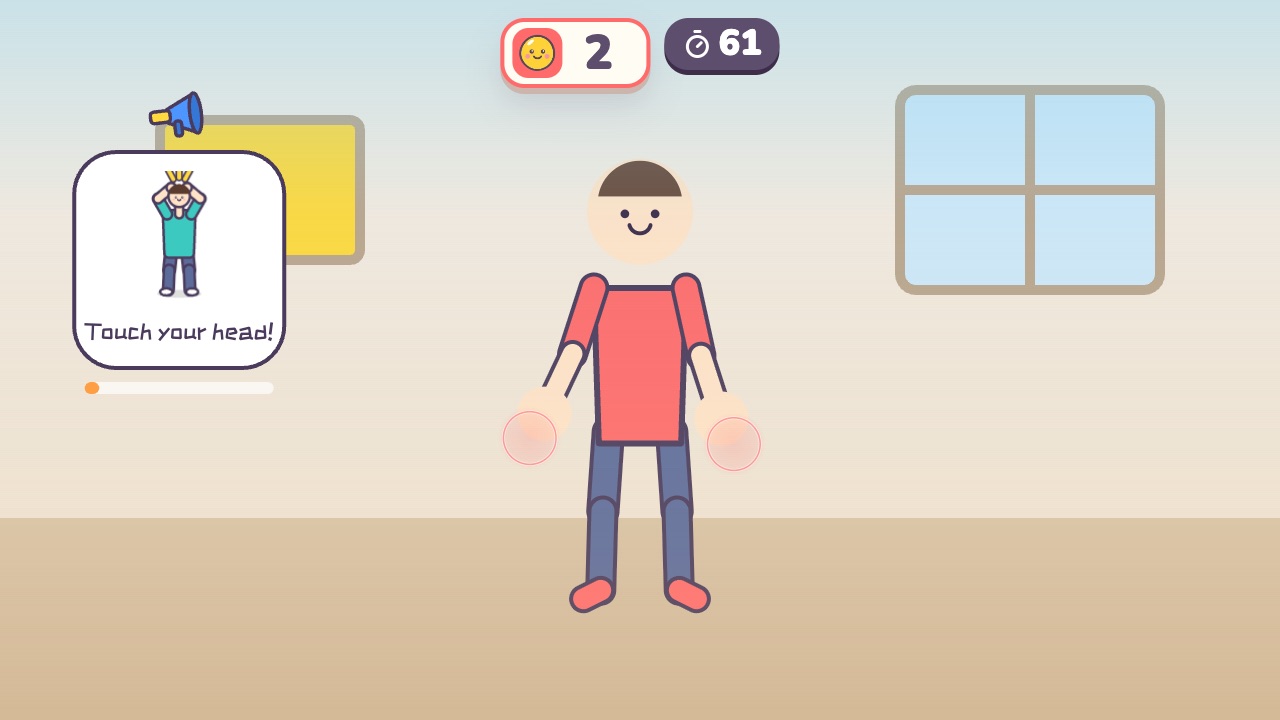 Listen and MoveListen to the English command and do the moveAges 4–12 · Moderate activity · Thinking / Whole body
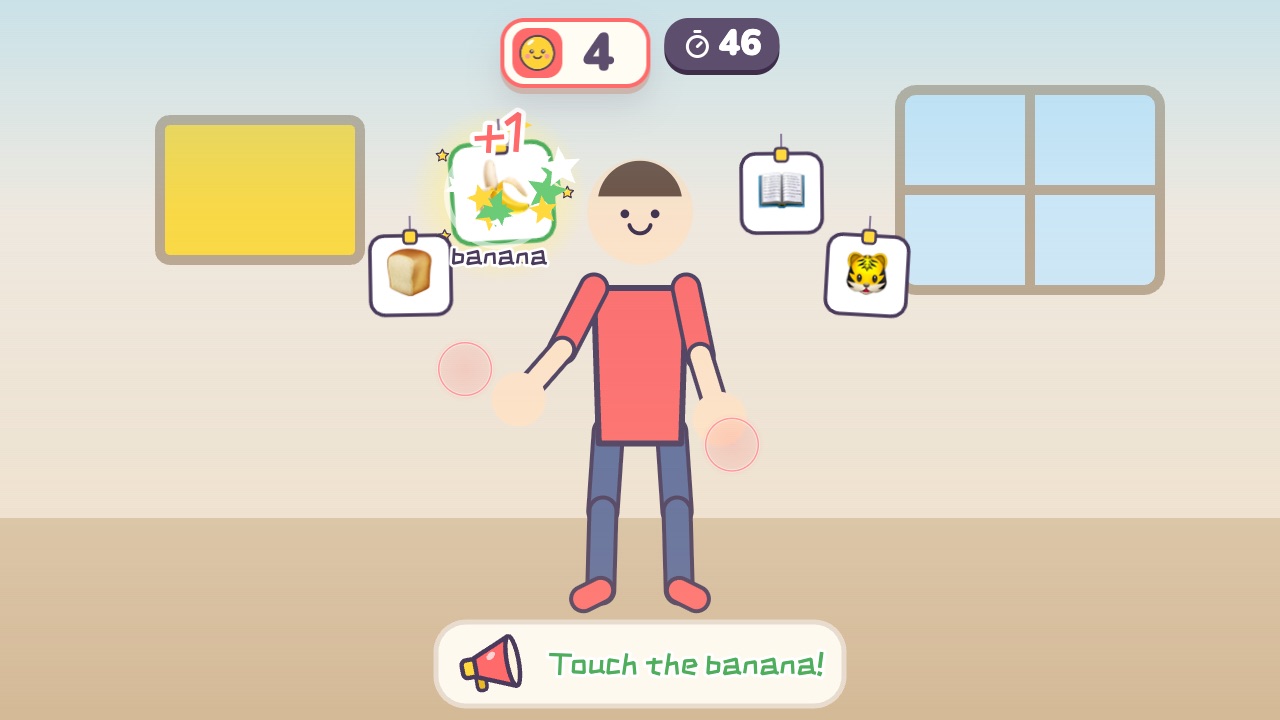 Listen and TouchHear a word and touch the picture that matchesAges 4–10 · Light activity · Thinking / Hands
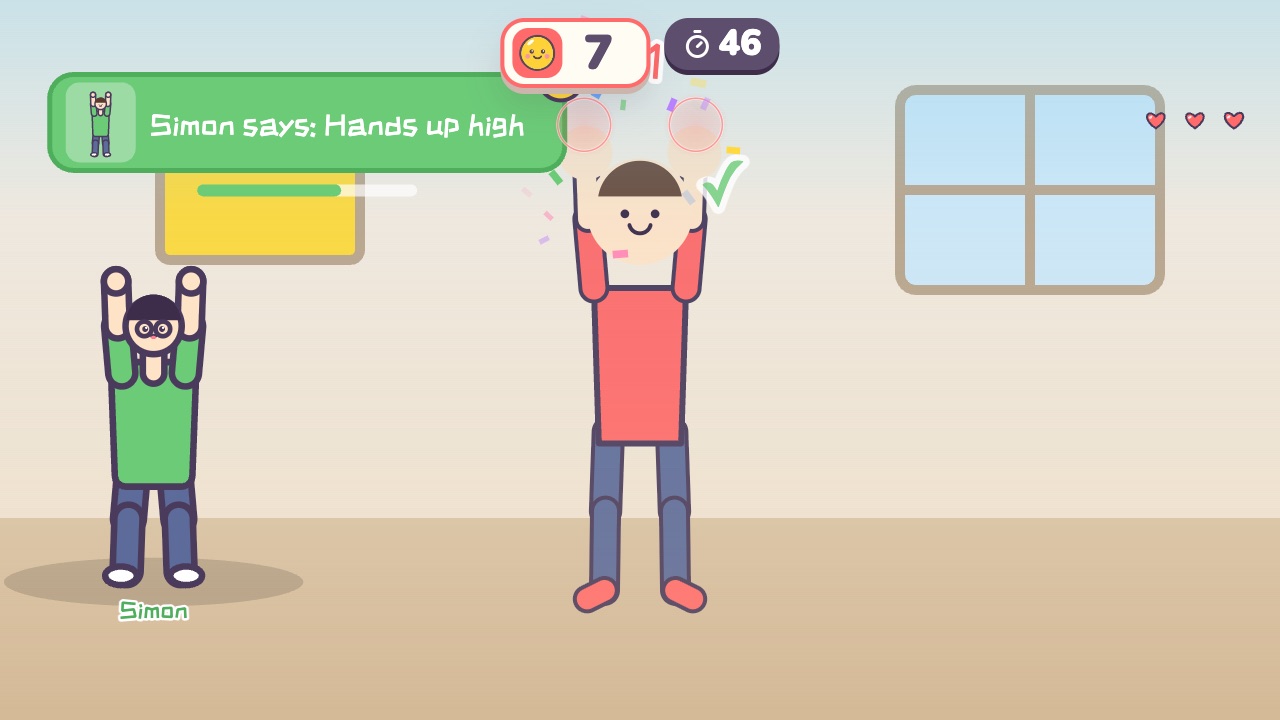 Simon SaysOnly move when Simon says soAges 4–10 · Moderate activity · Whole body / Thinking
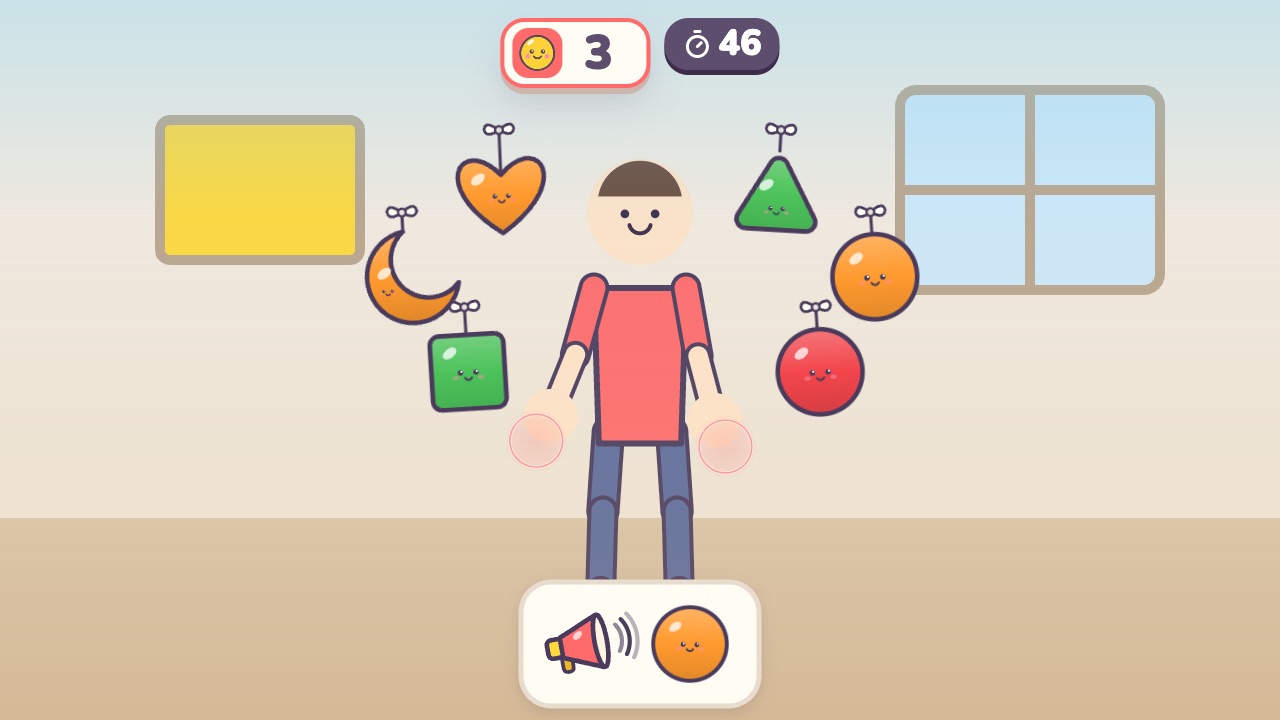 Color TouchListen and touch the right color and shapeAges 3–7 · Light activity · Thinking / Hands
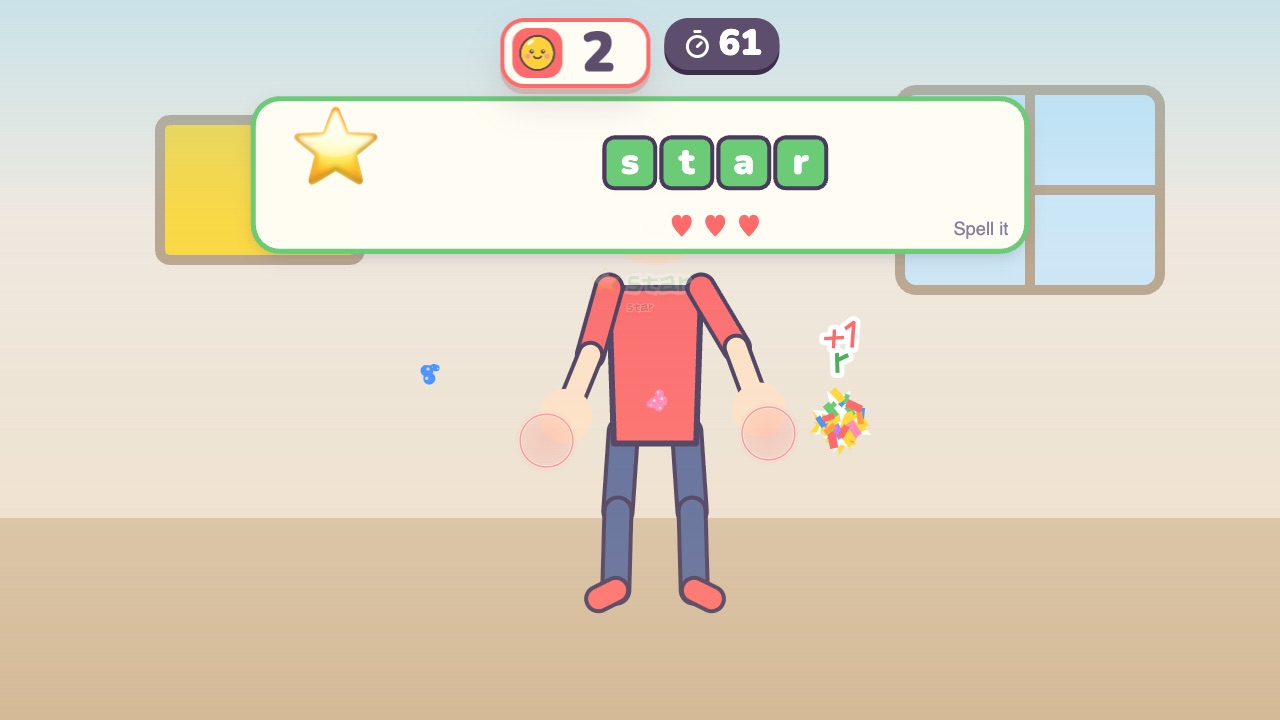 Spelling CatchCatch the letters in the right order to spell the word in the pictureAges 6–12 · Light activity · Hands / Thinking / Calm
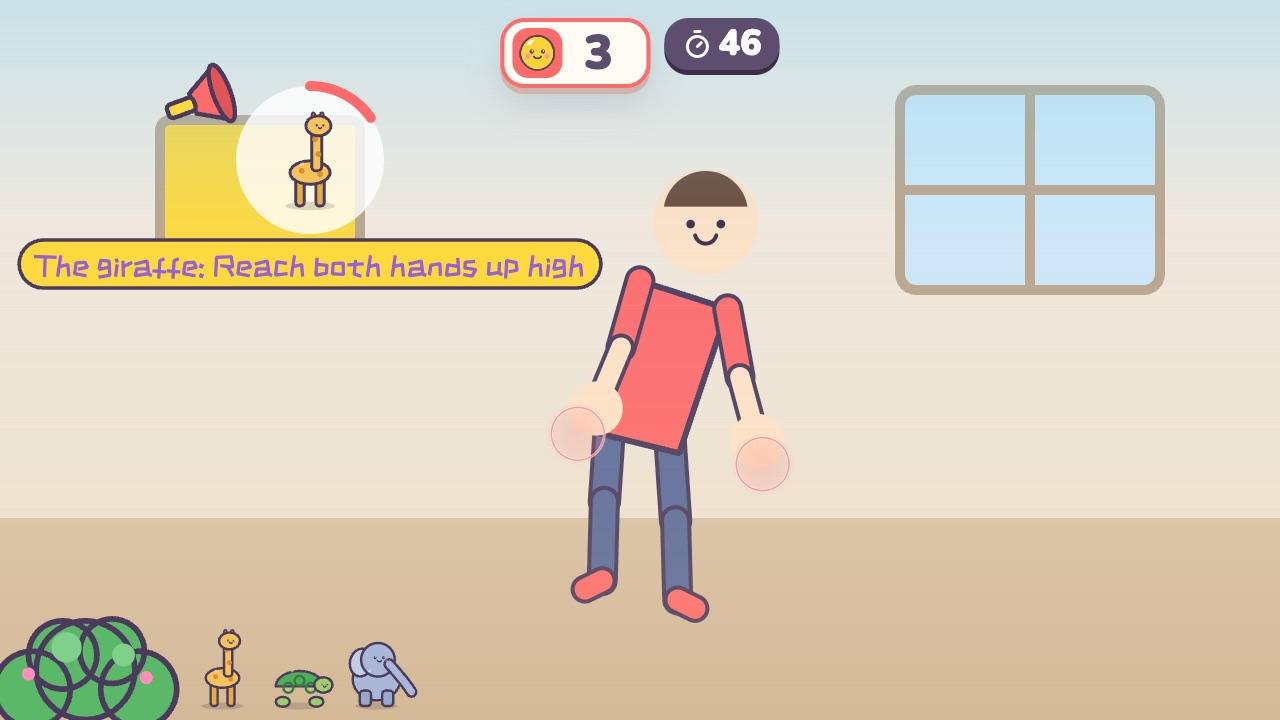 Animal MovesDo the move of whichever animal gets calledAges 3–8 · Moderate activity · Whole body
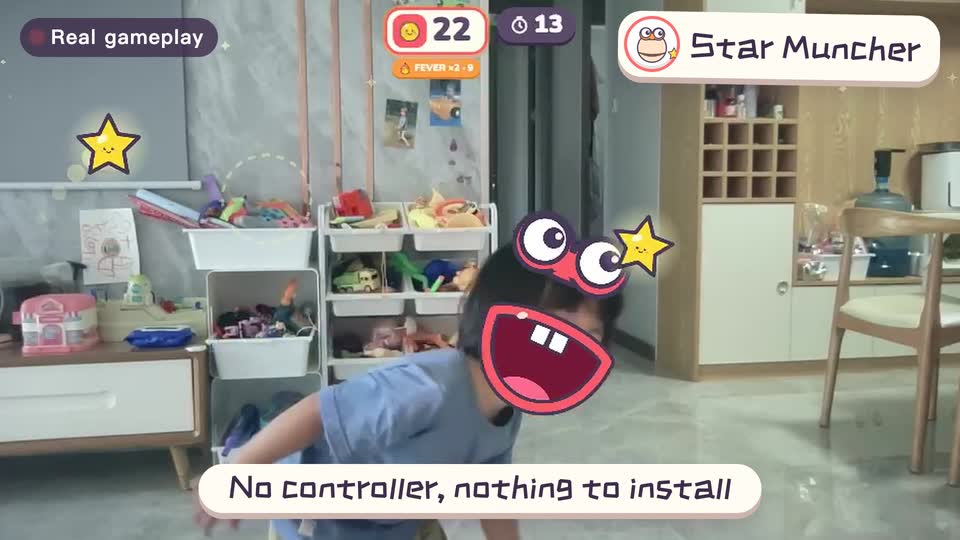
Real footage · 14 s
Kids stand in front of the computer and just move
100+ motion games for ages 3 to 18. Open the website and play: nothing to install, and the camera picture stays on this computer.
Sources
- The Total Physical Response Approach to Second Language Learning. James J. Asher. The Modern Language Journal 53(1), 3–17, 1969
Keep reading
- Indoor recess games: a 20-minute rainy-day plan
- Brain breaks: 5-minute movement games for any grade
- Brain breaks for middle and high school: movement teens won’t call babyish
- Brain breaks for kindergarten and preschool: short, silly and mostly screen-free
- Smartboard games that get the whole class moving, not just one kid at the board
- Homeschool PE made simple: a weekly plan, a fitness log and indoor games for bad-weather days