 DongDong Park
Home for the break? A 7-day plan to get kids moving 20 minutes a day
Updated
The usual school-break scene: a kid on a tablet all morning, and “go move around” falls on deaf ears. Turn it around and let the screen get them moving. A motion game round lasts about a minute, counts for you and hands out stars and badges, so kids ask for “one more round” on their own.
Planning 20 minutes a day
- A set time. After breakfast or before dinner, written into the break schedule like any other daily task.
- Warm up, sweat, calm down. An easy first round, two or three sweaty rounds in the middle, and a thinking game to finish.
- Beat yesterday. The results screen shows how many more you did than last time. That motivates more than beating someone else.
- A theme for each day. Monday to Sunday each have their own focus, so no two days in the week are the same.
The World Health Organization recommends that children and teens aged 5 to 17 get at least 60 minutes a day of moderate-to-vigorous physical activity on average. Twenty minutes of motion games is extra; outdoor play is still the first choice.
A weekly plan (20 minutes a day, about a minute per round)
| Day | What to play | Games |
|---|---|---|
| Monday · Jump | 3 rounds of jump rope + 2 rounds of Rhythm Steps | Jump Rope Champ, Rhythm Steps |
| Tuesday · Run | 3 rounds of Forest Run + 2 rounds of 100-Meter Dash | Forest Run, 100-Meter Dash |
| Wednesday · Strength | 2 rounds of Fitness Circuit + 2 rounds of Rock Climbing | Fitness Circuit, Rock Climbing |
| Thursday · Reactions | 2 rounds each of three quick games | Fruit Slash, Mole Bop, Snowball Fight |
| Friday · Brain | Games that mix moving and thinking | Math Catch, Spelling Catch, Magic Runes |
| Saturday · Family | Two-player matches against Mom or Dad | Tug of War, Air Ping-Pong, Rock Paper Scissors |
| Sunday · Kid’s choice | The kid picks, and plays until they earn three stars | Any |
Games that work well
- Jump Rope Champ: jump rope at home with no real rope, so nothing gets whacked.
- Fitness Circuit: squats, jumping jacks and high knees, counted for you.
- Forest Run: parkour on the spot. The living room is big enough.
- Boxing Practice: hit the coach’s pads. Older kids love it.
- Dance Along: dance with the coach, with every beat scored.
- Math Catch: move and do sums, so math doesn’t slip away over the break.
- Spelling Catch: catch letters to spell words, a bit of spelling practice on the side.
Common questions
Our home is small. Can we still play?
About 6 by 6 feet (2 m × 2 m) in front of the camera is enough: push the coffee table aside and stand in front of the couch. Most games are played on the spot, with no running around.
Won’t this just turn into more screen time?
Agree with your kid on how many rounds to play before you start (say, the five rounds in the plan), and turn it off when they’re done. The games themselves are moderate-to-vigorous activity, which is not the same as sitting and watching videos. More in Active screen time: when screens get kids moving.
Do I need to watch the whole time?
Kids in elementary school and up can play on their own; with preschoolers, a grown-up should stay close. Make sure the floor isn’t slippery and nothing breakable is nearby.
You can play two rounds without signing in: try Jump Rope Champ →
Games mentioned here
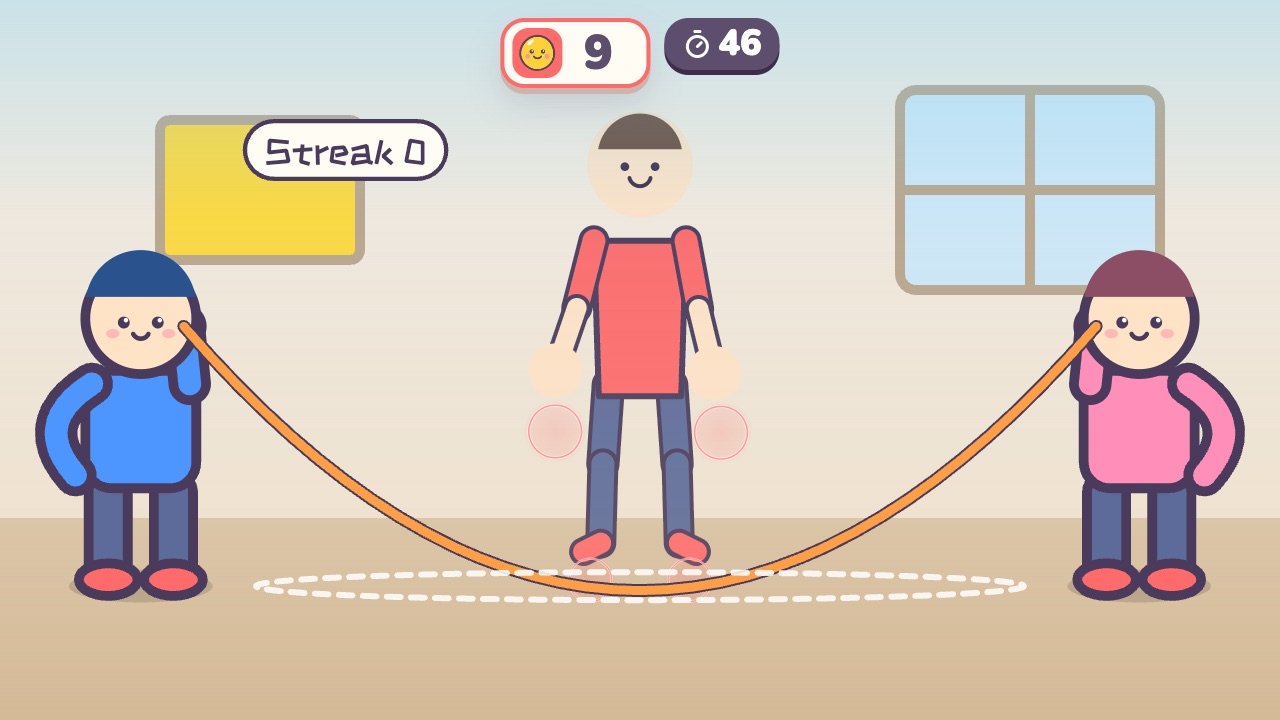 Jump Rope ChampJump when the rope sweeps under your feet. The longer your streak, the faster the ropeAges 6–14 · High activity · Run & jump / Fitness / Rhythm
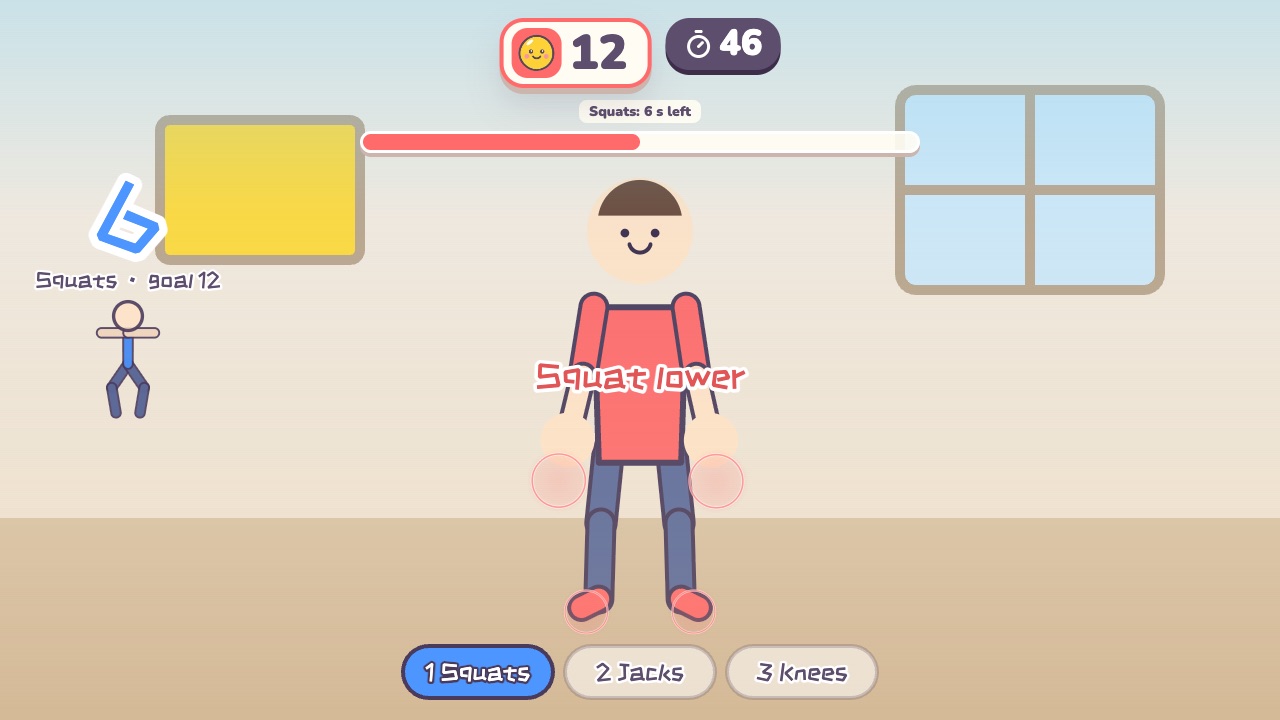 Fitness CircuitSquats, jumping jacks and high knees: three stations, counted for youAges 12–18 · High activity · Fitness / Run & jump / Whole body
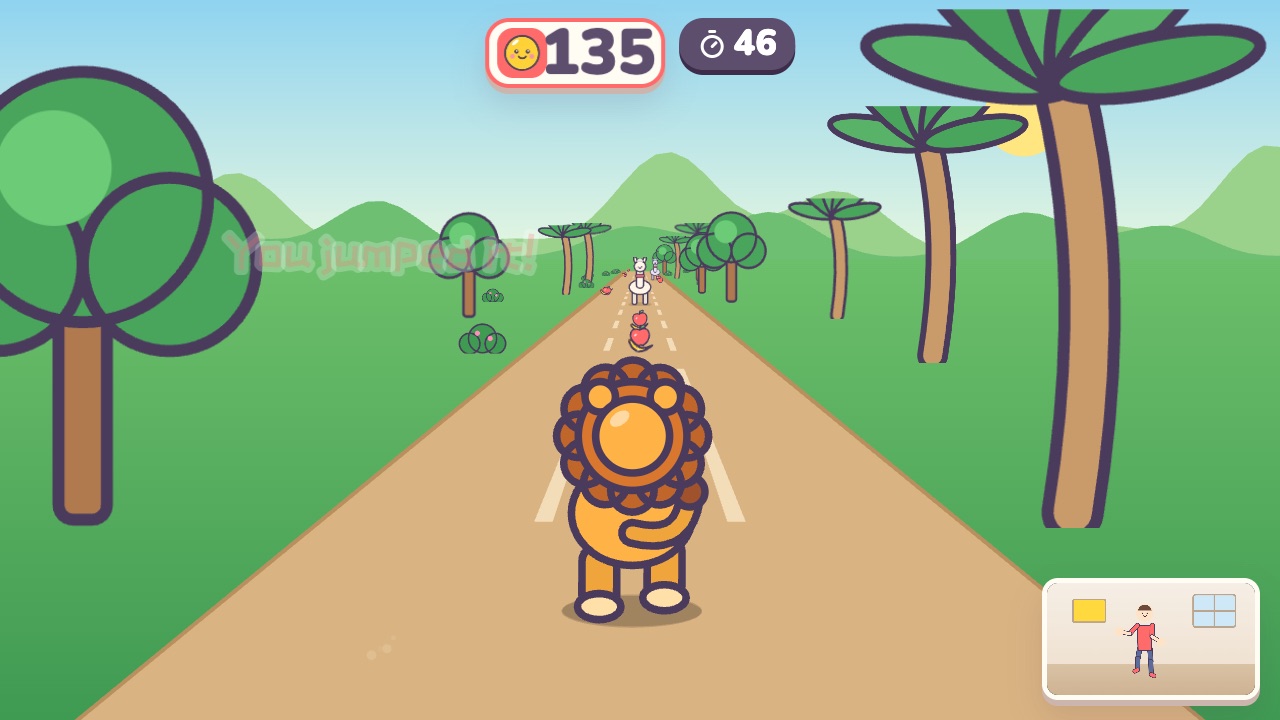 Forest RunRun on the spot, dodge left and right, and jump over the logsAges 4–10 · High activity · Run & jump / Whole body
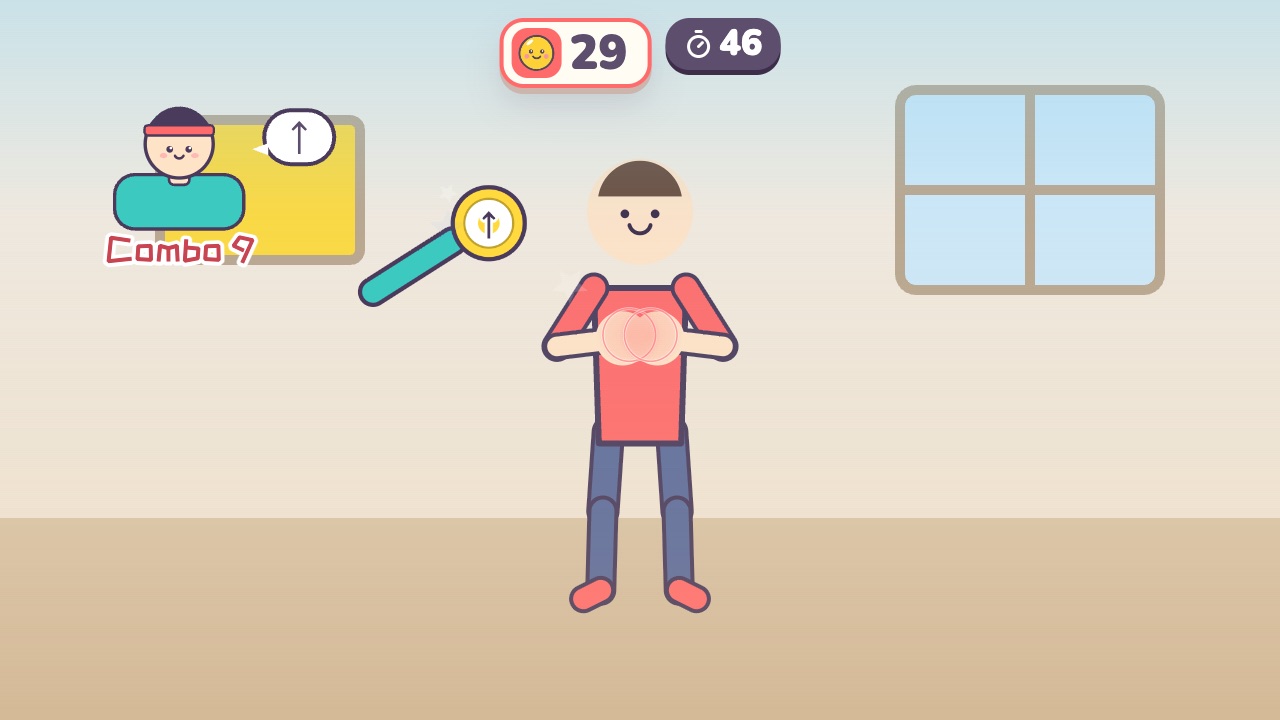 Boxing PracticeThe coach holds up pads: punch left, right and up, dodge the gloves and duck the barAges 9–18 · High activity · Hands / Fitness
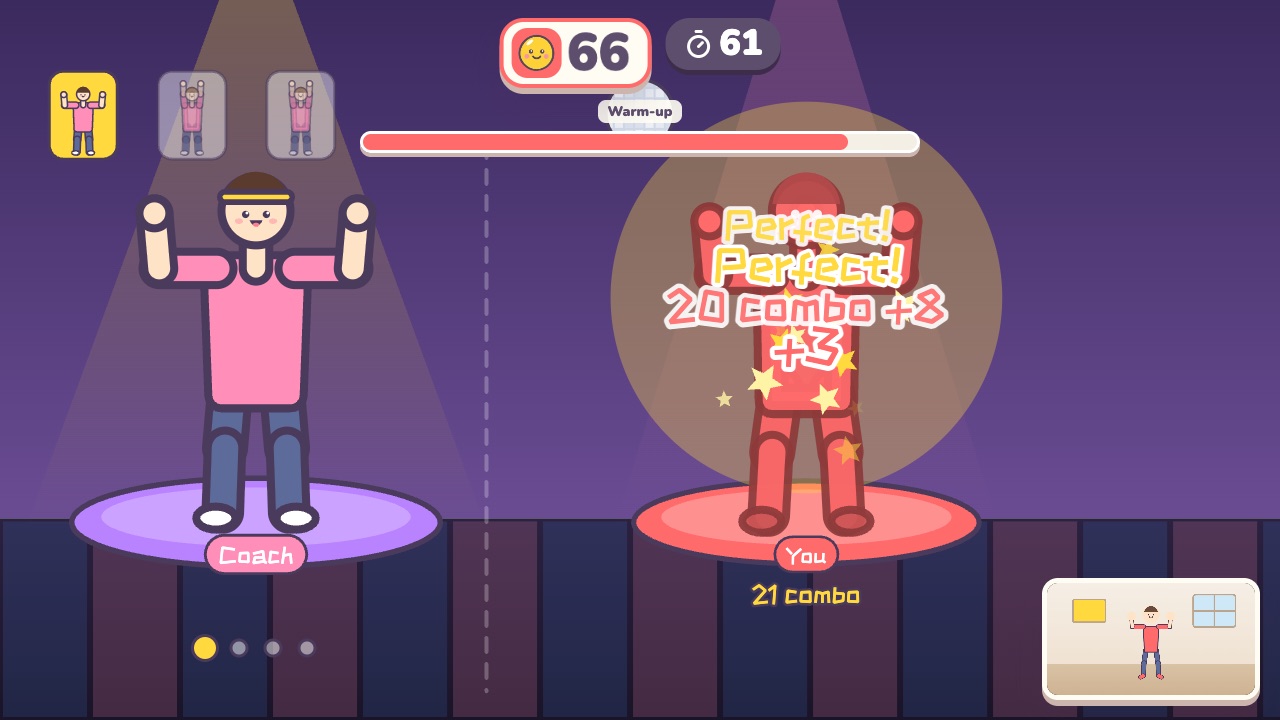 Dance AlongDance with the coach. Every beat is scored on how well you match the moveAges 12–18 · High activity · Rhythm / Whole body
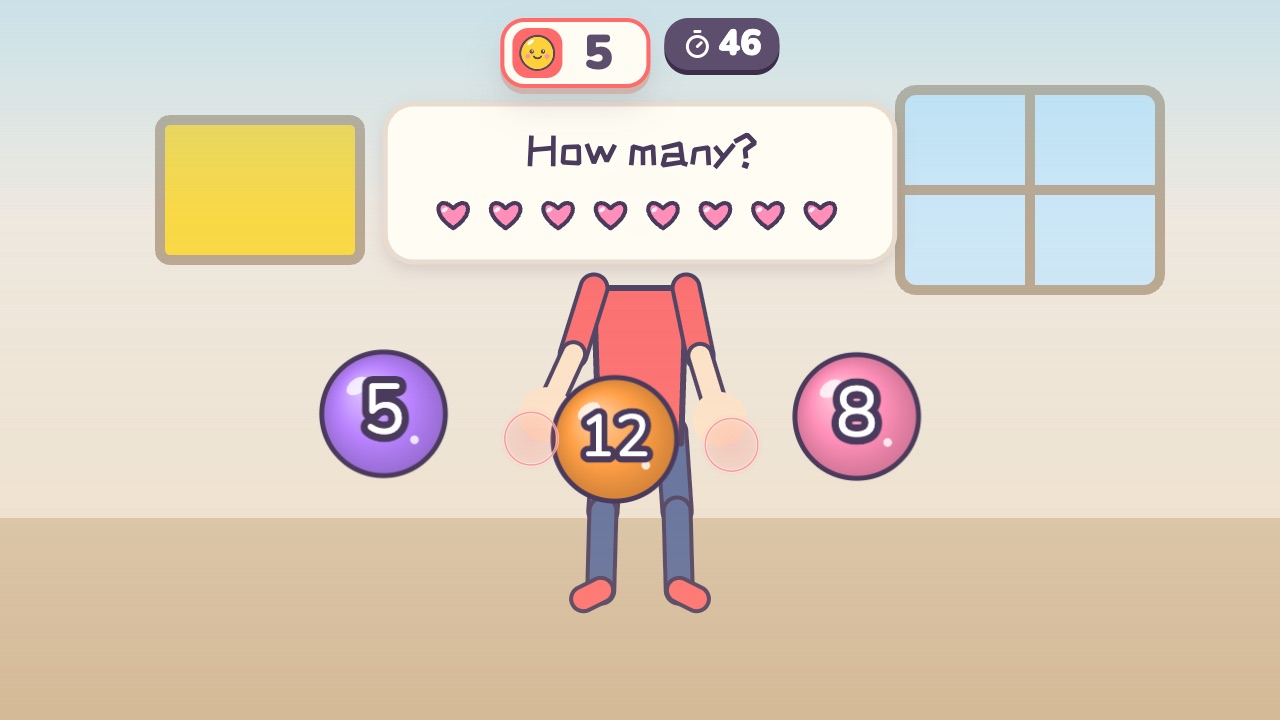 Math CatchThink it through and catch the right answerAges 5–9 · Light activity · Hands / Thinking / Calm
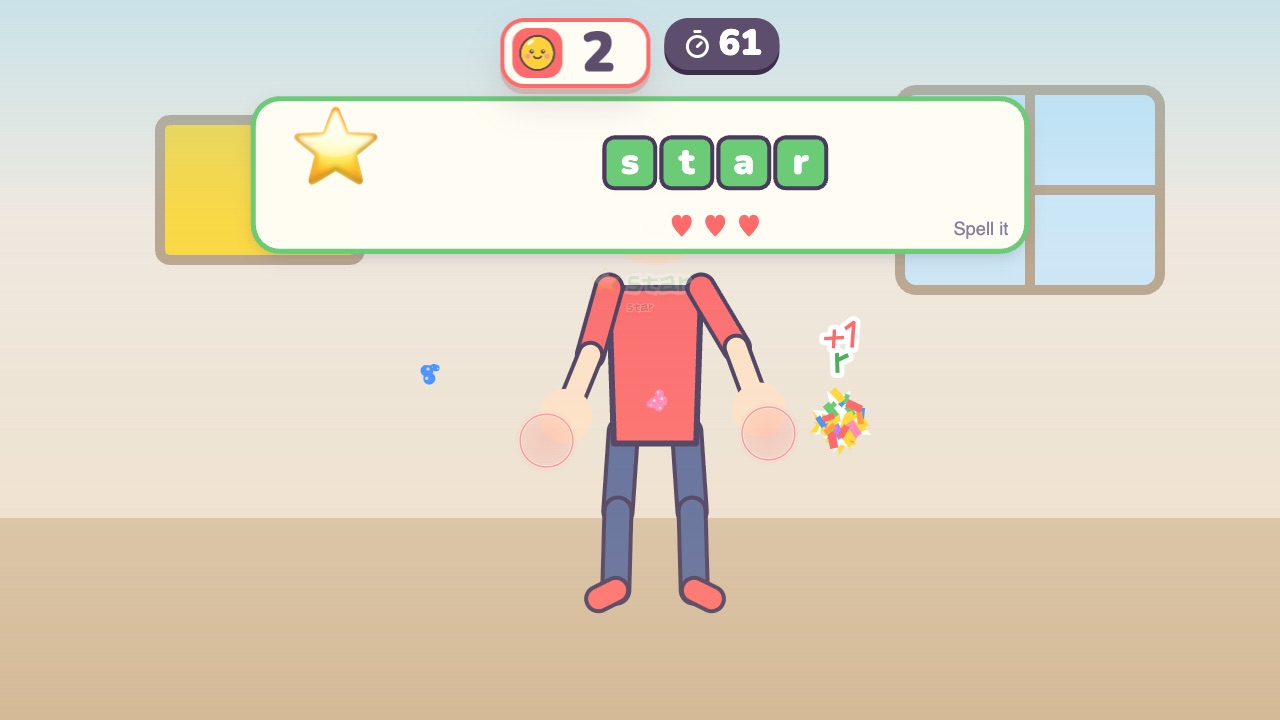 Spelling CatchCatch the letters in the right order to spell the word in the pictureAges 6–12 · Light activity · Hands / Thinking / Calm
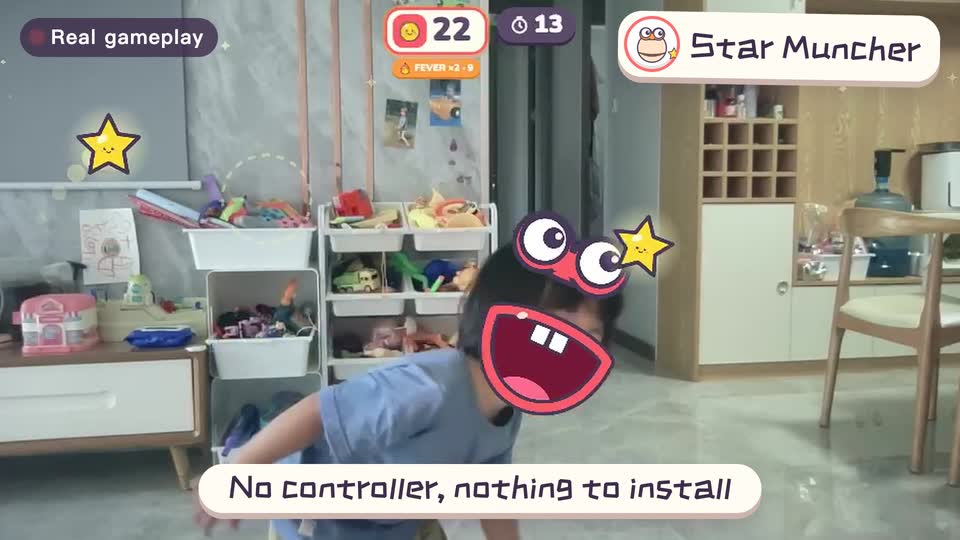
Real footage · 14 s
Kids stand in front of the computer and just move
100+ motion games for ages 3 to 18. Open the website and play: nothing to install, and the camera picture stays on this computer.
Sources
- WHO guidelines on physical activity and sedentary behaviour. World Health Organization. 2020
Keep reading
- Indoor recess games: a 20-minute rainy-day plan
- Brain breaks: 5-minute movement games for any grade
- Indoor PE class: one computer gets the whole class moving
- Indoor movement games for preschool: morning exercise and rainy days, ages 3 to 6
- Rainy-day obstacle course: 6 stations for a preschool classroom
- PE warm-up and cool-down games: the whole class follows the screen